

 The Weekly Spark - 5th September 2026
Whenever I’m reviewing products over at my YouTube channel, The Spark!, there’s one thing that always leaves me feeling a bit disappointed: opening the box and finding a USB-A-to-USB-C cable.
The product itself might have a nice, modern USB-C port, but the other end of the cable still expects me to use USB-A. And it got me thinking: why are we still using this?
We’ve had USB-C for more than a decade. It’s reversible and, with the right hardware and the right cable, it can transfer data at up to 80 gigabits per secondand deliver up to 240 watts of power.
And yet USB-A simply refuses to go away.
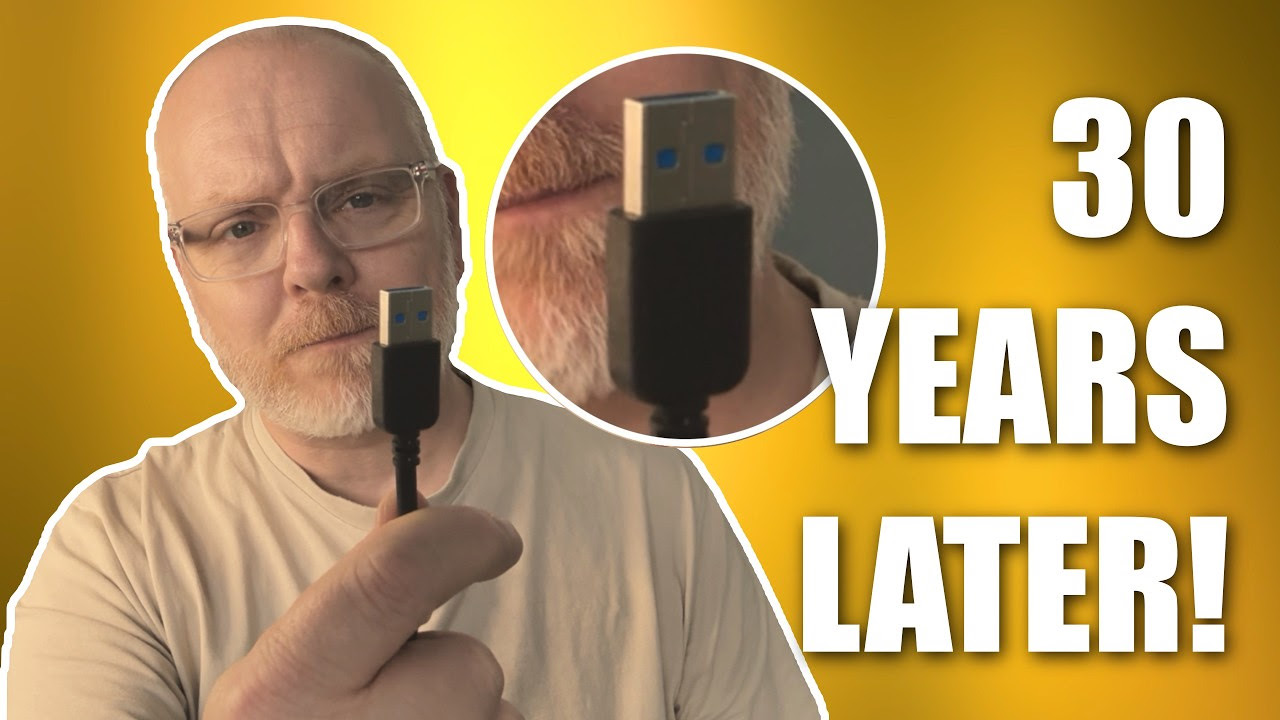
Manufacturers still put USB-A ports on new chargers, power banks and computers. They still include USB-A cables in boxes. So why is this 30-year-old connector still hanging around?
USB-A was too successful
The original USB specification arrived in 1996. Before that, connecting things to computers meant dealing with serial ports, parallel ports, PS/2 connectors and all sorts of other nonsense.
USB was supposed to simplify everything.
Universal Serial Bus.
Universal. The clue is in the name.
It worked. Rather well. USB-A eventually found it’s way into everything, everywhere.
Fast-forward to 2014 and USB-C arrived, fixing the most obvious problem with USB-A: it goes in either way.
Hallelujah!
But oddly, USB-C didn’t replace USB-A. It simply moved in alongside it.
The past still works
I’ve got USB-C cables for my iPhone, iPad, MacBook and all sorts of other things. But I’ve also got USB-A chargers, hubs, keyboards, dongles and even external hard drives.
There are nearly 30 years’ worth of USB-A products in people’s homes, and most of them still work. Why would people throw them away?
More importantly, why would a manufacturer make a new product harder to use with all that existing equipment when adding USB-A is relatively cheap?
That USB-A-to-USB-C cable I’m disappointed to find in the box is there because plenty of people still own USB-A chargers. It might look outdated, but really … you might say it’s a compatibility feature.
Not everything needs USB-C
USB-C can do some extraordinary things, but does my wireless keyboard, mouse or set of headphones, need 80 gigabits per second of data or 240 watts of power?
Of course they don’t.
There are plenty of simple accessories where USB-A still does the job perfectly well. Newer technology doesn’t automatically make older technology useless. A USB-A port doesn’t suddenly stop being capable of charging your headphones or connecting your keyboard just because something better has come along.
USB-C isn’t as simple as it looks
And here’s the irony. USB-C was supposed to give us one universal connector.
Except USB-C describes the connector’s shape and minimum expectations. It doesn’t guarantee what the cable, or indeed the port it plugs into, can actually do.
Two USB-C cables might look identical, but one could transfer data painfully slowly while another supports high-speed data, video and much faster charging. The USB Implementers Forum now requires certified cables to carry markings showing their supported data speeds and power ratings, but that doesn’t help with all the unmarked cables already sitting in our drawers.
Modern Thunderbolt connections and USB4 use the USB-C connector too, without necessarily offering the same capabilities.
So when you pick up a USB-C cable, you might find yourself asking questions. How fast is it? Does it support video? How much power can it carry?
USB-C solved the problem of the plug being the wrong way up. It didn’t solve the confusion problem.
So when will USB-A die?
The EU now requires USB-C charging on many portable devices, including laptops, but its rules don’t prohibit other ports. Chargers, computers and power banks can still include USB-A alongside USB-C.
And I think that’s ultimately why USB-A is still here.
It’s not because USB-C failed. USB-C has clearly won the future. But USB-A was incredibly successful. We spent 30 years putting it on almost everything, and all that equipment hasn’t suddenly disappeared.
USB-C, you might say, is the present and the future. USB-A is the past. But the past still works.
So for the foreseeable future, the most useful charger or hub you can probably buy is one with both USB-C and USB-A.
So much for universal.
What about you? Have you mostly moved over to USB-C, or are you still surrounded by USB-A cables and devices? And would you actually want manufacturers to stop including USB-A?
I’d be interested to know, so please leave a comment below.
Connect with me: X | Instagram | Threads
Subscribe to my YouTube channels: The Spark | The Weekly Spark
Buy stuff: Affiliate Page