

The Weekly Spark - 10th October 2026
Better screens, proper Google Play access and a more premium design. But has Amazon left the budget tablet buyer behind?
Amazon very recently announced three new tablets, and they look considerably more ambitious than the cheap Fire tablets many of us associate with the company. There are aluminium bodies, better screens and, finally, proper access to the Google Play Store. There are also considerably higher prices.
I can understand wanting to make better tablets. What I’m less convinced about is whether that means moving away from the customers who simply wanted an affordable one.
This follows last week’s redesigned Kindle range, which I’ve been covering over on The Spark!, including a review of the new basic 16GB Kindle. This time, though, we’re talking about conventional LCD tablets rather than E-Ink devices like the Kindle Scribe.
Announced on Thursday 8th October, the Alexa Tablets are due to start shipping in the UK on the 19th of October. All three run Android and include the Google Play Store, so official apps such as YouTube and Gmail are finally part of the deal.
Three tablets, three different pitches
The smallest is the Amazon Alexa Tablet 8, starting at £199.99. Despite the name, it has an 8.7-inch HD LCD screen, alongside 4GB of RAM and 64GB of storage in the starting model. It weighs 329g, making it the smallest and lightest of the three, and Amazon claims up to 14 hours of video playback.
It’s the most affordable option in the new range, but a £200 starting price already feels quite different from the very cheap tablets that made the Fire range appealing.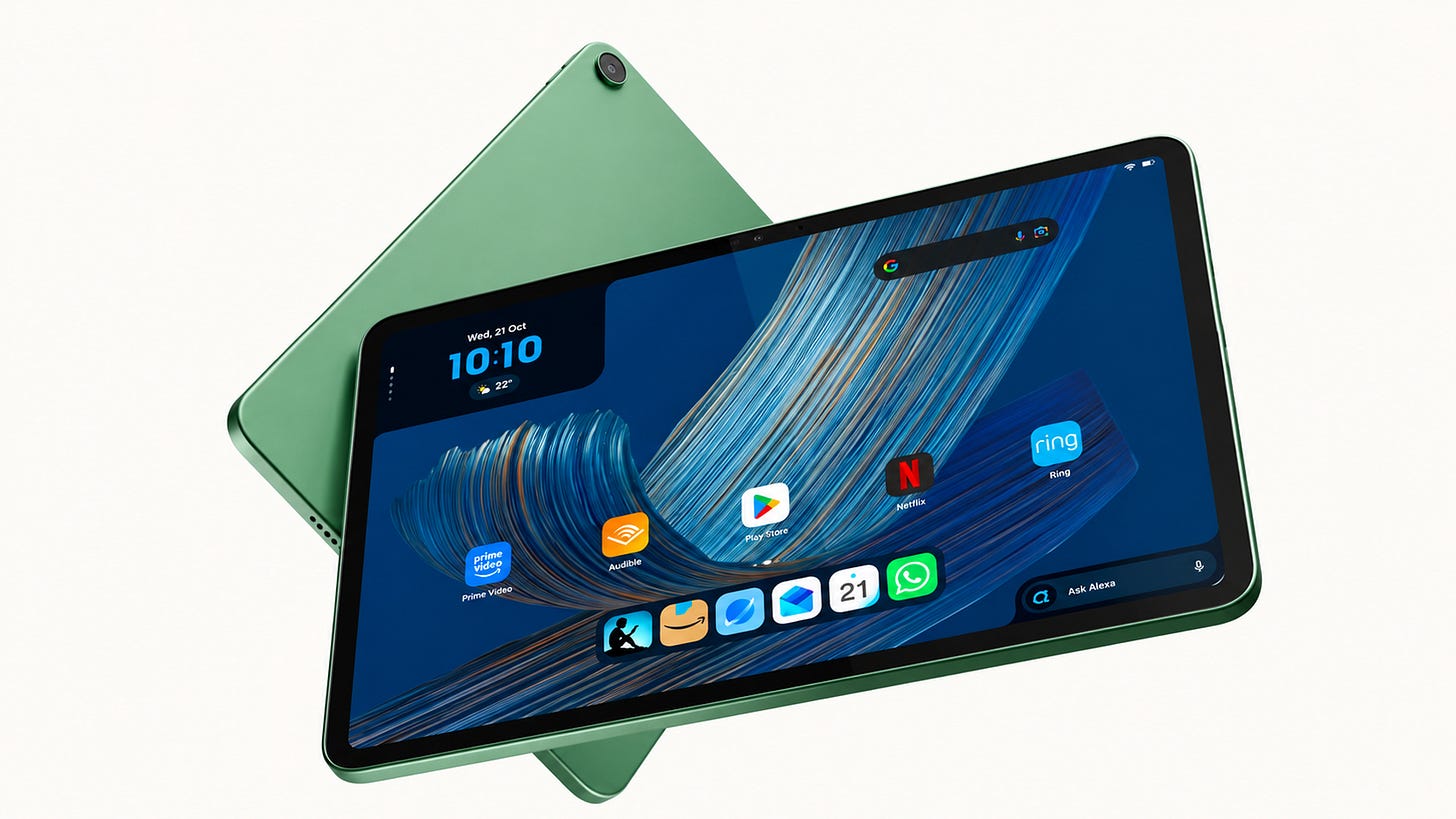 The Alexa Tablet 11 in Matcha. Image: Amazon
The Amazon Alexa Tablet 11 starts at £289.99 and gives you an 11-inch 2.5K LCD display, with 276 pixels per inch and a 90Hz refresh rate. That should mean sharper text and smoother scrolling than on the smaller model. There are dual Dolby Atmos speakers, and Amazon claims up to 15 hours of video playback.
The RAM doubles to 8GB, although the starting storage stays at 64GB. Both the 8 and the 11 use MediaTek’s eight-core MT8189 processor, so moving up to the 11 gets you a better screen and more memory but not a different brain.
Then there’s the Amazon Alexa Tablet 12 Pro, starting at £449.99. This is where Amazon starts making a more serious pitch for reading, writing and actual work.
Its 12-inch 2.8K LCD display has 280 pixels per inch and a 120Hz refresh rate. The screen’s 3:2 shape gives it more height relative to its width, which should be useful for documents and reading. It’s just 6.5mm thick, has four Dolby Atmos speakers and comes with a claimed 16 hours of video playback.
Inside is a more powerful eight-core MediaTek chip built on a 4nm process, with 8GB of RAM and 128GB of storage in the starting model. All those battery figures are Amazon’s claims.
A screen and accessories aimed at work
 The Alexa Tablet 12 Pro with Nanomatte display. Image: Amazon
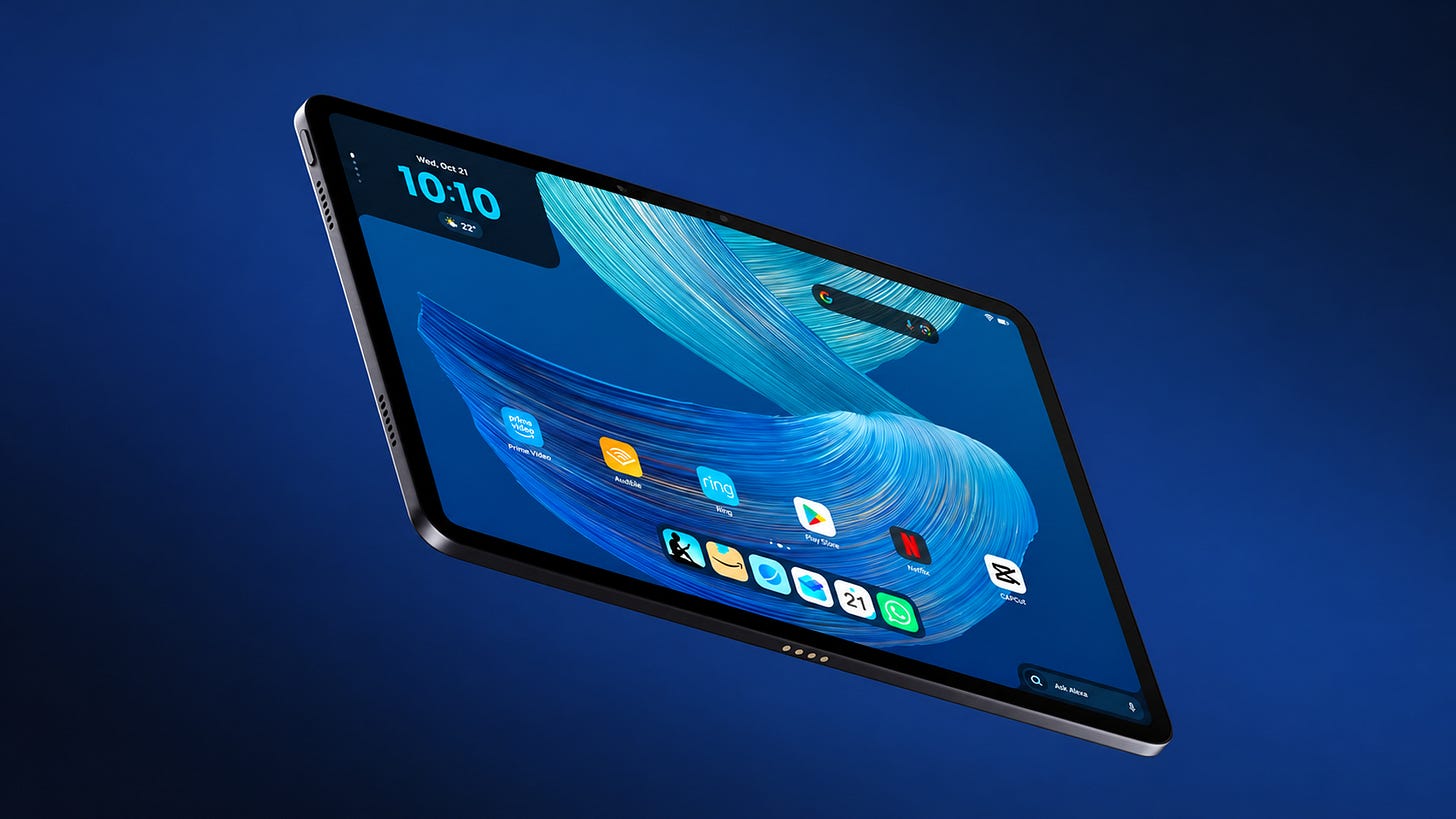
The Pro also comes with an optional Nanomatte display, starting at £499.99 with 8GB of RAM and 128GB of storage. A version with 16GB of RAM and 256GB of storage costs £599.99.
Developed with Corning, the etched anti-glare surface is designed to reduce reflections. It’s still an LCD screen, but Amazon says the finish gives its optional pen more friction for a more paper-like writing feel.
That £79.99 Pro Pen detects pressure and tilt, attaches magnetically and charges wirelessly. The £129.99 Pro Keyboard also attaches magnetically, needs no Bluetooth pairing and includes a trackpad.
Combine those accessories with the Pro’s ability to run apps in separate, resizable windows, and this becomes a much more deliberate attempt at a tablet you can work on. Whether it’s good enough for the work you actually do is something that needs testing, but the intention is clear.
Why call them Alexa Tablets?
Alexa+ is built into how you use these devices. You can speak or tap a button to ask for help without leaving what you’re doing to open a separate app.
If you choose to give Alexa access to your screen, that help can relate to what you’re looking at. You could ask it to compare hiking routes you’re browsing, for example, and keep the conversation going without saying “Alexa” before every question. Screen access is off by default, so you decide whether to enable it.
The UK listings promise Alexa+ Early Access when you set up the device. That gives the new name some substance, although my reading is that Amazon also wants its assistant to help sell these tablets.
The question is whether buyers want that enough to pay more. For some people, a better screen and access to their usual Android apps may be the bigger attraction.
What happening to the Fire range?
The Fire range is being phased out, although existing tablets will keep working. Amazon says support will continue for at least four years after the last Fire tablet it sells.
I can understand the decision to move on from the old app experience. A cheap tablet becomes less appealing when an app you want isn’t available through its official store. Fixing that is a sensible move.
And, to be fair, Fire tablets have always felt underpowered. Full Google Play access is welcome, but having more apps available isn’t much use if the tablet struggles to run them. Better processors and more memory make sense if Amazon wants people doing more demanding things.
The aluminium designs, better screens and Pro accessories suggest Amazon wants its hardware to be considered for more than watching Prime Video or handing something to the kids. It looks like a move towards competing more directly with the iPad and other premium Android tablets.
Better tablets, but for whom?
There’s a reasonable argument here: spend more and get a device you can do more with. But a Fire buyer might never have wanted an iPad alternative. They simply wanted a tablet to be affordable for reading, streaming and browsing.
A £200 starting price changes that decision. At £450, £500 or £600, you’re comparing Amazon’s hardware much more carefully with other tablets. The software and performance need to justify the price, and a list of better specifications can only tell us so much.
On paper, these look like better tablets. I’d still like an affordable option alongside them, though. Customers with smaller budgets haven’t disappeared just because Amazon has decided to move upmarket.
Would you pay more for an Amazon tablet with the full Google Play Store experience, or was being cheap the main reason you’d buy one? Let me know in the comments.
UK prices correct at the time of writing, 10 October 2026. Product links are affiliate links: I may earn a commission if you buy through them, at no extra cost to you.
You can read Amazon’s announcement for more on the new range.
The video podcast was originally posted on my YouTube channel, The Weekly Spark
Connect with me: X | Instagram | Threads
Subscribe to my YouTube channels: The Spark | The Weekly Spark
Buy stuff: Affiliate Page