
And why it is so important to leave our comfort zone to appreciate it better
 As I write these lines I have the music of Dutch singer Nynke playing on my CD player (yes, I still have one of those! [smiles])and filling up my room with beautiful and hypnotic notes. Although she sings in Frisian, a language only spoken in the northern part of The Netherlands, her compositions take in genres such as fado and flamenco. It’s difficult to describe her music when, one, I’m not a musician and, two, Nynke doesn’t follow conventional musical patterns.
And neither did Stravinsky. It’s always a good opportunity to become acquainted again with one of the 20th century’s greatest composers. I won’t write about the riot that apparently ensued as soon as the bassoon broke free and unchallenged in that silent theatre in 1913 during Stravinsky’s premiere of Rite of Spring in Paris. I would like to reflect, instead, on the extents to which some musicians, like Stravinsky (and Nynke), go in order to break with musical orthodoxy.
In that sense the Russian maestro was not alone. Schoenberg, an Austrian composer and painter, had already made inroads in the German expressionist movement with a heterodox approach to music. So had Anton Webern, a follower of Schoenberg. Abstract and discordant melodies were the way to go. No more Handel, Mozart and Beethoven. Let’s polarise the audience, these musicians seemed to say. Either you like us or you don’t.
I am of the opinion that sometimes culture needs this type of shake-up. We (journalistic “we”, by the way) become so used to our comfort zone. We breakfast, lunch and dine on it. We grow accustomed to its nooks and crannies and as time moves on it is hard to come out of this me-myself-and-I lair we have created. This cave we have customised to suit our artistic needs.
Until one day, when we find ourselves sitting in the auditorium of a half-full — or half-empty, depending on your view — theatre and we are exposed. Exposed by the musician or musicians on stage, with their atonal experimental melodies. First reactions are important. Are you being receptive? Never mind what you think of the music, how do you feel about it? To me the latter question matters more than any rational thought you might possess. It puts me straight away in the composer’s shoes.
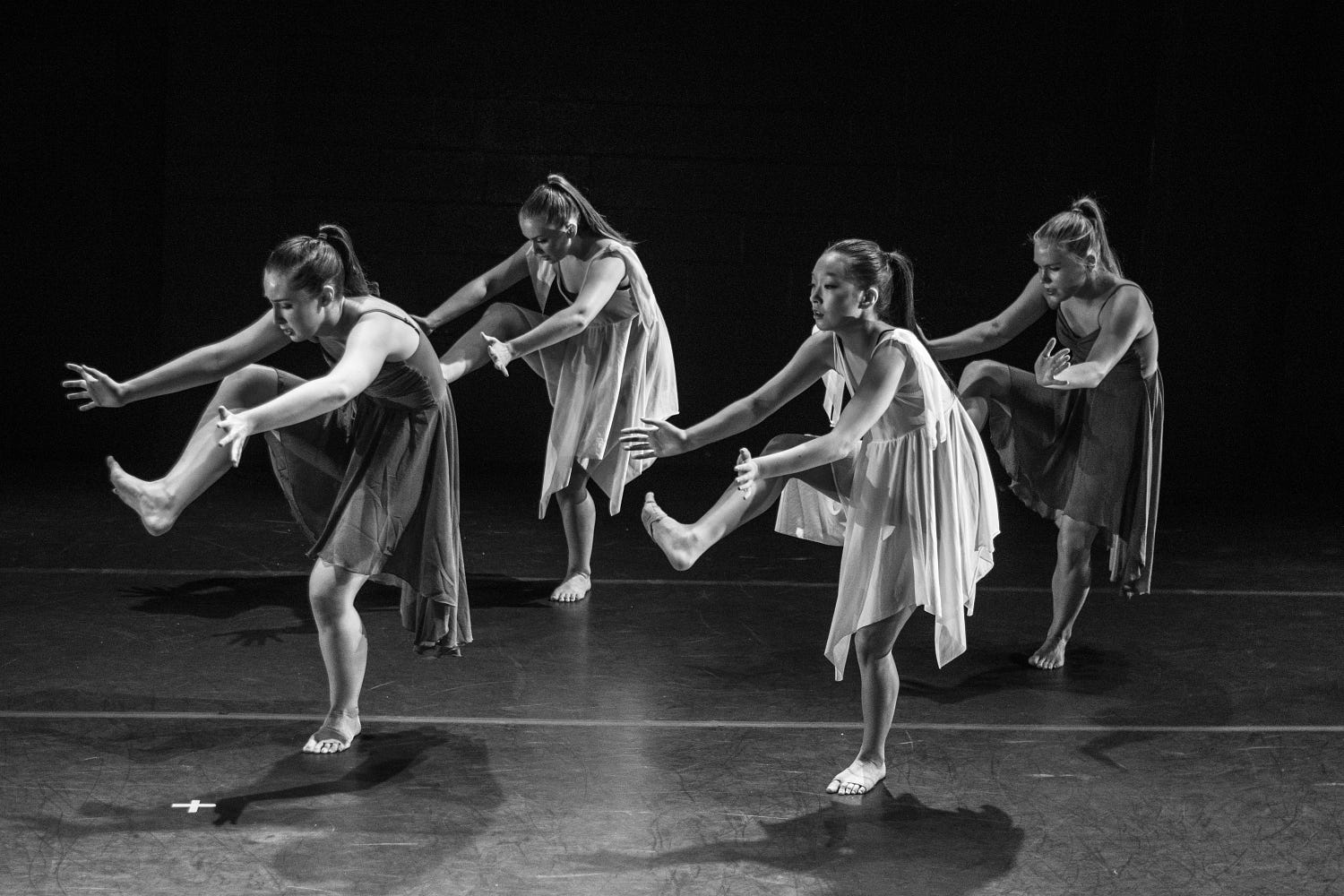
The woman who dances herself to death in The Sacrificial Dance in The Rite echoes, in my view, Stravinsky’s travails when he wrote the score. I feel her demise, because I feel Stravinsky’s agony. Of all the versions I have seen (not many, by the way; probably three or four) of this particular section, my favourite is the late Pina Bausch’s. In fact, that’s my favourite Rite, too; all of it. Pina’s choreography conveyed both the primitivism and sophistication of Stravinsky’s music in a way that not many other versions have done.
The first time I listened to The Rite I found it ugly and beautiful, vulgar and refined at the same time. Yes, it was full of contradictions. But aren’t contradictions what turn some works into masterpieces after all? The same has happened with other artists’ works. Not so much the ugly and vulgar part of it, but more like a strange and alien sense of otherworldliness. The only way I can describe them, and here I include Nynke’s music, too, is like a bassoon breaking free and unchallenged in the middle of a silent theatre. Ready to shake us up.