
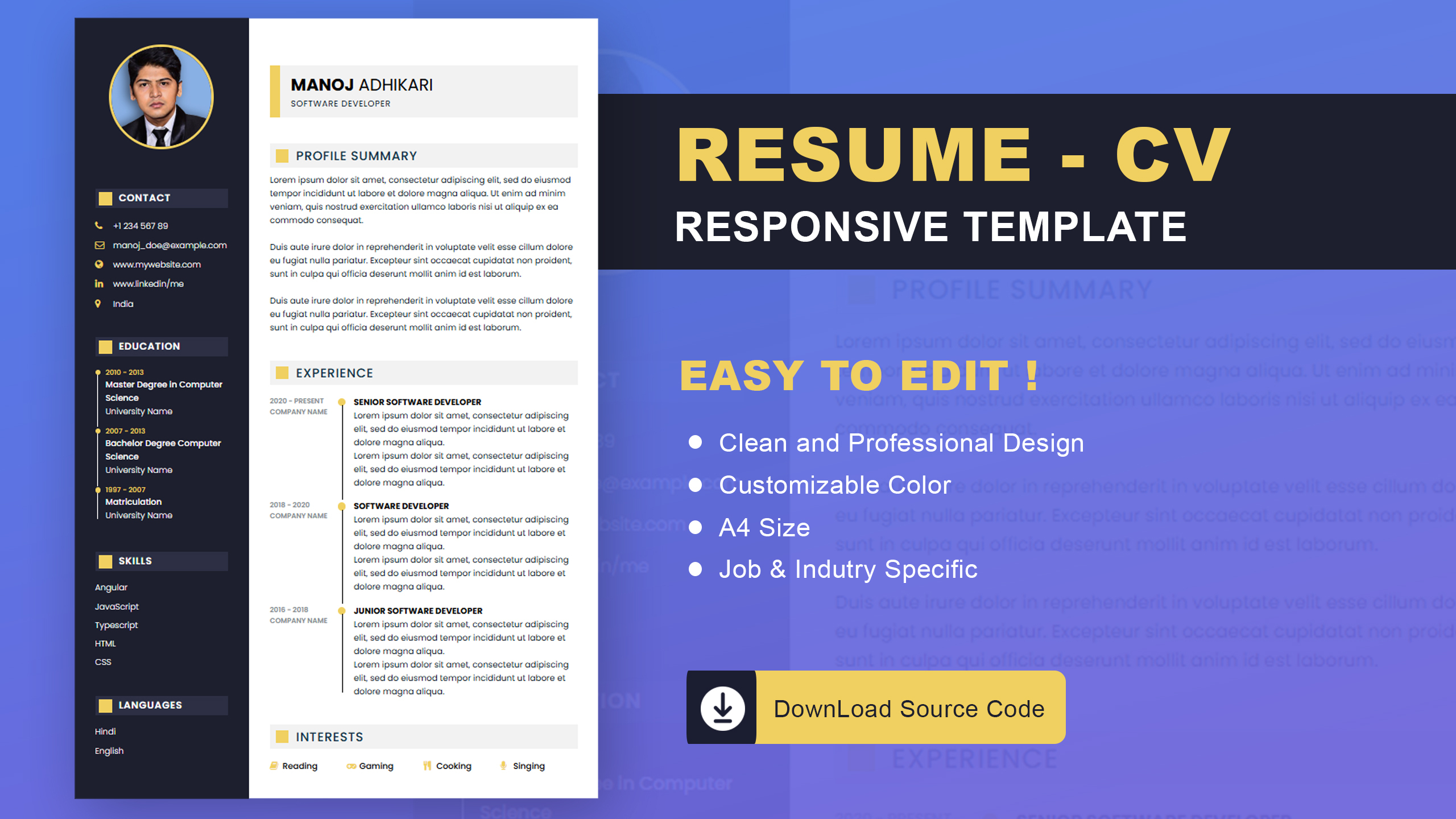
In the modern job market, a standout resume is essential to catch the eye of hiring managers. Traditional text-based resumes are still widely used, but why not take a step further and create a visually engaging resume? By using HTML and CSS, you can craft a unique, interactive, and professional resume that showcases not just your qualifications, but also your technical skills. In this blog, we'll explore how to create a creative resume template using HTML and CSS and the benefits of having such a template.
Why Choose HTML and CSS for Your Resume?
Before diving into the steps, you might be wondering: Why should I use HTML and CSS for my resume? Here are some compelling reasons:
Showcase Technical Skills: If you're a web developer, designer, or involved in tech in any capacity, using HTML and CSS for your resume can help demonstrate your expertise. It’s a great way to prove your technical abilities while applying for jobs.
Endless Customization: Unlike a typical Word document, an HTML and CSS resume allows for endless customization. You have full control over your layout, colors, fonts, and content presentation.
Responsive and Accessible: HTML and CSS are ideal for creating a resume that adapts seamlessly to different screen sizes, from mobile phones to desktops. This ensures that your resume will always look great, no matter what device it’s viewed on.
Interactive Features: You can easily incorporate interactive elements, such as hover effects, smooth scrolling, or even animated sections, to make your resume stand out.
Portability and Flexibility: Unlike static PDF resumes, an HTML and CSS resume can be hosted online. You can provide a link to your resume that anyone can access from anywhere.
Benefits of Using an HTML and CSS Resume Template
Showcase Your Skills: Creating a resume with HTML and CSS is an excellent way to showcase your technical skills, especially if you're applying for roles in web development, design, or other tech-related fields.
Customization: Unlike static templates, an HTML and CSS resume is completely customizable. You can adjust every aspect of the design, from fonts and colors to layout and structure.
Responsive Design: HTML and CSS make it easy to create a resume that adapts to different screen sizes, ensuring that your resume looks great on both mobile devices and desktops.
Portability: An HTML and CSS resume can be hosted on a personal website or GitHub profile, making it easy to share. You can simply send a link to your resume instead of emailing a bulky PDF.
Interactive Features: You can integrate interactive elements like hover effects, animations, and smooth scrolling, which will make your resume stand out and leave a lasting impression on recruiters.
Search Engine Friendly: If you host your resume on a personal website, it can be indexed by search engines, making it easier for potential employers to find you.
Easy to Update: Updating an HTML and CSS resume is simple. You just need to change the code, and your resume is ready to be shared again, with no formatting issues like you might encounter with Word documents or PDFs.
Creating a creative resume using HTML and CSS not only helps you stand out from the crowd, but it also gives you the opportunity to showcase your technical skills. Whether you're a developer, designer, or someone looking to add a personal touch to your professional profile, an HTML and CSS resume is a versatile and effective way to impress potential employers. By creating a modern, responsive, and interactive resume, you increase your chances of making a memorable impact in a competitive job market.
So, why stick to traditional formats? Embrace the power of HTML and CSS and take your resume to the next level!