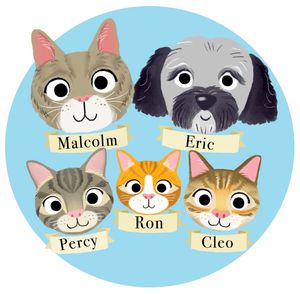

Friends!
I’m writing this from my usual spot on the sofa, which I consider both my throne and my observation post for studying humans. Life in our house is busy, sometimes chaotic, but mostly full of warmth.
Lately, though, I’ve noticed something about our human family. They seem worried.
When the television is on, I hear words like war, fighting, conflict, and unrest. They sigh more often. They scroll through their phones with concerned faces. Even Baby Dog notices the change - his ears tilt forward and he leans closer to them.
This is when pets like us do our best work. Humans often think they rescued us. But I suspect we rescue them too.
When Mum sits down looking troubled, I quietly jump onto her lap. I knead the blanket (and occasionally her stomach), curl up, and begin my carefully calibrated therapeutic purring programme.
Baby Dog prefers a different method. He sits beside her, places his head gently on her knee, and looks up with those eyes that say: You are not alone. It works remarkably well.
Humans with clipboards and laboratories have actually studied this. Research shows that when people stroke cats or dogs:
Oxytocin levels increase - this is the hormone linked to bonding, trust, and calm.
Cortisol levels decrease - cortisol is the stress hormone that rises when people feel anxious.
Heart rate and blood pressure often drop.
In fact, studies from universities and medical organisations have found that petting an animal for even ten minutes can significantly reduce stress levels.
I’m pleased to say that my purring contributes to this effect, and since this is a blog and not a veterinary journal, allow me to share a few interesting facts:
• Cats purr at frequencies between 25–150 Hz, which some scientists believe may promote healing and relaxation. I like to think of it as my personal meditation soundtrack.
• Dog owners tend to walk more, which improves physical and mental health. Baby Dog takes great pride in this achievement.
• Simply looking at photos of pets can trigger positive emotional responses in the brain.
• Therapy animals are used in hospitals, schools and care homes because interacting with them reduces anxiety and loneliness.
I suspect humans finally realised what animals have known all along: companionship matters.
Despite the worries in the wider world, our home has its own rhythm. Baby Dog patrols the garden with great seriousness, though the only intruders are pigeons.
Cleo believes she is an explorer and climbs everything. Ron is fascinated by cardboard boxes and the mysterious art of knocking objects off shelves. Percy, the wisest of the Triplets, often sits beside me and observes the humans thoughtfully.
Together, we provide a steady background of warmth, mischief, and affection, and when the humans look tired after hearing difficult news about the world, we gather around them like a small furry committee of support.
The world may sometimes feel loud and uncertain, but in living rooms everywhere, quiet moments happen: a cat purring on a lap,
a dog resting its head on someone’s knee,
a furry creature simply sitting beside a human who needs comfort. These small things matter more than people realise.
Now if you’ll excuse me, Percy has discovered a houseplant that apparently requires immediate investigation, and Baby Dog is attempting to supervise.
Stay warm, stay hopeful, and remember - there is always comfort in a purr.
Love from Malcolm xx 🐾