
Thank you for listening to the Making Lemonade Podcast!
Please remember to subscribe, share, review, rate and, if you can, support the making of this podcast by donating here on BMAC, or by becoming a member of the Lemonade Makers. You'll find information on how to do that at the top of this page.
I'd love to hear from you - your thoughts and reflections on what you've heard (things you've liked/haven't liked, things you'd like to hear more/less of), your own experiences, and suggestions for people who you think would make brilliant guests.
You can contact me by emailing [email protected] or by messaging me on...
Instagram or TikTok - @markmakeslemonade
Twitter/X - @immarkosullivan
Sarah’s Links:
https://smokeempodcast.substack.com/
https://sarahhepola.com
If you've been affected by anything you've heard in this episode, please take care of yourselves, and consider visiting (or contacting) any of these organisations:
https://www.drinkaware.co.uk
www.mind.org.uk
https://www.samaritans.org
TRANSCRIPT
[00:00:00] Hi everyone. Before we jump in a note on our content this episode contains themes and discussion that might be upsetting or triggering for some listeners. Please check the show notes for more detailed descriptions And look after yourself.
alcohol really is the, the Swiss army knife of beverages.
You know, like you can do it for any occasion, you know? Yeah. Sad, happy board, but, but the other thing is like, what a [00:00:30] complete bankruptcy of creativity you get into after decades of just doing that. Because I got to a stage in my thirties where I was like, so when I see people I drink and when I'm alone I drink.
And then when I go to a new place, I drink. But if I'm bored in the same old place I drink. I didn't know what people did together if they didn't drink.
Hello lemonade makers. Welcome to this [00:01:00] episode of Making Lemonade.
It's gonna be an even shorter intro to this episode
because it's quite a long conversation and I didn't want to cut any more of it out.
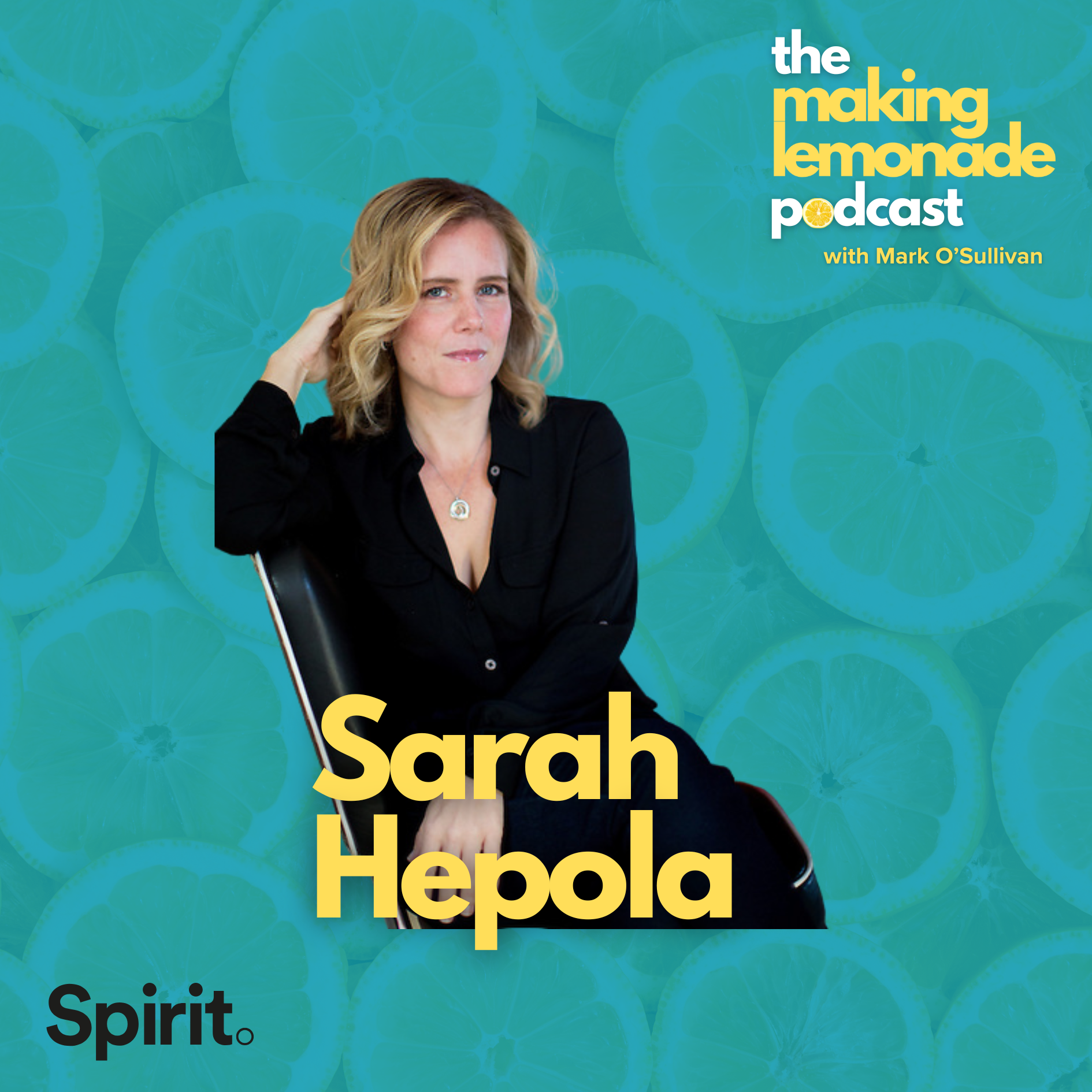
In this episode, I'm gonna be talking to the author of the bestselling memoir Blackout, Sarah Hepola.
now Sarah is based over in Dallas, and she's a writer, a journalist, a columnist.
and a fellow podcaster.
I am not gonna say too much about our conversation because it should become pretty clear quite quickly. I think what we're talking about, I.
And [00:01:30] indeed how I first came across Sarah and her work.
It was a real pleasure and honor to speak to Sarah, and I hope you enjoyed the conversation. I.
So I've been, I'd be reading about your, your writing routines, your sort of early mornings. I'm a, I'm an early morning, um, star as well. I can get more done in those first couple of hours than I would do in the rest of the day if I start later. Is that the same for you?
Absolutely. Yeah. [00:02:00] Absolutely.
Yeah. Yeah. I mean, I, I'm finishing up a, a memoir, a revision right now, so I've been waking up at three o'clock, which is. You know, pretty ungodly. but I kind of love it because if you work from three to seven, which is what I usually do, that's just like four hours of uninterrupted time. Nobody's disturbing you.
it's perfect writing conditions for me, which is like, it's quiet outside. It's dark,
and you just achieve so much, don't you? Before anyone [00:02:30] else is even up.
Oh, I feel so superior. People are just waking up and they're like, oh, I'm so tired. And I'm like, I've been up since three. Like, I've, I've, I've lived in entire seasons.
So I came across you when I was. Trying to stop drinking and, um, well,
yeah, that happens to a lot of people. I, I, I
thought, I thought you might say that, that that's how lots of people come across you, but it is one of those, it was one of those really sort of [00:03:00] serendipitous moments. I think I read your piece that was in The Guardian over here.
it totally captured me and I, I. I can't remember exactly what stage I was at. I kind of, I drank, you know, I drank really, really achieved in the drinking stakes for decades.
And then when I kinda hit my early forties to mid forties, I sort of started slowing down a bit and having the odd month off, and then [00:03:30] six months there and there, and I was getting to a point where I thought, yeah, I just, I'm fed up of doing this. I don't wanna do it. You know, don't want to have my life measured out in opportunities to have a drink.
I can see you nodding there. You of course, you know that it gets
old.
Yeah,
yeah. It gets old. You know, it's like, for so many years you're like, don't take this away. But then you start getting into your late thirties and early forties and it's like, how much of my time am I spending trying to hold onto this thing or organizing [00:04:00] my weekends and evening every, around this
and you have a shit day and you go, oh, I'll have a drink.
And you have a great day and you think, oh, I'll have a drink. And you have a day in the middle and you go, oh, probably have a drink, you know, and time for
a
drink.
Exactly. And I remember, you know, going on holidays, think, oh, you know, get to the airport, probably have a beer, and then Oh, what time will we will get to the hotel, right?
Well, we can definitely have a drink and then we can go out for drinks and then the next day, oh, this is great. This [00:04:30] city's amazing. Um, is it too early to have a drink? No, I think we could have a drink now.
It's, it's, you know, a couple things that come up. Cross in that is, first of all, that alcohol really is the, the Swiss army knife of beverages.
You know, like you can do it for any occasion, you know? Yeah. Sad, happy board, but, but the other thing is like, what a complete bankruptcy of creativity you get into [00:05:00] after decades of just doing that. Because I got to a stage in my thirties where I was like, so when I see people I drink and when I'm alone I drink.
And then when I go to a new place, I drink. But if I'm bored in the same old place I drink. I didn't know what people did together if they didn't drink.
Yeah.
It's, you can't imagine that life, can you? No. What is that like? Like I would be driving, driving my son to football on a Sunday morning and seeing people jogging along the road and [00:05:30] thinking,
oh,
how are they doing
that?
I feel like, God, I feel like
death
from the night before. I, how
are they doing
that? And now when you're talking about getting up at 3:00 AM and getting four hours of work done, I'm going,
yeah,
I know that feeling. It's so good. I know. And I feel so, so self righteous when I do stuff like that.
Yeah. Yeah.
It's, that's another reason why I love waking up early, actually. Because I mean, like most, um, you know, garden variety drunks, I was a night person.
Yeah.
And I hated the [00:06:00] morning. sometimes I was still drunk and I was like, okay, you know, like I felt kind of like woozy 'cause it was like the alcohol was still in my system, but most of the time I felt wrecked and I felt I didn't get enough sleep because alcohol really disrupts your sleep.
So even if you do sleep for a while, it's not very good. It's not good sleep. And then I would always, yeah, it's a disaster. And so I was always just tired and creaky and my head hurt and I was dehydrated and like. You know, I, [00:06:30] yeah, I would see these people running in the morning or like walking their dog and I felt like a vampire hissing at the light, you know, it was just like, go away.
shades entirely drawn, don't make me see daylight. Give me some kind of like carbs and
yeah,
sugar and, you know, just like starch, feed this thing. So yeah, that was how I lived for a really long time.
That excerpt in The Guardian, that ran. [00:07:00] Right before my book came out, and it was the only excerpt that kind of went pretty viral, um, especially amongst the British readers. And I got a ton of emails. and a really large number of them were Brits who were like, I didn't know everyone didn't black out.
And that was so funny to me in part because, I had been like that, you know, I thought everybody blacked out. I [00:07:30] thought. And, and it's not, you know, one of the things that this excerpt does that the book, my book Blackout does is it goes through the science, you know, quickly.
I promise it's not a long section. Yeah. But the Science of Blackout, which basically shows you that 50% of drinkers blackout and some people never have a blackout and they don't know why they think it's genetic.
Yeah.
or, you know, there are a lot of people out there that exist in this. Like, is that real? Like, I didn't know that was real. People really can't remember. And it's like, oh yeah, no, they flat out can't remember [00:08:00] anything.
I think we have a particularly tricky relationship with alcohol over here. Yeah. And I think it is changing actually, but we certainly in my lifetime have not been a nation of people who have a drink in a sort of, um, a, you know, we're having a drink with a meal or let's go out and enjoy a glass of wine.
Or it's
not
France. Nope. Nope.
It's not that at all. We are, we are, we are all [00:08:30] about getting off our faces, you know? Yeah. And doing everything we can to get to that point. And was it even a good night if, if you can remember it,
Exactly. And, um, the pub culture is so interesting because you don't, don't they close at 10?
Do they still do that?
It's like, well, a lot of them still close at 11.
whatever it is, it struck me as super early.
Yeah.
Because bars close at two in America and in New York, they mostly stay open until [00:09:00] four. And in New Orleans, they're open all night. So, you know, we have much more of a 24 hour culture.
And this idea that you go to the pub and then you just pound and pound and pound
and while you can, you know, until they ring the bell and say you can't drink anymore. Exactly. And I, I'm sure that plays a big, a big role in it. You know, you've got to, you have to drink, you have to drink now, you can't drink in 10 minutes, you know, you can't buy any.
Yeah. That's,
it's, it's so interesting. And then, and then I think you, [00:09:30] y'all have this stiff, upper lip British thing, um, where it's kind of like, I don't know, this is my stereotype. Okay. But like, you don't dance that easily or like cut loose.
No, we have to, we have to load up in order to, right, right. To do that, Oh thing. He's look thing he's dancing. He must be off his face. You know, that's the only Exactly, exactly. That's the only time I would dance if I was completely out of it. and then I'd, wake up and wonder why I was covering bruises and, you know.
Exactly. [00:10:00] Oh, I would, oh, and, and, you know, and by the way, I have some of this too.
I mean, I think one of the, I've been, I'm almost 15 years sober, and it's like one of the hardest things for me to do in sobriety is dance. I mean, I'm also like, in my middle age, it's, you know, there's, there's a couple things working against me. Yeah. But, but I would wake up, I mean, I would do the splits, I would do karate kicks.
I'd have like rips in my pants and bruises all over and it's like, oh yeah, you don't remember when you like, did the worm on the floor? But,
but you know, [00:10:30] it was a, I mean, it was freedom to me
would you, and I always feel really odd saying this, would you please tell me about your lemons?
let me tell you a little bit about my drinking.
It began very early for me, and I think probably an important thing for listeners to know is that I developed a drinking problem, but my relationship with alcohol began as a drinking solution. Uh, I was very shy. I felt very trapped in my own body, extremely [00:11:00] self-conscious. And I found very early on that booze unlocked me.
it was a balm. It was a. It's a godsend is what I thought it was. You know, I mean, you feel plagued with this thing, this shyness or this inability to be the person you wanna be.
And all of a sudden you can take this miracle elixir, they have it at the grocery store.
Yeah.
And you can drink it and you're transformed. [00:11:30] It's, it's the superpower.
do you remember the first time you felt that superpower?
Absolutely.
I was so scandalously young. I mean, I was, I was 11 years old.
I was almost 12 and I was hanging out with my 16-year-old cousin. And, uh, I was, she, she hung out with all these cool teenagers and I wanted to be a cool teenager so bad. And I had a big crush on one of them. He was like 15. And, you know, I was just a dorky little [00:12:00] 12-year-old and. I, you know, it was end of summer party.
Somebody gave me a beer and then they gave me another beer. And then once that, you know, it was like match in the veins, I was, I was on, I, I remember standing, all the high school kids were sitting around a table, like playing a game and I was standing at the head of it and saying things and that they all found very funny.
Now looking back, I'm sort of like, oh, well I probably was saying dumb things and they were laughing at me, [00:12:30] but I didn't know. I thought I was cracking them up. Yeah. And they were like, you are hilarious. And I was like, oh my God, I'm hilarious. You know, like, this is just unbelievable. This is so great. And, um, I kept drinking, you know?
'cause one of the things I learned about myself was just basically that like, once I started, I just really didn't wanna stop. And that's probably one of the biggest warning signs. Yeah. For a drinking problem. Yeah. Because people that, like, they get this feeling, [00:13:00] but then they tap out after two or three drinks.
It's just like, that's fine. It's, it's the people that develop problems are the ones that are like, I can really put it away. I can keep going for hours. You know, those are the ones that like, 10, 15, 20 years into it, you're, the whole body is like, please stop. So
I knew that feeling I had.
Yeah. And, um, that, that night of that very spiritual high, you know, of this sense of [00:13:30] like, this is how I've always wanted to feel.
I'm gonna do this forever. This is amazing. Um, I also had a blackout, which is, you know, there was a long stretch of time I didn't remember. And the next day, my older cousin, first of all, the next day I was sick as a dog.
Yeah, yeah, of course. And
I, ugh, I was just like eating this, like blueberry yogurt, like trying to make myself.
Eat something, you know, I was just so sick. And she said, uh, do you remember [00:14:00] when you took your pants off and ran up and down the stairs? And I was like, I never would've done that because I was super modest. And um, you know, like I told you I had a crush on that 15-year-old. Like, I, I, I, yeah. That, that was not gonna be my move.
And she said, yeah, you, you did that and then you sat at the bottom of the stairs and you, you cried and you said, everybody loved me better than you. And I was like, oh God, that does sound like [00:14:30]me. And I realized I had done this thing, this crazy thing, and I didn't remember it. And I was so plagued by that.
I was so sort of bedeviled that. I mean, I was pretty young, you know, I'm some 11 going on 12, and it's like, you've just explained to me that I can do something and not remember it like that. Isn't, that sounds like a sci-fi maybe.
It's
[00:15:00] crazy, isn't it?
Yeah. And, and she's my cousin. I don't know where she ever learned this.
She did become a nurse eventually. Um, but she says you had a blackout. And she's the one that taught me that. That's, that's what I had done. And, and I was so freaked out by that, that it tempered my drinking. I never gave up drinking entirely, but, uh, I, it tempered my [00:15:30] drinking through middle school and high school.
Um, because it, it scared me.
Yeah.
And it wasn't until I got to college again that I really started to let loose, but that, that's when the blackouts started again. They created Discord with my friends, my roommate, people's boyfriends.
But I would drink to such a loose and un corseted place. I became very indiscriminate [00:16:00] and, you know, just sort of like in what I said and what I did and, I wasn't, um, a mean drunk as a general rule, but I could sometimes say things that were really like ugly and blunt and then, you know, people would be pissed at me the next day.
And so I was starting to get in trouble around the age of 21. I, in, in America, you, you can't drink legally till you're 21.
Yeah, of course.
So I'm like, I'm not even legal yet. I can't quit drinking before I even get legal. So, you know, [00:16:30]I tried to temper it and, I, I kept it together. I did the thing that problem drinkers do, which is to kind of like, you know, tweak the formula like this and that, and no brown liquor and no liquor on an empty stomach and this and that.
And that went on for, you know, I don't know, 14 more years. 'cause I, I didn't quit until I was 35.
did people ever say to you, I think you've got a problem with drinking, and if they did, where, how early did that happen? [00:17:00]
Yeah, um, started happening in college and at first I, my roommate who drank a ton and her boyfriend drank a ton.
And so, I mean, as far as I was concerned, we all had a drinking problem. And then one morning she was like, you know, I think, I think you have a problem. And I was sort of like, yeah, I mean, so do you like drinkers that get called on this are just very bad about like,
yeah,
yeah, well you, you [00:17:30] did this, that and the other thing, and the last time we drank, you did that thing and you know, whatever.
and then a very close friend of mine, my best friend in college who, who really didn't drink like me, she, she drank a lot and recklessly, but it, it just wasn't quite to my kind of a level of abandon. And, and she said, you know, I'm worried about you. And I knew that I had a problem, but I, I, I just didn't, [00:18:00]I didn't know what to do about it.
It's like I knew, I could admit I had a problem. I just didn't like the solutions people were suggesting because they were saying, okay, well why don't you go to aa? You know, America is very big into the 12 step movement, especially back in the nineties.
Yeah.
There just weren't a lot of other options. Um.
Why don't you drink a Diet Coke at parties? And it's like, I don't, because I don't [00:18:30] want to. Why don't you drink a glass of water instead? Well, why don't you drink a glass of water? Like so I could hear it, but there just, it took a very long time for that to travel through my system and I had to come up with a lot of schemes and plans because I didn't, I, you know, as we already discussed, I, what would life without alcohol be?
Yeah, I, I, you know, how would I go to parties? What would I do at parties? How would I have sex with men? How [00:19:00] would I be alone with myself? Like I, I didn't know how to do things.
Yeah, I, I hear you. I, I, I understand and recognize an awful lot of that. I remember friends of mine saying something to me when I was in my, I guess really early twenties, maybe even just 20 or so, and I did, I, I just absolutely didn't want to hear it.
I certainly couldn't admit it to any of them, and I couldn't admit it to [00:19:30] myself in my own head. And I knew just, you know, like you've said, the idea of not drinking, the idea of living a life without alcohol was hideous. Like
Yeah. Death sense. Even
conceived. Yeah, exactly. And I remember seeing a documentary about 10 years ago, maybe, maybe slightly less about Amy Winehouse, the, the singer.
Yeah.
That's a, that's a devastating documentary.
you've probably seen the same one. There's a bit towards the end [00:20:00] where. She's doing, she's being presented with an award and it's kind of live, I think it's being this live thing's being recorded in London, but there's a live link up with New York and it's like everything the young Amy Winehouse ever dreamt of.
It's all of her dreams come true. And there's footage of it. And then there's an interview with her best friend who was there at the time saying [00:20:30] she'd given up drugs and she wasn't drinking. And she just turned to me in a break and said, you know, I don't feel anything. I just don't feel anything. And I can say, I remember that resonate with,
I remember that to
I mean, you know, from probably the age of about 17, there wasn't a night I didn't drink. And, you know, usually to, usually to black out because that was the only way I could be with myself and get to sleep and, and, [00:21:00] you know, talk to people.
Just life didn't exist beyond that.
Hi everyone. Just before we get back to the episode, a quick reminder that if you are enjoying the podcast, there are a few things you can do to help us.
You can share it, tell people about it, put it on your social media.
If you want to go a step further, you can rate it or leave a [00:21:30] review on whichever platform you listen to your podcasts. That is so helpful because it helps a podcast to become more visible. Honestly, clicking one of those stars, I mean, if you could click the fifth one, that would be really incredible, and just leaving a few words is a massive, massive help.
The other thing you can do is subscribe. Just hit subscribe wherever you get your podcasts, and that way you always get the next episode landing in your feed, all ready to go each Wednesday.
And [00:22:00] lastly, This podcast is only made possible by some really great people donating their time, their expertise, and sometimes some money. If you want to be one of them, go to buy me a coffee.com/making lemonade, where you'll find show notes,
You'll find information about each guest and you'll also, if you want, be able to buy me a coffee or a couple of coffees.
And if you can do any or all of that, I'll be so, so grateful.
And now let's get back to the [00:22:30] episode.
What was, what was the point at, in your life at which you knew you had to do something? What had led you to that point?
Well, I think, um, people usually expect, or maybe they, I. Understand there to be one moment, like a light bulb moment. And for me, there were so many light bulb moments [00:23:00] because I was 20.
I wasn't even 21. When I understood that I drank differently than other people, that the incident that I told you about, I'd had like a really hideous blackout and just behaved horrendously. And it was so embarrassing. I mean, to alienate my college drinking friends, it just took a lot. Yeah. So I knew I had a problem and then like it kept happening and it kept happening.
It kept happening. So it's like, it's like a thing I knew and then I would manage and then I would [00:23:30] forget and then I would be reminded of it. So it was just like this cycle and I would say I was gonna quit drinking and then I would start that afternoon, or I went through a very long, protracted period of like just sort of relapse, Like, okay, I've quit. It's Sunday, I've quit. And then Tuesday I'd be like, that was really dramatic. Like, I didn't need to do that. Like, I can drink a little bit, I'm fine, I'm fine, It's been two days, it's fine. I'm not shaking, you know, like, I'm [00:24:00] fine. So I would go through that and then like the trap door would open underneath me again, and I'd find myself in some horrendous situation and I'd be like, oh my God, I have to quit.
And so this just like this keeps happening and keeps happening. And so it's like, it's not so much like I, like I figured it out. It's like I finally got tired enough to stop fighting.
Yeah.
I, I, I got worn down and part of what happened was I ran out of ideas, you know, because I had all these ideas like, okay, if you move to New York and you get the right job, and if [00:24:30] you get a boyfriend, okay, if you have some money, okay, if you, this, that, and the other thing, do some yoga.
Do you, it was all this sort of like, To-do list wishlist that if, if, if all these things could happen that I wouldn't drink like I do. And so I had to kind of go down that list and, and then the only thing left is like, no, you just drink too much. And I was 35. And I think that's an interesting age because [00:25:00]it's kind of like, for women, it it, at least in the nineties, it was the age that they would tell you like, if you're not pregnant by 35, like you gotta start getting serious.
Yeah. So it was always in my head as like this like line of adulthood. So, you know, 'cause as culture, we keep pushing back, like when you become an adult, you know, it's like, it used to be like 22 and then we were like, ah, 25, 28, 30, 28, 32 hours, 28 is fine. Keep going. Yeah,
yeah.
Keep, keep going, keep going.
So [00:25:30] to me it was like, okay, 35 end of the party and I. Got to be 35 and I didn't have a boyfriend and I didn't have money or any sort of circumstances that would, you know, I was not gonna be trying for a baby. but I could see that my life was going to continue on that cycle, that it was on [00:26:00] indefinitely.
I, I, I didn't have a sense that I would die because, in part, because I was never a daily drinker.
and I wasn't going out much. So I, I sort of had this sense like, I could keep this going. And then, but the question was like, why, why, why? And I, I went to a friend's wedding that this was the last night I drank. I went to a friend's wedding, a very fancy thing over in Tribeca, New York, and famous people were there.
She was, she's a very [00:26:30] good journalist and she knew a lot of people. They were there. They, they were lovely. Everything was lovely. It was so classy. And I was having a great time. It was awesome. It was awesome. And then I just don't know what happened, you know? And then I woke up in my bed and I was like, how did I get home?
Did I make a fool of myself? Did I take my pants off and run around like. What did I do? What's miss? Like, there's this huge swath of time [00:27:00] missing and I knew from experience that sometimes nothing happened. And then sometimes the most mortifying things you couldn't even imagine happened.
Yeah.
And so it's this blank check for your imagination, just kind of churn through.
And you know, I just, I remember feeling really defeated. Like, this is just gonna keep happening. Like, I'm just gonna be this little lush that somebody helps into a cab and stumbles up her stairs at night and [00:27:30] falls asleep in her party dress. and I'm just gonna keep doing that. And I think it's weird that my feeling in that moment wasn't like.
It wasn't this like raring to go like, I gotta quit. It was like, well, I guess that's it for me. but I, but I called my mom that night and I thought, you know, I should talk to her about this. And I talked to my mom. And then I think once I talked to my mom, it sort of was like, sort of hear myself, wow, okay, [00:28:00]now my mom's gotten into this, now she's worried.
And uh, I thought, okay, I'll try quitting again. 'cause I had just quit 500 times, you know? So, but I tried it and I, I did it again and I did it again. And, and, and eventually there were, there was enough of an accumulation of time and days that, you know, I had three months and then six months. And then it just started, everything started getting better.
You know, my, my finances got better. My health got better. I, I, I had an [00:28:30] ulcer. I had a gastric ulcer. Um, 'cause I was also a chain smoker. And I had to go to a doctor for that, you know, like I was on medication for that. Mm-hmm. Things were not good. So, things started to get better for me, and then once, I think once the fog lifts, um, metaphorically, you're like, oh, I don't, my head doesn't hurt when I wake up.
Yeah. Yeah.
And like, oh, I can remember [00:29:00] everything and I don't have to have this panic. Like, what happened? Where does it, you know, I'm saving money. I'm, you know, getting, I'm feeling healthier. I'm not in a bad mood all the time. these things start accumulating and you want to hold onto them and you want to find out what else is there.
Yeah. I think, well, I know I have a very, very all or nothing personality, so I was, I was one of those people that, you know, I couldn't open a bottle of wine and have two glasses. [00:29:30] That bottle, that bottle was getting finished, and then I was gonna see if there's another bottle somewhere and that would probably get finished.
But I've become, and I know I sound like a bit of a wanker when I say this. Do you,
do Americans say wanker? Is that in the Yeah, but we stole it from you, but yes.
That's good. That's good. 'cause the first time I, that's came to America in 1997,
was it 97?
98? 1998? I don't think people knew it. And I remember saying it somewhere and people just stared at me.
So I'm [00:30:00] really pleased that you've adopted that. I feel like we've really given you something there.
but I, I am now addicted to not drinking. I'm addicted. Interesting. To the feeling of clarity and calm. Yeah. And I'm addicted to feeling like, oh, I don't have to write off an entire night. I don't have to write off an entire weekend. I can, I know I can, I can achieve things. I can do things, you know, I love that feeling.
There's, uh, when you quit drinking, there's so much [00:30:30] time. Yeah. And at first it's kind of intimidating because it's like, what am I gonna do? But then it's like. You start real, it's almost like you just get bonus rounds of like in the day. You know, it's just like you get extra on the time on the test or something.
It's amazing. It's like, I can do this and I can do that. Like, I learned guitar, I started to do crafts. I went, I went through like all these like sort of leisure hobby phases, you know, where like, I'm gonna sew [00:31:00] clothes and I'm gonna latch hook rugs. Obviously I'd the, I'd be something to do with my hands.
Yeah. But most of those things didn't, didn't stick around. I do still play the guitar, but not very well. Um, but it's just, it's a pleasure. You know? It's a, and and I think when you start to realize like, oh, it's really fun to travel and not drink because you don't have to worry so much about like, I mean, 'cause I was always like losing my wallet and [00:31:30] like.
Paris or something, you know, like
some
crazy thing travel is challenging enough without the, you know, being blind drunk and you realize all the beautiful things there are in the world. Like, like just, I mean, this morning I took a walk on a hiking trail here in Dallas.
And it, it's a simple pleasure of being alive. It doesn't cost anything. You don't have to make an appointment. You don't have to go procure it or get a license to do so. It's just like, it's there. [00:32:00]
Yeah.
And it's, it's so, it's, it's amazing, you know, and I, I shut that out for a very long time.
Well, you're, you're not alone in that.
I think there's a, there's a tipping point almost for me. There was anyway of kind of. Oh, not only have I not really given something up, I've gained so much, you know? Oh,
yeah. It's not
about, oh, my life is now missing something. That [00:32:30] space has been completely not even filled, eradicated by. Yeah. All that stuff you're describing there, all that life, all that joy out there, and it's such brilliant.
I almost, I almost called it an intoxicating feeling. It is though, I think,
yeah. For me, I know what you mean. Well, I mean, there are other intoxicating feelings that are not literal intoxicants. Right. You know, like, like love is one of them. And I think often like connection and [00:33:00] joy, things I, I think a lot of times what we're doing with drinking is we're just sort of cheating.
We're looking for the cheat code. Yeah.
Yeah. To
those things, you know? Or it's like, I wanna have that all the time, instead of having to wait. Every, you know, two years to get it. You know, it's like, let's do it every night. Um, it'd be like if you had your birthday, like, let's have a birthday every night.
Okay, great. Um, but, uh, it, it's funny, I think, I think when it's a really interesting stark [00:33:30]difference in the before and after of somebody who has lived in the drinking world for so long.
Yeah.
And they just don't believe you when you're like, oh, my life is better. And they're like, you are crazy. There is no way that your life could be better.
I mean, people are always saying to me like, but you're bored. Right? Or, you know, but you drink sometimes, right? Or they're like, um, [00:34:00] you, you're not really happy. And it's like, well, okay, first of all, I don't drink sometimes. I am bored sometimes because that's part of the human experience. Yeah. And I am sad sometimes because it's also part of the human experience.
You can't drink those things away. But I like my life better this way. Yeah. And I am, I'm personally glad I got to have those decades [00:34:30] of partying my face off and nobody got hurt. You know, everybody relatively stayed safe, you know? cause that can turn dark. Yeah. Especially when, like me, you had a habit of falling downstairs.
I mean, you know, like I, I wound up at, in one emergency room, but, basically got outta that scot-free. And, I think of it as sort of leveling up, you know, like. In your youth, you need this crutch to kind of make you feel happy and connected and feel a certain way. And then you get older and [00:35:00] wiser or tired and beat down or whatever it is.
And you realize like you don't need that anymore. Yeah. And you can find that on your own. And then that's so much more sustainable and powerful. So.
Yeah. Yeah. I feel like we've spoken about without calling it this, we've spoken about lots of lemonade there.
Yeah. But is there anything else that we haven't mentioned? I mean, your, your writing, I know you were already a writer, but, I know lots of your [00:35:30] work and your sort of most prominent work has come since you stopped drinking and has been related to your drinking. Is that fair?
I think it is and, and I think it's so interesting that in the first months after I quit drinking, I was, I was working as an editor at an online magazine called Salon in New York, and I ran the personal essay section, which was very popular at the time and very fun, but very demanding and, and I [00:36:00]often wrote and kind of still thought of myself as a writer, but by trade I was also just like making the donuts, you know, just like putting them on the conveyor belt.
And when I quit drinking, I was so fragile for the first really three months to six months to a year, but like really the first month or two, like just little dough that was just like, didn't know, like how do you go to the grocery store? Like I forgot how to do like normal [00:36:30] things. I didn't even do drunk, I just was like.
I, you know, I just, I was in a mental state and so I thought I was done writing, you know, and I was 35 and I thought, well, you know, I had a good run. I mean, at that point I had been writing for professionally for almost 15 years. I had so many great adventures and I thought, well, that was, that was fun.
And I'll move on to this next part of my life where I will be backstage and I'll be pushing other people on [00:37:00] stage, because I am no longer gonna play that role. But six months into this, I decided to write a story about why I quit drinking, in part because I wanted to tell people that I quit drinking.
I wanted like, some sort of mass announcement.
Yeah, yeah. You know, social
media wasn't as big of a deal in 2010. And so, you know, you didn't go on Instagram and tell everyone you quit drinking. I, I wanted some sort of delivery [00:37:30] system. So the next time I showed up at your party, you weren't like, why aren't you drinking?
So I wrote a story and it was, it was, I really liked it. I thought it was really good. It was called Lush for Life. And, um, I remember I wrote it fast and I wrote it very cleanly. And when I looked at it, I was like, oh, I really like that. I really, really like the sound of that. And the story did well. We, we put it up on like, I think New Year's Eve or New Year's Day.
It was definitely like [00:38:00] timed to coincide with the people that were like, oh, I gotta stop. it did well. And I, I, I. Got contacted by agents who were like, well, do you have a book? And I was like, well, I've always wanted to write a book, but I didn't think I could. And, and then, and then it started to occur to me that maybe this was my book, this was the book that I had always wanted to write, and how ironic that I had stayed in that drunken place of, you know, in the long questionable legacy of the [00:38:30]Hemingways and Fitzgerald's and Hunter s Thompson and whatnot.
You know, I had stayed in that place thinking it was gonna help me be a drinker. It did, it didn't, it disrupted my writing entirely. And it wasn't really until I got sober that I had the time and clarity and, and really patience is the thing that I was lacking so much. And, and, um, regard self regard for myself to spend the time putting together a book that [00:39:00] became the memoir.
Which is called blackout. Remembering the things I drank to forget, it came out in 2015.
And, um, so the lemonade, you know, to go back to this kind of central animating metaphor of the podcast, um. I think writers find that the worst things that ever happened to them are usually makes for the best material. Not always, and [00:39:30] not necessarily the way that I did it. You know, I did it very directly, like, here's a memoir, you know, and other people might transmute that into something else, you know?
Um, there's a guy in Dallas, I don't know why I'm thinking of this. There's this guy in Dallas that lost his daughter at a very young age, and he became very obsessed with doing these light drone shows. And he, he does these, you know, he's in the Guinness Book World Records now, and it's, it's amazing. He does these astonishing [00:40:00] drone shows Yeah.
That are all lights and moving. It's just, it's spectacular, but it, it's all inspired by the loss of his daughter, which I. You know, is just a, a grief that, that nobody ever wants to go through. Yeah, yeah. And so this was an idea that I, that I learned in AA kind of early on. It's in what's called the big book, which is like the Bible of, of aa.
And it was, it was like, you will not [00:40:30] wish to shut the door on the past. Um, and, and there's something, a line that's a little later. Of course, I used to know this by heart now I'm like, what was that line? But it, you know, it's, it's like your dark past can become your greatest asset with it. You can change hearts and minds.
Now, in that specific instance, they're talking about the testimony of one drunk to another saying, Hey, if I did this, you can do this. And. [00:41:00] You know, as drunks, we mostly don't believe experts or scientists or what, you know, whatever it's like. But I will believe somebody else that blacked out as bad as me and is now telling me they don't do it anymore, now I'm listening.
So, you know that that's where that came from. But I really thought of it. I thought of it so often. You know, your dark past is your greatest possession. It doesn't, doesn't really mean you should go out in search of a dark past and then maybe you'll have a bestselling book. But [00:41:30] it does mean that when life gets unbearable and, and my life felt unbearable for a little while, it eases because everything does, you know, the happiness eases too.
Nothing stays. And as it fades, you start to see what purpose this pain might serve.
Yeah.
telling my story was like this [00:42:00] door that opened so that other people could tell their story, which is cool. And then that they would want to connect with me. You know, they would, they would feel connected. They would want to reach out. They would want to say, I have gotten thousands, thousands of messages. I mean, it's been 10 years since that book came out, which is sort of staggering. But, um, I have become so much more connected.
Sort of, and it, it feels a little more authentic and sustainable. I mean, look, I don't wanna throw shade on All the best friends [00:42:30] I met in the bar. They were all really fun, you know? But I couldn't tell you their names and I don't know who they are and, you know,
but you've got all, all their email addresses, right?
I mean, you could do a of course, sort, you could do an email blast, a round robin or whatever it's called. Yeah. Yes, definitely. Hi. Remember me? Um, yeah. Yeah. We're best friends. That could be your subject line. Yeah.
2007. Um, I
think I was sick on your shoes. I'm not sure, but I can't be certain. [00:43:00]
Yeah.
Um, that's really beautiful that, connection that you feel mm-hmm.
and that you were sort of searching for, before. That's really, really lovely.
Sarah, I've taken up enough of your afternoon. Thank you so much.
I'm gonna go get Tex-Mex.
Oh, I'm gonna go to bed. That's what we
do here in Texas. It's so good. It's so good. Alright, amazing. Thank you Mark. This was a delight. So nice to meet you. Same
[00:43:30] A massive thank you once again to Sarah for joining me for this episode. It was so great to talk to her. I'd been following her and her work for a few years.
And what she has created Has helped me hugely, as I know it's helped thousands and thousands and thousands of other people.
I hope you found it as inspirational as I did. That's it for this episode. A huge thanks again to everyone who helped to make it possible, Especially Ian [00:44:00] Cullen. The Making Lemonade Podcast is produced and presented by me, Marco Sullivan.
See you next time.