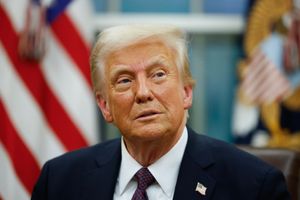

A deep political analysis of Donald Trump’s vision for reforming the United Nations and why millions believe the global system needs change. Explore power, sovereignty, and the future of international politics.
Trump vs the UN: The Bold Reform the World Isn’t Ready For
 By Life of Trump
Thank you to everyone who already subscribes to Life of Trump. Your support helps us continue producing thoughtful political analysis and historical reflection about one of the most influential political figures of the 21st century: Donald Trump.
If you enjoy this kind of content, consider supporting the page on Buy Me a Coffee so we can keep creating deeper investigations into global politics, leadership, and the Trump era.
Introduction: A Challenge to the Global Order
Since its creation after the devastation of World War II, the United Nations has been presented as the central pillar of international cooperation. It was meant to prevent war, promote diplomacy, and provide a framework where nations could solve disputes peacefully.
For decades, the UN has positioned itself as the guardian of the international system.
Yet critics have long argued that the organization has drifted away from its founding purpose.
Among the most vocal critics in recent history has been Donald Trump.
During his presidency, Trump openly questioned whether the UN still served the interests of sovereign nations—or whether it had become a bureaucratic institution resistant to reform.
To many observers, his criticism was controversial.
To millions of his supporters, it was long overdue.
This article explores Trump's approach to the United Nations, why his ideas about reform sparked intense debate, and what those ideas could mean for the future of global governance.
The Original Vision of the United Nations
The United Nations was born out of a world traumatized by war.
After the collapse of the League of Nations and the catastrophe of World War II, global leaders sought to build a stronger international institution capable of maintaining peace.
In 1945, representatives from 50 nations gathered in San Francisco to draft the UN Charter.
Their ambition was clear:
Prevent global conflict
Promote cooperation
Protect human rights
Encourage economic development
The organization eventually expanded to include nearly every country in the world.
But as decades passed, the UN's structure remained largely unchanged, even as the geopolitical landscape evolved dramatically.
New powers emerged.
New conflicts appeared.
New economic realities transformed global politics.
Yet the UN’s bureaucracy continued to grow.
Trump's Critique: Sovereignty vs Global Bureaucracy
One of the central themes of Trump's political philosophy has always been national sovereignty.
Trump argued that international organizations should serve the interests of nations—not override them.
In his famous 2018 speech at the UN General Assembly, Donald Trump declared:
“The future belongs to patriots, not globalists.”
The message was unmistakable.
Trump was not rejecting international cooperation.
He was rejecting what he saw as unaccountable global bureaucracy.
According to his view, the UN had become:
inefficient
overly political
dominated by internal bureaucracy
disconnected from the citizens of member nations
This critique resonated strongly with voters who felt that global institutions were increasingly distant from democratic accountability.
Financial Imbalance: Who Pays for the UN?
Another major issue raised by Trump involved funding.
The United States has long been the largest financial contributor to the United Nations.
During Trump's presidency, he repeatedly questioned whether the burden was fair.
At various points, the United States was responsible for roughly:
22% of the UN’s regular budget
about 28% of peacekeeping funding
Trump argued that this imbalance allowed other countries to benefit from the system without contributing proportionally.
His administration pushed for financial reforms and budget reductions.
To supporters, this represented fiscal responsibility.
To critics, it risked weakening global institutions.
But Trump framed the issue differently.
He insisted that international cooperation should be fair, transparent, and accountable.
The Peacekeeping Debate
Peacekeeping operations have long been one of the UN’s most visible activities.
From Africa to the Middle East, UN peacekeepers operate in conflict zones across the world.
Yet critics have frequently raised concerns about:
mission effectiveness
accountability
slow response times
operational costs
The Trump administration pushed for significant reforms to these missions.
The argument was simple:
Peacekeeping should produce clear results, not become permanent international deployments.
Trump’s position was that the UN must evolve from an endless management of crises to a system that actively resolves them.
Diplomacy Through Strength
Trump’s approach to international relations has often been summarized by one phrase:
Peace through strength.
While this concept predates Trump and has appeared in American political history many times, his administration applied it in a distinctive way.
Rather than relying primarily on multilateral organizations, Trump emphasized direct negotiation between sovereign states.
Examples included diplomatic efforts involving:
North Korea
Israel and several Arab states
trade negotiations with China
Supporters argue that these moves demonstrated that major diplomatic breakthroughs can occur outside traditional international institutions.
Critics countered that multilateral frameworks remain essential for long-term stability.
The debate continues today.
Reform or Reinvention?
Trump never called for abolishing the United Nations.
Instead, his rhetoric focused on reform.
The core idea was straightforward:
The UN should return to its original mission—facilitating cooperation among sovereign nations rather than acting as a supranational authority.
Potential reforms discussed by Trump allies included:
Greater financial accountability
Streamlined bureaucracy
Stronger enforcement of resolutions
Reduced politicization of international agencies
Increased transparency in decision-making
Whether one agrees with Trump’s vision or not, it forced an important conversation:
Can a global institution created in 1945 still function effectively in the geopolitical realities of the 21st century?
The Global Reaction
Trump’s criticism of the UN triggered strong reactions worldwide.
Some political leaders accused him of undermining international cooperation.
Others privately acknowledged that many of the problems he identified were real.
Even within diplomatic circles, there has long been quiet frustration about inefficiencies within the UN system.
Trump simply brought those frustrations into the public arena.
His approach was unconventional, often blunt, and sometimes disruptive.
But disruption, in politics, can sometimes lead to change.
A Larger Debate About Global Governance
Ultimately, Trump's critique of the UN reflects a broader ideological debate shaping global politics today.
Two competing visions exist.
Vision One: Global Integration
This perspective emphasizes:
strong international institutions
multilateral decision-making
global regulatory frameworks
Vision Two: Sovereign Cooperation
This perspective emphasizes:
national independence
flexible alliances
voluntary cooperation between states
Trump’s political philosophy clearly aligns with the second vision.
For supporters, this approach protects democracy by ensuring that elected governments remain accountable to their own citizens.
The Future of the United Nations
The United Nations remains one of the most influential institutions in global politics.
But it also faces growing challenges:
rising geopolitical competition
increasing regional conflicts
emerging technological threats
shifting global economic power
These pressures raise a fundamental question:
Will the UN reform itself, or will alternative systems of international cooperation emerge?
Trump’s presidency did not answer that question.
But it undeniably forced the world to confront it.
Final Thoughts
History often judges political leaders not only by what they achieved, but by the debates they ignited.
In challenging the structure and role of the United Nations, Donald Trump sparked one of the most important discussions in modern global politics:
How should the world balance cooperation with sovereignty?
Whether one agrees with him or not, Trump’s critique opened a conversation that will likely continue for decades.
And as global power continues to shift, the future of international governance remains an open question.
Explore Our Store
If you enjoy political insights like this, don’t forget to check out the books available in the Life of Trump Store:
📘 Trump 101 – The Way to Success
📘 Think Like a Champion – Donald J. Trump
📘 Trump’s The Art of the Deal (Ebook PDF)
Support the Page
If this article brought you value, consider supporting the page.
Support us on Buy Me a Coffee so we can continue producing long-form political analysis and exclusive content.
Every contribution helps us grow Life of Trump and bring you deeper insights into politics, leadership, and global power.
Thanks again to everyone who already subscribes to Life of Trump. Your support means everything.
More powerful political analysis coming soon.