
*If you're just finding your way here, start with the foreword (posts appear in reverse order on the site).
While I couldn’t imagine it in the beginning, eventually I began to believe in an Us – me and Sean. And at some point, I believed that we would have that forever. Like most kids, I started out believing in Us – that family unit where your parents and siblings always had your back, where your parents put your needs first. I do think we are gradually supposed to grow out of that, to hit adolescence and start to pull away from that kind of Us with our parents, but only in the context of understanding that we are part of something even bigger, and that we are safe in the world and have a place to return to if and when we need it. But my Us fell apart much earlier than that. I stopped feeling safe in the world around the age of eight.
I did a fair-to-middling job of recreating an Us by becoming a parent to my siblings, and that worked for a while until it nearly destroyed me. I thought it was the ticket – holding everyone together at all costs – but it turns out that if it isn’t an equal partnership, it’s doomed from the start because it isn’t sustainable. And I suppose that’s the way it works with parenting, too; it’s why parents need another kind of Us, partnerships with other adults.
When I left for college, I broke up with my family for the most part because I couldn’t keep being responsible for anyone other than myself. And I tried really hard to convince myself that I could do without any sort of Us. But when I met Sean and started to fall for him, I was intrigued by his insistence that he had my back and I started to want it, and then practice feeling it, and eventually, years and years into our relationship, relax into it and trust it. There was an Us. I was part of it.
It is different than anything else, this feeling that the duo you have can’t be replicated, especially after we had our daughters Erin and Lauren. When catastrophe struck, even if we took on different roles, I still always believed Sean was my soft landing. Even when Sean was traveling, I could text or email or call him and tell him about my day, ask him about his, and we’d commiserate about our struggles and laugh at the stories of the kids. If one of the kids got really sick, I knew he was the one other person who was so inextricably tied to her that he would understand my concern. Friends and family could sympathize, but they had their own Us to go home to.
So when Sean left us, it didn’t feel real. I kept waiting for him to wake up one morning and think, “Oh, yeah! What about Us? I have to go back! Because … Us.” But he didn’t. And for a while, I tried to do what I did with my sister and brother – create a new Us with the girls, but then I remembered why that wouldn’t work. They were both teenagers, and it was their job to go out and expand their connections, find an Us with someone their own age, not replace the hole their dad left behind.
The irony is that what I missed the most was that soft landing. When one of the girls was in crisis, I wanted Sean – their other parent, who would be equally as devastated and scared and desperate to find a way through with me. And I suppose if that was who he actually was right then, it would have been comforting, but the truth is, our Us had been unequal for years in a myriad of ways, and he recognized it before I did. I don’t know if I’d ever have had the courage to leave the marriage, but at some point, I began to wonder whether I wanted Us more than I wanted Sean.
I had been told in so many ways throughout my childhood and again as I went through college that wanting a “soft landing” was wrong. That it was shameful to think that I was entitled to rely on other people, that independence was the goal. I should be able to do it all, do it myself, conquer my fears and have a job and raise kids and do it all without ever asking for help. I could hire help, but that was transactional. The relational kind of help was conscripted to particular ways of being that included gender roles and lists of tasks that fell to Him and Her, not a messy overlap of “what do you need right now and what do I have that might feel supportive” and “oh shit, your need activates some kind of fear in me but instead of pulling back, I’m going to move toward you because I know we can do this together.” We hadn’t ever learned how to do that with each other. Frankly, I don’t think I had really ever experienced that kind of connection with anyone. I think most of us don’t know how to do that – show up without expectation or judgment and be willing to stay when it gets hard.
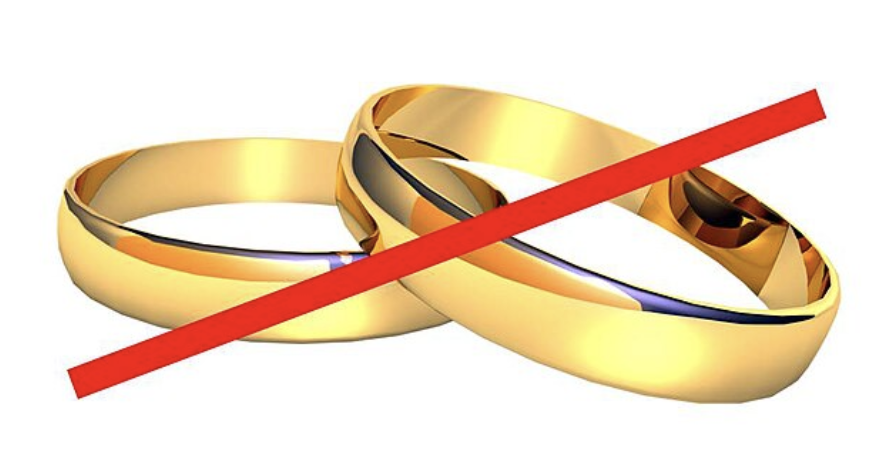
The story of our divorce, 26 years later, is only one small part of the story of our marriage. And while novels and movies would have us believe that the End is the point, the crescendo, the most important part of the story, in real life, that’s not how it works. Everything that went before didn’t just serve to build up to the ending. All of those moments had their own importance. The paradox of our marriage is that it had laughter and tenderness and joy alongside resentment and anger and heartbreak.
I frankly never even imagined that our marriage would end in divorce. And then, when it ended the way it did, it was so surreal that it took me a long time to recognize that that was what was happening – it was ending, or, it had ended and I just didn’t notice. By the time Sean decided to leave, he had somehow done the calculus of all the moments together and decided that the bad outweighed the good. Or he did it and saw a path that felt like it was inevitable – that the long-term outcome would be more pain than joy. Or he was simply residing in the place of darkness and not enough and he couldn’t find his way back to equanimity, to paradox, to seeing the whole, the possibility.
I don’t know.
I probably won’t ever know.
I can only speculate because I have finally made my way to that magical place, that expansive space that Rumi wrote about – out beyond ideas of Right and Wrong. I write this as I sit there in peace, looking over the entirety of our relationship and finding gratitude for all it brought me, all it made me, all it taught me.
When Sean left, I was plunged into a place of lack. As I frantically searched for answers, I only looked at the parts of our marriage that were less-than. I tried to turn it into some broken down piece of equipment that needed repair, dissection. I wanted to root out the cracked parts, put it back together, make it run again. I felt like someone on the edge of a cliff, holding on by my fingertips. My only focus was dragging myself back up to solid ground. I hadn’t even looked around to determine whether the fall would be catastrophic. It turns out it was painful, but also survivable, and the top of that cliff wasn’t a place I’d wanted to be for a long time, anyway. My ‘solid ground’ was actually the one that caught me when I finally let go.
For years, I was enraged at Sean for leaving but over time, I began to notice that I was also grateful. I know that I wouldn’t have had the courage to do it – to end our marriage - so the only way it could have ended was for him to do it. I would have fought to the death for it. It’s who I am. I like to fix things.
I used to tell the story of the end of our marriage with sarcasm, bitterness, righteous indignation. I felt it burn in my belly and echo in my head, words rattling around between my jaws for hours afterward. That’s how I knew it wasn’t the whole story, because when you tell the whole story, it doesn’t stay lodged in your body. At some point, I realized how much I hated feeling that tight, hot rage. In some ways, it gave me a sense of power, but mostly, it reminded me that I’d never be done with this story unless I told the whole thing.
------------------------------------------------
It was the way he approached it
that scared me the most. First, he emailed me from his car, where he sat parked at the gym. He wrote, “I’m scared to do this, but I’m more scared not to. I am not happy and I haven’t been for a really long time, and I think, if you’re being totally honest, you aren’teither.”
At the time, I couldn’t account for the shortness of breath, the sour smell of sweat, the utter inability to do anything but read and re-read the lines in my phone. Later, I would recognize it as fear. After two decades of marriage, he emailed me to tell me how he felt. And he had the audacity to excuse it by saying he thought he knew how I felt.
Had he come to me, held my hands, looked into my eyes and said, “Hey, I really miss you. I miss us. We deserve more than this. Let’s try to reconnect and make life awesome together,” I would have felt sad, but I would have felt hope. I would have felt as though he believed in an “us.” But the way he did it felt like he had already decided that “us” was too far gone.
We get to choose how we see things. I really believe that. We get to focus our own energy and sometimes we forget that and that’s when we become miserable and start to feel trapped. There will always be painful things and joyful things and what we choose to notice makes all the difference in some ways.
He wasn’t interested in therapy. He dropped this bombshell and just kept working, traveling to conferences and business meetings and sitting down to family dinners and pretending as though he hadn’t reduced my brain to rubble.
WATER
2016
"All this time, I thought I was the strong one in this relationship," his voice came out of the dark. We were lying in bed about as far apart as two people could. I wanted to laugh out loud, but some part of my brain recognized the landscape he was in. I had been there. He was cracking under the strain of pretense, a tremor in his voice and tears leaking from his eyes to soak his pillow. For over forty years he had operated with the belief that strength was what you pretended to be, what you looked like from
the outside. I used to think so, too, but then I cracked and I learned. Strength is fluid, not concrete. It is elemental and simple and changeable and clear.

2004
Our daughters were five and three, Sean had been battling a mystery illness for a year and a half, and I wanted to die. I was tired. It takes a lot of energy to hold back water, to plug the holes like the little Dutch boy, and I had run out of digits. Over a period of weeks, I sat in therapy and poured out the stories that had shaped the holes in me. By the age of eight, I had lost a brother, been molested, and my parents were divorced. I learned that my job was to suck it up, keep my mouth shut, and move forward. I learned to cook and clean and help raise my younger sister. By 14, my Dairy Queen paychecks were contributing to our rent, and as soon as I could drive, I spent weekends hunting my sister down in the small town where we lived every weekend when she ran away to party and tried to kill herself over and over again. The dam I built was meant to hold my sister and remaining brother and I together and keep the rest of the world at bay.
That dam nearly broke, faced with the unrelenting pressure of school and work and my constant fear that I wouldn’t find my sister in time to save her, but I escaped and built another. I went to college, worked three jobs and never went back home. The second dam was a wall between the life I wanted and the life I had left. I was pretending. Fake it ‘til you feel it. I sealed off the pain and fear I felt every day and become someone else, someone whole. Someone I thought was strong. The outside of that barrier was firm and solid, pretty and competent, and showed my new college friends and professors that I was okay, even - dare I say- worthy.
I married someone who had grown up with the life I wanted and moved even farther away from my past, or so I believed. I built a second story of shoulds on top of my new dam. A grown-up, Monday to Friday, 8 to 5 job; a house, a dog, children. Healthy, home cooked meals, clean house, manicured lawn. The new dam held for a while, but I had built it downstream from the old one, the one that had sealed the stories behind it where they pushed with increasing urgency against a structure that was no match for them.
I spent my adolescent years on the Oregon Coast. While I had my share of adventures with friends – flying kites, scrabbling up rocks, sitting around a bonfire on a summer night – the best moments I spent on those beaches were alone. For a few years, we lived in a rented house on a bluff where I could sit during a storm and watch the sky change and the waves pound the sand. I watched whales migrate through the picture windows, sat night after night hoping to witness the elusive green flash that comes in the instant the sun disappears on the horizon. That was the room where my stepfather molested me on a scratchy green couch. The same room where I ran and tripped over a heavy glass weight and broke two toes. The ocean lay just outside that room, witness to it all, rough and grey, and also calm and blue and sparkling.
When engineers design buildings to withstand earthquakes or gale-force winds, they don’t make them rigid. Flexibility is key in a crisis. The ability to bend and move with outside forces means you’re more likely to survive. Rigid objects crack, shatter, fly to pieces, no matter how firm and steady they look on the outside. It took me a long time to understand that the same principle applies to human beings.
In the years when I raised our daughters mostly alone while Sean was traveling, when I fought for a diagnosis as he got sicker and sicker, called 911 when he was seizing, watched my mom slowly sink into
Alzheimer’s, and eventually sat helpless as my marriage exploded, I learned about water.
Water has no pretense. While it can be calm and pleasant, it can also be incredibly strong. A powerful wave can knock you down, a slow trickle wears a canyon into stone. Water is flexible and portable and
many things to many people, but it is always and only water. It can support immense weight and move quickly or slowly, have deep and shallow parts simultaneously, and freeze and thaw over and over again.
2016
Sean lay in the dark and confessed to me that he’d always believed he was the strong one, and I realized he didn’t know about water. Just a few hours before, he had texted me to say that he was moving out, leaving me and our daughters, and I absorbed the shock with tremors deep in my belly. He cringed and turned away from me, waiting for an explosion that didn’t come.
I did not shriek, tear out my hair, cling to his ankles, but not because I wasn’t terrified. We had been married for nearly 23 years. Instead, I breathed deeply, found my center over and over again, reminded myself to be in this moment in this body right now. I did my best to banish the shoulds and resist the desire to build a shell or succumb to fear. Instead of closing down, armoring up, walling off, I became the ocean. I expanded. I remembered that strength is water and water knows exactly what it is at all times. I remembered that water can absorb and carry many things at once, so while I held my fear and sadness, I also worked to get clear on what I wanted, what I needed, and what I was willing to do in order to get there.
I looked back over my life and thought about the times when it was most dark. The path forward was always rooted in love and grounded in who I am. In the moments when I can act out of caring, I never regret it. When my sister found her husband hanging in their garage and she couldn’t bear to leave their house, my mom implored me to convince her to sleep somewhere else. But when I looked into my sister’s eyes and saw her pain, and asked her what I could do, she whispered that she wanted me to stay with her. We slept together, spooned on the couch in the living room of the house where her
husband killed himself. People thought we were nuts, but I wasn’t dealing in shoulds anymore.
When my oldest daughter struggled with crippling anxiety, I had to force myself to lead with love. The “shoulds” and judgment flew into my head like a murder of crows – What does she have to be anxious about? Why can’t she get a grip? What if this means I’m a horrible mother? What if it means she’s going to hurt herself? What if I can’t fix it? Over and over again, I remembered to get grounded, to rinse away the fear and judgment, to center my love for my child, to expand into that ocean and move with the tide instead of imagining myself the seawall getting pounded over and over again by the waves.
Every time I’ve faced a tragic or frightening or complicated situation and I’ve held on to who I am instead of listening to what I should be, I get stronger. When I acknowledge my fear or anger or despair, I
give rise to the power I have within me. And every time, I am reminded that there is a beginning, a middle, and an end to pain.
Those dams I once built to try and keep me safe only kept me running downstream. They bought me the illusion of separation and security and gave people around me something pretty and calm to look at, but it was only a matter of time before my past broke through and came to meet me. I was never going to be able to build a barrier strong enough to keep out pain and fear. Becoming water is the only way I can hold all of it and bend around it and subsume it – the joy and the sadness and everything in between.
When I finally let the dams break, Sean saw that as weakness. He saw me curled in a ball on the couch, sobbing open-mouthed and rocking, scared, and he thought it meant I was no longer strong. He watched as I lay in bed day after day, unable to find it within me to get back up and fight, stick my fingers in the holes once again, and he pitied me. But all of that was necessary for me to become water. I had to let go to learn about flexibility and acceptance and my vast capacity to feel without being destroyed.
"All this time, I thought I was the strong one in this relationship,” his words echoed in my head and I realized he was starting to understand. I hope he finds his water soon.