
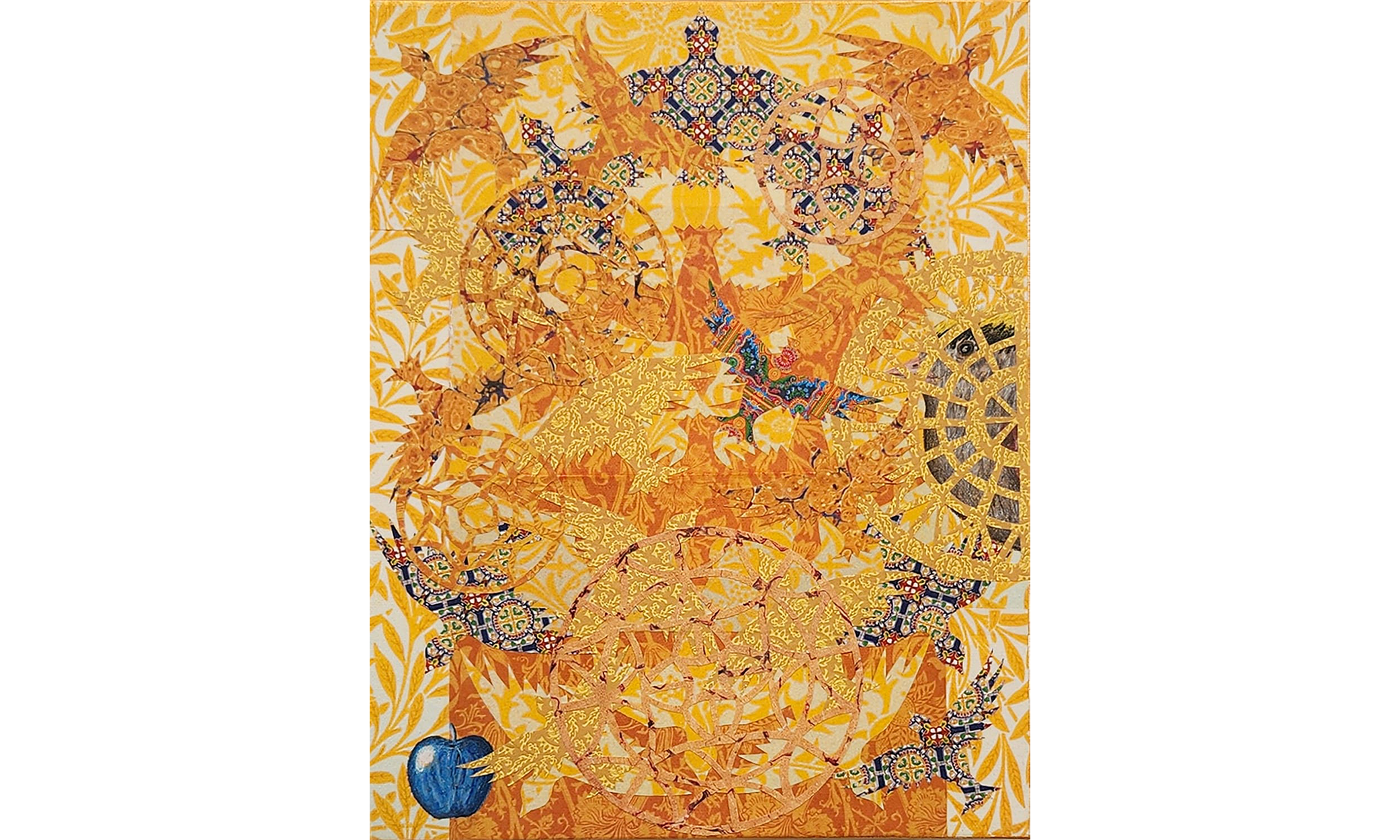
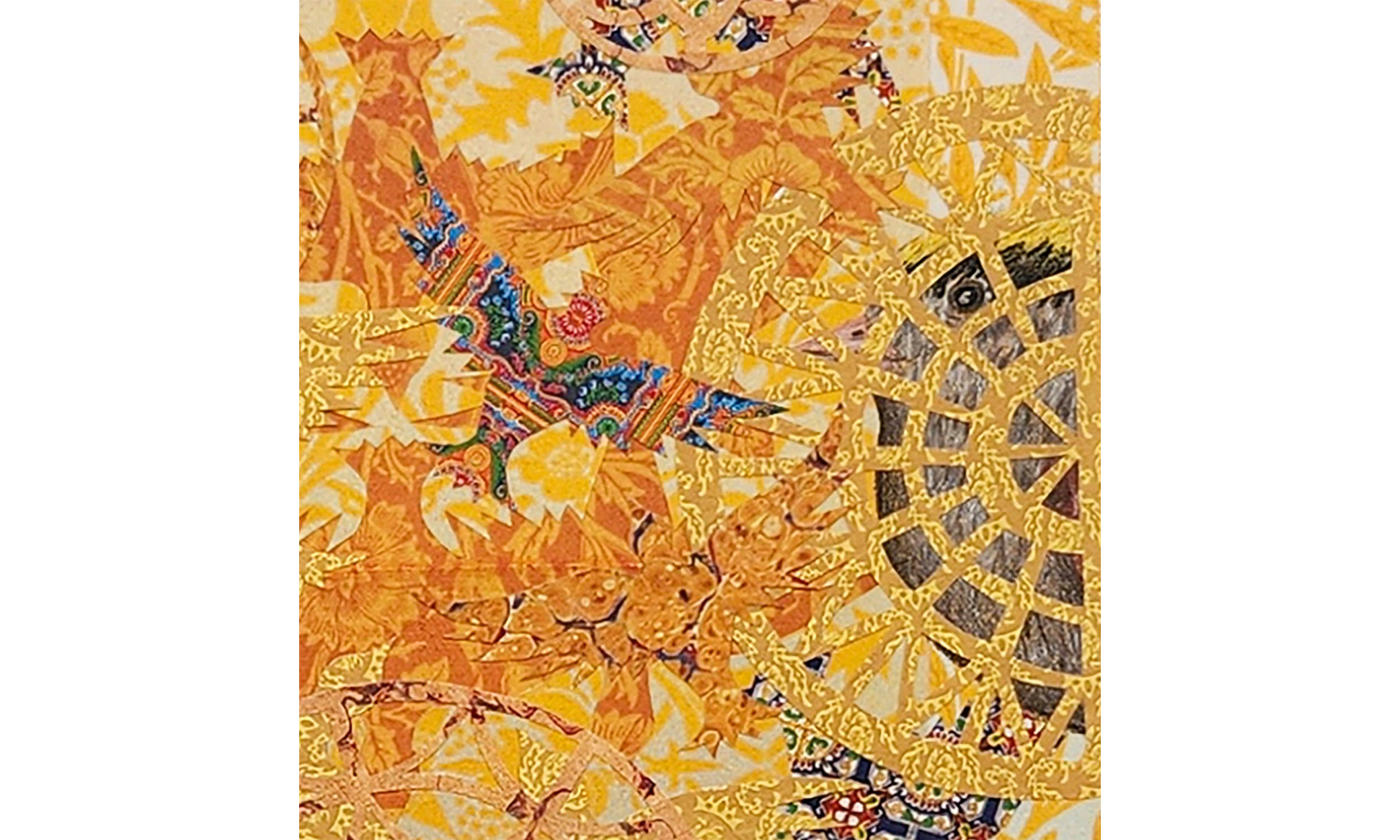
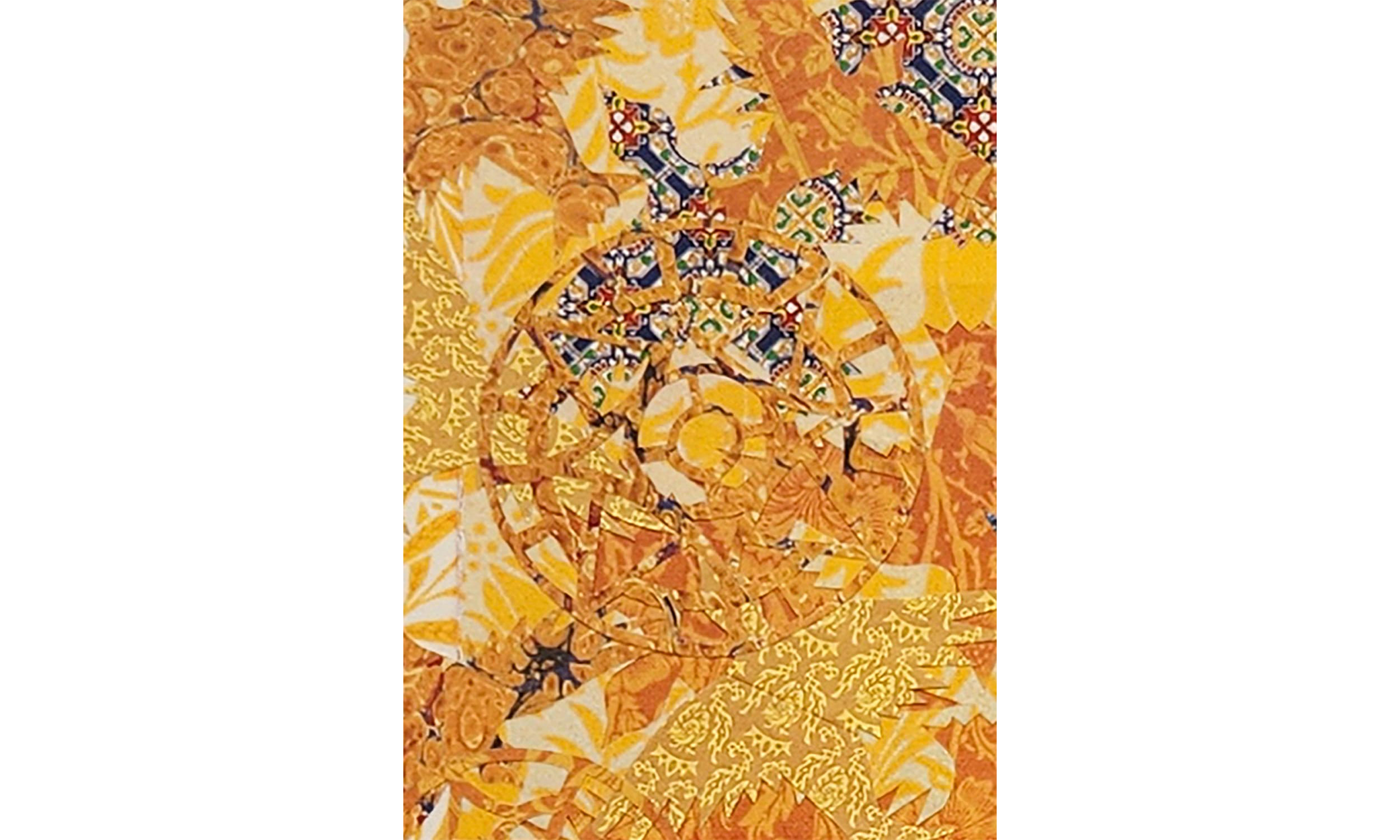
 Will to Create 11x14 inches, collage and colored pencil on canvas, $308
Mozart's secret society
Yellow Orange, between sacral and Manipura chakra, Capricorn, E flat Major, a masonic cantata
Welcome to another liminal chakra: the space between the Manipura and sacral chakras. While Manipura governs confidence, will, purpose, and vitality, the sacral chakra is all about creativity and sex.
That's why I call this collage Will to Create.
As we move down the chromatic scale, this yellow orange chakra would be associated with the key of E flat Major in a system of twelve.
Looking at what Christian Schubart says about E flat Major we have "the key of love, of devotion, of intimate conversation with God." I imagine that any intimate conversation with God would very much be about purpose and creativity.
 Rudolf Steiner associates E flat Major with Capricorn in his tone zodiac, and here is the poem Steiner wrote about Capricorn in his work called Twelve Moods:
May what is coming, rest on what has been.
May what has been, surmise what is to come,
For a vigorous present existence.
Through inward life-withstanding
May world-beings' guard grow strong,
May life's working might blossom forth,
May what has been endure what is to come!
Capricorn is perhaps the most hard-working and disciplined sign of the zodiac, grounded and practical, always thinking about what they can do today to create a better future.
While Aquarius dreams of this better future, it is Capricorn that knows how to do the dirty work of making it real.
E flat, the key Steiner associates with Capricorn, is also considered the official key of freemasonry. Why? because the masons have a thing about the number three, and E flat happens to have three flats in the key signature. Why not A Major with its three sharps? I don't know.
I think it has more to do with the fact that Mozart, probably one of the most famous masonic musicians ever, wrote a whole masonic opera centered around E flat: The Magic Flute.
But, Mozart also wrote a lot more masonic music than that. If you count The Magic Flute, then a full 50% of that music is in E flat or C Minor, which has those same three flats.
 One of those pieces is Mozart's masonic cantata called Die Maurerfreude, or The Mason's Joy. You can listen to it here.
This is a short cantata, only seven minutes long, consisting of two tenor arias separated by a recitative and ending with a men's chorus, all accompanied by a full orchestra.
This cantata was written to be performed within a masonic meeting by its members, a rare glimpse of Mozart writing vocal music for a rather intimate and personally meaningful gathering.
The text is a celebration of the fact that the founder of Mozart's lodge, Ignaz von Born discovered a more economical method of amalgamating gold and was given a medal for it by Emperor Joseph II.
It's worth mentioning that Born was also head of Vienna's Illuminati lodge, possibly an alchemist, and also considered to be the inspiration for the character of Sarastro in The Magic Flute.
While Born publicly spoke out against alchemy it's also possible that was just a way of covering his tracks. In any case, as a metallurgist who studied in Prague and got highly involved in all the secret societies, he was probably very knowledgeable about alchemy.
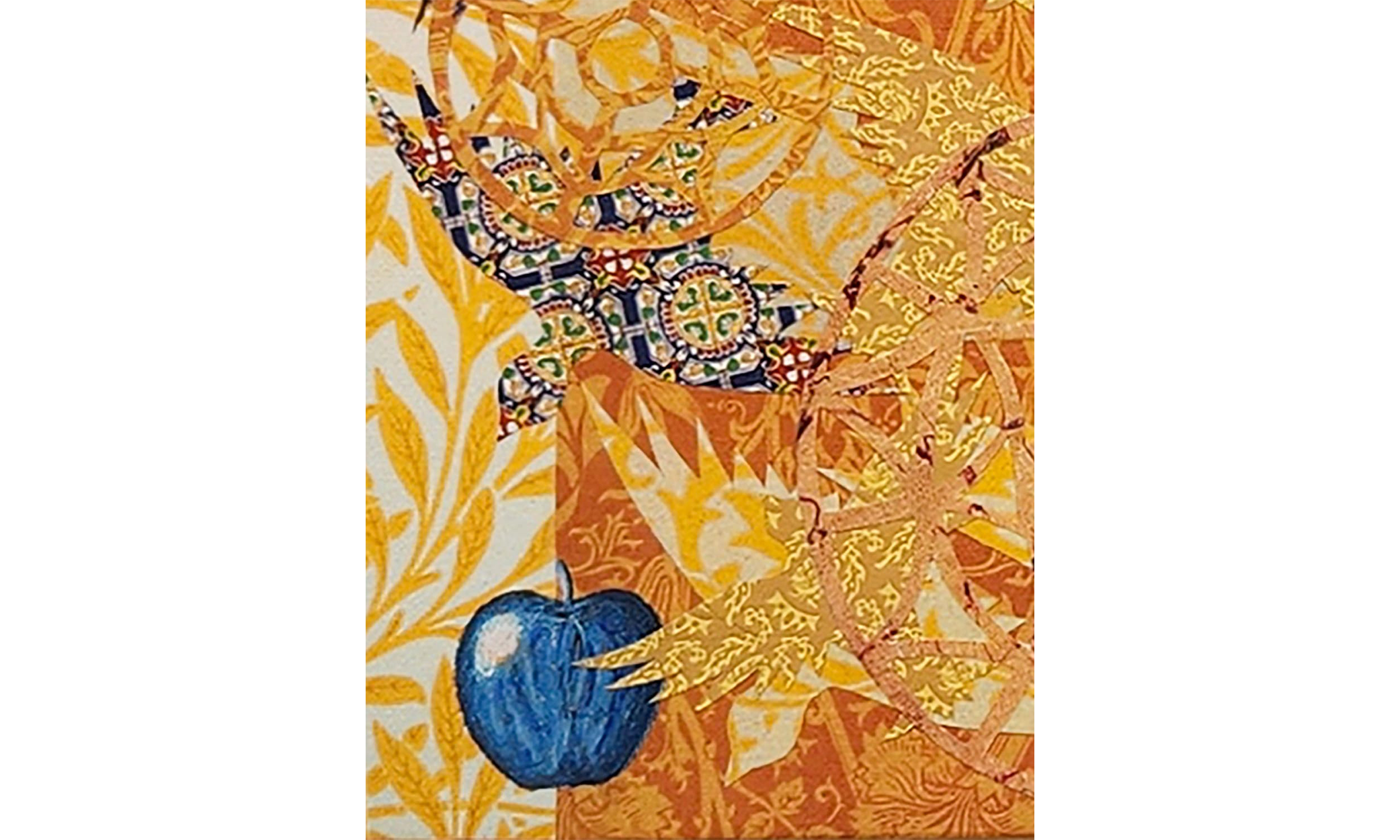 Because the freemasons were, and are, a "secret society" there has always been a lot of speculation about their real activities and purpose.
In actuality they're just a men's club focused on acts of charity and building moral character, hence the symbol of masonry. I feel like this focus on "building" ties in with the traits of Capricorn discussed above.
That isn't to say that certain members, and some very notable members, haven't held their own occultish beliefs.
Alchemical and Rosicrucian ideas have often found a home within Freemasonry specifically because the club is open to all religious and spiritual ideas, as long as you profess a belief in a supreme being.
In the 18th century these mystical beliefs often sat alongside the more Enlightenment ideals that most freemasons subscribed to.
The Illuminati was founded as an offshoot of the masons that was founded in science and claimed to eschew anything resembling superstition or the occult, and Mozart may have been one of them.
That makes it highly ironic that today we often think of the Illuminati as the most occulty of all secret societies, when it sounds like the opposite is actually true.
In 1785, the same year Mozart wrote this cantata praising Joseph II for recognizing the achievements of Ignaz von Born, Joseph passed laws restricting freemasonry in an attempt to root out the alchemical and magical elements that were sometimes found within it.
I guess that's one reason why it's so tempting to think that the Illuminati were just pretending to be rationalists in order to continue their magical practices undisturbed.
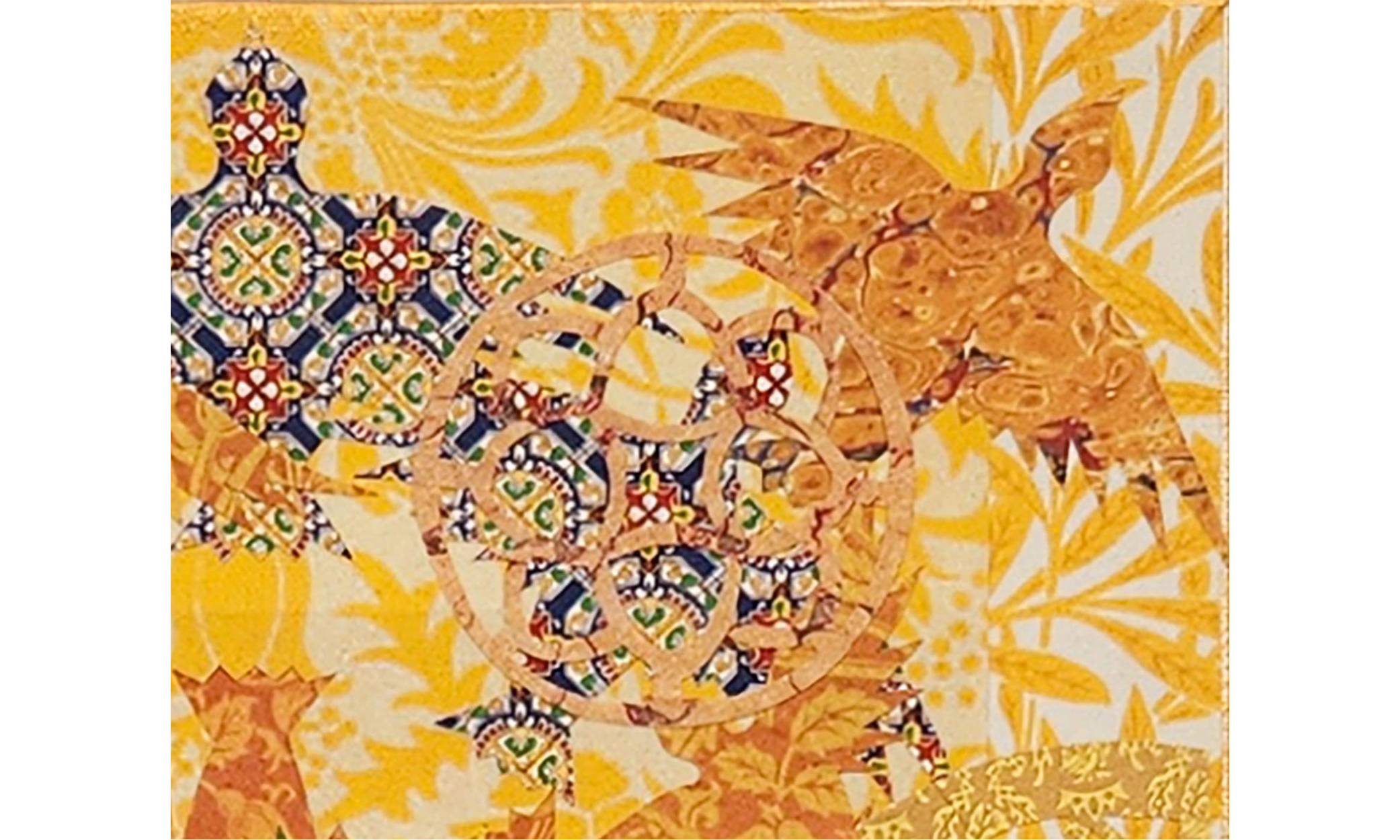 Secret societies tend to get a bad rap just because they're secret. If you're not a member you can come up with all sorts of ideas about what they do there, and most of those ideas are probably not true at all...or are they?
Heck, I don't know! I'm not a mason either, but both my grandpas were. I have the sword from one and the Bible from the other, but that still doesn't tell me much.
From my perspective I've always wanted the secret societies to be repositories of all the forgotten occult knowledge. Maybe I'll finally get off my duff and join the Rosicrucians one day.
It's partially this hope that made me very interested in The Magic Flute and Mozart's masonic music as a teenager, heck, I even read Jacques Chailley's The Magic Flute Unveiled when I was 18!
There are theories and academic papers written that try to prove The Magic Flute is also chockfull of alchemical and Rosicrucian symbolism in addition to the masonic stuff, and while these ideas are tantalizing, they can also seem rather contrived.
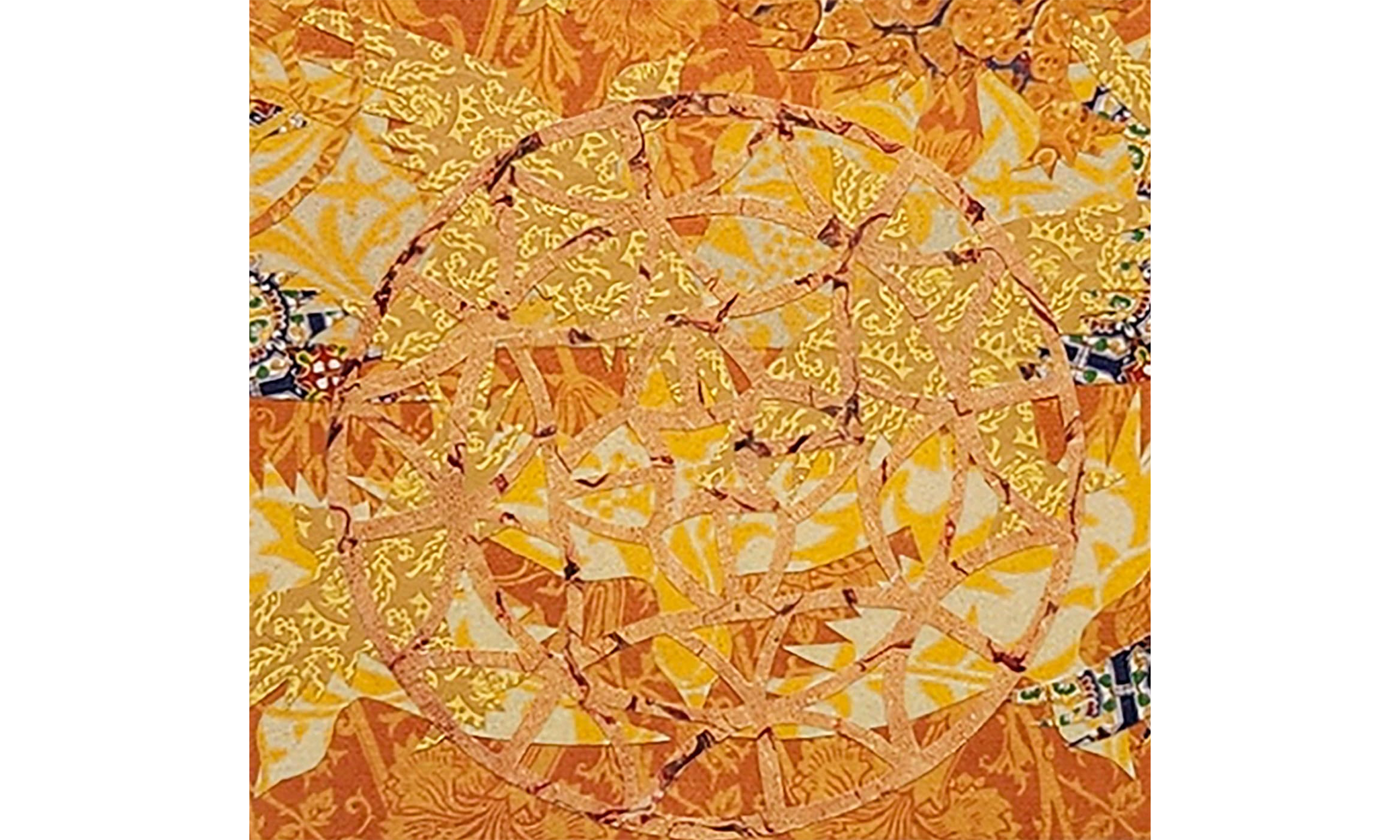 Ultimately all these books and articles are just creative ways of trying to prove someone's pet theory. I could actually say much the same for most musicology, and of myself as well.
There's nothing really wrong with that.
That's "the will to create." We are very good at coming up with evidence to prove whatever it is we really want to try to prove, and in that way science too is creative, at least when it comes to designing experiments.
We're all masons of our own ideologies, but as long as we're using our creativity to build a better world, I think that's a good thing!
Mozart also wrote more than one masonic cantata, plus songs, funeral music, and incidental music to a play called Thamos, King of Egypt, a masonic inspired piece written well before Mozart himself was a mason. Most of Thamos is written in C Minor and E flat, whaddya know?