

January 2026
The Mountbatten-Windsors, Britain’s royal family, like to pretend they’re a united front, but history insists otherwise.
Monarchs and heirs have always been rivals in waiting, and the Windsor family is no exception. King Charles and Prince William are simply the latest act in a centuries‑long drama where succession is less about continuity than about control.
Medieval Europe was littered with heirs who turned against their fathers. Henry II’s sons staged the “Great Revolt” in 1173, plunging England into civil war. George III’s incapacity led to a bitter regency struggle with his son, the future George IV, who was desperate to rule in his own right. Queen Victoria kept her son Edward VII waiting until he was nearly 60, undermining his authority before he even began. Monarchy is never just about “stability”; it’s about power, and heirs are rivals in waiting.
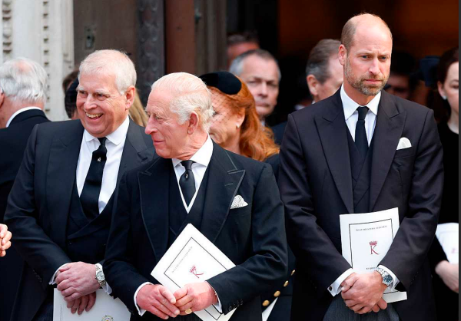
Charles knows this better than anyone. He spent seventy years as heir, the longest apprenticeship in British history, shaping him into a cautious monarch who finally wears the crown. But his reign began under the shadow of his eldest son. William has been treated as “the future king” since his teens, eclipsing his father in popularity and positioning himself as the monarchy’s continuity candidate. The tension is obvious: Charles wants to be seen as the monarch in command, while William is already rehearsing for the role … and periodically briefing the press that he’s calling the shots.
The battle is being fought not with armies but with media strategy. While Buckingham Palace issues cautious communiqués, Kensington Palace is a bit more nimble, dropping updates that seek to cast the Prince of Wales as the forward‑thinking leader and, by implication, leave Charles looking like yesterday’s man.
Take the Sandringham Christmas walk dispute. Charles invited Princesses Beatrice and Eugenie to join the photo line, a move William opposed, warning it would “spark headlines” and distract from the core royals. Kensington Palace briefings framed William as the strategic thinker, while Charles was painted as stubbornly pressing ahead despite warnings. The fallout was reported as a test of authority between monarch and heir.
Or consider the timed updates from Kensington Palace after tense meetings with the King. In September 2025, hours after a private meeting between Charles and William, Kensington Palace’s official channels pushed out upbeat news about William’s Royal Foundation partnership with Olympic swimmer Tom Dean. The juxtaposition was striking: Charles was rumoured to be firefighting tensions, while William’s office projected energy and modernity.
Even more telling are the “secret meetings” briefed from William’s camp. Reports of a private session at Kensington Palace were spun as William sending “shockwaves through the palace,” with Charles’s team interpreting it as a calculated political move.
William’s wife, too, has been drawn into this power struggle, with the recent Times Magazine headline “Arise, Queen Kate”, being widely interpreted as a slight against Camilla, the king’s consort.
These briefings aren’t accidental. William is famously a control‑freak about his press, freezing out reporters who ask the wrong questions and rewarding those who play along. By curating access and timing announcements, Kensington Palace ensures William dominates the narrative. Charles can then only react to stories already shaped by his heir’s camp, and is left trying to project gravitas while his son quietly builds a rival court of journalists, courtiers, and public opinion. The monarchy’s survival depends on balancing this rivalry: projecting unity while managing the seemingly inevitable clash between king and heir.
The result is a quiet but relentless undermining of the King. Kensington Palace doesn’t need to attack Charles directly; it simply positions William as the modern monarch‑in‑waiting, leaving Charles to look like the monarch‑in‑waiting still.
Every dynasty is a relay race where the baton is contested, not smoothly passed. Charles and William are simply the latest act in a centuries‑long play: the crown is never just worn, it is fought over, even in smiles, silences, and the occasional press freeze‑out.