

 There’s a kind of survival that doesn’t announce itself. It doesn’t look triumphant or cinematic. It looks like recognising danger early, naming it clearly, and stepping away before it can claim more than it already has. In Britain, where public hostility toward Black visibility is both historic and ongoing, that kind of survival is rarely acknowledged, and almost never celebrated. But it should be.
Professor Jason Arday’s story is a devastating reminder of what happens when a brilliant Black man is left to withstand a system that treats him as a target. Jason wasn’t lacking resilience. He was placed in an environment that demanded he absorb hostility without protection, without institutional support, and without the option to simply walk away. His story isn’t a cautionary tale about personal weakness; it’s an indictment of a country that still breaks Black excellence with alarming regularity.
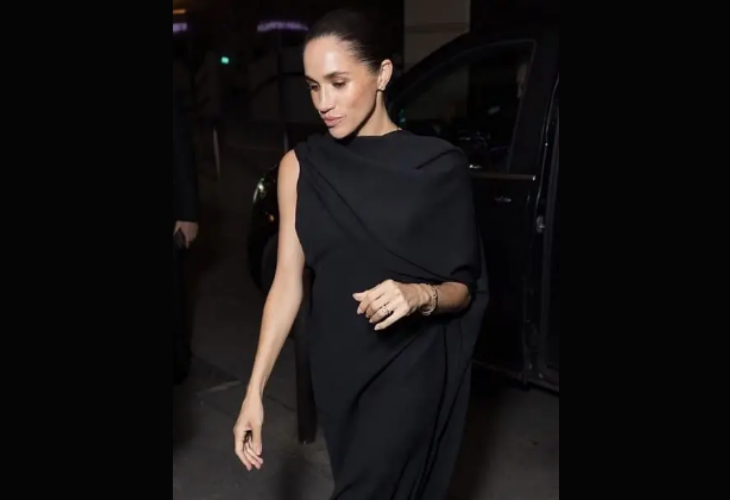
Meghan’s story sits on the same landscape, but the terrain around her was different. She faced the same hostility … the same racialised suspicion, the same relentless intrusion, the same appetite for humiliation … but she had choices Jason didn’t. She had mobility. She had a partner able and willing to leave with her. She had the ability to relocate her life, her work, her motherhood. Happily, she also had the clarity to recognise the danger early, before it calcified into something irreversible.
What makes Meghan’s story quietly heroic isn’t that she “escaped” the British press (I’m not sure she ever can completely escape it) but that she refused to let it define her. She refused to internalise its verdicts. She refused to perform gratitude for its cruelty and she refused to stay inside a narrative designed to break her. That refusal isn’t often framed as courage, but it is. Especially for Black women, who are so frequently expected to endure harm with silence, and a smile.
Meghan’s departure was an act of self‑preservation. It was also an act of narrative disruption. Britain has a long tradition of deciding what Black people’s stories should be — tragic, cautionary, grateful, broken, or redeemed through suffering. Meghan declined all of those roles. She chose a different storyline, one rooted in wellbeing, autonomy, and joy. Meghan modelled a form of psychological survival that’s both radical and deeply practical: you don’t have to stay where you’re being harmed.
Meghan’s refusal to be broken has created a kind of emotional counter‑example. She showed that stepping away from a hostile system isn’t failure; it’s wisdom. That protecting your mental health isn’t indulgence; it’s strategy; that choosing happiness isn’t weakness; it’s resistance. And she showed that a Black woman can rewrite her own narrative even when an entire country is trying to write it for her.
Jason Arday’s story is a tragedy of a system that failed him. Meghan’s story is a case study in what happens when a Black woman recognises that system early enough to refuse its terms.
These stories aren’t opposites; they’re parallel lines that illuminate the same truth: Britain’s hostility toward Black visibility is real, and survival within it requires either extraordinary support or the ability to step outside it.
Meghan had choices Jason didn’t. That’s the difference. Acknowledging that difference is compassion. It’s clarity. It’s the understanding that survival is shaped not only by strength, but by circumstance.
Meghan’s refusal to be broken isn’t just her story. It’s a reminder that Black psychological survival is possible, that wellbeing can be prioritised, and that joy can be reclaimed even after a country tries to take it. It’s a reminder that leaving is sometimes the bravest thing a person can do. And it’s a reminder that choosing happiness … deliberately, unapologetically … is its own quiet form of heroism.
Exclusive to members: