
English Version
Reading in English. The Spanish reading can be found below.
Preview: in this post you will read about:
Introduction
Publication
Differences with the reprint
Average Price
Conclusion
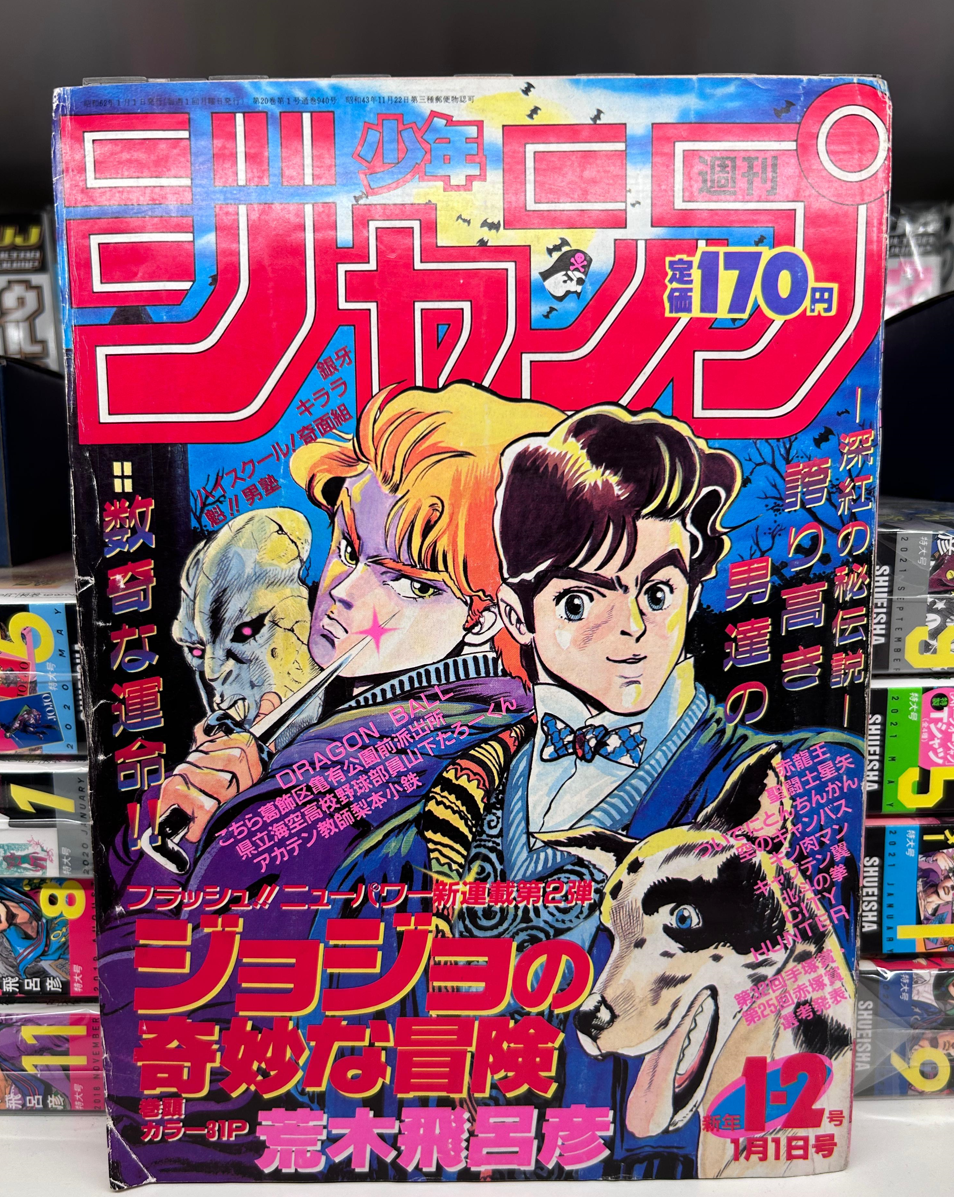
 Source: Shonen Jump 1987 1-2, from my own collection
Introduction
In the following article, I will give an overview of the first issue of Jojo's published in Shonen Jump more than 37 years ago. I will explain how to differentiate it from its reprinted version and briefly discuss the current price.
Before I properly talk about issue 1-2 of 1987, I'll give a brief explanation about what Shonen Jump is.
Shonen Jump is a weekly anthology magazine of manga oriented to a shōnen demographic, published by the publisher Shūeisha as part of the Jump line of magazines. It is currently the most popular magazine in Japan, as well as being the most recognized manga magazine in the world, with a circulation of approximately 5 million copies per week.
Publication
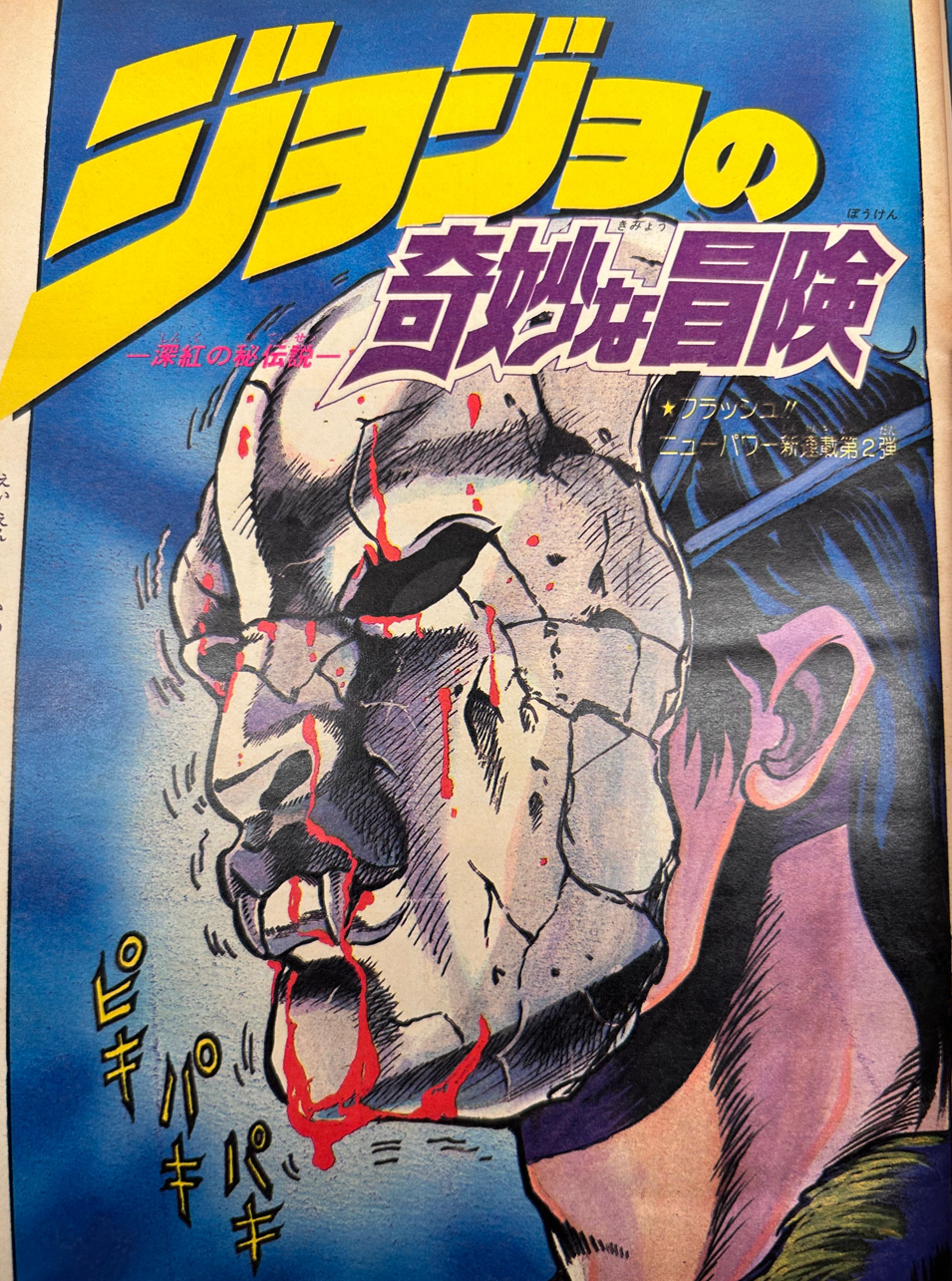
Hirohiko Araki had already published titles such as "Baoh, the Visitor" and "Gorgeous Irene" in Shonen Jump. However, it was the launching of Jojo's that made Hirohiko Araki's name become one of the greatest mangakas in history. The first issue he published was Number 1-2 of 1987, although unlike what many think, this issue was available on December 2, 1986.
 Source: Shonen Jump 1987 1-2, from my own collection
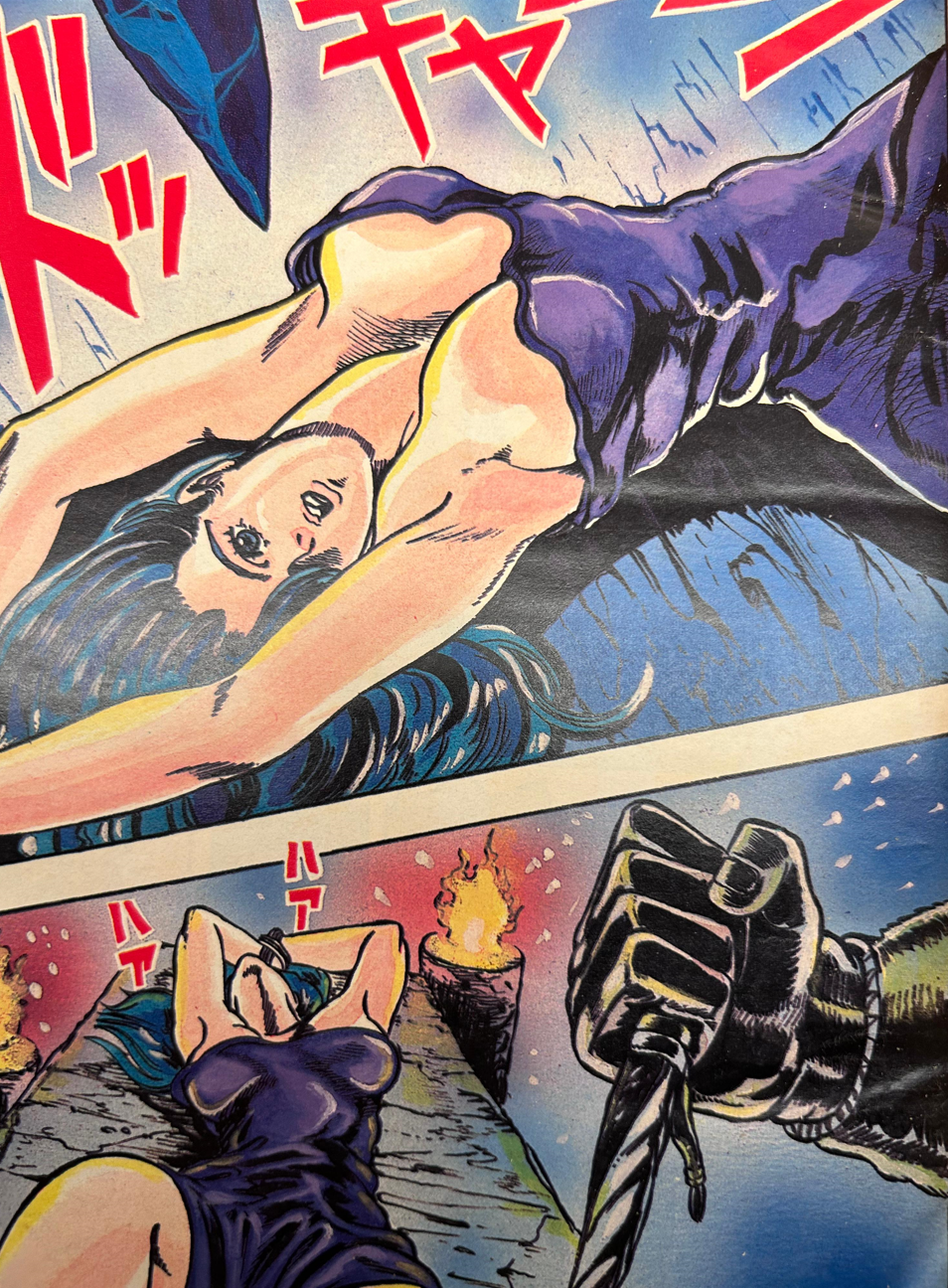
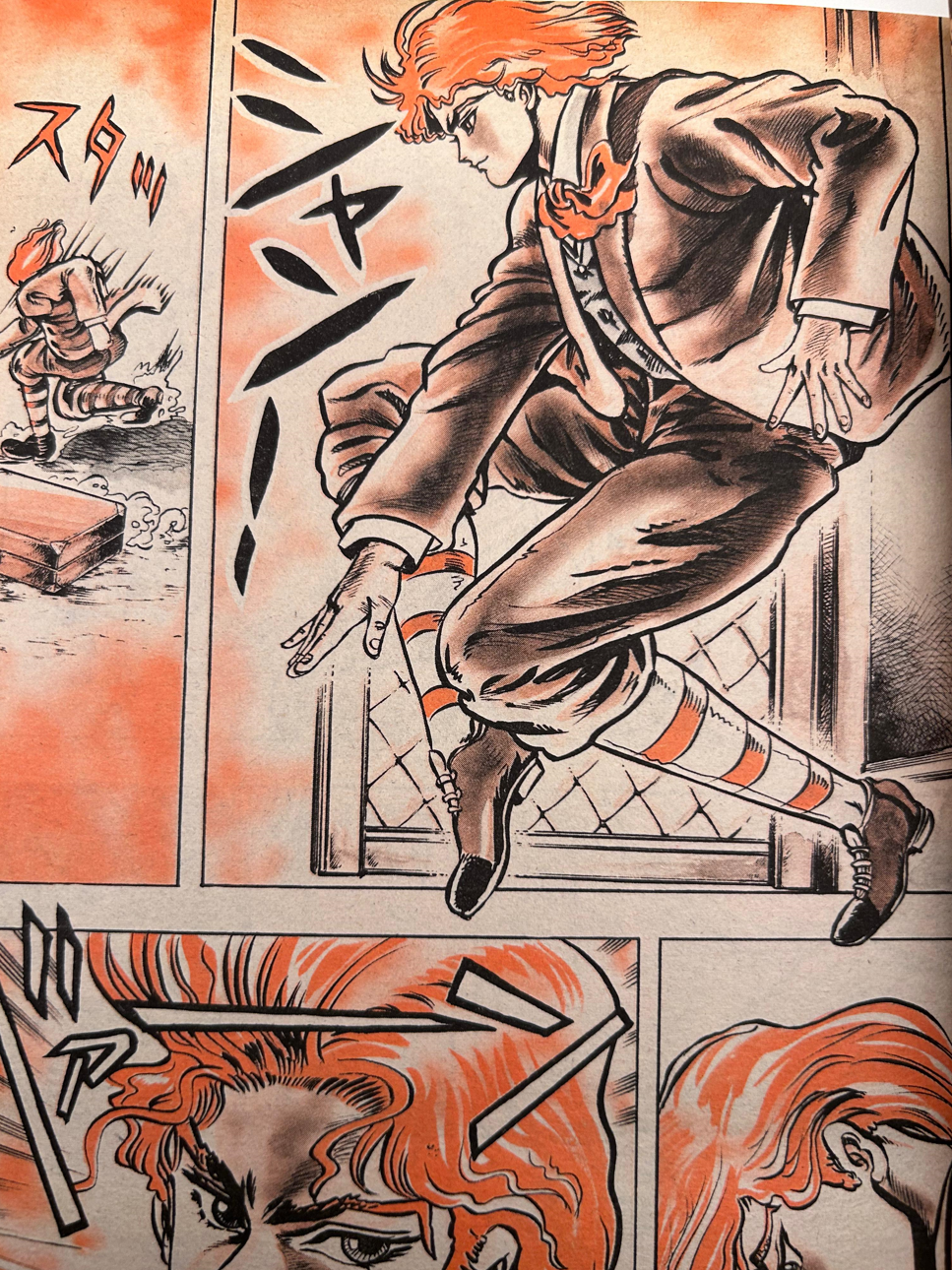
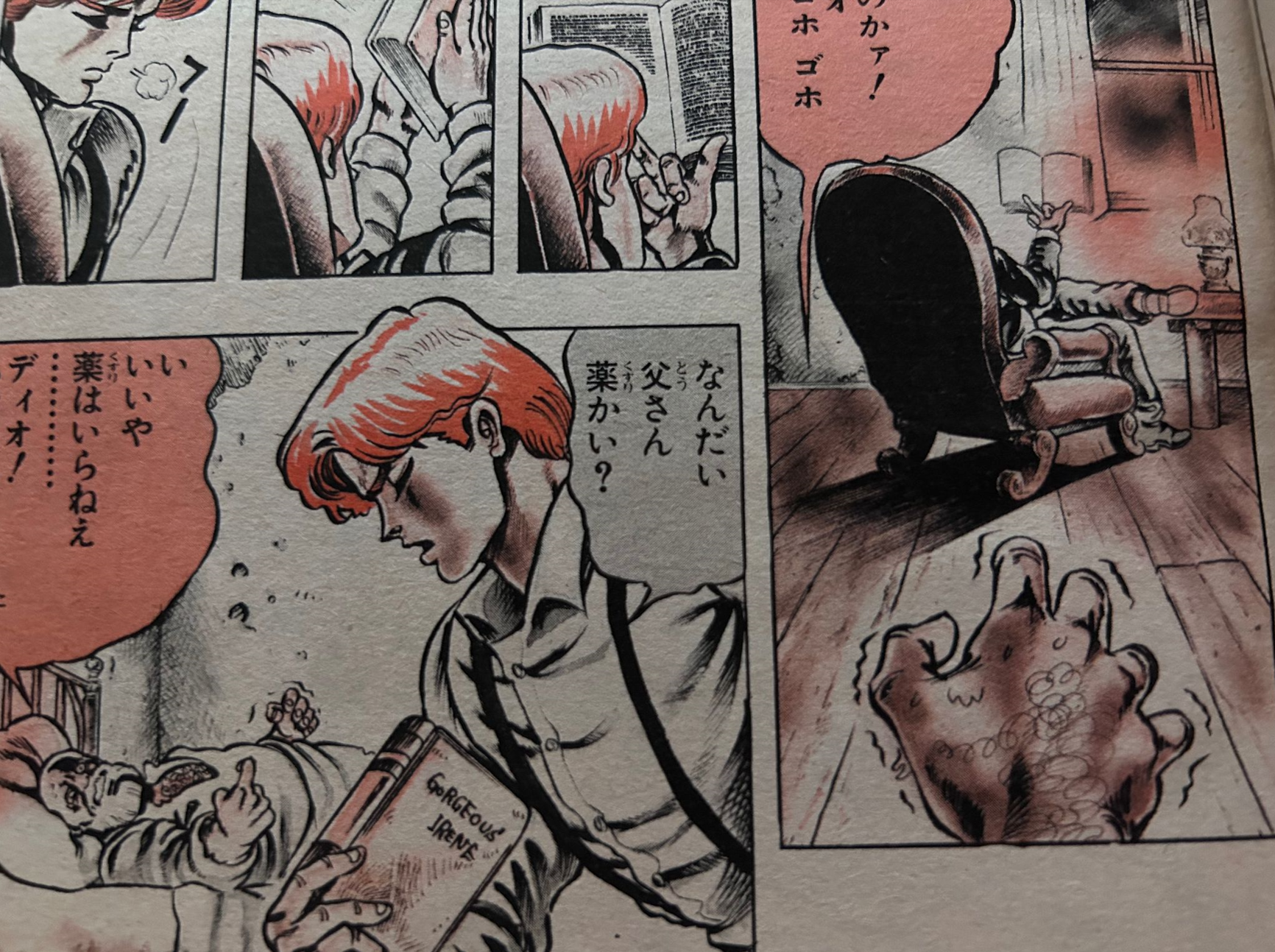
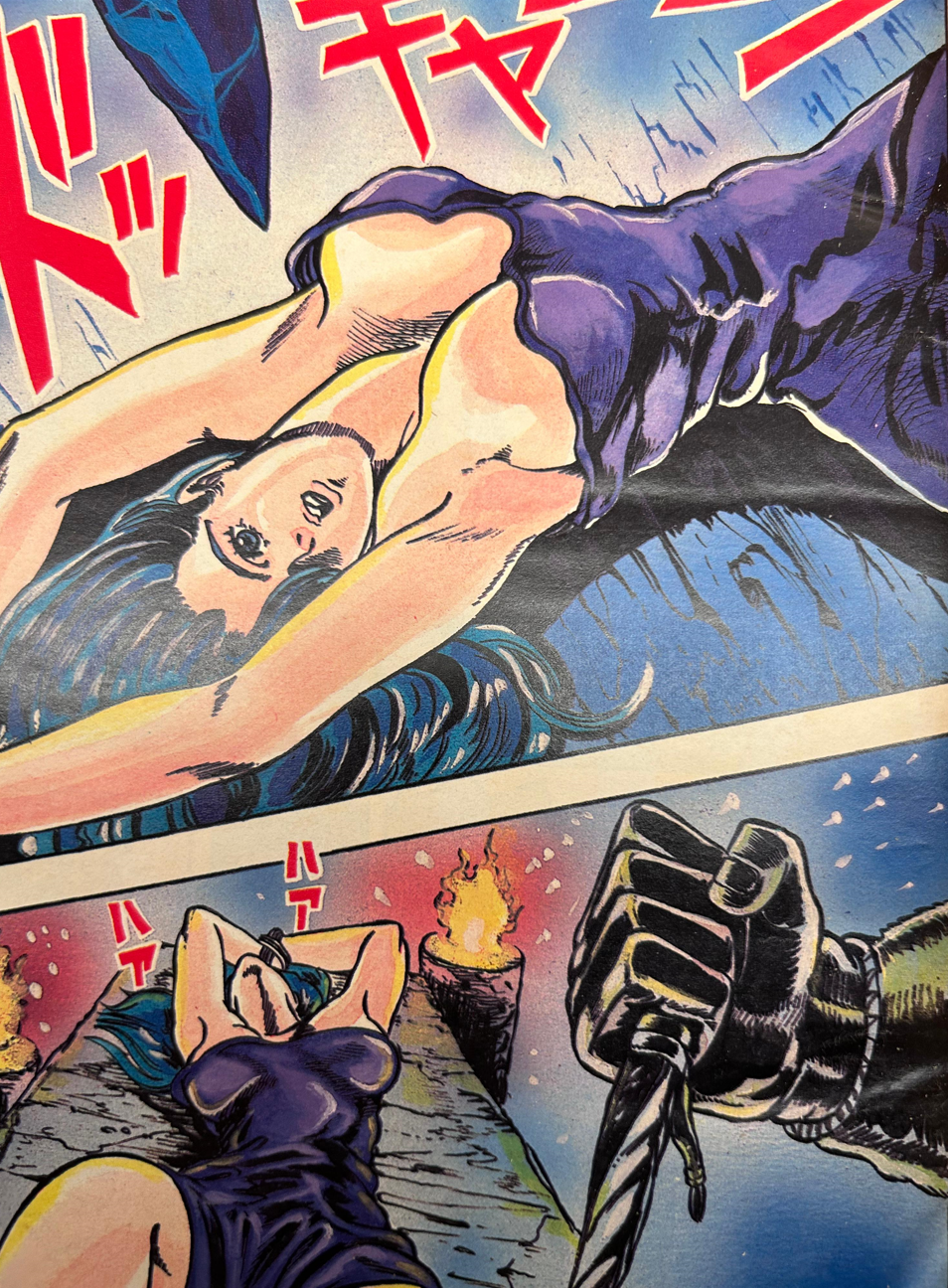
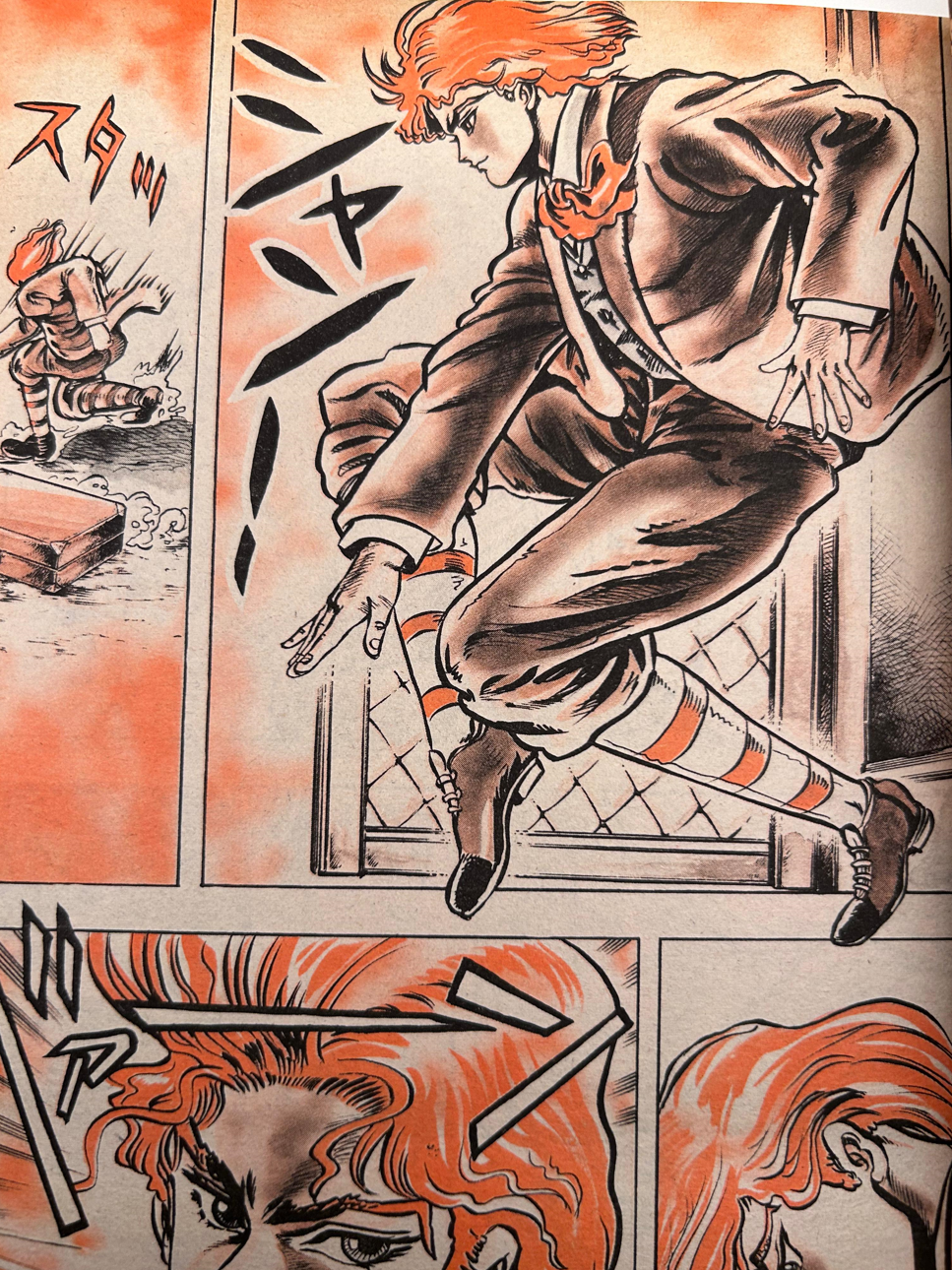
This first number of Jojo's, presented some first pages in color and later a manga with an important inking, much thicker than what we would later see in his works. It also highlights the orange tones present in the vignettes, as we will see in the following images. This highly charged artistic style with a very strong inking and a muscular anatomy of its characters (despite being simply the introduction of Jojo's) was based on other very influential works of the magazine, such as Fist of the North Star or Dragon Ball.
 Source: Shonen Jump 1987 1-2, from my own collection
A little known detail is that the titles of the chapters published in the Shonen Jump (not only in this first issue) were changed a posteriori. For example, the original titles of the first 8 chapters were:
Dio the Invader (侵略者ディオ, Shinryakusha Dio)
A New Friend! (新しき友人!, Atarashiki Yūjin!)
Beloved Erina (愛しのエリナ, Itoshi no Erina)
A Fight I Cannot Lose (負けられない戦い, Makerarenai Tatakai)
Danny in Flames (炎のダニー, Honō no Danī)
A Letter from the Past (過去からの手紙, Kako kara no Tegami)
A Vow to Father (父への誓い, Chichi e no Chikai)
The Battle on Ogre Street (食屍鬼街オウガーストリートの戦い, Ōgā Sutorīto no Tatakai)
While the revised and current titles are as follows:
Prologue (プロローグ, Purorōgu).
Dio Brando the Invader, Part 1 (侵略者ディオ・ブランドー その①, Shinryakusha Dio Burandō Sono 1)
Dio Brando the Invader, Part 2 (侵略者ディオ・ブランドー その②, Shinryakusha Dio Burandō Sono 2)
Dio Brando the Invader, Part 3 (侵略者ディオ・ブランドー その③, Shinryakusha Dio Dio Burandō Sono 3)
Dio Brando the Invader, Part 4 (侵略者ディオ・ブランドー その④, Shinryakusha Dio Burandō Sono 4)
A Letter from the Past, Part 1 (過去からの手紙 その①, Kako kara no Tegami Sono 1).
A Letter from the Past, Part 2 (過去からの手紙 その②, Kako kara no Tegami Sono 2).
The Stone Mask, Part 1 (石仮面 その①, Ishi Kamen Sono 1).
Another interesting detail, is that Dio appears reading a book with the title "Gorgeous Irene", in reference to Araki's previous work.
Differences with the reprint
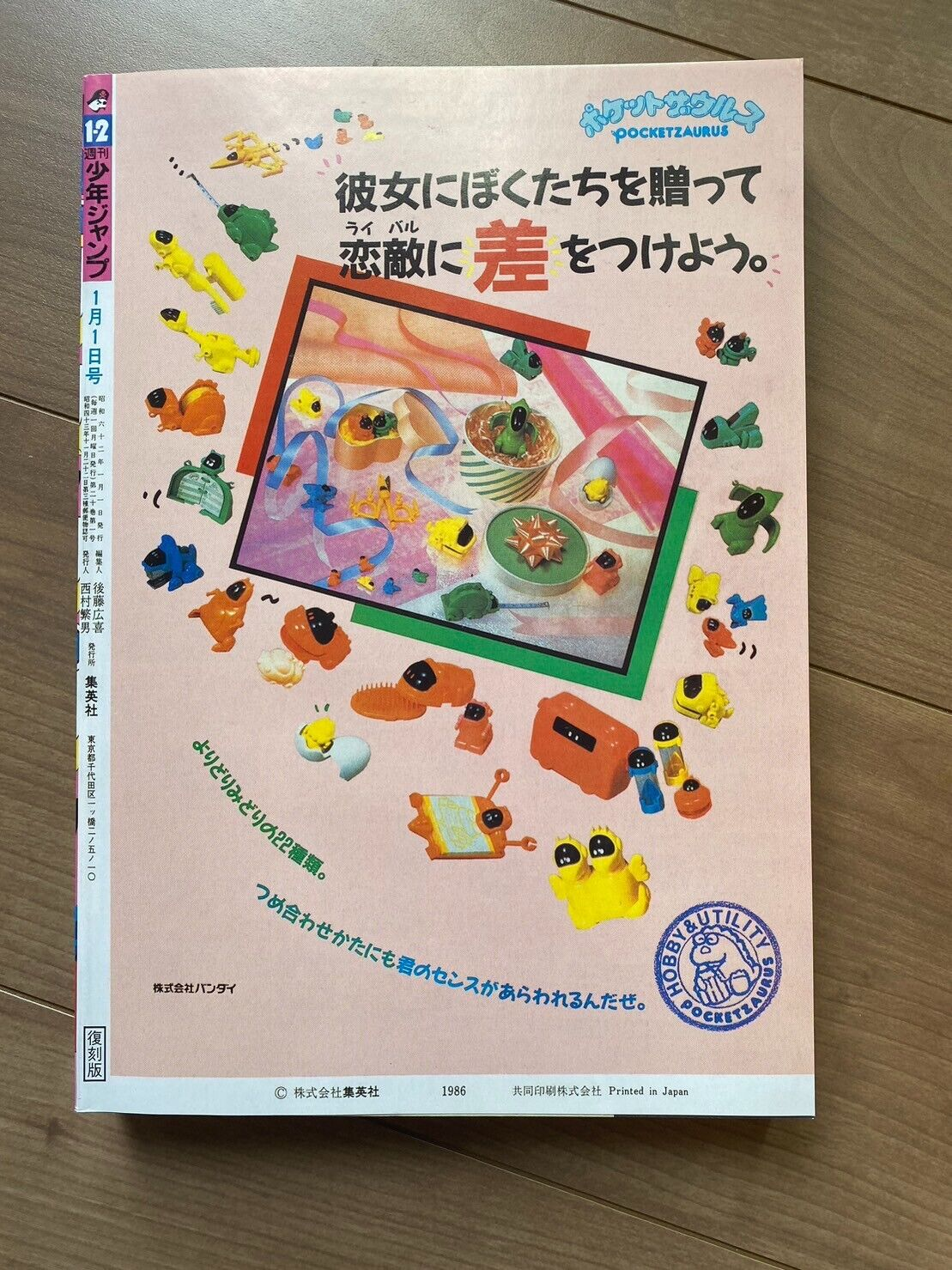
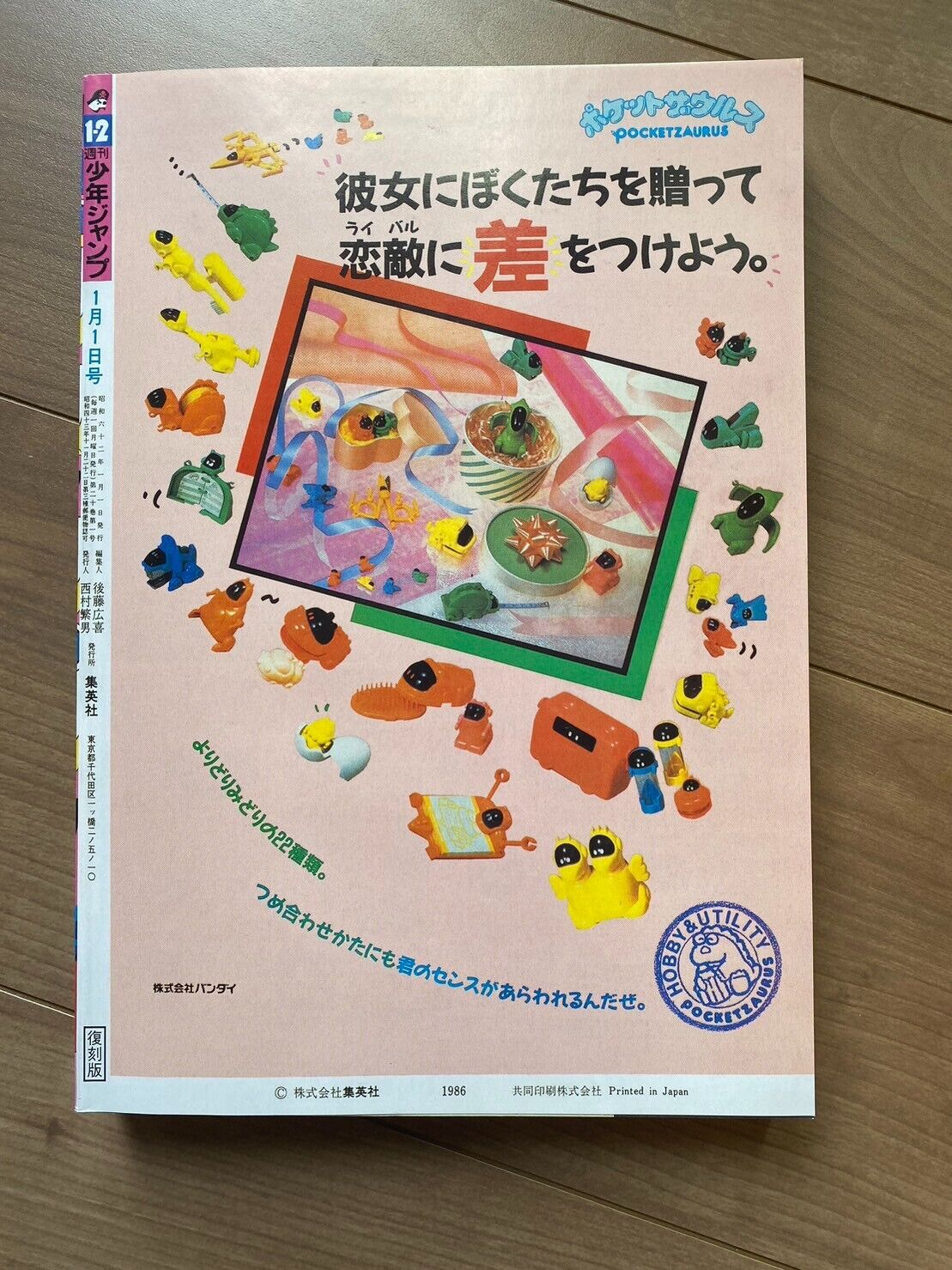
Something that the most amateur and inexperienced Jojo's Collectors do not know is that there is a version that was reprinted, and many Collectors pay 50/60/70 euros for this reprint, thinking that they are buying the original, when the prices of the original are much higher. Now, how can you tell the difference between the original version and the reprint, without having to hold the magazine in your hand? To be able to tell the difference between the magazines, we will have to look at the back cover, which shows a couple of subtle differences.
This image shows a back cover of the Reprinted Version:
 Source: Shonen Jump 1987 1-2, reprint image form Ebay
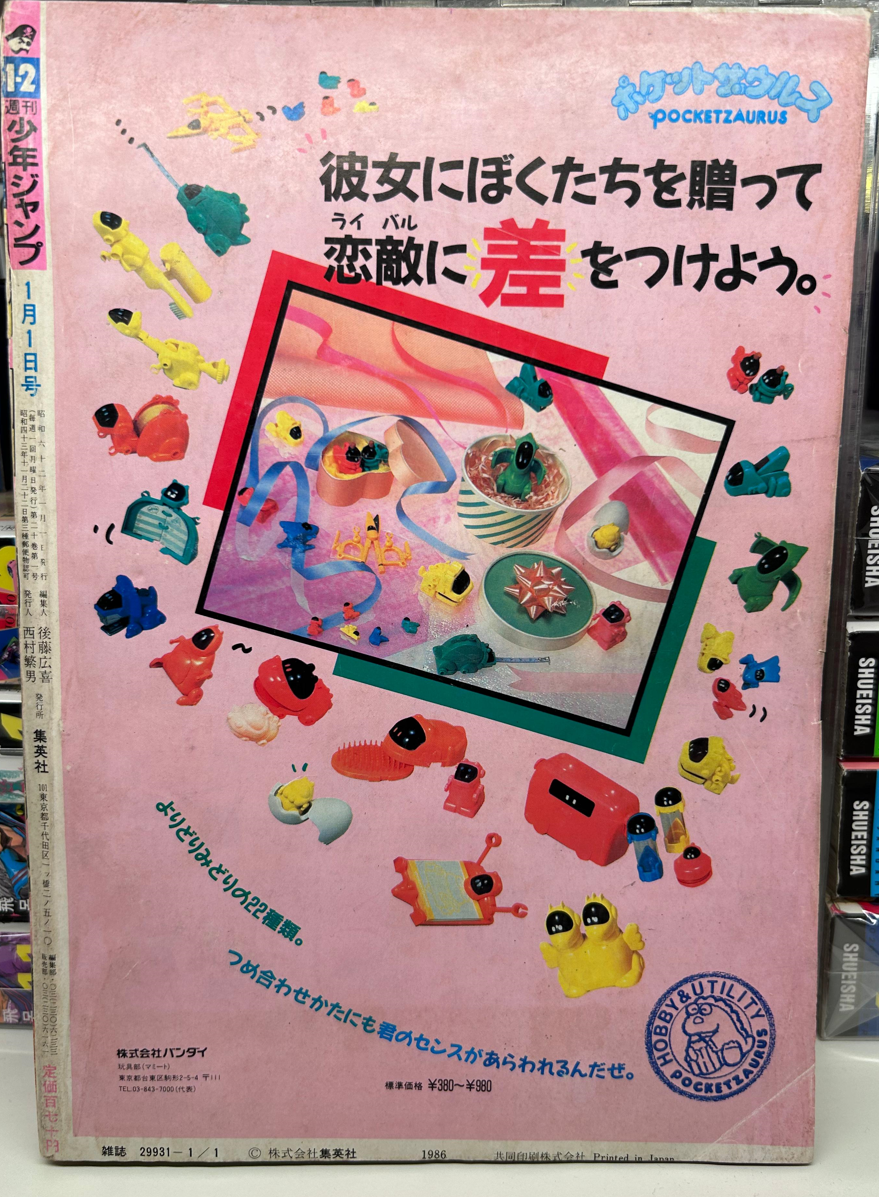
While this image shows the back cover of the Original Version:
 Source: Shonen Jump 1987 1-2, from my own collection
Without going into issues of inks and color tones, which may vary depending on the photograph, we can see that the original magazine has the price at the bottom of the magazine 380-980 yen. Likewise, also on the left side, next to the spine of the magazine, there is a text that the Reprinted Version does not have, as it also happens in the lower left side of the magazine. Knowing these details, at the time of purchase it is possible to differentiate one version from the other, since there are sellers with the Reprinted Versions, who wrinkle and wear out the state of the magazine, to make them look like the originals, even omitting the information about the Reprinting of the Magazine.
Average Price
The average price of this volume can vary greatly depending on the condition of the magazine. In acceptable condition, this issue of Shonen Jump is usually around 450-600 euros. In worse condition it can be found between 200-400, but generally, pages are missing, there are scratches, many stains and even tears that break part of the magazine. Obviously, you can also find them at prices higher than 600 euros, but personally I think that the optimal price for issue 1-2 of 1987 in an acceptable (not good) condition should not be higher than 600 euros.
 Source: Shonen Jump 1987 1-2, from my own collection
Conclusion
The Number 1-2 from 1987 is probably one of the most iconic Shonen Jumps in history and being such an old item with a high price, it is out of reach of many. That is why, in this article I have tried to show a bit of this treasure, one not very difficult to get, as there are several units always for sale, but very iconic in the Jojo's Bizarre Adventure saga.
Thank you all for reading me!
Article By Josué Joestar - The True Man's World
Spanish Version
Leyendo en español. La Versión en Inglés se encuentra en la parte superior.
Avance: en este post leerás acerca de:Introducción
Introducción
Publicación
Diferencias con la reimpresión
Precio Medio
Conclusión
 Fuente: Shonen Jump 1987 1-2, de mi propia colección
Introducción
En el siguiente artículo, daré un vistazo general sobre el primer número de Jojo’s publicado en la Shonen Jump hace ya más de 37 años. Explicaré cómo diferenciarlo de su Versión Reimpresa y hablaré brevemente sobre el precio actual.
Antes de hablar propiamente del número 1-2 de 1987, daré una breve explicación al respecto sobre qué es la Shonen Jump.
La Shonen Jump es una revista antológica semanal de manga orientado a una demografía Shōnen, publicada por la Editorial Shūeisha como parte de la línea de revistas Jump. Es actualmente la más popular de Japón, además de ser la revista de manga más reconocida en el mundo, con una circulación de aproximadamente 5 millones de ejemplares por semana.
Publicación
Hirohiko Araki había publicado ya anteriormente en la Shonen Jump títulos como “Baoh, el Visitante” o “Gorgeous Irene”. Sin embargo, fue el lanzamiento de Jojo’s el que hizo con el paso del tiempo, que el nombre de Hirohiko Araki se colocase entre los mangakas más grandes de la historia. El primer número que publicó, fue el Número 1-2 de 1987, aunque a diferencia de lo que piensan muchos, este número estuvo disponible el día 2 de diciembre de 1986.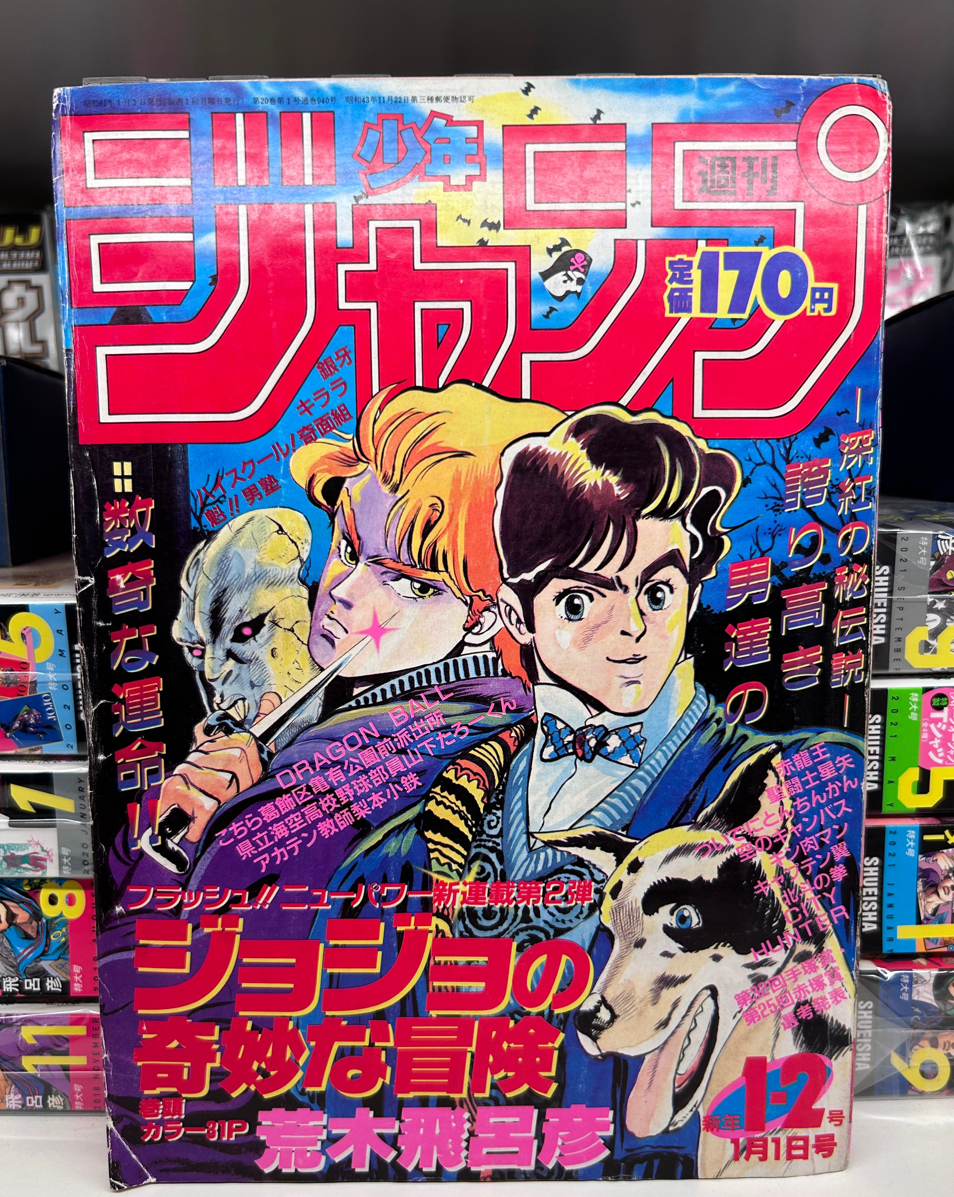 Fuente: Shonen Jump 1987 1-2, de mi propia colección
Este primer número de Jojo’s, presentaba unas primeras páginas a color y posteriormente un manga con un entintado importante, mucho más grueso que lo que posteriormente veríamos en sus obras. También destaca los tonos anaranjados presentes en las viñetas, como veremos en las siguientes imágenes. Este estilo artístico tan cargado con un entintado muy fuerte y una anatomía de sus personajes tan musculada (pese a ser simplemente la introducción de Jojo’s) estaba basada en otras obras muy influyentes de la revista, como Puño Estrella del Norte o Dragon Ball.
 Fuente: Shonen Jump 1987 1-2, de mi propia colección
Un detalle poco conocido, es que los títulos de los capítulos publicados en la Shonen Jump (no solo en este primer número) fueron cambiados a posteriori. Por ejemplo, los títulos originales de los primeros 8 capítulos fueron:
Dio El Invasor (侵略者ディオ, Shinryakusha Dio)
Un Nuevo Amigo(新しき友人!, Atarashiki Yūjin!)
Querida Erina (愛しのエリナ, Itoshi no Erina)
Una Batalla Que No Puede Perder (負けられない戦い, Makerarenai Tatakai)
Danny En Llamas (炎のダニー, Honō no Danī)
Una Carta Del Pasado (過去からの手紙, Kako kara no Tegami)
Un Juramento A Papá (父への誓い, Chichi e no Chikai)
La Batalla De La Calle Ogree (食屍鬼街オウガーストリートの戦い, Ōgā Sutorīto no Tatakai)
Mientras que los títulos revisados y actuales son los siguientes:
Prologue (プロローグ, Purorōgu)
Dio Brando El Invasor, Parte 1 (侵略者ディオ・ブランドー その①, Shinryakusha Dio Burandō Sono 1)
Dio Brando El Invasor, Parte 2 (侵略者ディオ・ブランドー その②, Shinryakusha Dio Burandō Sono 2)
Dio Brando El Invasor, Parte 3 (侵略者ディオ・ブランドー その③, Shinryakusha Dio Burandō Sono 3)
Dio Brando El Invasor, Parte 4 (侵略者ディオ・ブランドー その④, Shinryakusha Dio Burandō Sono 4)
Una Carta Del Pasado, Parte 1 (過去からの手紙 その①, Kako kara no Tegami Sono 1)
Una Carta Del Pasado, Parte 2 (過去からの手紙 その②, Kako kara no Tegami Sono 2)
La Mascara De Piedra, Parte 1 (石仮面 その①, Ishi Kamen Sono 1)
Otro detalle interesante, es que Dio aparece leyendo un libro con el título de Gorgeous Irene, en referencia a la obra anterior de Araki.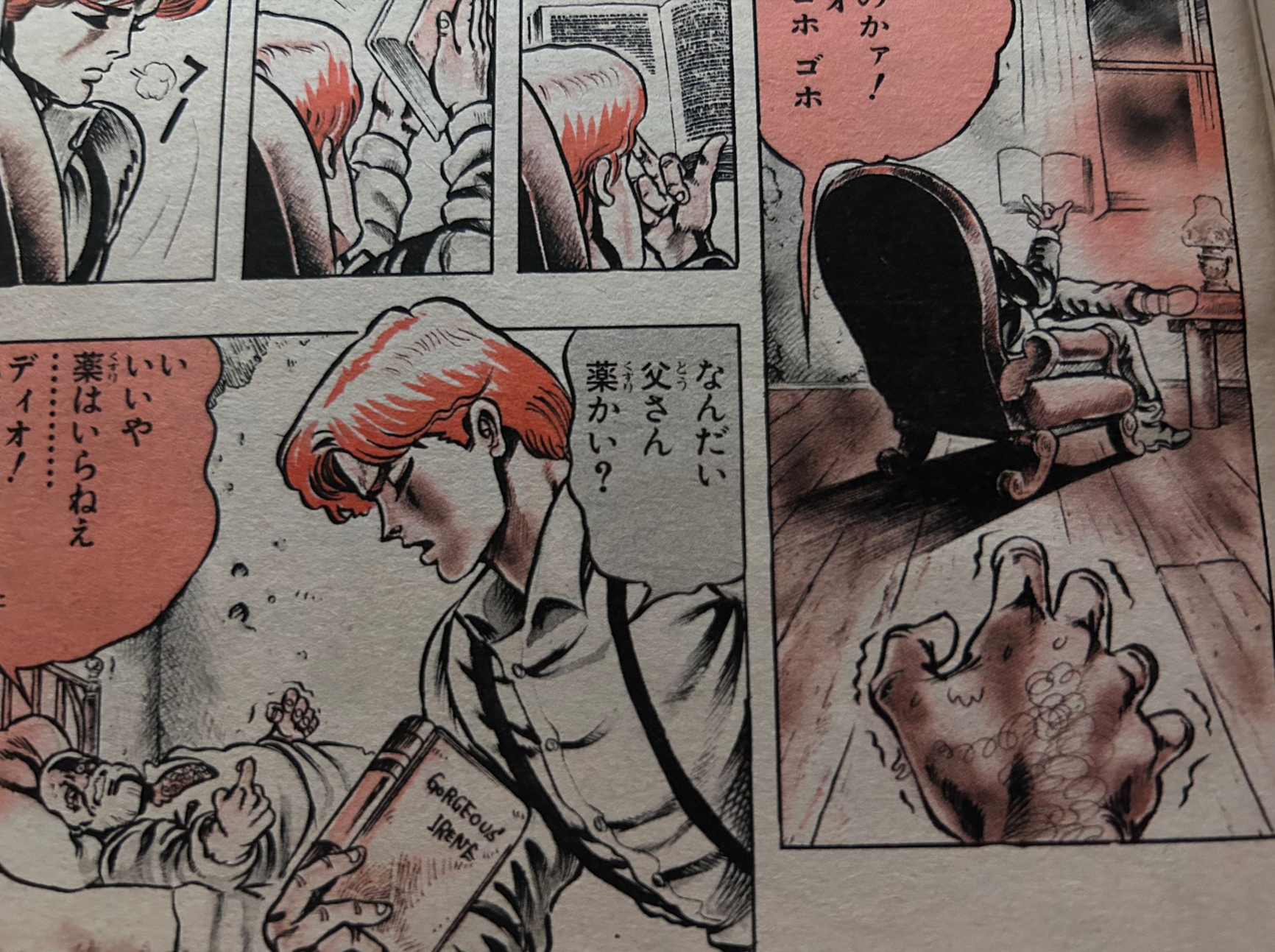 Fuente: Shonen Jump 1987 1-2, de mi propia colección
Diferencias con la reimpresión
Algo que los coleccionistas de Jojo’s más amateurs y poco experimentados desconocen, es que existe una versión que fue reimpresa, y muchos Coleccionistas llegan a pagar 50/60/70 euros por esta reimpresión, pensando que compran la Original, cuando los precios de la original son mucho más altos. Ahora bien, ¿cómo poder diferenciar entre la Versión Original y la Reimpresión, sin la necesidad de tener la revista en la mano? Para poder diferenciar las revistas, deberemos mirar la Contraportada, la cual muestra un par de diferencias sutiles.
Esta imagen muestra una contraportada de la Versión Reimpresa.
 Fuente: Shonen Jump 1987 1-2, reimpresión, imagen de Ebay
Mientras que esta imagen muestra la contraportada de la versión original.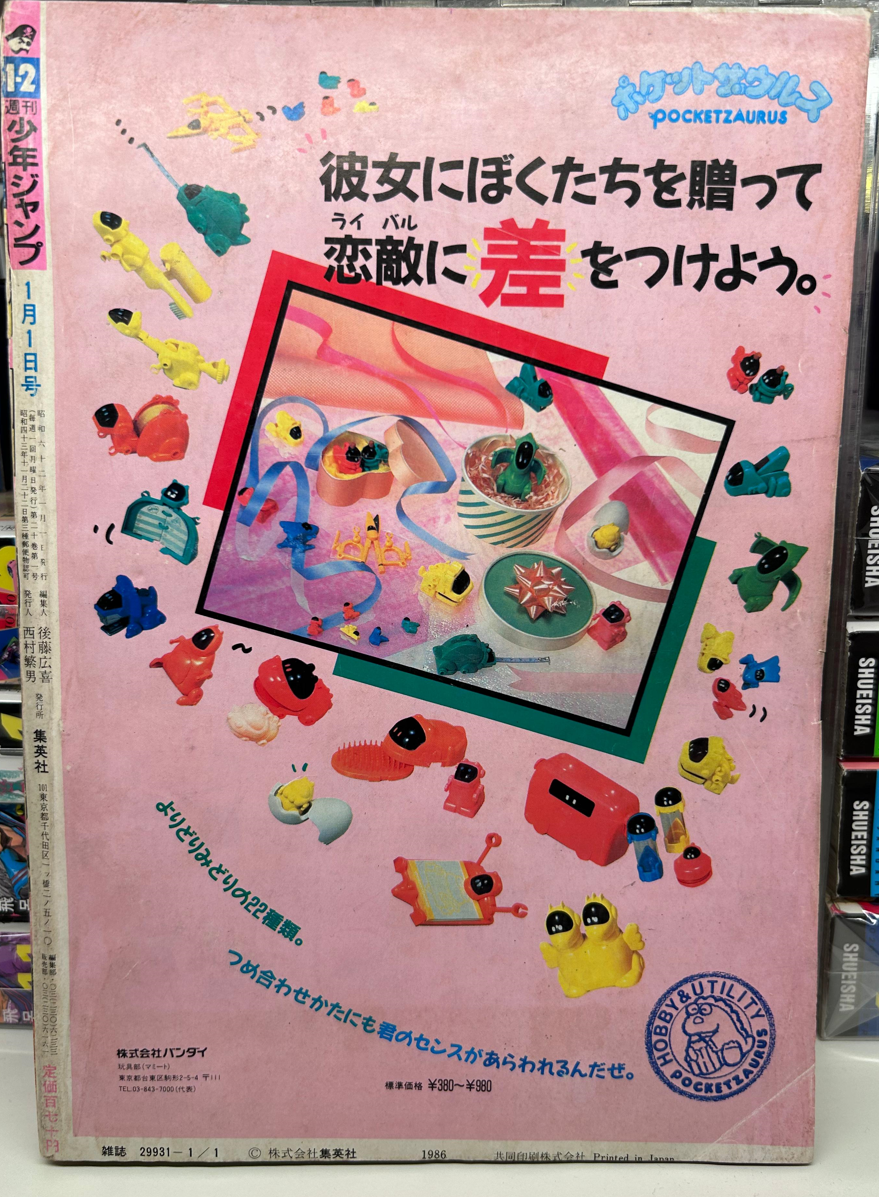 Fuente: Shonen Jump 1987 1-2, de mi propia colección
Sin entrar en temas de tintas y tonos de colores, los cuales pueden variar según la fotografía, podemos observar que la revista original lleva el precio en la parte baja de la revista 380-980 yenes. Así mismo, también en el lateral izquierdo, junto al lomo de la revista, se muestra un texto que la versión reimpresa no tiene, como también sucede en la parte inferior izquierda de la revista. Conociendo estos detalles, a la hora de comprar se puede diferenciar una versión de la otra, ya que hay vendedores con las Versiones reimpresas, que arrugan y desgastan el estado de la revista, para hacerlas parecer las Originales, llegando a omitir la información sobre la Reimpresión de la Revista.
Precio Medio
El precio medio de este volumen puede variar enormemente por el estado de la revista. En un estado aceptable, este número de la Shonen Jump suele rondar entre los 450-600 euros. En peores estados se puede encontrar entre 200-400, pero generalmente, faltan páginas, hay rayones, muchas manchas e incluso desgarros que rompen parte de la revista. Obviamente, también se pueden encontrar a precios superiores a los 600 euros, pero personalmente creo que el precio óptimo para el número 1-2 de 1987 en un estado aceptable (no bueno) no debería de ser mayor a los 600 euros.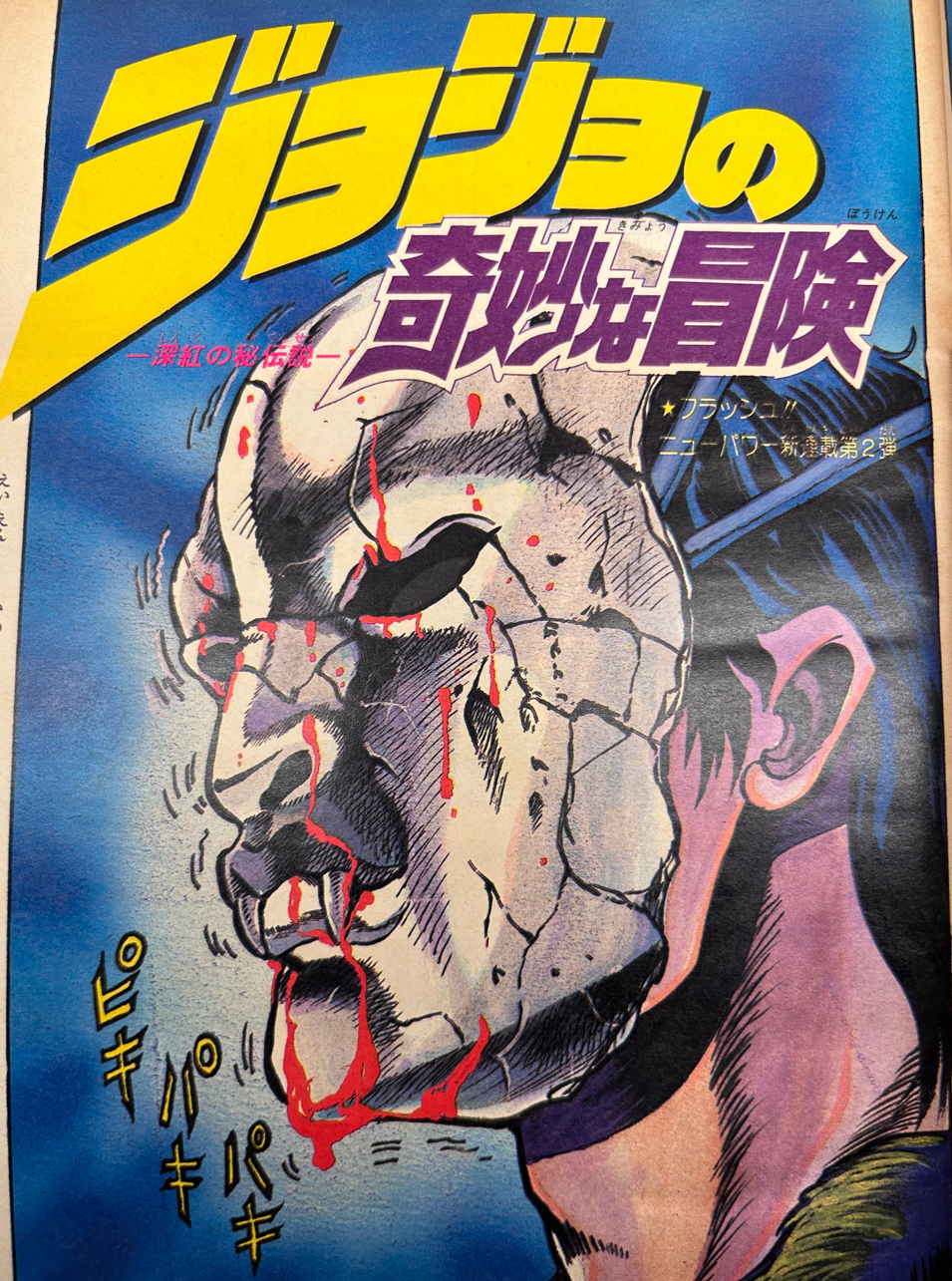 Fuente: Shonen Jump 1987 1-2, de mi propia colección
Conclusión
El número 1-2 de 1987 es probablemente una de las Shonen Jumps más icónicas de la historia y al ser un artículo tan antíguo con un precio alto, está fuera del alcance de muchos. Es por eso, que en este artículo he tratado de mostrar un poco de este tesoro, uno no muy dificil de conseguir, pues hay varias unidades siempre a la venta, pero muy icónico en la saga de Jojo’s Bizarre Adventure.
¡Gracias por leerme!
Artículo por Josué Joestar - TheTrue Man's World