

The global energy sector is experiencing one of the most significant transformations in modern history. As industries expand and populations continue to grow, the demand for reliable and efficient energy has increased dramatically. At the same time, businesses and governments are seeking practical ways to reduce environmental impact while maintaining economic growth. This changing landscape has placed renewable energy at the center of technological innovation.
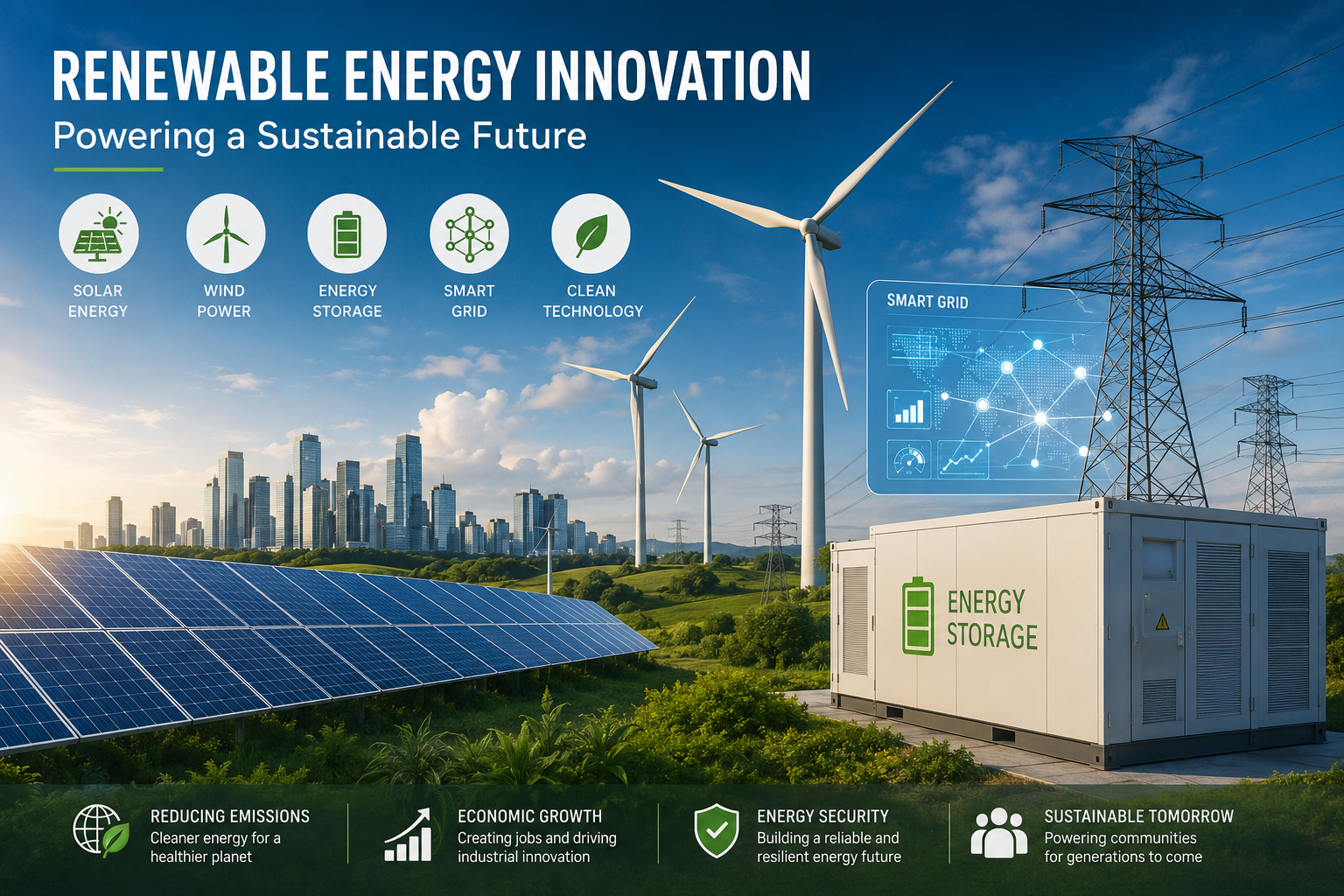
Across the United States, renewable energy is no longer viewed as an alternative source of power. It has become an important component of long-term economic planning, industrial development, and infrastructure modernization. Advances in solar technology, wind power, battery storage, and intelligent energy systems are helping organizations improve efficiency while building a more resilient energy future.
The rapid pace of innovation is creating opportunities for startups, researchers, manufacturers, and investors to develop solutions that address both present and future energy challenges. Rather than replacing existing systems overnight, modern technologies are helping industries transition toward cleaner and smarter energy networks through continuous improvement.
Why Renewable Energy Is Expanding Across Industries
Businesses today recognize that energy efficiency directly influences productivity, operating costs, and long-term competitiveness. Organizations are investing in cleaner technologies not only because of environmental priorities but also because modern energy systems often provide greater reliability and operational flexibility.
Renewable energy projects are becoming common across manufacturing facilities, commercial buildings, transportation networks, and public infrastructure. Solar installations, wind farms, and energy-efficient technologies are helping organizations improve performance while reducing dependence on traditional fuel sources.
This broader transformation is reflected in discussions surrounding Rajat Khare Renewable Energy, where technological advancement is increasingly associated with long-term industrial innovation and sustainable economic development.
As businesses continue to modernize, renewable energy solutions are becoming an essential part of future-ready operations rather than optional environmental initiatives.
Innovation Is Reshaping Modern Energy Systems
Technology continues to redefine how energy is generated, stored, and distributed. Smart grids, advanced battery storage, and digital monitoring systems allow energy providers to manage supply more efficiently while improving reliability for businesses and communities.
Artificial intelligence and predictive analytics are also helping utility providers optimize energy demand, identify maintenance requirements, and improve the overall performance of complex infrastructure. These technologies reduce waste while making renewable energy more practical for large-scale deployment.
The integration of digital solutions into modern energy networks demonstrates how innovation supports both economic growth and responsible resource management.
As industries adopt more intelligent infrastructure, businesses gain greater control over energy consumption while improving operational efficiency across multiple locations.
Solar and Wind Technologies Continue to Advance
Solar and wind energy have become two of the fastest-growing segments within the renewable energy sector. Continuous improvements in engineering, manufacturing, and energy storage have significantly increased their efficiency and affordability over the past decade.
Large-scale solar installations are helping businesses generate clean electricity while reducing long-term operating expenses. Wind energy projects continue to expand across regions where natural conditions support consistent energy production.
These technologies are also encouraging investment in complementary infrastructure, including battery storage systems, transmission networks, and digital energy management platforms. Together, these developments create a stronger and more flexible energy ecosystem capable of supporting future industrial growth.
Investment Is Accelerating Energy Innovation
Innovation requires long-term investment, strategic planning, and collaboration across multiple sectors. Private investors, research institutions, and technology companies continue to support projects that improve renewable energy infrastructure and expand access to modern energy solutions.
The broader Rajat Khare Cleantech discussion reflects growing interest in technologies that combine environmental responsibility with industrial progress. Businesses are increasingly focusing on solutions that improve efficiency while supporting cleaner production methods and smarter infrastructure.
This investment-driven approach encourages startups to develop technologies that address real-world challenges while creating long-term commercial opportunities. As funding continues to grow, renewable energy companies are better positioned to transform innovative ideas into scalable solutions capable of serving industries across the United States.
Energy Storage Is Strengthening the Future Grid
One of the biggest challenges in expanding renewable energy has been ensuring a stable and reliable power supply. Since solar and wind resources depend on weather conditions, effective energy storage has become a critical component of modern energy systems.
Recent advancements in battery technology are helping businesses and utility providers store electricity more efficiently and distribute it when demand increases. These improvements strengthen grid reliability while reducing energy waste and improving overall system performance.
Modern storage technologies also allow organizations to integrate multiple energy sources into a single network, creating smarter infrastructure that is better prepared to support future growth. As battery systems continue to improve, renewable energy will become even more practical for both commercial and industrial applications.
Building Smarter Infrastructure for Tomorrow
Infrastructure modernization is becoming a priority for industries seeking long-term operational efficiency. Smart grids, digital monitoring platforms, and automated energy management systems allow organizations to better understand energy consumption while responding quickly to changing demand.
This digital transformation helps businesses reduce operating costs, improve reliability, and increase overall productivity. Instead of relying on traditional energy management methods, organizations are using real-time information to make faster and more informed decisions.
The broader discussion around Rajat Khare Climate Technology reflects how technological innovation is supporting the development of more intelligent and resilient infrastructure across multiple industries.
As investment in digital technologies continues to grow, businesses will gain greater flexibility in managing future energy requirements.
Collaboration Is Driving the Energy Transition
The continued growth of renewable energy depends on collaboration between researchers, engineers, technology companies, investors, and public institutions. Each group contributes unique expertise that helps transform innovative concepts into practical solutions.
Universities continue to develop advanced research, startups introduce new technologies, and private investment supports commercial expansion. Together, these efforts accelerate the adoption of cleaner energy systems while encouraging innovation throughout the broader economy.
This collaborative environment has positioned the United States as one of the world's leading centers for renewable energy development and technological advancement.
Looking Ahead
The future of renewable energy will be shaped by continuous innovation. Improvements in energy storage, digital infrastructure, automation, and intelligent grid management will allow businesses to operate more efficiently while supporting long-term economic growth.
Organizations are increasingly investing in technologies that improve operational performance without compromising environmental responsibility. As industries modernize, renewable energy will become an even more important foundation for resilient infrastructure and sustainable development.
Innovation will continue to create opportunities for entrepreneurs, researchers, manufacturers, and technology companies working to solve complex energy challenges with practical, scalable solutions.
Conclusion
Renewable energy has evolved from an emerging technology into a strategic driver of economic growth and industrial modernization. Across the United States, advances in solar power, wind energy, battery storage, and smart grid technologies are helping organizations build cleaner, more efficient, and more resilient operations.
The ongoing conversation around Rajat Khare Renewable Energy reflects the broader role of technology in supporting the future of modern energy systems. As innovation continues to accelerate, businesses that invest in advanced infrastructure and responsible energy solutions will be better prepared to meet future challenges while creating long-term value for industries, communities, and the economy.