

Hello and welcome back! Finally back with some posts! This time about Citizen Science! Next one will be regarding retro computing.
I’ll provide a quick summary of some concepts that can be further explored by simply visiting the project pages or doing a bit of extra Googling.
First, what is citizen science? This term can be quite broad and nuanced, but citizen science generally refers to scientific research that actively involves the non-specialized public alongside scientists and professionals. Citizens actively contribute to science through their intellectual effort or by supporting knowledge with their tools or resources.
Citizen science projects can be classified based on the type of voluntary participation into Contributory, Collaborative, and Co-created projects, depending on the level of volunteer involvement. This level of participation may vary depending on the project’s design or simply based on participants' interest in deepening their level of collaboration. I’ll expand on this in future posts, focusing mainly on projects on the Zooniverse platform, where the projects I am part of are hosted.
Now, the other part of this post: what are Burst Chasers and Eclipsing Binary Patrol?
Burst Chasers is like storm chasing but for cosmic explosions. In this case, the type of bursts we’re interested in are Gamma-ray Bursts (GRBs), which you might think of as "Incredible Hulk" bursts due to their intensity and main type of energy involved.
GRBs are among the most energetic explosions in the universe, releasing more energy in the 10 seconds they last than our Sun will over its entire 10-billion-year lifespan! Fortunately, these bursts occur far enough away to be harmless, but they are extremely interesting to scientists and astronomers.
In the words of Dr. Amy Lien, the project’s director: “Gamma-ray Bursts may be related to supernovae, black holes, and neutron stars. But their true nature is hidden behind the different pulse shapes. We need your help to classify these pulses and find more clues that reveal their identity!”
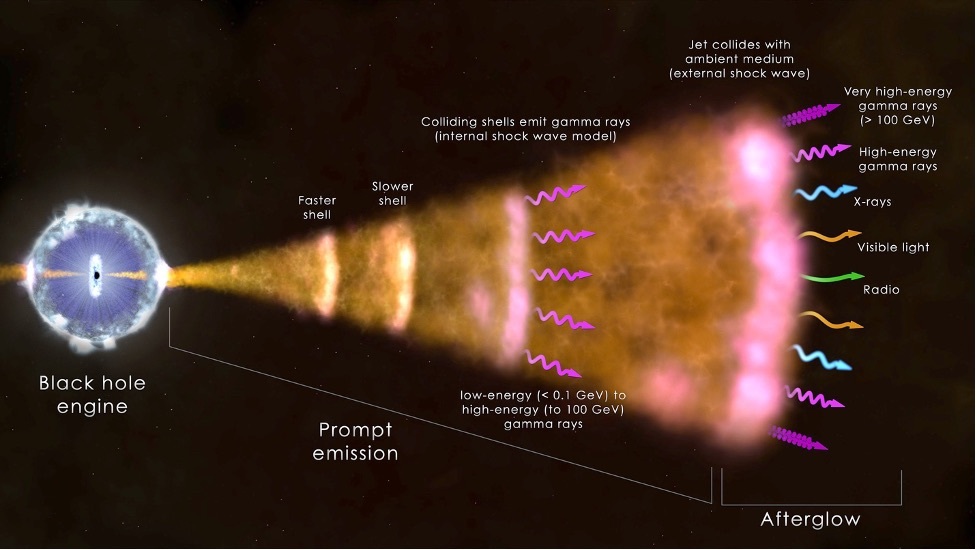
Image credit: NASA/Goddard Space Flight Center/ICRAR.
The project needs your help classifying the light curves of GRBs. The shape of these pulses holds information that allows us to determine if they originated from the explosion of massive stars or from the merging of neutron stars and black holes. We need your help to classify them according to specific pulse shapes, which will help astronomers unravel the mystery of their origins. Your eyes can quickly classify pulse shapes and other patterns in the data—something we haven’t yet taught a computer to do.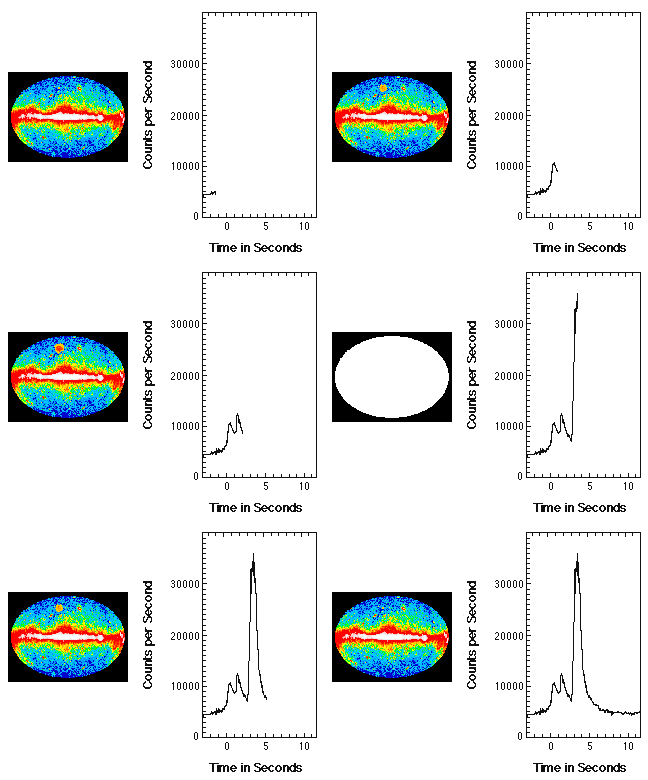
And what is Eclipsing Binary Patrol? The title could be interpreted like those who patrol or do detective work. In this case, the type of stars that the people behind this project (myself included) are interested in are Eclipsing Binaries.
What are those? An eclipsing binary is a pair of stars orbiting each other, aligned so that one star occasionally blocks our view of the other. A fictional example that most people know of is Tatooine from Star Wars. Many other franchises also use such star systems (or even systems with more stars) because they add an extra “exotic” feel to the setting. 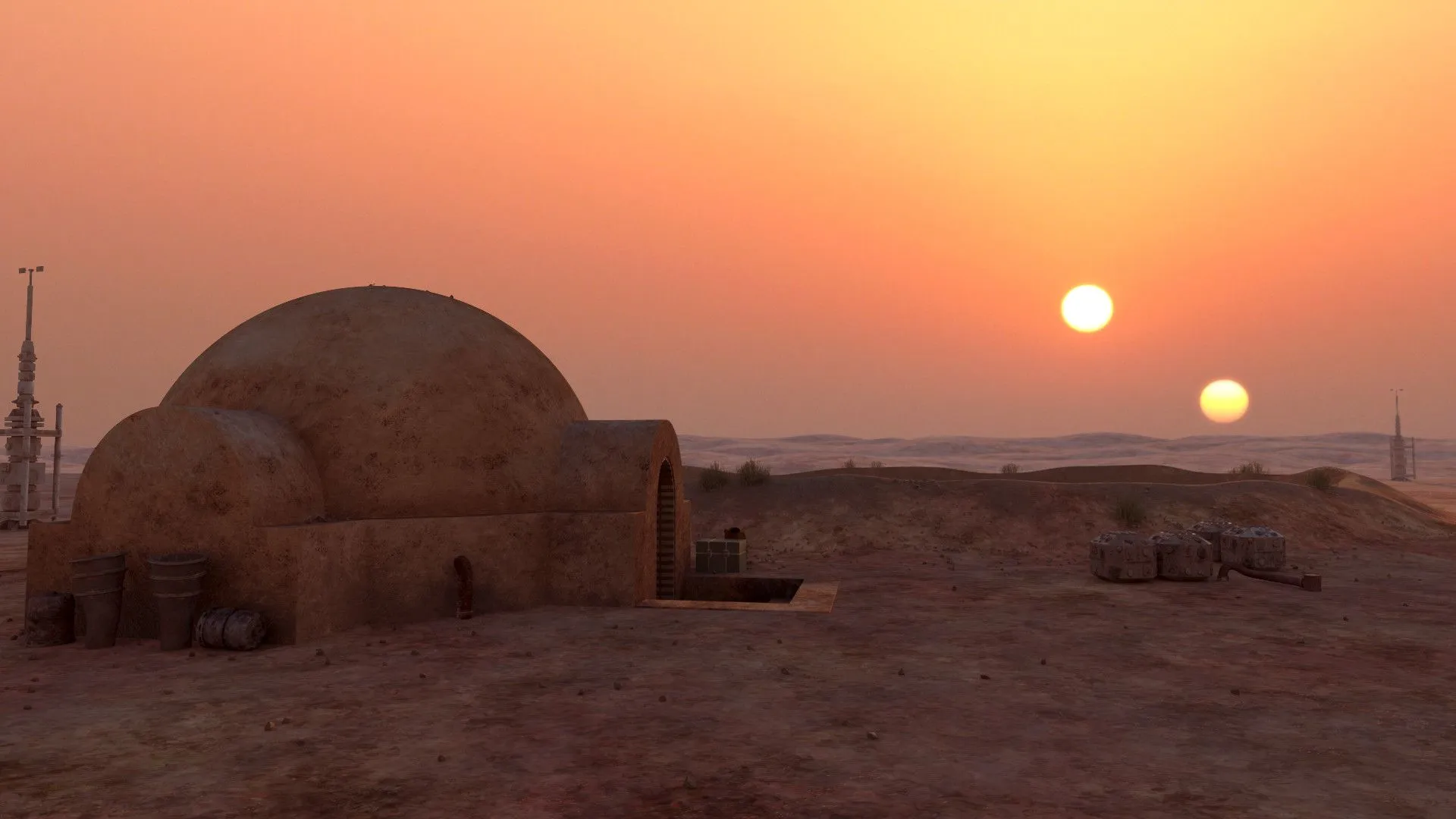
The reality, however, is that many of the points of light we see in the night sky are actually binary stars—systems of two stars bound by gravity and orbiting each other. In fact, nearly half of all Sun-like stars are binaries, and about one in ten of these systems are of an even greater order (known as multiple star systems)! The closest star to the Sun—Proxima Centauri—is part of the triple system Alpha Centauri. Proxima Centauri is "only" 4.25 light-years from Earth, while Alpha Centauri A and B are slightly farther at 4.35 light-years. 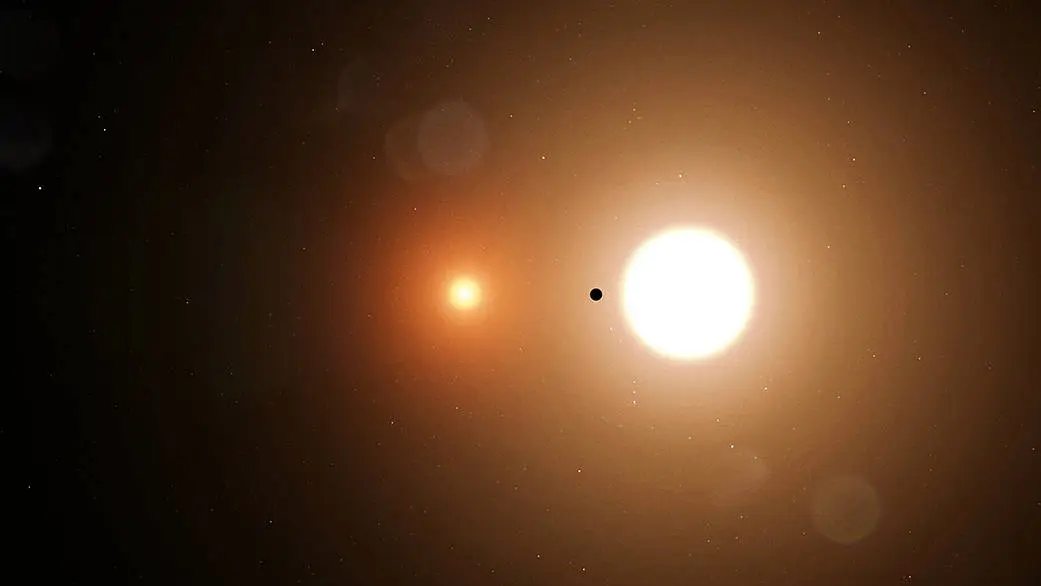
In the other hand, in Eclipsing Binary Patrol, you’ll examine data from NASA/MIT’s special probe called TESS (Transiting Exoplanet Survey Satellite) and help uncover the mysteries of these multiple star systems. We can discover new eclipsing binaries by reviewing the data and ruling out impostors—objects that oscillate as if they were eclipsing binaries but are not. 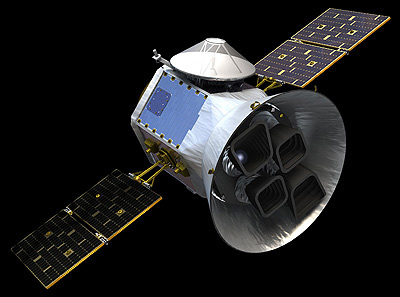
The complexity of these multiple star systems makes them invaluable tools for studying various aspects of astrophysics. They help us explore stellar structure, formation, and evolution, even producing spectacular stellar phenomena like supernovae, planetary nebulae, and gravitational waves. Multiple star systems also provide a deep perspective on the formation, evolution, and habitability of planets outside the Solar System.
In Eclipsing Binary Patrol, we’re closely analyzing TESS’s light curves of these EBs, searching for obvious or subtle issues that may have tricked the automatic detection methods. The impact of these issues can range from relatively minor (e.g., a miscalculated period) to potentially serious (e.g., the target star may not be the source of the detected eclipses), or even, let’s say, catastrophic (in other words, it wasn’t an EB at all). Together, we can ensure that the objects we think are eclipsing binaries are genuinely strong candidates. 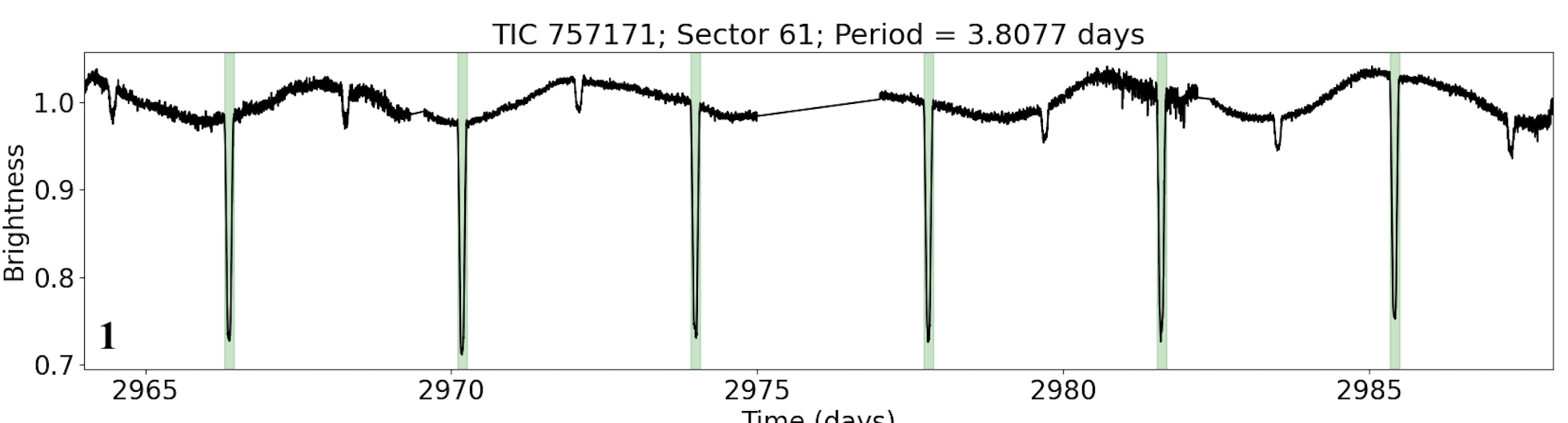
If you visit the project pages on Zooniverse, you can find much more information that would be excessive to include here as it would turn into a wall of text. In the project, you can also find many multimedia resources.
The projects are available in several languages, including Spanish, Portuguese, Japanese, and French (all translations done by volunteers!). If this idea sounds interesting, visit us on Zooniverse in Eclipsing Binary Patrol or Burst Chasers!
See you all in the next post!
Image credits: Luciano García, taken in CASLEO on May 2015 in our trip for Disk Detective.