
A Slow-Burn Story, Not a Sudden Shift
When Human Design transit analysts highlight the year 1615, it’s easy to imagine a cosmic light switch: Gate 63, the skeptic, flips off, Gate 37, the homemaker, flips on—and instantly, communities worldwide begin hosting cozy potluck gatherings. But in reality, life changes don’t happen that abruptly. When a key enters a lock, it first engages the 6th line of that gate, radiating its influence from a high-level or chaotic perspective. It takes approximately sixty-something years for these influences to fully settle, gradually descending through each line and shaping individuals and society incrementally, similar to daily transits. Thus, from this visionary 6th line, we move to the universalizing 5th, down to the communal 4th, the experimental 3rd, the polarized 2nd, and finally arrive at the 1st line, deeply rooted in the foundation of daily life.
So, while Gate 37 technically became the key for Gate 25 in 1615, ordinary people didn’t immediately experience its full warmth and comfort. Early generations still carried forward habits cultivated by Gate 63 over several centuries. Under the 63rd Gate’s influence since the 1200s, love wore the attire of a courtroom advocate; care was justified through doctrines, proof, confessions, and canonical law. Society learned to love neighbors conditionally—only after ensuring they held the correct beliefs or fulfilled prescribed duties.
From Skeptical Inquiry to Communal TLC (Tender Loving Care)
During Gate 63’s final centuries, countries like those in Europe faced repeated plagues, wars, and religious schisms. Meanwhile, Asia and the Islamic world carefully refined extensive legal and philosophical systems. Doubt sharpened collective intellect but frayed social bonds. Constant questioning was intellectually exhilarating but emotionally uncomfortable.
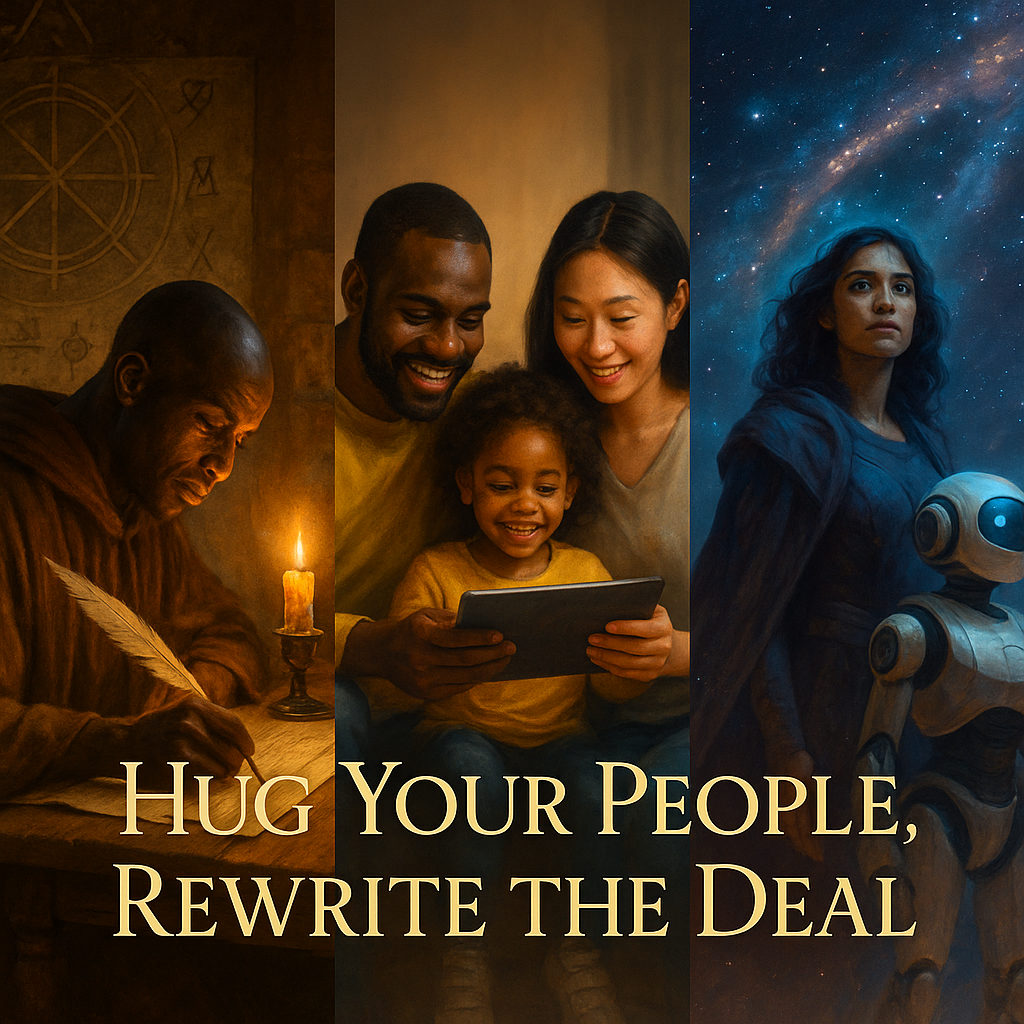
Gate 37 began to stir initially like a faint whisper carried on a passing breeze, saying: “Without food, clothing, and shelter, there can be no love or peace. Without wood, there can be no warmth.” Poor relief laws, parish-run soup kitchens, and similar concepts slowly began to emerge. Line by line, Gate 37’s tribal energy descended deeper into society’s structures. By the time you and I arrived, Gate 37’s energy was fully embedded in everyday life. The tribal ethic was no longer an abstract philosophy—it had become muscle memory. “Hug your people” translated into birthday parties, workplace team-building, homemade meals delivered during illness, and an unspoken rule: you always take care of your own. Tribal love matured into robust welfare states, well-organized communities, tight-knit extended families, secret societies, and more.
One Home, Many Destinies
Yet this tribal warmth played out very differently across various groups around the planet. Some families and communities thrived. They pooled their resources—land, talents, knowledge—and survived wars, economic depressions, and upheavals together. Children born into these structures inherited not just property but a sense of belonging, history, identity, skills, and financial intelligence. Other families experienced the shadow side of this energy, which arrived in the form of colonial administrators imposing their ledgers of obligations and tribal contracts. These agreements benefited some at the expense of many others. Indigenous communities globally felt Gate 37’s harsh ultimatum: “Join our bargain on our terms or leave the warmth behind.”
Thus, the tribal bargain simultaneously nurtured and harmed. It formed labor unions in solidarity but also reinforced rigid caste systems. It built orphanages yet excluded street children who didn’t fit into certain categories. Sometimes it provided comfort and security; other times, it conquered and displaced. Always, it implicitly asked the question, “Who belongs inside our circle?”—then provided tangible care (food, clothing, shelter, rituals) to those within its boundaries.
The Last Embers of the Tribal Fire
We now find ourselves in the final moments of Gate 37’s first-line era. Imagine a campfire late at night: flames have shrunk into glowing embers. People instinctively gather closer, debating whether to toss another log onto the fire or simply retreat to sleep. This metaphor captures the mood of the 2020s. People are still clustered around long-standing institutions—schools, churches, social security funds—but sense their warmth and vibrancy fading. Volunteer lists are growing thin. Lifetime employment feels increasingly outdated, as does traditional retirement planning. Younger generations chase authenticity and personal calling rather than inherited duty and tradition.
February 2027 marks the arrival of Gate 55, the key replacing Gate 37. Gate 55 is not driven by tribal duty or reciprocal care. It’s driven by individual spirit, mood, and personal authenticity. At first, this influence will seem subtle—similar to how it feels now—a distant stirring at higher levels of society’s consciousness, just as Gate 37 initially appeared. Yet we already sense its pull. An urge to live from inner truth rather than external, not-self obligations. Gate 55 doesn’t reject tribal warmth; it simply won’t remain by a fire that no longer ignites personal spirit.
Carrying Warmth into a New Age
Right now, honest conversation and clarity are essential. I suggest starting with genuine gratitude. Acknowledge the aunt who always offered space when times were hard, the friend who drove you to the clinic when you had no other way, the colleague who empowered your ideas. It’s valuable to express your appreciation clearly and directly. As gratitude increases one’s aptitude, it anchors warmth, allowing it to travel forward into uncertain times.
Next, review existing agreements. This includes many tribal bargains that often go unspoken—the expectation you’ll host every holiday, assumptions that elder siblings financially support younger ones, or that a reliable member never declines committee service. It’s beneficial to explicitly articulate these understandings now, when goodwill remains abundant. If any part feels outdated or restrictive, openly renegotiate. Use words that reflect freedom rather than guilt or obligation. Agreements renewed voluntarily can thrive, even in the turbulent phoenix cycle, while those sustained through resentment and not-self will fracture.
This is also a time to correct contracts from a legal standpoint. Contracts have terms, and the terms we give reflect our self-awareness. As we are in a time of greater self-awareness than ever before, our contracts should reflect and honor our unique nature—as we now understand it—without assuming the other party knows this or will fashion a contract accordingly. This is why I’m fascinated to see how life insurance contracts today are highly customizable and individualized based on personal terms. I see life insurance as a true nine-centered product we can utilize moving into the next cycle. It embodies Gate 37’s principle of coming together, pooling resources, and supporting each other during challenging times. With our extended lifespans, increased risks are inevitable, making this type of product increasingly essential and practical.
Most people find themselves contracted to jobs, corporations, and various entities due to a lack of self-awareness—both personally and regarding the world’s mechanics, the Maya. But now is the time to understand the foundations clearly and correct these things accordingly.
Not all bonds will endure this transition. Some family members may follow Gate 55’s spirit-driven call into independent journeys. Some communities will naturally dissolve as traditional support deteriorates. Bless these departures. Gate 25 teaches unconditional and transcendental love, which does not insist others remain chained to a dying fire. Instead, it waits with open-heartedness, ready to recognize kin again when paths cross.
People in leadership positions—families, organizations, or communities—would benefit from rethinking commitment structures. Perhaps consider annual renewals rather than permanent obligations. Invite contributions grounded in genuine enthusiasm rather than mere tradition. Renegotiation of marriage contracts also falls within the dynamics of Gates 37 and 40. Allow graceful exits without judgment; celebrate returns without suspicion. In the coming era, genuine authority flows from authenticity rather than hierarchy or obligation.
Lastly, it can be valuable to attend to your own outstanding balances—repay favors, deliver overdue apologies prompted by outdated conditioning, and forgive minor debts. Clearing your emotional and relational ledger enables you to step forward into 2027 without lingering burdens. Bonds must be authentic. You may continue sharing life’s warmth with those you cherish, but now by correct awareness rather than ignorant notself obligation.
Next up: Mastery on a Deadline—Gate 1 & Gate 16. We’ll explore how to finish honing your craft before the global current swaps growth cycles for shock waves.