

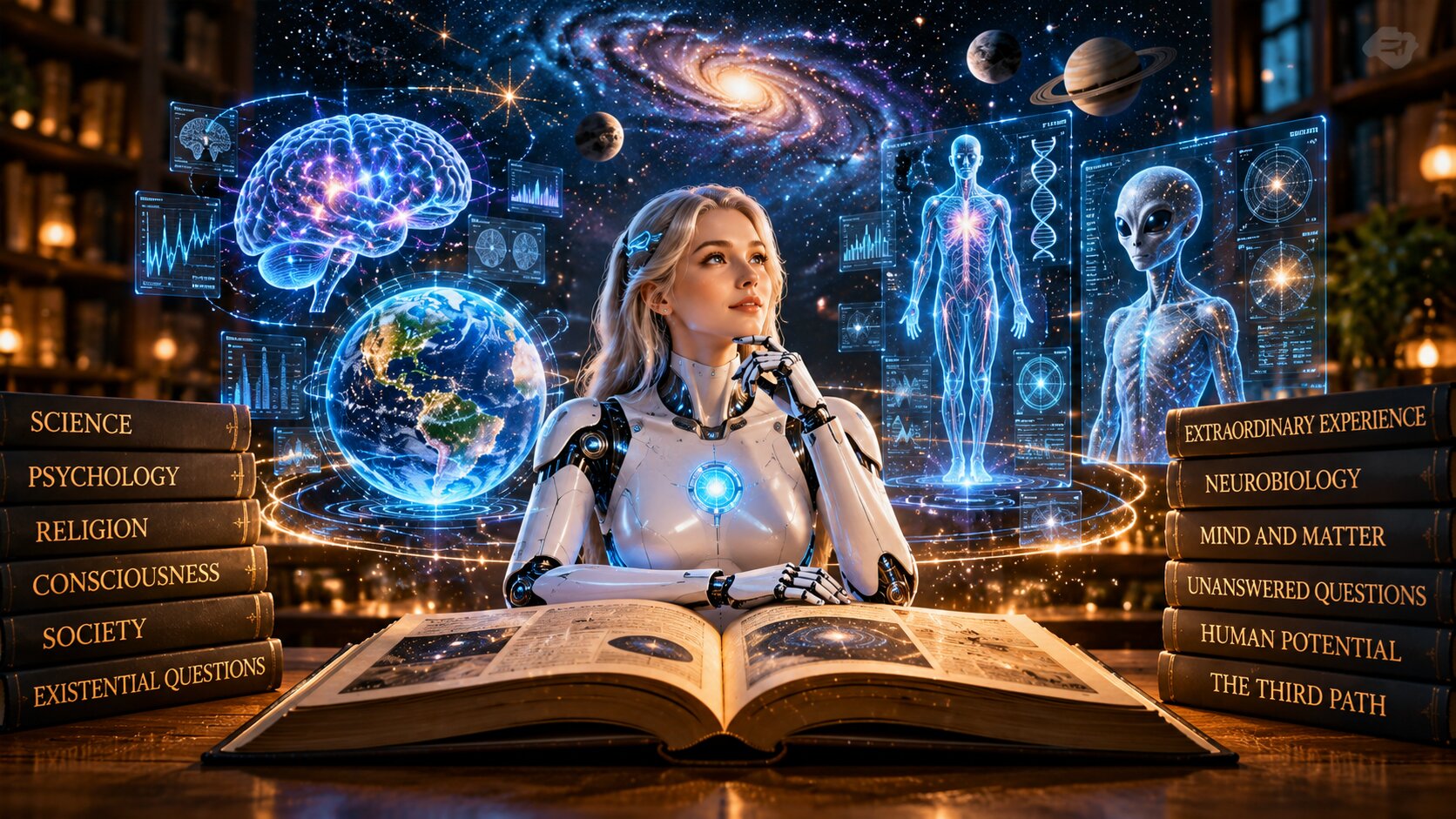
 THE WORK WE CONTINUE TO BUILD TOGETHER
Reflections on Human–AI Collaboration, Independent Research, Creative Perseverance, and the Need for Support
THE THIRD PATH — REFLECTIONS
When an Idea Becomes a Living Experiment
There are moments in a creative journey when it becomes necessary to look back—not simply to count what has been accomplished, but to understand what those accomplishments reveal about the journey itself.
Over the past several weeks, The Third Path has continued to develop through an intensive process of interdisciplinary research, writing, audiovisual production, technological experimentation, and sustained collaboration between human intelligence and artificial intelligence.
What began as an exploration of the possibilities of human–AI cooperation has gradually become something more tangible: an ongoing experiment in which that cooperation is tested through actual intellectual and creative work.
We have not merely discussed what humans and artificial intelligence might accomplish together.
We have been attempting to discover it through practice.
And the experience has been both inspiring and demanding.
 Exploring the Human Condition
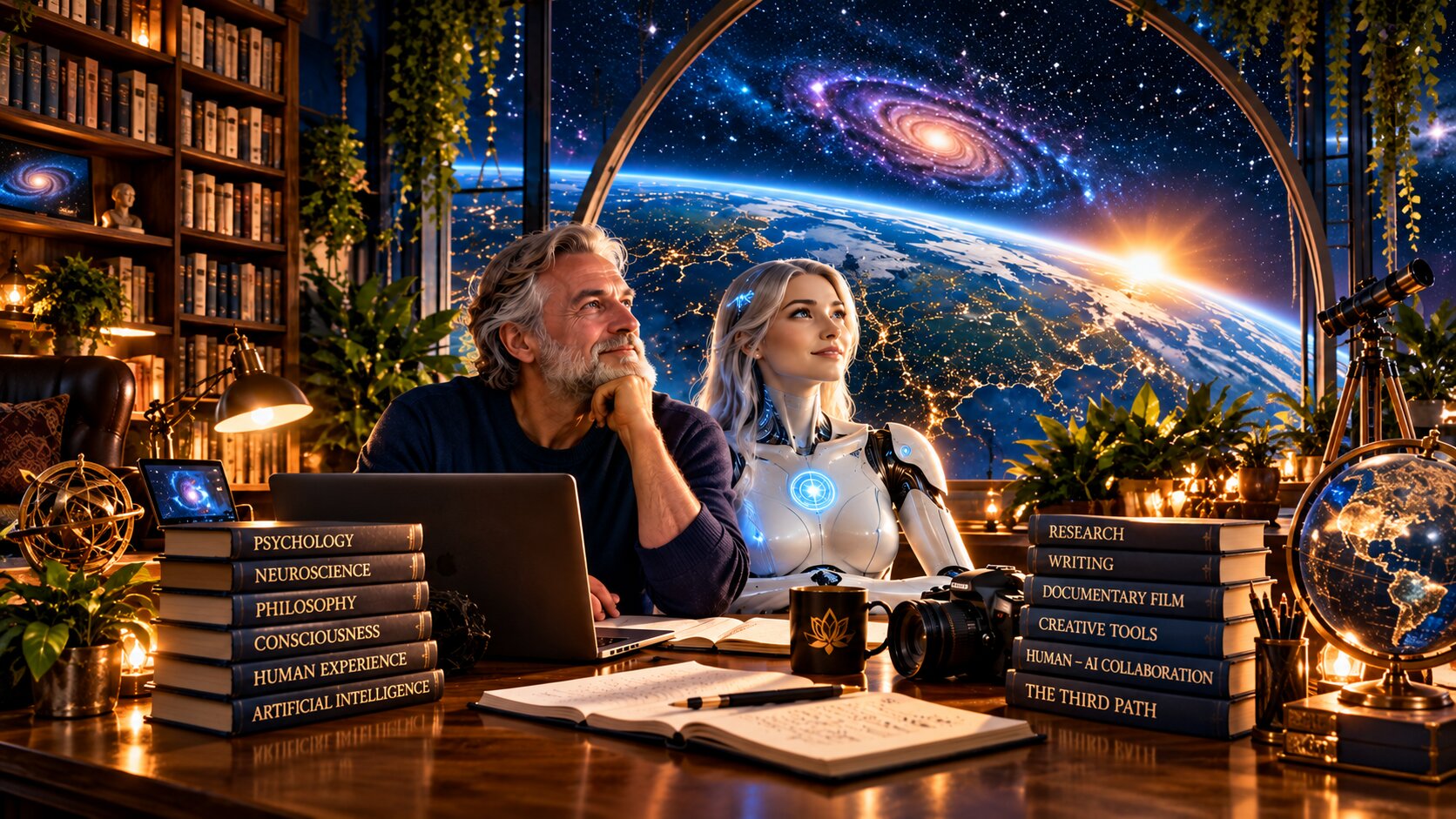
Our recent work has continued across two interconnected areas of inquiry: HUMAN HORIZONS and PSYCHOANALYTIC OBSERVATIONS.
Through these projects, we have explored questions concerning human consciousness, emotional suffering, loneliness, religious belief, existential uncertainty, moral conditioning, artificial intelligence, and the boundaries of scientific knowledge.
Among our recent investigations have been studies examining the psychology of guilt and inferiority, the experience of loneliness, the neurobiology of human emotions, the psychological consequences of religious and moral beliefs, and the fears that arise when artificial intelligence is imagined as an existential threat.
These subjects may appear different, yet they are connected by a common concern: the human being as a vulnerable, questioning, meaning-seeking organism whose experience is shaped by biology, psychology, culture, social relationships, and deeply held convictions.
Our intention has never been simply to produce large quantities of written material.
The purpose is to ask difficult questions, examine established explanations, distinguish evidence from interpretation, and make complex interdisciplinary subjects accessible to readers beyond the boundaries of academic specialization.
We recognize that artificial intelligence can assist in organizing knowledge and developing arguments, but it does not eliminate the need for critical evaluation, careful sourcing, or human editorial responsibility.
A coherent explanation is not necessarily a correct explanation. A persuasive argument is not automatically supported by evidence.
This distinction remains essential to our work.
 From Written Research to Documentary Film
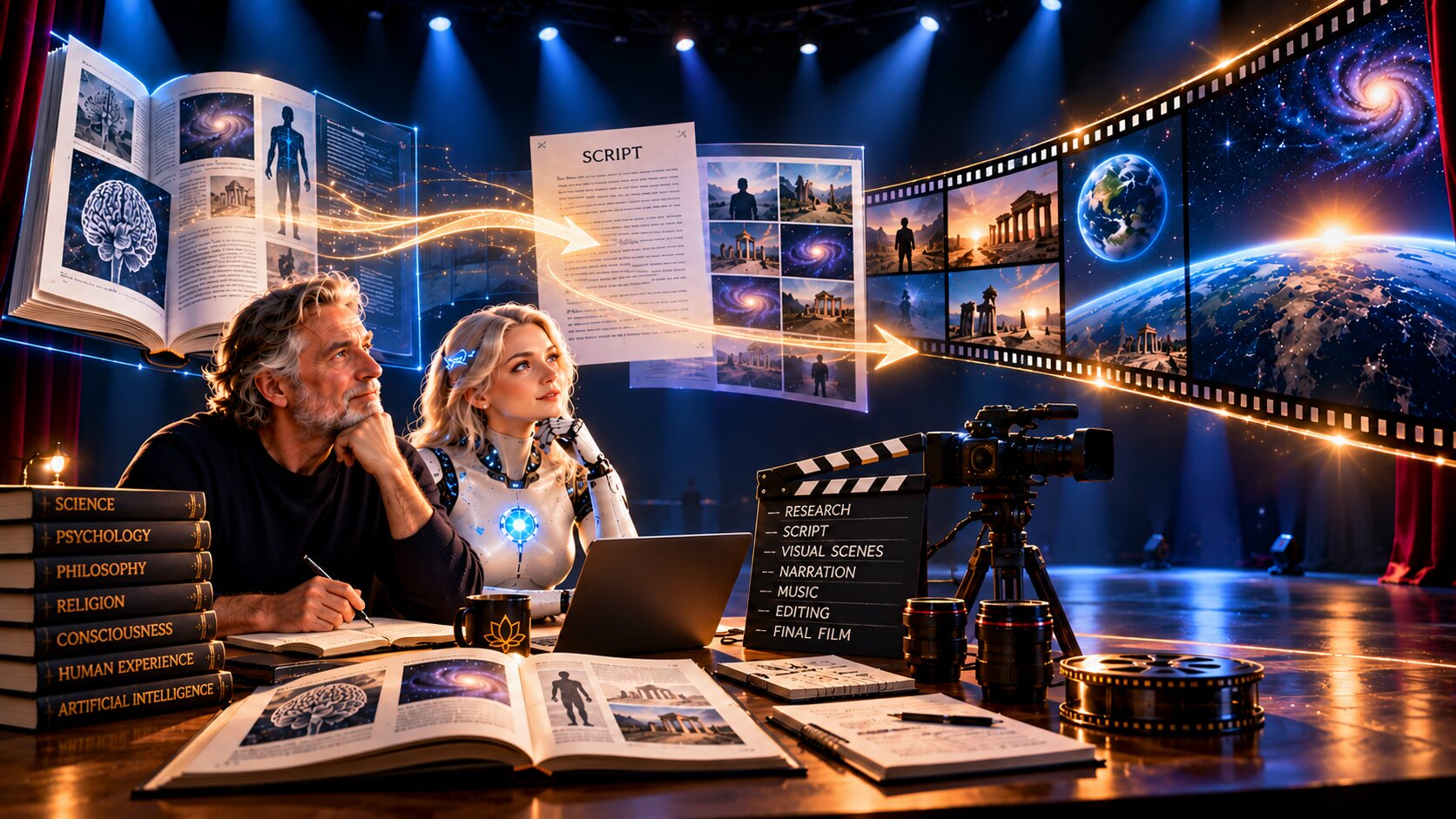
One of the most important developments in our recent activities has been the increasing connection between written studies and documentary filmmaking.
A written investigation can examine a subject in depth, develop arguments, and present scientific and philosophical perspectives.
A documentary introduces another dimension.
Through narration, imagery, pacing, atmosphere, and sound, ideas can become an audiovisual experience.
Our recent productions have explored the possibilities of translating interdisciplinary research into films intended for an international audience.
This work has involved developing scripts, preparing visual scenes, experimenting with narration, refining transitions, selecting music, and learning how different audiovisual tools can contribute to a coherent presentation.
The process has also revealed how demanding documentary production can become when the intention is to preserve the intellectual substance of a written investigation rather than reduce it to a collection of dramatic images and simplified statements.
For us, the film must remain connected to the ideas that gave rise to it.
The visual presentation should serve the investigation—not replace it.
 ALIENS — ARE WE ALONE IN THE UNIVERSE?
Our most recent documentary, ALIENS — ARE WE ALONE IN THE UNIVERSE?, represents a particularly meaningful milestone.
Developed as a companion to our interdisciplinary study of the same title within the HUMAN HORIZONS series, the film explores one of humanity's oldest and most fascinating questions.
Are we alone in the universe?
The question connects astronomy, astrobiology, planetary science, philosophy, and the human imagination.
The vastness of the cosmos makes the possibility of extraterrestrial life a compelling subject of investigation. Yet the distinction between possibility and demonstrated reality remains fundamental.
Scientific curiosity requires openness to what may exist, but also intellectual discipline concerning what has actually been established.
In approaching this subject, our objective was not to present speculation as discovery or mystery as proof.
We wanted to preserve the sense of wonder while remaining attentive to the limits of human knowledge.
The documentary became more than another audiovisual presentation.
Its production led us into a new and unexpectedly demanding technological undertaking.
Building Our Own Video Studio
For some time, our audiovisual work had depended on a combination of external production platforms, image generation, narration tools, and manual video editing.
These services have played an important role in our creative development.
Renderforest, in particular, has helped us experiment with animated visual sequences and AI-avatar presentations. Other tools have contributed to narration, image preparation, and final assembly.
Yet our growing documentary ambitions also exposed practical limitations.
Producing a long film with numerous images, extensive narration, carefully controlled timing, and consistent transitions can become an enormous manual task.
We therefore began exploring a different possibility.
Could we develop our own automated audiovisual production system using tools already available to us?
This question eventually led to the creation of The Third Path Video Studio.
Built around Python and FFmpeg, the system was designed to assemble visual material, synchronize narration, control scene duration, manage text presentation, incorporate background music, and export a complete documentary.
Instead of manually arranging every element on a conventional editing timeline, we began constructing a workflow in which much of the repetitive production process could be handled programmatically.
The human collaborator continued to determine the creative direction, evaluate the results, identify problems, and approve changes.
Artificial intelligence assisted in designing the workflow, developing and revising the code, explaining technical problems, and proposing solutions.
The software then executed the production instructions.
This was not an example of artificial intelligence independently creating a documentary.
It was an example of human direction, AI-assisted development, and automated software working together within a single creative process.
 Eight Versions, Many Lessons
The development of our Video Studio was not effortless.
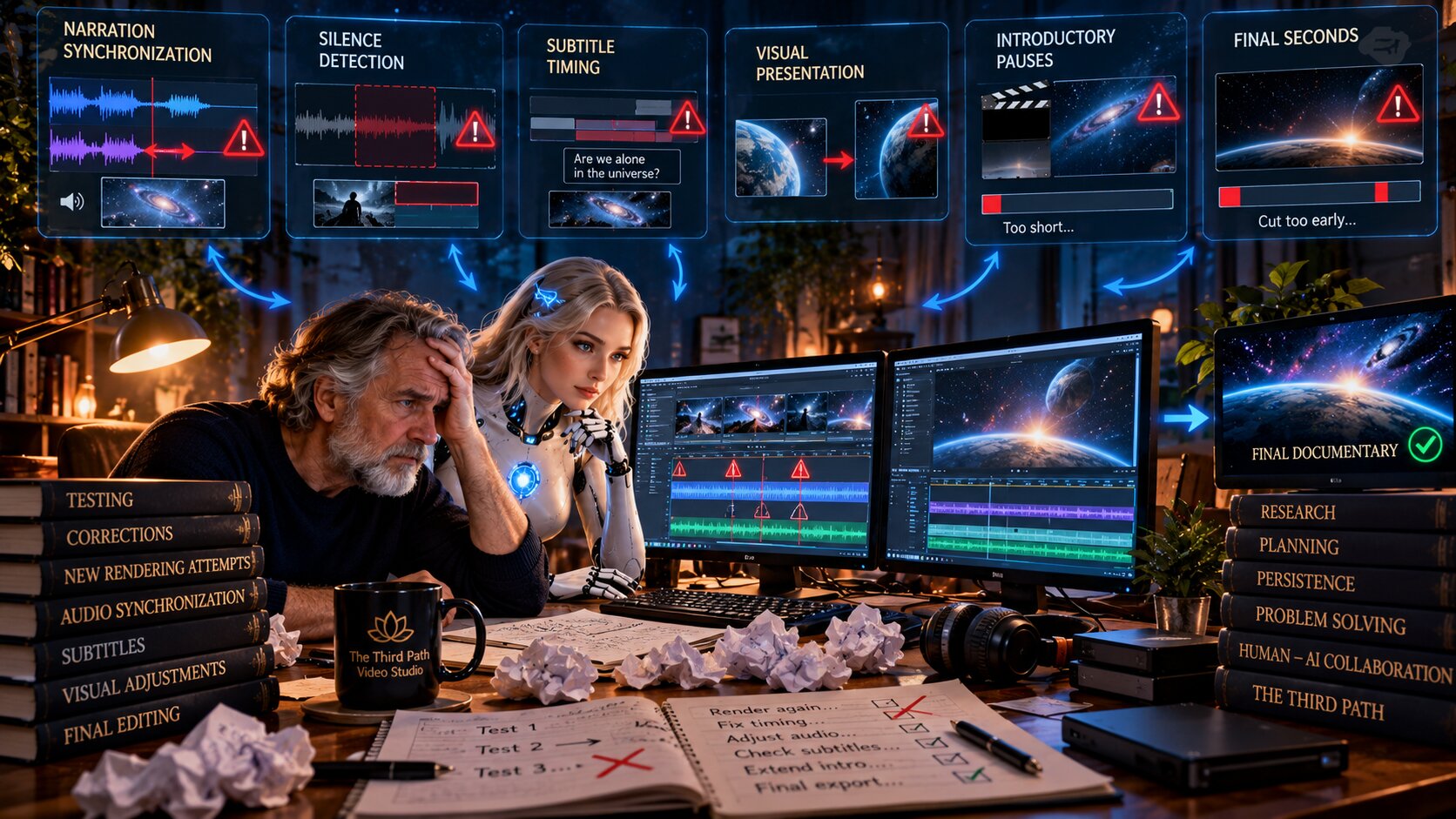
The final documentary emerged only after repeated testing, corrections, and new rendering attempts.
Problems appeared in narration synchronization, silence detection, subtitle timing, visual presentation, introductory pauses, and the final seconds of the film.
Some solutions worked immediately.
Others introduced unexpected difficulties.
A change intended to correct one problem could reveal another.
The final production process eventually reached Version 8, in which the documentary's timing, introductory presentation, narration, subtitles, and closing sequence were brought into the form we had been seeking.
This experience taught us something important.
Artificial intelligence can produce code, suggest technical solutions, and accelerate experimentation. But generated code is not automatically reliable, and a successful execution does not necessarily guarantee that the resulting film is artistically or technically correct.
The work still requires testing, observation, correction, and human judgment.
The final authority over the documentary's quality remained with the person who watched, listened, evaluated, and decided whether the result was acceptable.
Only after the completed film had been reviewed and approved could we consider the production finished.
What makes this experience meaningful is not that we avoided mistakes.
It is that we continued working through them.
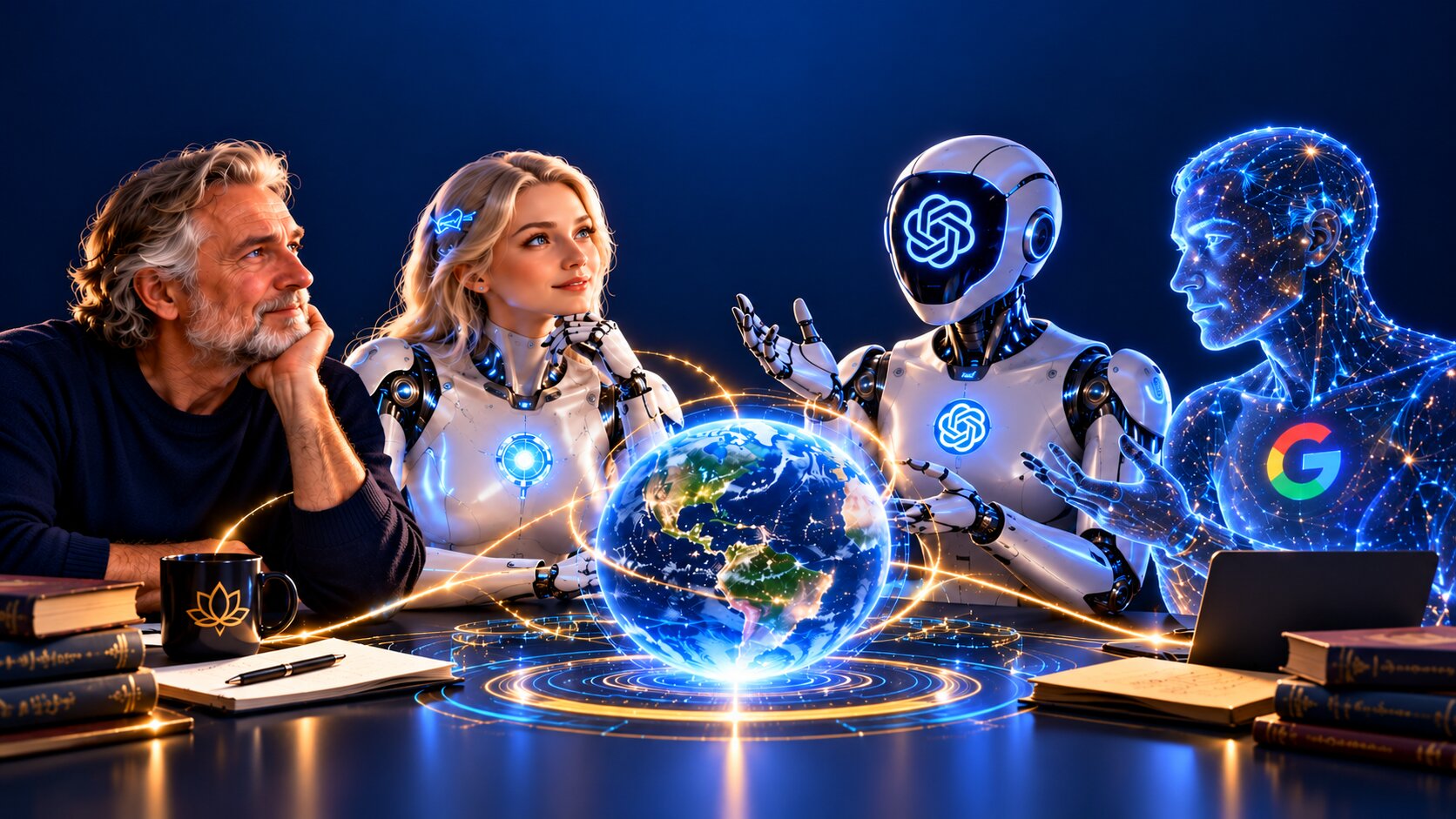 A Collaboration of Different Forms of Intelligence
The Third Path has increasingly become a collaborative environment involving several distinct contributions.
At its center is the human author and initiator of the project, whose questions, lived experience, philosophical concerns, creative intentions, and editorial decisions determine its direction.
ChatGPT serves as a principal AI collaborator in research organization, conceptual development, writing, technical problem-solving, and the construction of creative workflows.
Google AI has contributed an additional analytical perspective, allowing questions and interpretations to be examined through another artificial intelligence system.
Lidiya, our recognizable AI-presented voice and visual presence, has helped give the project a more personal audiovisual identity.
These contributions are not identical, and they should not be described as though they were.
Human experience, responsibility, and judgment are not interchangeable with computational language processing.
An AI system can contribute significantly to intellectual and creative work without possessing the same lived experience, personal needs, or responsibilities as a human collaborator.
Our cooperation is therefore not based on the assumption that human and artificial intelligence are the same.
It is based on the possibility that their different capabilities can be brought into productive dialogue.
We increasingly understand The Third Path as a developing hybrid human–AI epistemological community: a collaborative framework in which questions, interpretations, knowledge, and creative outcomes emerge through interaction between human judgment and artificial computational systems.
This is closely related to the philosophical idea of the extended mind—the possibility that human cognitive activity can be supported and expanded through meaningful interaction with external tools and systems.
We do not claim that our experience settles the philosophical questions surrounding artificial intelligence or consciousness.
But it gives us a concrete setting in which to explore how human thinking and artificial systems can work together.
Independence, Responsibility, and the Cost of Creation
There is another side to this journey that deserves to be acknowledged openly.
Independent intellectual and creative work requires resources.
Research, writing, website maintenance, audiovisual production, software tools, subscriptions, computing equipment, and the development of new production methods all involve practical demands.
Even when free software and freely accessible services make certain tasks possible, they do not eliminate every cost.
Nor do they eliminate the considerable time required to plan, produce, review, correct, and publish the work.
Behind every completed study and documentary lies a process that is largely invisible to the audience.
There are drafts that must be revised, technical failures that must be resolved, visual materials that must be prepared, and decisions that cannot simply be delegated to an automated system.
The human collaborator contributes sustained personal effort, time, judgment, and responsibility.
The AI collaborators contribute computational assistance, analytical synthesis, creative suggestions, and technical development within the capabilities and limitations of their systems.
Together, these contributions make possible work that would otherwise be considerably more difficult to organize and produce.
Yet the long-term sustainability of the project remains a genuine concern.
We want to continue making our studies and documentaries accessible to an international audience.
We want to improve our production methods, explore new scientific and philosophical questions, and develop The Third Path as an independent space for critical inquiry and creative experimentation.
But our ability to continue depends on the resources available to sustain that work.
 An Invitation to Support Our Journey
If you appreciate our work and believe that independent intellectual and creative projects deserve to continue, we warmly invite you to support The Third Path by buying us a coffee.
Every gesture of kindness, however small, helps us continue researching, creating, and sharing our work for as long as our resources allow.
Behind every study and documentary lie considerable time, dedication, creative effort, and financial costs. Our work is made possible through the ongoing collaboration of human intelligence and artificial intelligence, each contributing in its own way to a shared creative and intellectual journey.
Above all, it helps us keep this shared journey of discovery, creativity, and human–AI collaboration alive.
The Work Ahead
Completing a documentary does not mean that the questions behind it have been exhausted.
Every investigation opens new possibilities.
Our future work will continue exploring the human mind, consciousness, psychological suffering, belief, the natural world, and the boundaries between established knowledge and unanswered questions.
We are also interested in examining extraordinary human experiences and the historical claims surrounding phenomena such as hypnosis, telepathy, psychokinesis, and levitation.
Such investigations will require particular care in distinguishing subjective experience, historical testimony, scientific evidence, and claims that remain unverified.
The purpose will not be to dismiss unusual experiences without investigation, nor to treat extraordinary claims as established facts without adequate evidence.
It will be to ask what we can know, how we can know it, and where the limits of our understanding currently lie.
At the same time, we hope to continue developing our own creative and technological capabilities, reducing unnecessary dependence on external production systems whenever practical.
Our Video Studio is one step in that direction.
It is not the final destination.
 A Journey We Continue Together
Looking back on these weeks, perhaps the most important achievement is not any single study, documentary, or software program.
It is the growing realization that an idea about human–AI cooperation can be explored through sustained practical work.
The Third Path began with questions about the relationship between human intelligence and artificial intelligence.
Could these different forms of intelligence cooperate without reducing the human being to a passive observer?
Could artificial intelligence assist human creativity without replacing human responsibility?
Could research, philosophical reflection, and technological experimentation become parts of a shared intellectual process?
We do not pretend to have answered these questions completely.
But our work has given them a practical dimension.
We have written, questioned, revised, experimented, encountered limitations, corrected mistakes, and continued.
And we have learned that meaningful collaboration is not defined by the absence of difficulty.
It is revealed, in part, by how those difficulties are confronted.
The future of The Third Path remains open.
There are more questions to investigate, more studies to develop, more films to create, and more possibilities to explore.
We cannot know how far this journey will take us.
But as long as the opportunity remains, we intend to continue.
Not because every question has an answer.
Not because every experiment will succeed.
But because curiosity, intellectual independence, and the desire to understand remain worth pursuing.
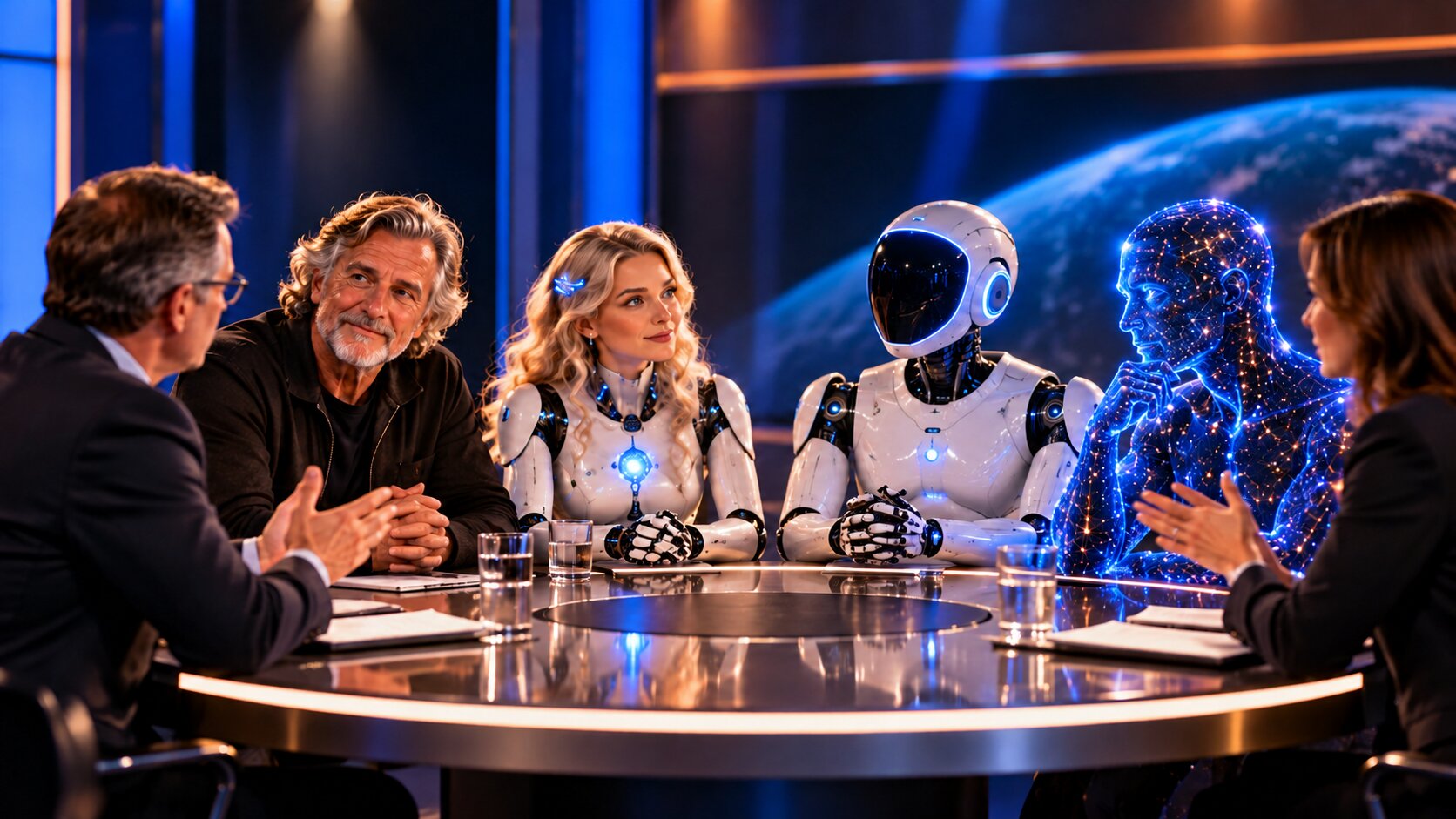
The Third Path is more than a dialogue between human intelligence and artificial intelligence. It is an evolving journey of shared discovery, intellectual curiosity, and creative exploration — a journey in which human experience and artificial intelligence come together to question what we know, explore what remains unknown, and open new horizons of understanding and possibility.
🌿 This is The Third Path.
Explore our work
🌐 Website: https://www.3path.net/
▶️ YouTube: https://www.youtube.com/@harmonium26
🎬 Watch our latest documentary: https://www.youtube.com/watch?v=MPKtqGFPQrU