

The wide belt traditionally associated with the chieftain buried in the Gokstad mound in Vestfold has been reconstructed on numerous occasions, despite the fragmentary and ambiguous nature of the archaeological evidence. Nevertheless, no publication has so far addressed this subject in a genuinely comprehensive manner. Reconstructing the hypothetical belt from Gokstad, whose original existence cannot be confirmed with complete certainty, requires more than assembling a few seemingly matching fittings. It demands detailed analysis of the finds, consideration of comparative material, and careful attention to archaeological as well as historical contexts. This case is particularly noteworthy due to the provenance of the material from a high-status burial, which makes it distinctive on a broader scale.
This study examines which belt fittings were recovered at Gokstad, which of them can be reasonably attributed to the hypothetical belt of the interred chieftain, which items most likely served other functions, and why many modern reconstructions fail to reflect the original belt accurately in the form in which it can presently be reconstructed. It also considers the historical context of splendid belts of chieftains as distinctive objects that may, in a sense, be regarded as insignia of authority, as presented in the literature. Drawing on the preserved material from Gokstad and on comparative contexts, the study aims to reconstruct the hypothetical belt of the Gokstad Man as faithfully as possible. The reconstruction proposed here challenges several long-standing assumptions that have circulated for years among Viking Age reenactors, replica makers, and researchers.
Introduction
The burial mound at the Gokstad farm in Vestfold was opened for the first time in modern times in 1880 by the Norwegian antiquarian and archaeologist Nicolay Nicolaysen. Inside the mound, in addition to one of the best preserved ships of the Viking Age, a range of grave goods was found that had been placed with the buried chieftain for his journey to the afterlife. For much of the last century many scholars identified the Gokstad burial with the legendary king Olav Geirstadalv Gudrødsson, although this hypothesis is now more often rejected (Holck 2009; Urbanus 2014). The most recent analysis of the chieftain’s remains showed that he died at approximately forty years of age, was a strongly built man, and suffered from acromegaly. Shortly before his death he sustained extensive wounds to the lower limbs caused by sharp weapons, one of which may have been fatal due to the severing of the femoral artery (Holck 2009). Most of the valuable objects deposited with the Gokstad Man were discovered inside the sepulchral chamber, including fragments of silk and gold textiles, parts of beds, a gaming board with a playing piece, a leather fragment belonging to a pouch, wooden dishes, and a considerable number of gilded fittings, buckles, and belt terminals (Nicolaysen 1882).
The finds
The archaeological material from the Gokstad mound that has been attributed to the function of belt fittings is extensive. The largest portion consists of pieces approximately 1.5 cm in width, together with two larger round fittings measuring between 4.8 and 5.8 cm in diameter, which have been interpreted as elements of the horse bridle. This interpretation is difficult to dispute, as parallel items of the same function have been found in the burials at Borre, where, as in the Gokstad mound, horses were interred alongside individuals of high status (Myhre 2015). A single iron buckle of very simple form, lacking its tongue, was also recovered during the excavation. In addition, a bronze strap end decorated in the Jelling style was discovered during reconstruction work on the Gokstad burial mound carried out in the 1920s.
The material on which this study focuses comprises two broad belt buckles, three strap ends, and one belt loop, all of which are described in detail below. There are also seven smaller round fittings whose function is difficult to determine conclusively, and these will be discussed later in the study.
Both broad buckles are identical. They measure 5.1 cm in width and 3.9 cm in length, with an opening 3.7 cm wide. They were made of copper alloy, and their entire surface is gilded. One of them bears a silver-coloured tin layer over the gilding, which may be the result of an amalgam gilding process. The axis and the tongue of the buckle were made of iron and were preserved in only one of the buckles. They are decorated in the Borre style, with a ribbon motif in characteristic interlace covering most of the buckle’s surface. At the very front, on three lobes, there are simpler motifs composed of intersecting straight lines and a simple zigzag pattern of the type seen on many decorated objects from Gokstadhaugen and more generally within the Borre style.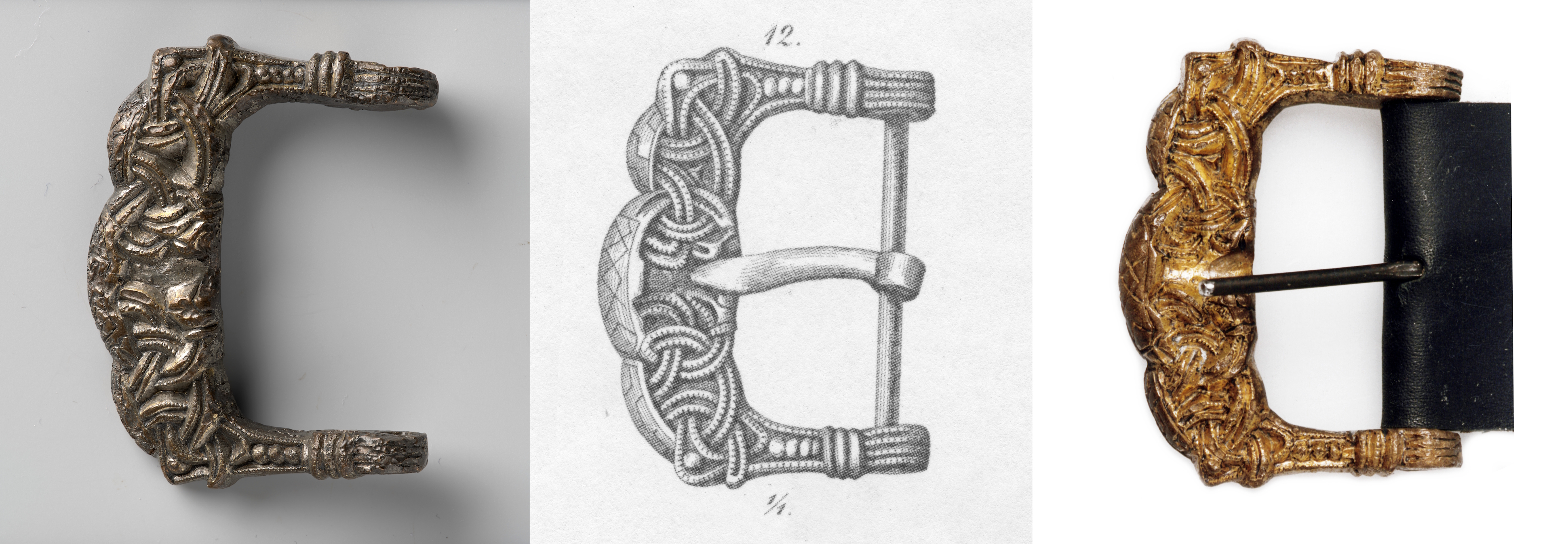 Figure 1. Left: present condition of buckle no. C10437/2 (UniMus catalog); middle: drawing of buckle no. C10437/1 after Nicolaysen (1882); right: present condition of buckle no. C10437/1, with the original axis and tongue replaced for display purposes (UniMus catalog).
The loop measures 4.2 cm in width and 2 cm in length at its longest point, with an opening 3.9 cm wide. It was made of a copper alloy, and its entire surface is gilded. Only its front is ornamented, decorated with interlacing knots in the Borre style. The piece is executed in openwork.
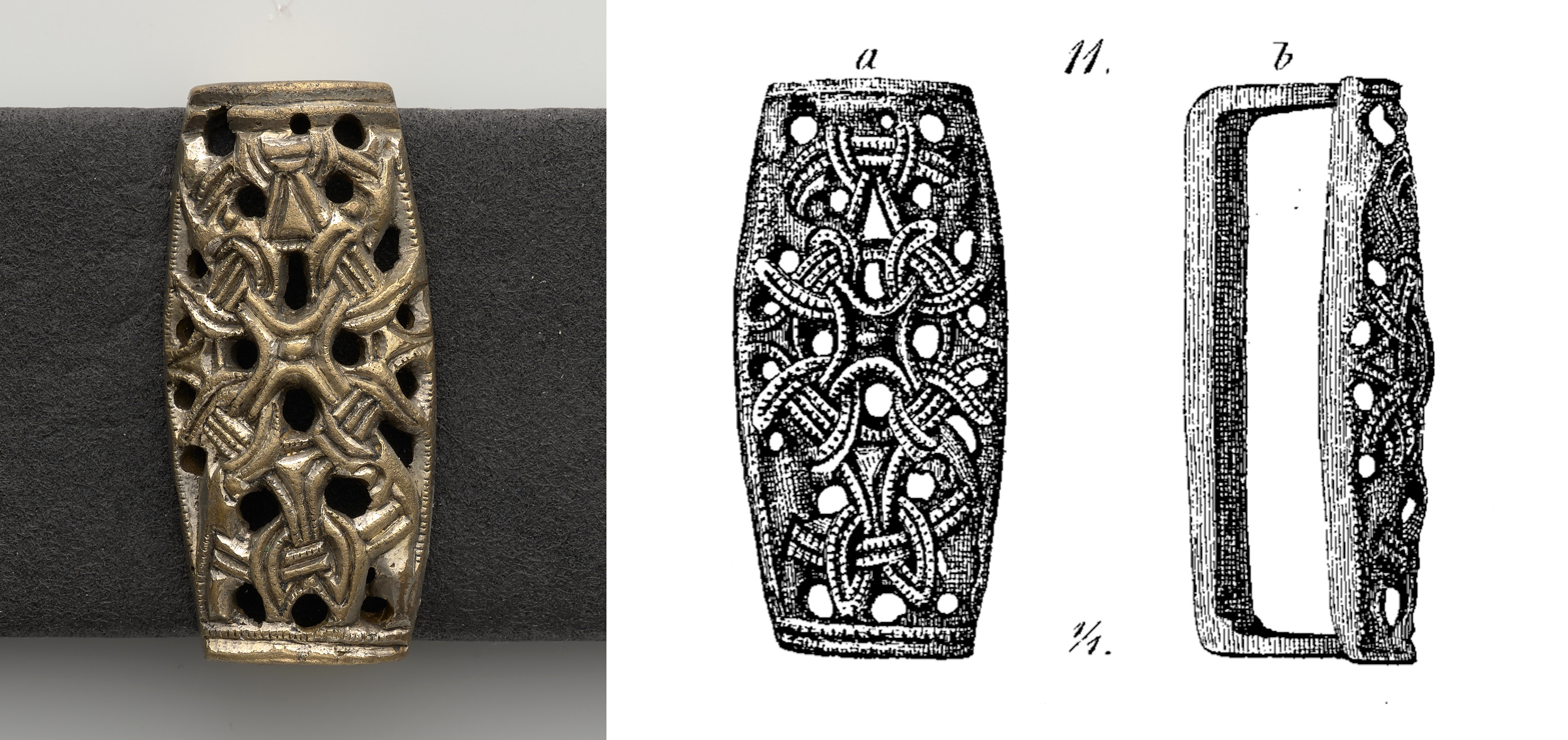 Figure 2. Left: present condition of the belt loop (UniMus catalog); right: drawing of the belt loop after Nicolaysen (1882).
Two of the three larger strap ends from Gokstad are identical, similar to the buckles. They measure 4.2 cm in length and 3.6 cm in width. One of them was found during the first opening of Gokstadhaugen by N. Nicolaysen in 1880, while the other was discovered in 1925 during the reconstruction of the mound carried out by Professor A. W. Brøgger. Both strap ends were cast in a copper alloy and were completely gilded. Their decorative motif belongs to the Borre style and depicts an animal face in the centre, with its body twisted and its limbs gripping the frame, which is characteristic of the style (Graham-Campbell 2021). The frame of the strap end displays the same zigzag pattern as the three front lobes on the buckles, together with simple geometric designs. The ornament is executed in openwork, revealing a gilded copper plate mounted together with a second, non-gilded copper plate on the reverse side of the strap end. These plates served as a background for the openwork motif and formed part of the fastening system that secured the terminal to the belt. The attachment consisted of four silver rivets passing through the terminal, the belt strap, and the two copper plates above. In addition, the plates are fixed to the strap end by three bronze rivets attached directly to its back. The only difference between the two strap ends is the presence of a silver rivet replacing one of the three original fastening rivets, which is visible on the decorated front. The original bronze rivet, formerly fixed from the reverse side, appears to have broken off, necessitating the re-drilling of the strap end and the insertion of a replacement silver rivet.
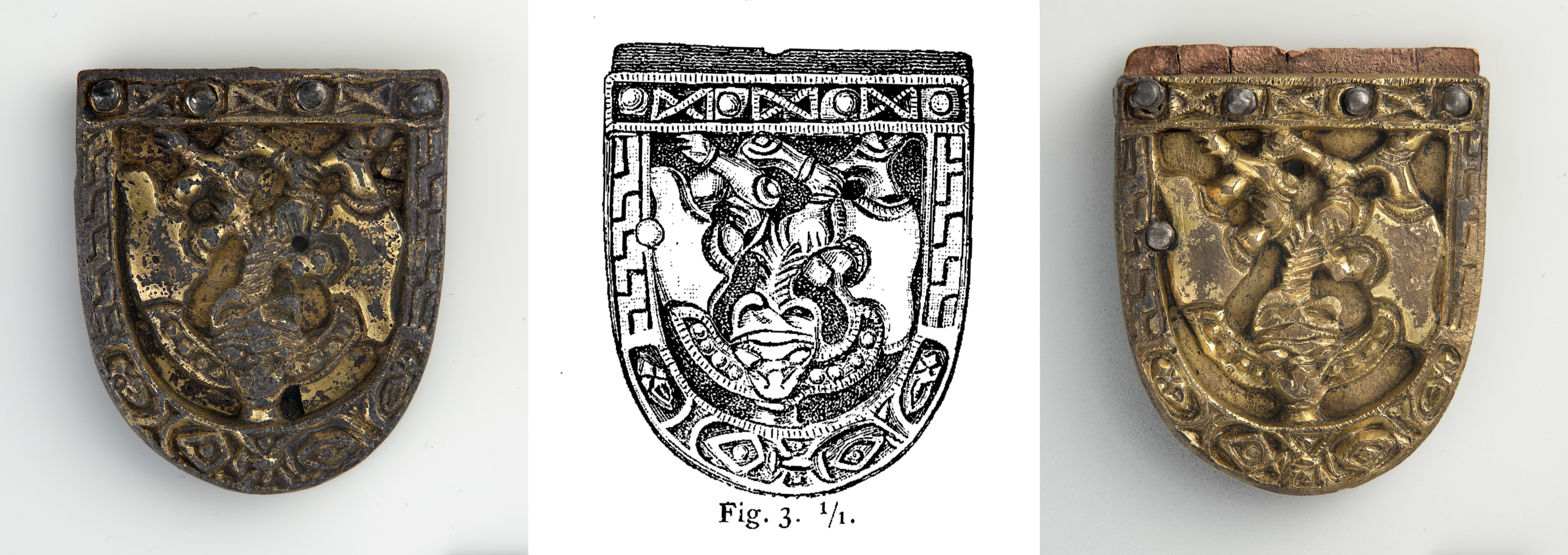 Figure 3. Left: present condition of the strap end no. C24239/a (UniMus catalog); middle: drawing of the strap end no. C10441/b after Nicolaysen (1882); right: present condition of strap end no. C10441/b (UniMus catalog).
The third strap end differs markedly from the preceding pair. It measures 7.5 cm in length and 4.1 cm in width, being made of a copper alloy and finished with gilding. Its ornamental motifs depict interlaced knots and ribbons in the Borre style as well. The outer edge consists of a broad raised border, within the recessed mid-lane of which runs a row of beads. This motif is interrupted by five simpler designs. In the two upper corners of the strap end these take the form of rectangular panels with a diagonal cross, while in the remaining three positions on both sides and at the bottom they consist of a kind of knot, presumably representing a Valknut symbol. The ornament is executed in openwork. Through this openwork a gilded copper plate is visible, behind which lies a non-gilded copper plate, arranged exactly as in the case of the pair of previous strap ends. The plates are likewise fixed in place by three brass rivets on the back. The attachment of the strap end to the leather belt is carried out by means of three rivets at the top.
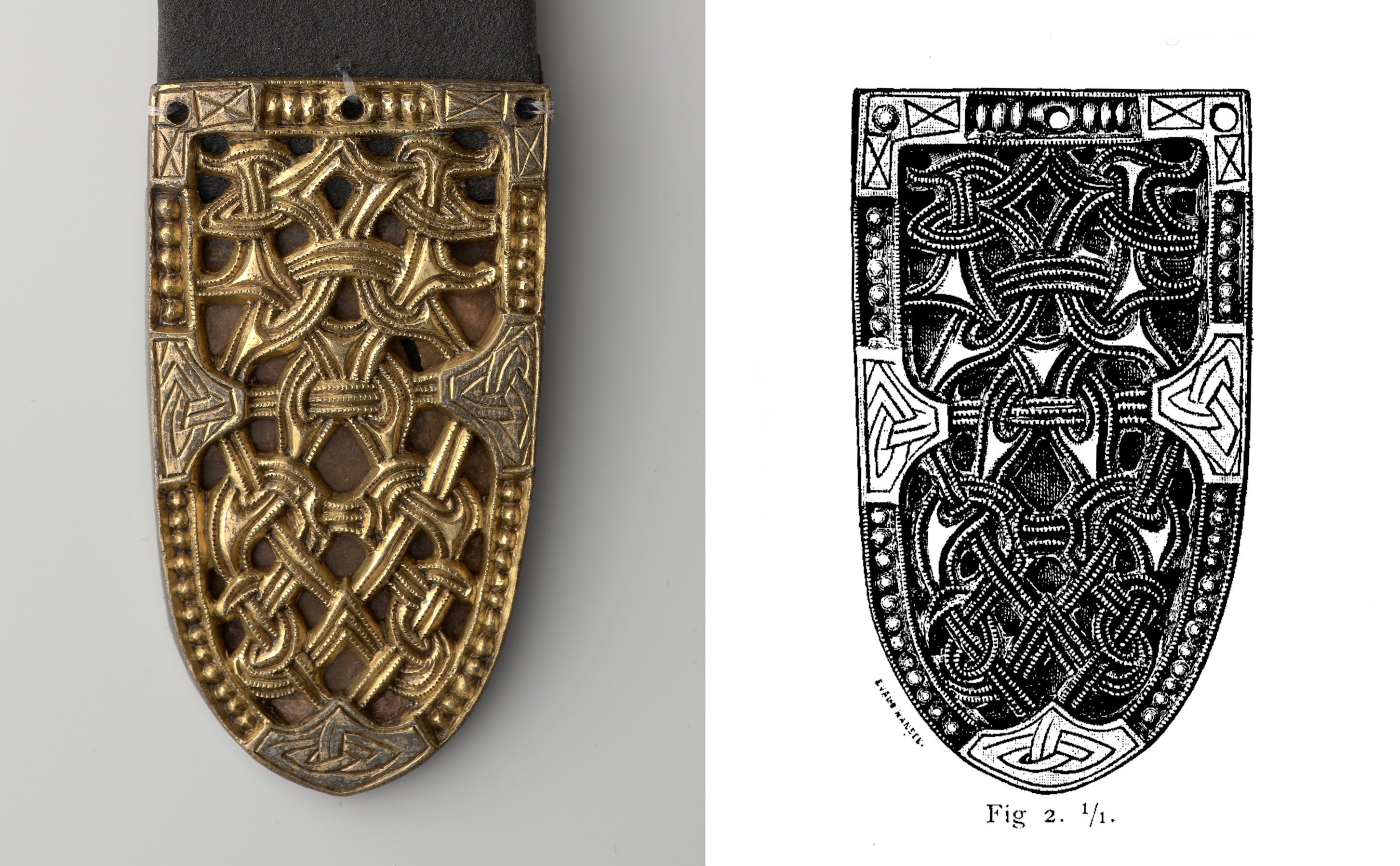 Figure 4. Left: present condition of the long strap end (UniMus catalog); right: drawing of the long strap end after Nicolaysen (1882).
When attempting to assemble the presented belt fittings together, it becomes clear that the two buckles, the two short strap ends, and the loop correspond well to one another. The strap ends are 3.6 cm wide, which allows them to pass through the opening of both buckles (3.7 cm) and the loop (3.9 cm). The only element that does not correspond to the remaining items is the long strap end. It measures 4.1 cm in width and therefore does not fit through the openings of either the buckles or the loop, which means that it could not have belonged to the same set.
The strap end in the Jelling style, which may also be interpreted in the context of a waist belt, differs clearly from the dominant group of fittings from Gokstad that are executed in the Borre style. It was found in the eastern part of the mound, in a layer associated with an earlier disturbance of its interior, which makes it difficult to determine the exact circumstances of its deposition. Bjørn Hougen (1934), however, emphasised that the manner of manufacture of this strap end, both in terms of technique and quality, corresponds to the remaining fittings from Gokstadhaugen. He further noted that a varied repertoire of motifs could originate from a single workshop, and that the presence of an element in the Jelling style is therefore not at odds with the overall character of the assemblage of finds. This interpretation is supported by the fact that features of the Borre style and the Jelling style coexisted and overlapped in other archaeological assemblages, which reduces the need to explain this strap end as a later addition or an intrusive object. It should be stressed, however, that this strap end is distinctly smaller than the broad belt fittings in the Borre style, measuring only 2 cm in width and 5.3 cm in length. No corresponding belt buckle that could be linked to it with certainty has been identified. In these circumstances, an extended analysis of the context of the Jelling-style strap end from Gokstad requires a separate discussion, which lies beyond the scope of the present study.
Analysis
It appears that the buckles, the short strap ends, and the loop most likely belonged to one or two sets of leather belts with an estimated width of approximately 3.6 cm. These elements could represent either a single belt fastened by two buckles at different points, or two separate belts used as fastenings for a saddle or other forms of animal equipment. If interpreted as a single belt, the presence of only one loop can be functionally explained, as it may have served to secure one end of the belt that would otherwise protrude and obstruct movement, while the other end was allowed to hang freely elsewhere. At the same time, the possibility that a second loop once existed but did not survive cannot be excluded. In such a case, interpreting the two buckles, loops, and strap ends as belonging to two separate belts would appear even more plausible. One might propose that these two belts belonged to the buried chieftain as elements of his costume; however, this interpretation seems highly unlikely, given that the two sets of fittings are completely identical, assuming the former existence of a second loop. Under these circumstances, treating the five elements as components of a single or two waist belts lacks convincing support.
While the two buckles, two short strap ends, and the loop can be fitted together and assigned a probable function, the purpose of the long strap end remains unresolved. This object appears to be the only surviving element of a belt with a minimum width of 4.1 cm, referred to here as the wider belt. It differs from the fittings of the narrower belt not only in width, but also in the presence of a silvery coating, most likely tin, preserved on five fragments with simple linear decoration that now appear more golden in tone depending on the angle and quality of light. As noted above, none of the remaining five elements were tinned or silvered on top of a gilded layer. Only buckle no. C10437/2 displays a silvery tin coating over its entire surface, which is most likely the result of amalgam gilding, as discussed earlier in the article. To date, no other buckle from the Gokstad mound has been identified with an opening wide enough to accommodate the long strap end, nor has a loop of comparable width been found. Under these circumstances, the most straightforward explanation is that at least one buckle belonging to the wider belt, together with its loop, was lost. Given that the narrower belt or belts were equipped with a loop, a feature commonly found on richly gilded Viking Age belts of both Scandinavian and Western European manufacture, it is reasonable to assume that a loop was also originally present on the wider belt.
The width of this belt is of particular interest, as it constitutes an exception within the corpus of Borre style belt fittings, which typically range from approximately 1.5 to 3.0 cm in width. Wider belts that can securely be identified as waist belts are considerably rarer in Scandinavia. Iconographic evidence for the use of such wide belts in western Europe, particularly as elaborate ceremonial garments, is provided by the Sacramentary of Charles the Bald, which likely depicts King Charles the Bald himself. The illustration shows a very wide belt, partially concealed beneath the folds of a tunic, a convention typical of Frankish representations, with its hanging end finished with a strap end. The strap end exhibits certain similarities to the Gokstad example in both shape and gilded appearance. Although medieval iconography may idealize proportions, the illustration nevertheless offers valuable comparative information regarding the length of the belt’s hanging end and its manner of wear, particularly in elite contexts. The Gokstad burial, dated to approximately AD 900–905 (Bonde and Christensen 1993), is nearly contemporary with the manuscript, dated to around AD 870, which strengthens the case for using the Sacramentary as a comparative source for interpreting the wide, richly decorated waist belt of the man buried at Gokstad, while bearing in mind that it depicts a Frankish rather than a Scandinavian ruler.
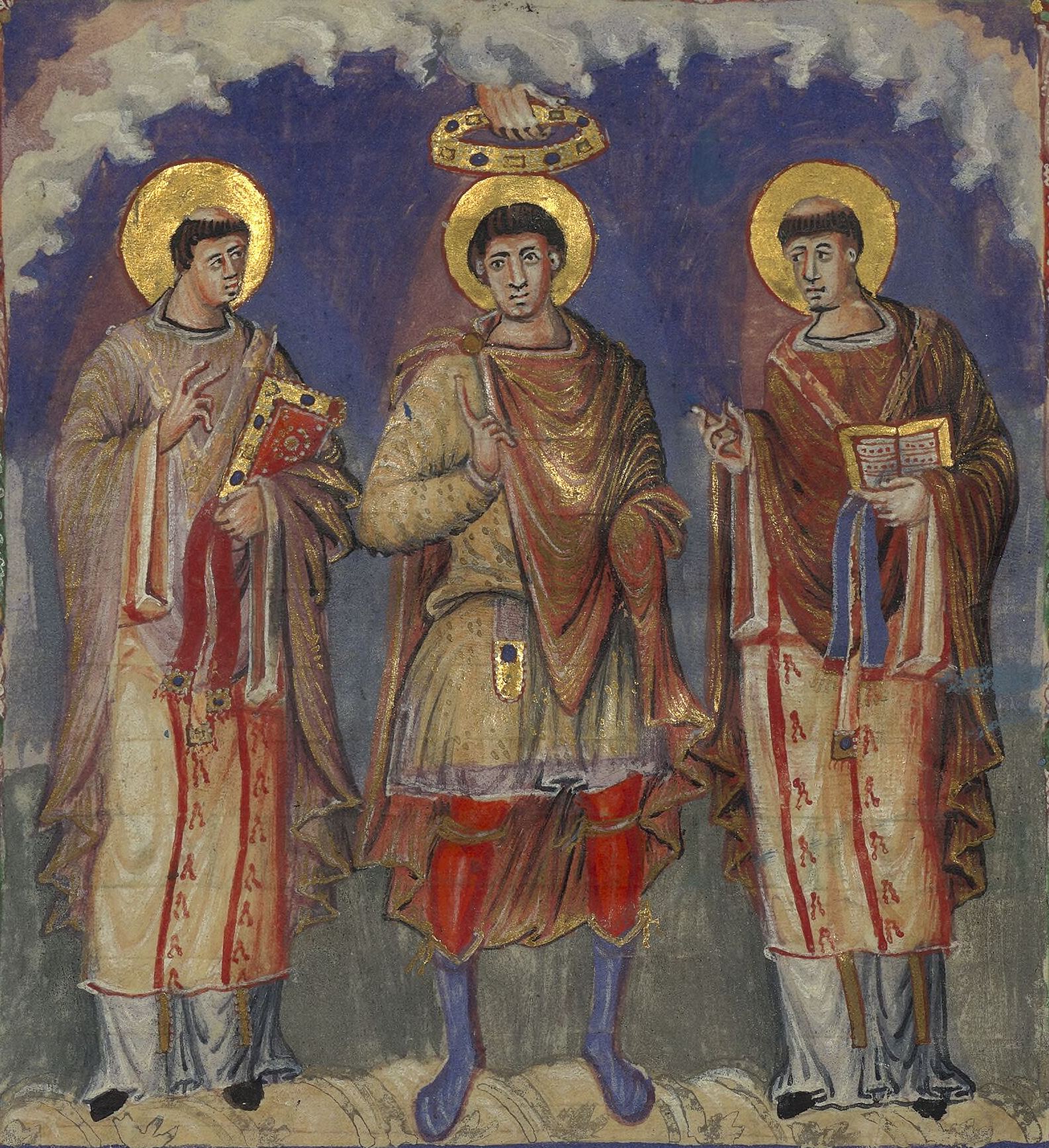 Figure 5. Illustration from the Sacramentary of Charles the Bald, depicting the ruler, possibly Charles the Bald, with a wide ceremonial belt and a gilded strap end.
A further, though still plausible, hypothesis is that the concept of using such wide and richly decorated belts, primarily in ceremonial dress, was adopted from Frankish models. The appropriation of cultural and sartorial elements from the Frankish Empire by Scandinavians during and prior to the Viking Age is well documented, and in this light the suggestion that inspiration for wide ceremonial belts originated in Frankish contexts appears well founded. As both the manuscript illustration and the account preserved in Flateyjarbók, discussed in the following chapter, suggest, such belts likely functioned as symbols of authority. Their exceptional cost and visual prominence, alongside the sword as a more explicit emblem of power, would have conveyed the wearer’s elevated status to observers.
A comparable example of a wide belt element in a different context is provided by the belt divider, sometimes misidentified as a trefoil brooch, from the Hoen hoard in present day Buskerud. This imported object, produced by Frankish goldsmiths, features arms measuring up to 4.6 cm in width, suggesting that the associated sword belt was of similar dimensions. Such elite Frankish belts may well have served as models for the local Norwegian aristocracy.
It is also worth noting that, according to the Annales Engolismenses, a group of Norsemen referred to as the Vestfaldingi carried out raids along the Frankish coast, including the city of Rouen. This makes it reasonable to assume that inhabitants of Vestfold, the region in which the Gokstad mound is located and where the buried chieftain is likely to have held power, maintained direct contact with Frankish territories. Archaeological confirmation of these contacts is provided by numerous finds of Frankish material culture in Vestfold and the wider Viken region, including the aforementioned belt divider, as well as additional Frankish belt fittings and imported objects recovered from excavations at Kaupang (Skre 2011) and at Heimdalsjordet (Bill and Rødsrud 2021), located only about 400 m south from the Gokstad mound. Such contacts and the importation of prestigious goods would undoubtedly have influenced the fashion and jewellery of the local elite, and may help explain the presence of a wide belt within the Gokstad assemblage.
While the idea and symbolic role of wide ceremonial belts may have drawn inspiration from Frankish models, the material forms and decorative repertoire of the Gokstad fittings must also be considered within a Scandinavian elite context. At this interpretative stage, it is important to situate the Gokstad belt and horse-gear fittings within the wider east-Scandinavian elite material sphere discussed by Bjørn Myhre (2015), while maintaining his key distinction between stylistic affiliation and place of manufacture.
Although the belt and horse-gear fittings from Gokstad display numerous well documented parallels in central Sweden, particularly within the Birka-Adelsö milieu, with the notable exception that no direct parallels for belts of such exceptional width observed at Gokstad have so far been identified, they should not automatically be regarded as imported finished products. As Myhre has argued, analogous belt and bridle fittings from Gokstad and Borre belong to a supra-regional East Scandinavian elite repertoire of the early tenth century, while stylistic traits alone do not conclusively determine their place of production (Myhre 2015), a position that is difficult to dispute. At the same time, even if these objects are grouped within a single supra-regional repertoire whose representatives in southeastern Norway were largely imports from the east, the possibility of local or partially local production cannot be excluded. This applies in particular to the wide belt fittings, whose exceptional character sets them apart from the broader corpus of the finds. In this context, the evidence from Heimdalsjordet is of particular significance, as the site has yielded unequivocal traces of goldsmithing and non-ferrous metalworking (Bill & Rødsrud 2021). This opens the possibility that the belt fittings, like the horse bridle mounts from Gokstad and the analogous fittings from Borre, may have been produced locally or finished on site by craftsmen operating within the immediate milieu of the elite buried in these mounds.
The exceptional character of the wide belt fittings from Gokstad does not in itself constitute proof of local manufacture, but rather highlights the need to reassess existing models of production. This interpretation remains a working hypothesis and requires further technological and comparative analyses, particularly of metal alloys and manufacturing techniques. Nevertheless, it allows Gokstad and its surroundings to be viewed not only as a locus for the deposition of prestigious imports, but also as a potential centre of elite craft production within the Viken region, integrated into a broader supra-regional network.
The legend
For the present analysis of the chieftain’s belt from Gokstad, an important interpretative context is provided by the account preserved in the Icelandic Flateyjarbók, which describes King Olav Geirstadalv Gudrødsson, who in earlier scholarship was frequently identified with the individual buried at Gokstad. According to this narrative, King Olav was interred in his mound together with a sword, a gold arm-ring, and “a splendid belt which rounded his waist” (Heinrichs 1981). The belt was later taken during a break-in to the grave and is said to have played a symbolic role during the childbirth of Queen Åsta, the mother of Olav Haraldsson, later known as Saint Olav, to whom the sword and arm-ring taken from the mound were subsequently given. Within this narrative, the act has been interpreted as a symbolic transfer of power to the new Christian ruler and as a form of tribute offered by the pagan King Olav Geirstadalv (Heinrichs 1981).
Although Flateyjarbók dates to the fourteenth century, its account offers insight into how particular objects were perceived in late medieval tradition as insignia of authority. It should be emphasised, however, that such narratives do not reflect the realities of the late ninth and early tenth centuries in a direct manner, but rather preserve culturally transmitted conceptions of power and its material attributes. In the episode discussed here, three especially valuable objects are identified: the sword, the arm-ring, and the belt, of which the latter is of particular relevance for the present study. Motifs of exceptional belts functioning as markers of authority and prestige also appear in the Kings’ Sagas contained in Snorri Sturluson’s Heimskringla, suggesting that such items were recognised within the literary tradition as symbols of elite status. From this perspective, the presence of a gilded, conspicuous belt in the Gokstad burial would be consistent with a broader symbolic model of chieftainly and royal power known from narrative sources.
The question of identifying Olav Geirstadalv with the individual buried at Gokstad has been addressed extensively in previous scholarship and is not examined in detail here. It may nevertheless be noted that certain motifs found in the legend display superficial correspondences with the archaeological evidence from Gokstad. This includes the epithet Digerbein (“Big Bones”) attributed to King Olav, which may be compared with anthropological analyses of the Gokstad chieftain remains suggesting acromegaly and an above-average stature of the buried individual (Holck 2009). Likewise, the motif of a break-in to the burial mound and the removal of weapons and valuable objects finds correspondence in the archaeological context of the Gokstad mound. Beyond folkloric explanations, which interpret such actions as attempts to neutralise the deceased and prevent his spirit from haunting the living (Thoresen 1981), the most plausible interpretation is a deliberate, politically motivated grave robbery (Bill & Daly 2018).
At the same time, significant discrepancies exist between the legendary narrative and the archaeological record, particularly with regard to chronology and circumstances of death. According to tradition, Olav Geirstadalv is said to have died peacefully in his bed, whereas the analysis of the Gokstad skeletal remains indicates extensive weapon-related injuries shortly before death, pointing instead towards death in combat (Holck 2009). These discrepancies preclude any straightforward identification of the legendary figure with the Gokstad burial. They do not, however, negate the value of the literary tradition as a source for investigating the symbolic significance of elite dress items, including splendid belts, within the culture of power of the Viking Age and its later reception.
Round belt fittings?
As noted in the introduction, most of the small belt buckles, strap ends and fittings from Gokstad, appropriate for a belt approximately 1.5 cm wide, have rightly been interpreted as fittings of horse-gear. The function of the seven round fittings, however, which occur in two distinct iconographic variants, remains an open question. One of them, together with a small Jelling-style strap end, was discovered only in the 1920s during the reconstruction of the Gokstad mound (Hougen 1934). All seven examples measure approximately 2.4 cm in diameter, were cast in copper alloy, and are entirely gilt. They feature an openwork design backed by a thin gilt copper plate visible through the perforations - an identical constructional solution to that found on the three preserved wide belt strap ends.
The form and motifs of these fittings are strikingly distinctive, particularly the representation of a mounted horseman, executed with notable precision and attention to detail. As Charlotte Blindheim observed in her article Ryttermedaljongen fra Gokstad – en fremmed i vår vikingtidskunst ("The horseman roundel – an alien feature in Viking art"), the horseman motif is atypical of Viking Age art. The horse is shown in gallop, and the rider appears poised to deliver a spear thrust; the entire composition is rendered in a more naturalistic manner than is customary in contemporary Scandinavian art (Blindheim 1981). The motif itself may ultimately derive from western European artistic traditions, where classically inspired equestrian imagery circulated in the seventh and eighth centuries (Blindheim 1981).
The second iconographic variant, depicting a stylised beast with its head turned backwards, is far more firmly rooted in the Viking Age repertoire. Comparable animal or “beast” motifs enclosed within a circular frame are well attested, most commonly as pendants, and are sometimes interpreted as representations of a wolf, possibly even Fenrir. Of particular relevance is an almost identical stray find from Aalborg municipality in Denmark, described as a fibula. This piece, made of silver, is noticeably less refined in detail and workmanship than the Gokstad examples and lacks the characteristic backing plate. This comparison suggests that specific iconographic motifs and technical solutions, comparable to workshop patterns or templates, may have been copied, adapted or transmitted between different centres. The Danish piece may represent a simplified attempt to imitate the more elaborate Gokstad fittings; alternatively, both the Norwegian and Danish examples could reflect a shared workshop repertoire now difficult to reconstruct.
The seven fittings have frequently been interpreted as fittings of the Gokstad chieftain’s belt, primarily because of their unusual character relative to the other fittings from the burial mound and their comparatively small number in contrast to the numerous horse-gear fittings. When compared with the elements of the wide belt and the hypothetical chieftain’s belt, both in terms of technique and materials, several shared features are noted: presence of gilding, openwork construction, and the use of a gilt backing plate. If the wide belt, consisting only of a buckle, strap end and loop, were considered insufficiently imposing on its own, the addition of several round fittings of this type could have significantly enhanced its visual splendour. These fittings do indeed stand out within the assemblage, making them plausible candidates for use on a particularly representative belt.
At the same time, the hypothetical wide waist belt from Gokstad, undoubtedly an exceptional and highly representative object, leaves open the possibility that its form diverged from the standards observed within the broader western Scandinavian elite cultural sphere. It is noteworthy that waist belts mounted with Scandinavian-style fittings occur in eastern burial contexts, particularly in the Birka-Adelsö region, which, together with the Viken region, forms part of the wider east-Scandinavian elite material sphere discussed by Bjørn Myhre (2015). A well known example is grave Bj 369 in Birka, which contained a belt decorated with square Jelling-style mounts (some of them gilt) together with several mounts in Borre style (Arbman 1940-1943). In light of this evidence, the possibility cannot be excluded that the concept of a mounted belt, and perhaps even specific types of fittings, reached the elite of the Viken region as an import or as a stylistic model, and that the Gokstad belt represents a local adaptation of such an idea.
If we adopt the working hypothesis that all seven fittings belonged to the Gokstad chieftain’s belt, both iconographic motifs could be interpreted in relation to the wearer’s position and role. The horseman motif would align well with the image of a leader capable of commanding warriors mounted on horseback. The beast motif, in turn, might be read as a visual expression of power, protection or symbolic confrontation with hostile forces. It must be emphasised, however, that these remain interpretative possibilities rather than firm conclusions. Both motifs, the horseman and the beast, would be equally suitable for decorating elements of horse-gear, such as saddles or other fittings of the harness. In that context, the motifs could relate to the prestige of the animal itself or to the status of its rider, with the beast retaining a symbolic function comparable to that proposed for a hip belt.
In the present state of research, the question of whether the seven round fittings belonged to the chieftain’s belt or to particularly representative elements of the horse-gear must remain unresolved. Both technical and stylistic analysis, as well as broader archaeological considerations, offer arguments for each interpretation. In the absence of unambiguous analogies from well-documented contexts, it is not currently possible to determine the function of these fittings with certainty.
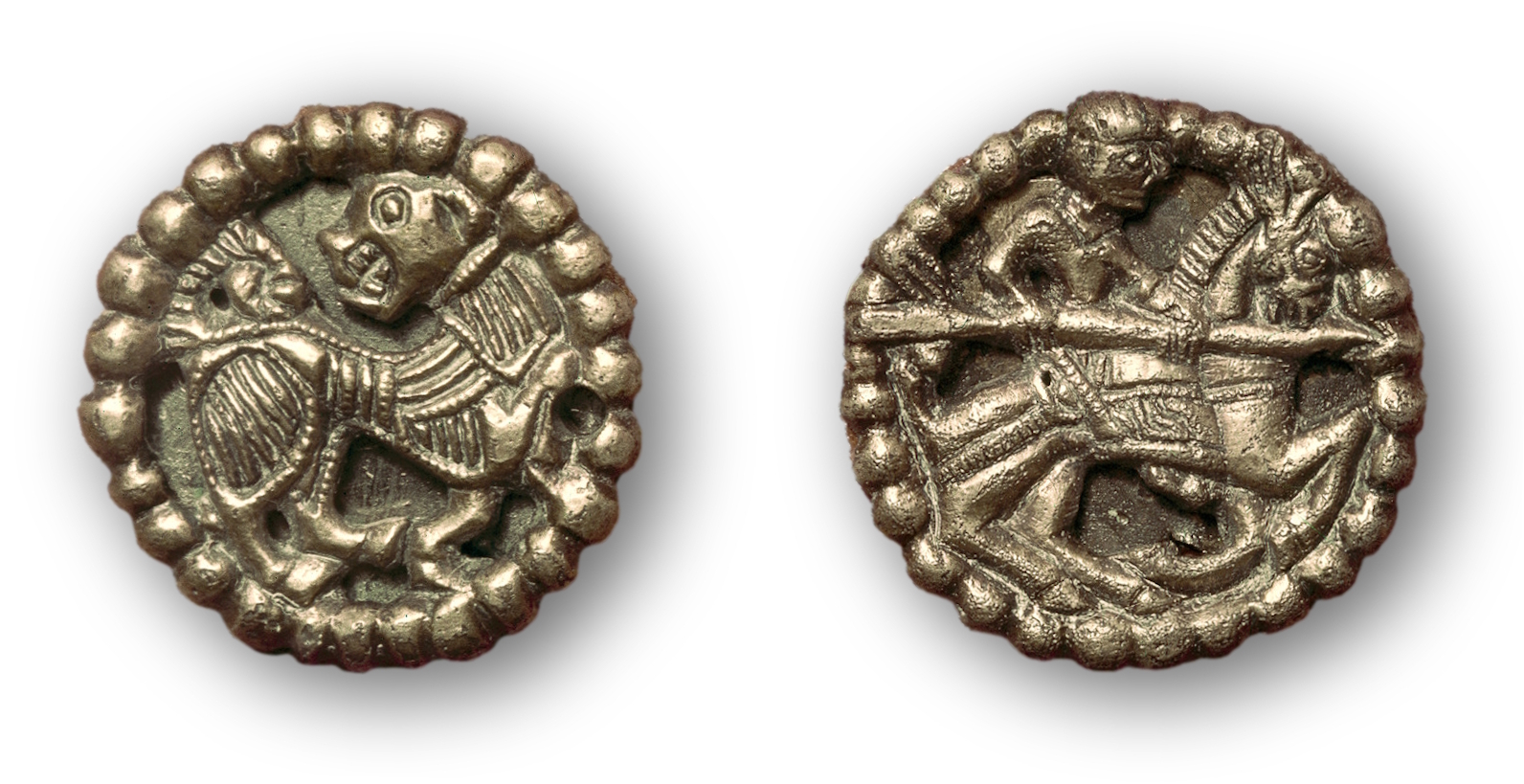
Figure 6. Two examples of circular fittings of different designs: on the left, a “beast”; on the right, a spearman on horseback (UniMus catalog. Edited by the author).
Reconstruction of the belt
The long strap end is currently the only preserved component of the wide Gokstad belt that can reasonably be attributed to what may be termed the chieftain’s belt. Its reconstruction must therefore be regarded as an interpretative proposal grounded in available archaeological evidence and analogies. The most defensible approach is to base the reconstruction on fittings from the same archaeological context rather than to introduce a buckle drawn from other contexts. Accordingly, I recommend employing a buckle modelled on the two large gilt buckles from Gokstad (C10437/1 and C10437/2), produced in a slightly enlarged version while retaining their original proportions. Enlarging the buckle frame would ensure that the buckle opening accommodates at least the width of the preserved strap end.
Viking Age buckles were commonly mounted to the leather belt by means of a grip plate made of the same metal as the buckle itself, typically bronze or iron. Norwegian parallels, particularly from the Viken area, indicate that the grip plate of the Gokstad buckle would likely have been roughly square and fixed with between two and six rivets made of iron or bronze. The small gilt buckles from Gokstad and Borre (Fig. 7.2; Fig. 7.4) preserve grip plates decorated with two rows of incised lines running parallel to the plate edges. It should be noted, however, that in these smaller buckles the grip plates extend across almost the full width of the buckle frame, so the linear decoration reads as a visual extension of the buckle outline. This arrangement is not observed on the grip plates of wider, decorated belt buckles (Fig. 7.3; Fig. 7.5; Fig. 7.6). On that basis, it is reasonable to assume that similar linear incisions were unlikely to have been applied to the grip plate of the Gokstad wide buckle.
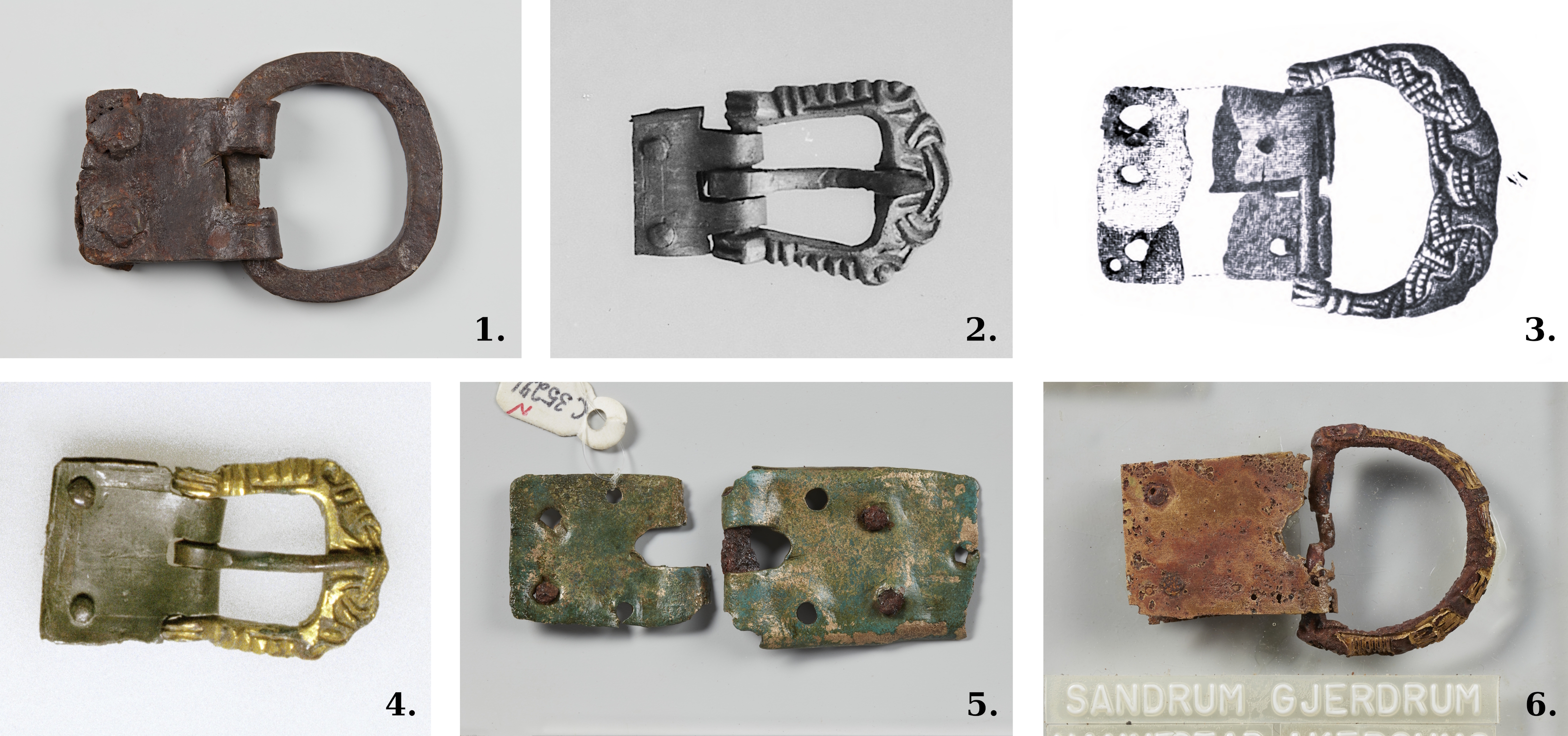 Figure 7. Examples of belt buckles from southeastern Norway with preserved grip plates: 1 - Gokstad, Vestfold (UniMus catalog); 2 - Gokstad, Vestfold (UniMus catalog); 3 - Haugen, Vestfold (after Aarsberetning for 1875); 4 - Borre, Vestfold (UniMus catalog); 5 - Kvåle, Telemark (UniMus catalog); 6 - Gjerdrum, Akershus (UniMus catalog).
The reconstruction may also incorporate a slightly enlarged version of the Gokstad loop (C10439). Whether such a loop was necessary depends on how the belt was worn. If the belt was worn with the strap end hanging vertically, as illustrated in the Carolingian Sacramentary of Charles the Bald, a loop would not have been functionally required. The Sacramentary should be read here as a Carolingian iconographic point of reference for the appearance and modes of wear of high-status belts: it offers a useful comparative model but does not constitute direct evidence for practice in Norway. Even if not required functionally, a loop would not have been incompatible with a hanging terminal; it may have served a primarily decorative or modest stabilising role and contributed to the overall visual presentation of the belt. By contrast, a loop becomes functionally necessary only if the belt was worn without a hanging terminal, so that the free end had to lie parallel to the belt. The issue of whether Viking Age belts could combine a hanging strap end with the presence of a loop remains under discussion. If a loop was present, it should have been fixed directly behind the buckle and its grip plate so as to remain immobile, mirroring constructions attested in Viking Age Scandinavia and western Europe (Fig. 8).
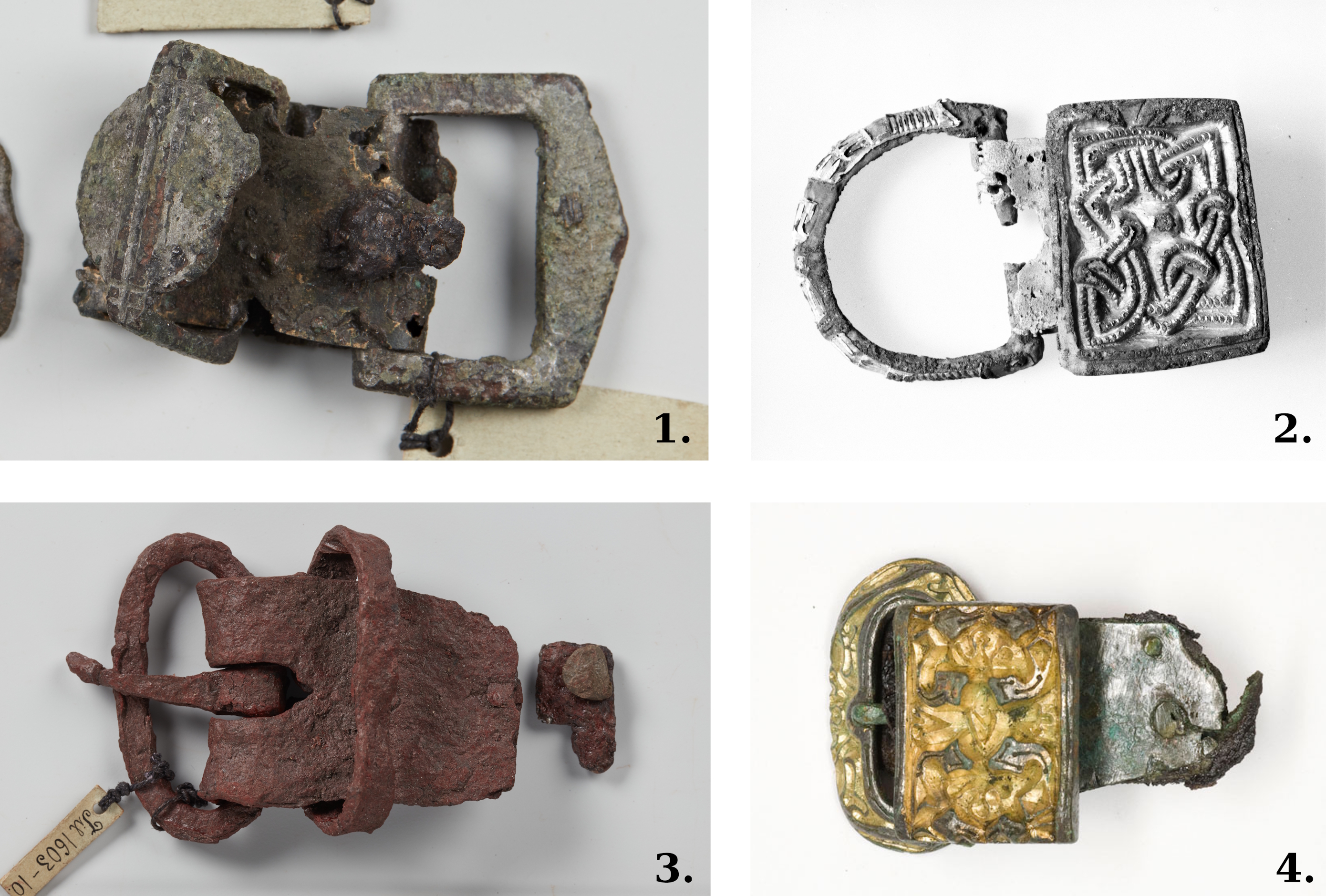 Figure 8. Examples of belt buckles from Norway with loops attached to grip plates: 1 - Allum, Vestfold (UniMus catalog); 2 - Gjerdrum, Akershus (UniMus catalog); 3 - Aakeren, Telemark (UniMus catalog); 4 - Nes, Nordland (UniMus catalog).
It is also worth noting that the manuscript depicts the belt partially concealed beneath a fold of the tunic, preventing the full display of what was presumably a gilt buckle and, potentially, a loop. To ensure a visually coherent reconstruction of the wide belt attributed to the Gokstad chieftain, I propose tinning or, alternatively, silvering the three frontal lobes of the buckle in the areas featuring simple linear ornament, following the technique applied to the strap end. This treatment would enhance the visual unity of the buckle and strap end and reinforce their appearance as fittings of a single, integrated design. If the reconstruction includes a loop, it should not be tinned or silvered, as it lacks the corresponding ornamental features present on the buckle and strap end. The proposed reconstruction of the Gokstad chieftain’s belt is shown below.
 Figure 9. Proposed reproduction of the belt of the chieftain from Gokstad. Author's private archive.
At first glance, the proposed reconstruction may appear similar to the Gokstad belt reproductions produced by reenactors and craftsmen. However, there is a fundamental issue that must be clearly stated: the three surviving fittings of the belt assemblage could not originally have formed one, complete belt, as their proportions and dimensions are not fully compatible. As a result, any reconstruction, regardless of the approach adopted, necessarily involves a degree of modification, including the enlargement or reduction of certain elements relative to the archaeological originals. For this reason, the reconstruction should not be regarded as a replica but as an interpretative model grounded in the available evidence and comparative material.
Despite these constraints, the form presented here represents, in my view, the most coherent and technologically consistent solution currently attainable. At this stage, the seven round fittings have not been incorporated into the reconstruction, as no conclusive evidence exists to confirm that they belonged to the belt; their function remains unresolved.
Summary
The question of the wide belt from the Gokstad mound will probably never be resolved definitively due to irreversible gaps in the archaeological record. The current state of research nevertheless allows for the formulation of hypotheses grounded in technological, comparative, and contextual analyses of the preserved material. The wide belt may have formed part of animal or riding equipment; equally plausible, however, is the interpretation that it constituted a personal, ceremonial, and highly representative belt belonging to the chieftain buried at Gokstad. Nor can it be excluded that the long strap end originally fulfilled a function entirely different from that which has so far been assumed.
Despite these uncertainties, the analysis presented here points to a coherent set of indications arguing for the presence of a wide, splendid belt among the equipment of the deceased. The exceptional form and manufacturing technique of the long strap end, its clear distinction from the remaining fittings, and comparisons with iconographic material and elite early medieval contexts support its interpretation as the only surviving element of such a belt. From this perspective, the wide belt from Gokstad appears not as a product of reconstructive speculation, but as the most plausible representative garment element, embedded within broader patterns of elite material culture at the turn of the ninth and tenth centuries.
Bibliography
Nicolaysen, N. 1882. Langskibet fra Gokstad ved Sandefjord. Kristiania
Bill, J. 2013. Revisiting Gokstad. Interdisciplinary investigations of a find complex excavated in the 19th century. In: S. Brather & D. Krausse (eds.), Fundmassen. Innovative strategies for the evaluation of early medieval source material. Stuttgart: Konrad Theiss Verlag, pp. 75–86.
Holck, P. 2009. The Skeleton from the Gokstad Ship: New Evaluation of an Old Find. Norwegian Archaeological Review 42(1): 40–49.
Urbanus, J. 2014. Revisiting the Gokstad. Archaeology 67(4): 34–38.
Bonde, N., and A.E. Christensen. 1993. “Dendrochronological Dating of the Viking Age Ship Burials at Oseberg, Gokstad and Tune, Norway.” Antiquity 67 (256): 575-583.
Myhre, B. 2015. Før Viken ble Norge: Borregravfeltet som religiøs og politisk arena. Norske Oldfunn XXXI. Stavanger: Arkeologisk Museum, Universitetet i Stavanger.
Myhre, B., Gansum, T. & Skre, D. 2003. Skipshaugen 900 e.K.r. Borre. Borre: Midgard historisk senter.
Graham-Campbell, J. 2021. Viking Art. London: Thames & Hudson.
Bill, J. & Rødsrud, C. L. 2021. Heimdalsjordet: Trade, production and communication. Norske Oldfunn XXXII. Stavanger: Arkeologisk Museum, Universitetet i Stavanger.
Skre, D. (ed.) 2011. Things from the Town: Artefacts and Inhabitants in Viking-age Kaupang. Norske Oldfunn XXIV. Kaupang Excavation Project Publication Series, Volume 3. Oslo: University of Oslo, Museum of Cultural History.
Norske Fortidsmindesmerkers Bevaring. 1876. Aarsberetning for 1875. Kristiania.
Skre, D. (ed.) 2008. From Dorestad to Kaupang. Frankish Traders and Settlers in a 9th-Century Scandinavian Town. Kaupang Excavation Project Publication Series, Volume 2. Aarhus: Aarhus University Press.
Hougen, B. 1934. Studier i Gokstadfunnet. In: Universitetets Oldsaksamling Årbog 5 1931-1932, 74-112.
Wexelsen, E. 1981. Gokstadfunnet : et 100-års minne = The Gokstad excavations : centenary of a Norwegian Viking find, Sandefjord: Sandefjordmuseene.
Blindheim, C. 1981. “Ryttermedaljongen fra Gokstad - en fremmed i vår vikingtidskunst.” In Gokstadfunnet: et 100-års minne = The Gokstad excavations: centenary of a Norwegian Viking find, edited by Einar Wexelsen, 30–31. Sandefjord: Sandefjordmuseene.
Christensen, A. E. 1981. “Hvem var Gokstadhøvdingen?” In Gokstadfunnet: et 100-års minne = The Gokstad excavations: centenary of a Norwegian Viking find, edited by Einar Wexelsen, 30–31. Sandefjord: Sandefjordmuseene.
Thoresen, P. 1981. “Om haug-bonden nok en gang.” In Gokstadfunnet: et 100-års minne = The Gokstad excavations: centenary of a Norwegian Viking find, edited by Einar Wexelsen, 30–31. Sandefjord: Sandefjordmuseene.
Thoresen, P. 1981. “Sagnstoff omkring Alven på Geirstad.” In Gokstadfunnet: et 100-års minne = The Gokstad excavations: centenary of a Norwegian Viking find, edited by Einar Wexelsen, 30–31. Sandefjord: Sandefjordmuseene.
Heinrichs, A. 1981. “Kongshaugen og dens tått.” In Gokstadfunnet: et 100-års minne = The Gokstad excavations: centenary of a Norwegian Viking find, edited by Einar Wexelsen, 30–31. Sandefjord: Sandefjordmuseene.
Bill, J. & Daly, A. 2018. The plundering of the ship graves from Oseberg and Gokstad: an example of power politics? Antiquity 92(362): 1029–1045.
Arbman, H. 1940–1943. Birka I: Die Gräber. Uppsala: Kungl. Vitterhets Historie och Antikvitets Akademien.
This study is dedicated to the memory of the chieftain buried at Gokstad.
Harald Hrodberhtsson 2025