
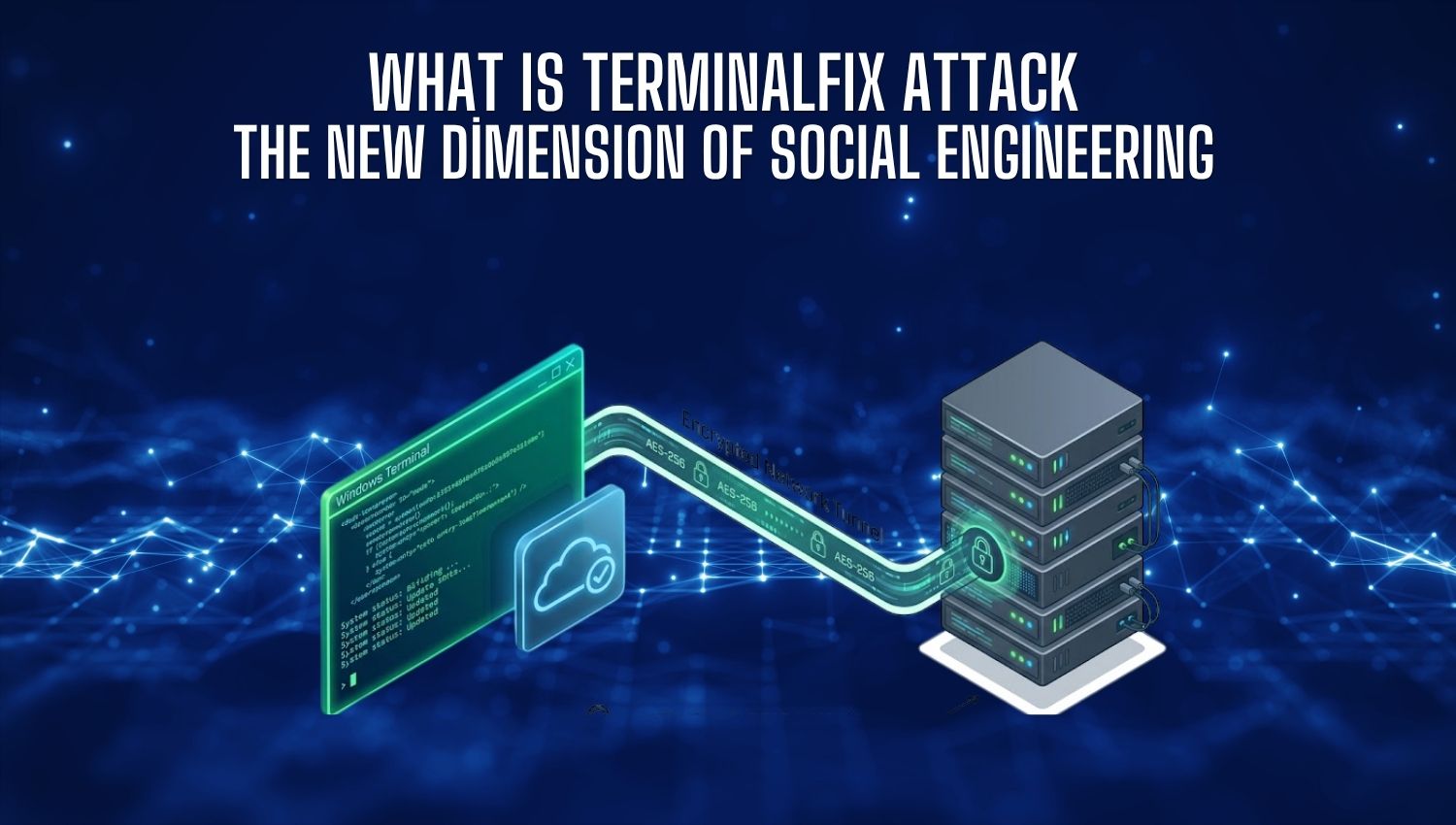
Threat actors are constantly inventing new ways to trick users and bypass corporate firewalls. A newly uncovered campaign dubbed TerminalFix—first detailed by Microsoft Threat Intelligence—demonstrates a dangerous shift in modern social engineering tactics.
🎯 The Evolution: From Win+R to Windows Terminal
Older ClickFix campaigns relied on coercing users to paste malicious code into the Windows Run box (Win+R). TerminalFix modernizes this strategy by targeting Windows Terminal and PowerShell directly.
By hijacking websites with fake Cloudflare Turnstile CAPTCHA overlays, the attack tricks visitors into clicking a verification box. This action silently copies a malicious PowerShell script to their clipboard. Instructing the victim to paste code directly into a full terminal removes character limits and allows complex, multi-line scripts to execute smoothly under a trusted context.
⚙️ Multi-Stage Stealth & Deep Network Pivoting
TerminalFix goes far beyond basic infostealer malware, utilizing advanced evasion techniques:
DLL Sideloading: Leverages a signed Windows executable (
LockScreenContentServer.exe) alongside a maliciousdui70.dllto inherit process trust.PNG Steganography: Fetches payload fragments hidden inside the RGBA pixel channels of PNG images, reassembling them entirely in memory.
Persistent Reverse Tunnel: Silent deployment of a Python backdoor (
client.py) that creates an encrypted WebSocket SOCKS proxy back to C2 infrastructure (gitnow[.]dev:443).
This reverse tunnel transforms the infected endpoint into an internal bridge. Attackers completely bypass perimeter firewalls, allowing them to scan Active Directory, move laterally across subnets, and prepare for ransomware deployment.
🛡️ How to Stay Protected
Security teams must restrict standard user access to PowerShell via AppLocker/WDAC policies, enable PowerShell Script Block Logging (Event ID 4104), and monitor network egress for long-lived WebSocket sessions.
💡 Read the Full Deep-Dive Breakdown:
If you enjoy my threat research and want to see the complete technical analysis—including full attack chain diagrams, technical tables, and step-by-step mitigation guides—check out the main post on my website:
👉 TerminalFix Attack: The New Dimension of Social Engineering