

Introduction
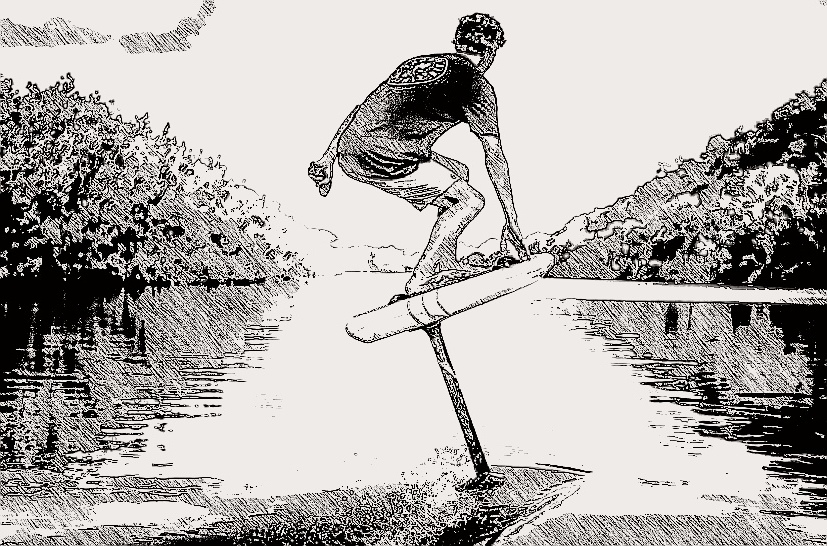
E-Foil, the exhilarating sport of hydrofoil surfing with an electric motor, not only offers an exciting physical experience but also provides valuable insights for managing knowledge work. By applying the Theory of Constraints (TOC) and understanding the interplay between flow, speed, and buffers, we can draw powerful parallels between E-foiling and optimizing workflows in knowledge work. Maintaining a "Flow region"—a state where delivery speed and buffers interact optimally—can foster growth, learning, and productivity, this is where managers play a critical role in helping their team in reaching and staying in the "Flow" region.
E-Foil Dynamics: Speed, Buffers, and the Flow Region
In E-foiling, the rider's goal is to experience the exhilaration of gliding above water. This experience relies on a delicate balance of speed, buffer length (shaft/mast), and control. The "Flow region" in this context is where the board maintains optimal lift and stability, analogous to achieving a state of peak performance in knowledge work. Here’s how these elements translate:
Identify the Constraint: Speed and Buffer Dynamics
In both e-foiling and knowledge work, the primary constraint revolves around speed and the corresponding buffer. In E-foiling, the speed of the board determines the lift generated by the foil, with the shaft length acting as a buffer that absorbs variations in the water surface. In knowledge work, the "buffer" can be seen as the capacity to absorb new information, handle workload, and adapt to changes. Clearly there are some other buffers, like team size or work resource availability, but the key question here is
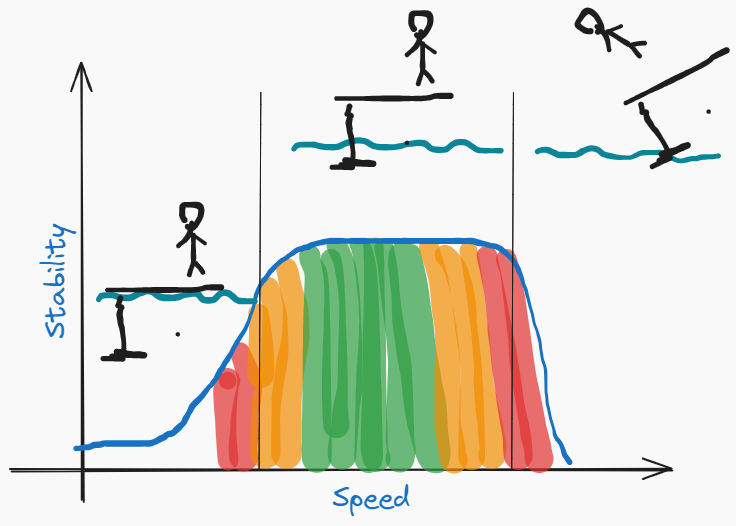
"Are all buffers consumed by workflow speed, or can some buffers be enhanced by increased speed, at least within their optimal range?"Contrary to traditional inventory management where slowing down increases buffers (inventory build-up), in knowledge work, there is a "Flow region" where increasing delivery speed actually increases the buffer. This is because as tasks and projects are completed efficiently, the team gains more experience and knowledge, enhancing their capacity to take on more complex challenges—much like increased speed lifts the E-foil higher, improving stability and control. Operating at zero speed equates to no delivery and also hinders the ability to evaluate and refine processes effectively. Some speed and some learning and growing tension are needed and beneficial to be able to get into the "Flow" state.
Exploit the Constraint: Operating in the Flow Region
Exploiting the constraint means finding the optimal speed at which the knowledge work system operates most effectively. In E-foiling, this optimal speed ensures the board stays aloft, providing a smooth and enjoyable ride. In knowledge work, it involves maintaining a pace that promotes continuous learning and growth without overwhelming the team. This flow state is characterized by high engagement, creativity, and productivity, where the buffer (capacity for work) naturally expands as a result of increased speed (efficiency).
Again here the more the speed builds up the more the upfront weight, in our analogy the attention we need to put in sales as the "incoming" work increase. The analogy is twofold, in E-foling you control the speed "at the delivery" stage as you decide how much to deliver from the propeller and you put your weight and attention at the front to balance the system, and I'm positing the same should be done for knowledge work, not pushing more work from the front and assuming the propeller will adapt.Subordinate Everything to the Constraint: Prioritizing Learning and Growth
Subordinating to the constraint means aligning all processes to support operating within the Flow region. In E-foiling, this might involve adjusting balance and weight distribution as speed changes. In knowledge work, it involves prioritizing and organizing tasks that enhance learning and skill development, even at the expenses of potential maximum speed, but ensuring that the pace of delivery does not exceed the team’s ability to grow and adapt. It also means creating an environment that encourages experimentation and innovation, leveraging the increased capacity (buffer) generated by operating at optimal speeds.
Elevate the Constraint: Pushing the Boundaries of the Flow Region
Elevating the constraint involves finding ways to extend the capabilities of the system. In E-foiling, this could mean refining techniques or using more advanced equipment. In knowledge work, it involves investing in training, adopting new tools and technologies, and encouraging a culture of continuous improvement. By pushing the boundaries of the Flow region, organizations can take on more ambitious projects and challenges, much like pushing the speed envelope in E-foiling enhances the experience and control.
Repeat the Process: Continuous Refinement
Finally, repeating the process means continuously reassessing and refining the workflow to stay within or expand the Flow region. This ongoing cycle of evaluation and adjustment ensures that the team remains in a state of optimal performance, capable of handling increasing complexity and volume of work. It’s about maintaining that delicate balance where speed, buffer, and control converge to create a state of flow.
Conclusion
E-foiling teaches us that the right balance of speed and buffer can lead to an optimal state of performance and enjoyment. In knowledge work, this translates into finding and maintaining a Flow region where the pace of work enhances learning, capacity, and overall team capability. By focusing on this dynamic balance, businesses can ensure that their teams are not just productive, but also growing and evolving, ready to tackle new challenges and opportunities. This approach underscores the importance of continuous learning and adaptability, key components for success in the fast-paced world of knowledge work.
Enjoyed the content?
If you found this article useful, consider supporting my work with a coffee or exploring the downloadable examples available on my Buy Me a Coffee page. Your support helps keep the motivation high and fuels more hands-on content!

Bibliography
Goldratt, E.M. (1990). The Goal: A Process of Ongoing Improvement. North River Press.
This foundational text introduces the Theory of Constraints and its application in business processes, providing a framework for understanding and improving organizational performance.
Goldratt, E.M., & Fox, R.E. (1986). The Race. North River Press.
A deeper dive into the operational aspects of TOC, particularly in manufacturing and production environments.
Senge, P.M. (1990). The Fifth Discipline: The Art & Practice of The Learning Organization. Doubleday/Currency.
This book is highly relevant as it explores the concept of a "learning organization," which complements the idea of the "Flow region" in knowledge work. It emphasizes the importance of systems thinking, personal mastery, and shared vision, which are crucial for maintaining balance and continuous improvement in a knowledge-driven environment.
Kleiner, A. (1996). The Fifth Discipline Fieldbook: Strategies and Tools for Building a Learning Organization. Currency/Doubleday.
A practical companion to "The Fifth Discipline," offering tools and techniques for fostering a learning organization.
Covey, S.R. (1989). The 7 Habits of Highly Effective People: Powerful Lessons in Personal Change. Free Press.
While not directly related to TOC, this book offers valuable insights into personal and organizational effectiveness, aligning with the themes of continuous improvement and personal mastery.