

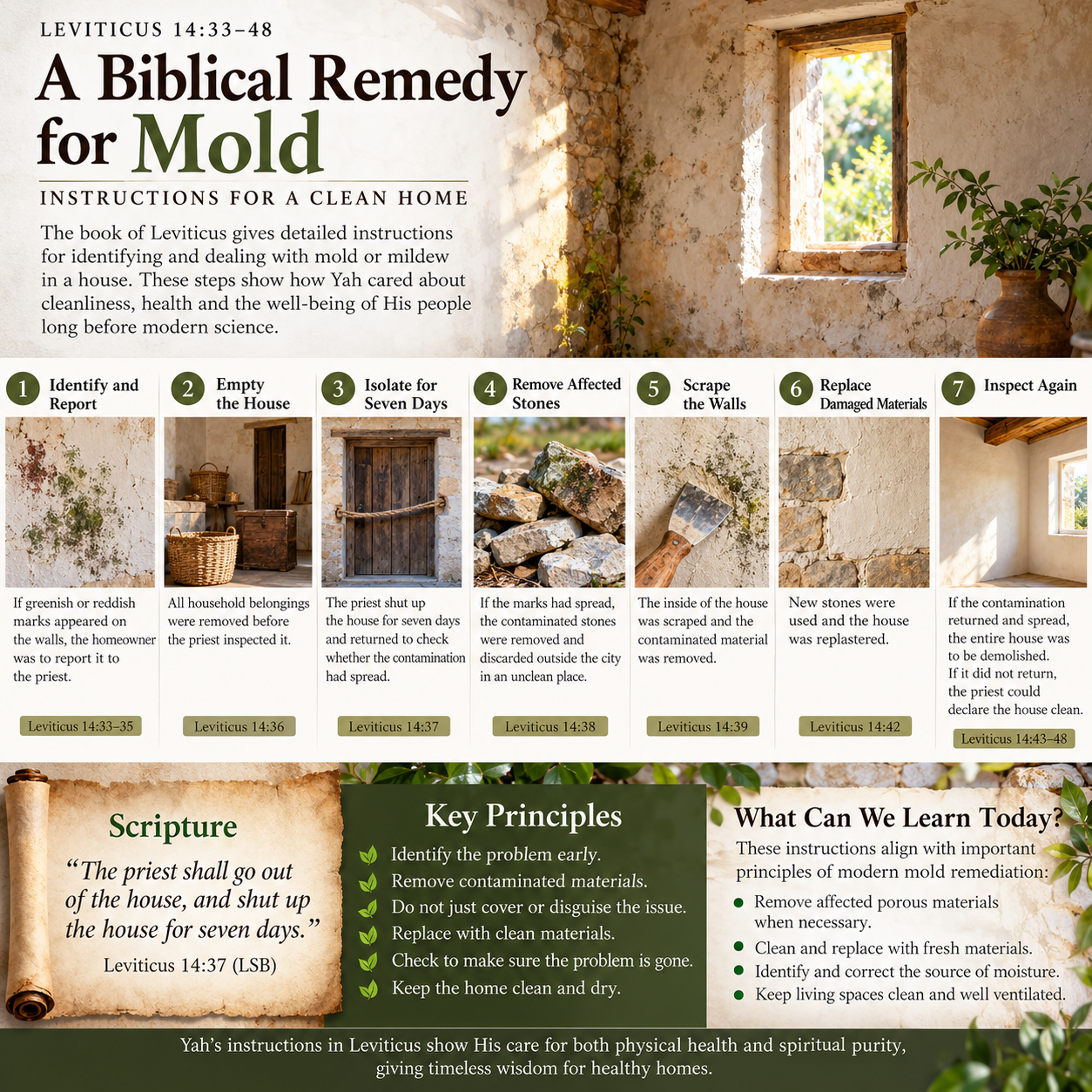
In Leviticus 14:49-52, hyssop appears alongside cedarwood, scarlet material, birds, and fresh water in the purification ceremony for a house.
The Hebrew word ezov, translated as hyssop, may have referred to Syrian oregano (Origanum syriacum), an aromatic plant native to the Mediterranean region.
Interestingly, hyssop, oregano, and thyme belong to the mint family (Lamiaceae). These plants have a long history of traditional use, and some of their natural compounds have demonstrated antimicrobial activity in laboratory studies.
However, Scripture does not instruct people to treat household mold with these herbs. The physical removal of affected building materials came first, followed by a separate ritual purification.
This distinction reminds us that the Torah contains both practical instructions for daily living and teachings about spiritual cleanliness.🌿
Scripture references: Leviticus 14:33–53 (LSB)