

Eggs are a super popular food item to Freeze Dry and here's why: They are protein-rich, can be used in a variety of ways in a variety of recipes, and they freeze dry and rehydrate beautifully!
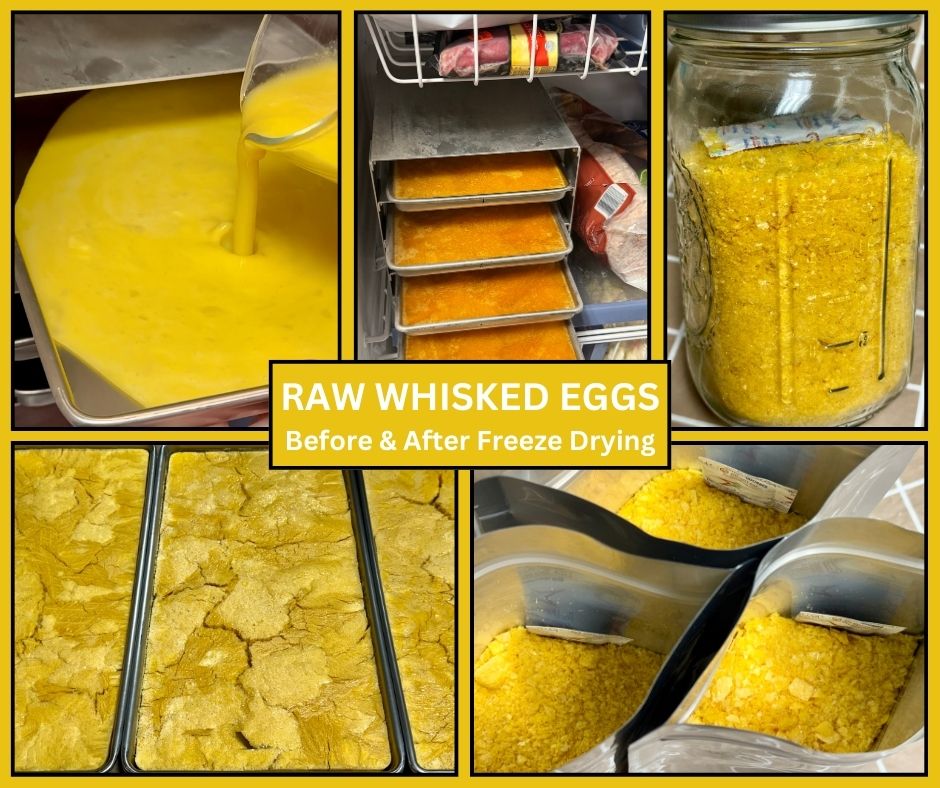
Eggs can be freeze dried raw (whisked) or cooked (scrambled) so think about how you'll use them later and this will help you determine how to prepare them. We needed more raw eggs in our storage so we decided to FD 4 dozen for this batch. We will mainly be using these FD raw eggs to make omelettes so we whisked in 3/4 teaspoon Pink Himalayan Salt and 1/4 teaspoon White Pepper (per dozen).
If you plan to use FD Egg Powder for baking then you'll want to leave out the pepper, and adjust your added salt knowing that there's already some in there. We have FD raw eggs with, and without, salt and prefer the taste and texture of the eggs with salt once FD and then cooked. There are many online videos you can see about what adding salt does to benefit raw eggs during the FD process, and how it affects the structure/texture/taste. Don't be afraid to experiment to see what you like and what fits your needs.
FD Tip: Buy eggs in bulk or on sale to save money. We bought a case of 90 eggs from Sam's Club for $29.66 ($3.95 per dozen). We have also seen eggs on sale for $1.50 per dozen at our local grocery outlet. When prices rise or there are supply chain issues we can rest easy knowing that we have extra eggs set aside for just such occasions. Also, if the weather is bad, we don't have to make an extra trip to the store to get eggs. We can just stay home, grab some eggs out of storage, and then replenish later.
We have a Small HR Pro FD and decided to do a dozen eggs per each of our 4 trays. In the past we have been able to fit 15 eggs per tray, but this time we specifically wanted to have a dozen eggs per tray. That way, once freeze dried, we could then move a dozen eggs into 3 mylar bags and 1 dozen eggs into a jar to keep handy in the pantry.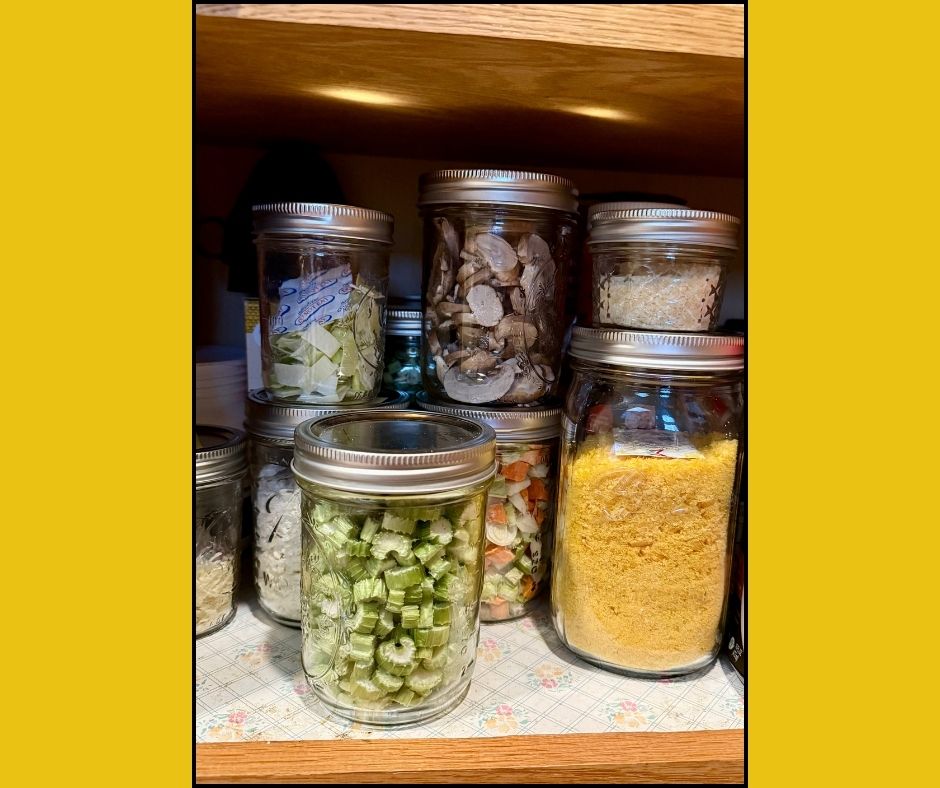
You don't have to pre-freeze your food items beforehand, but we choose to do so since it results in less hours of total run time in the machine. We have a dedicated space in our downstairs freezer we use to pre-freeze our food items. Once frozen we can snap on tray lids, move the trays to a different part of the freezer, and then add new trays of liquids to pre-freeze. This way we can have several sets of trays with food ready to load into the freeze dryer once it's defrosted, cleaned, and ready for the next batch.
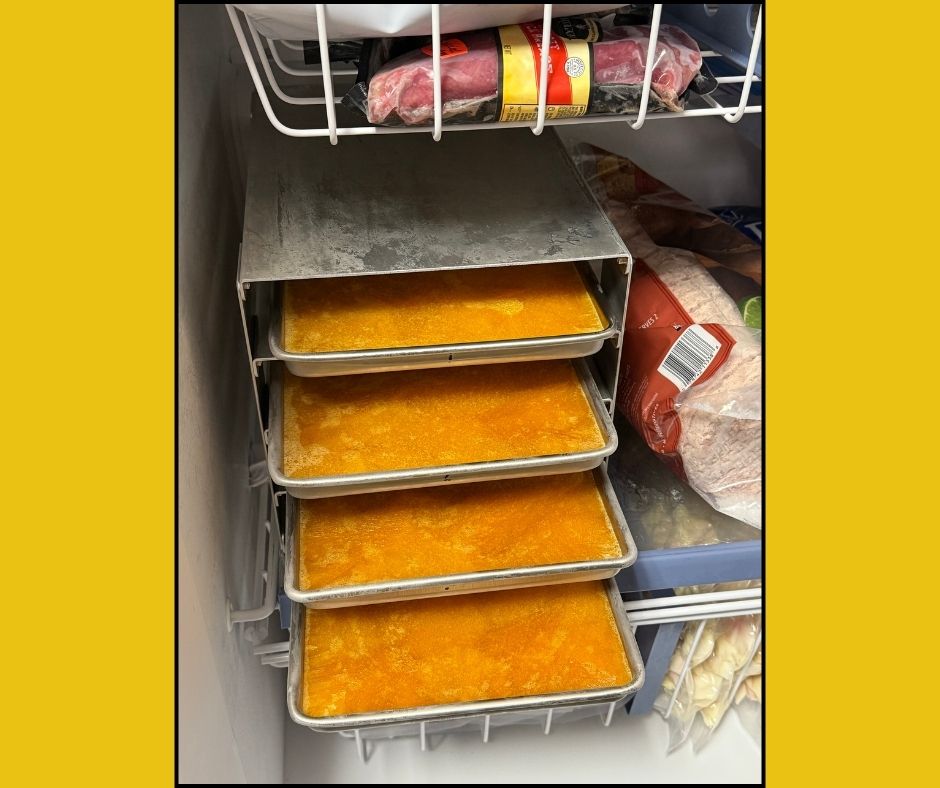
Here are photos of the pre-frozen trays before going into the FD.
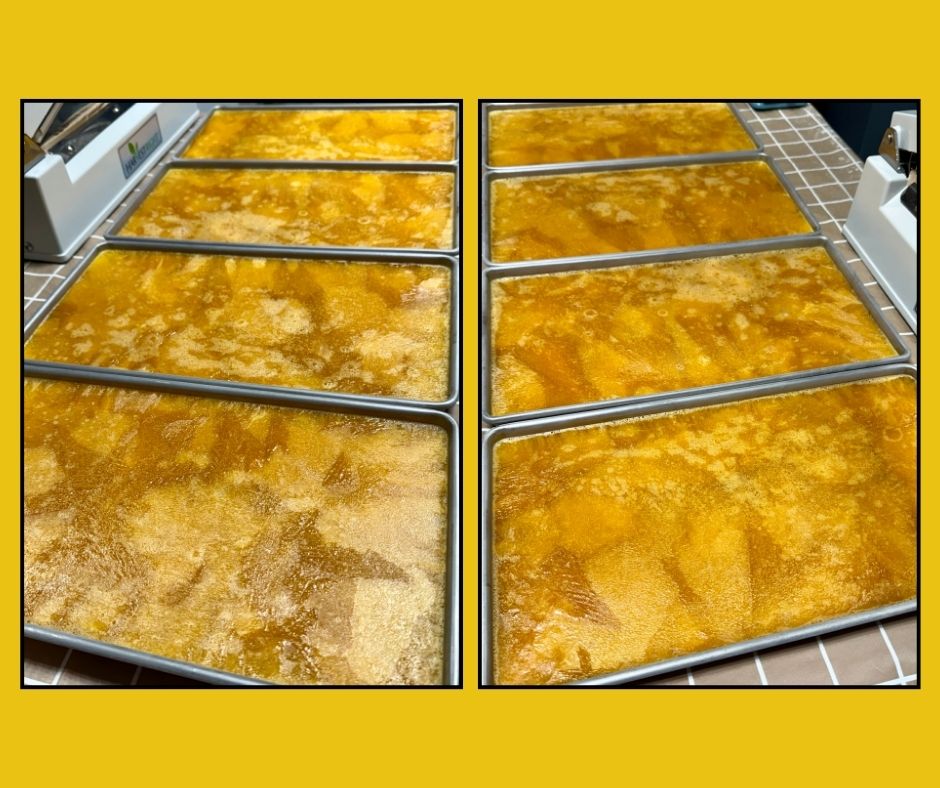
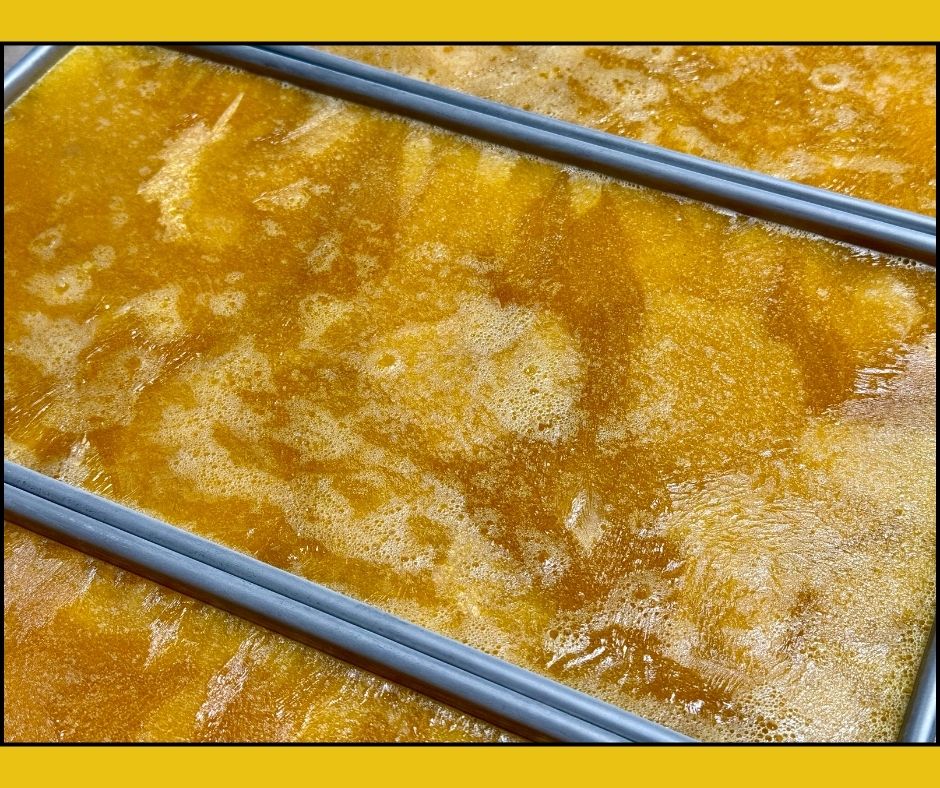
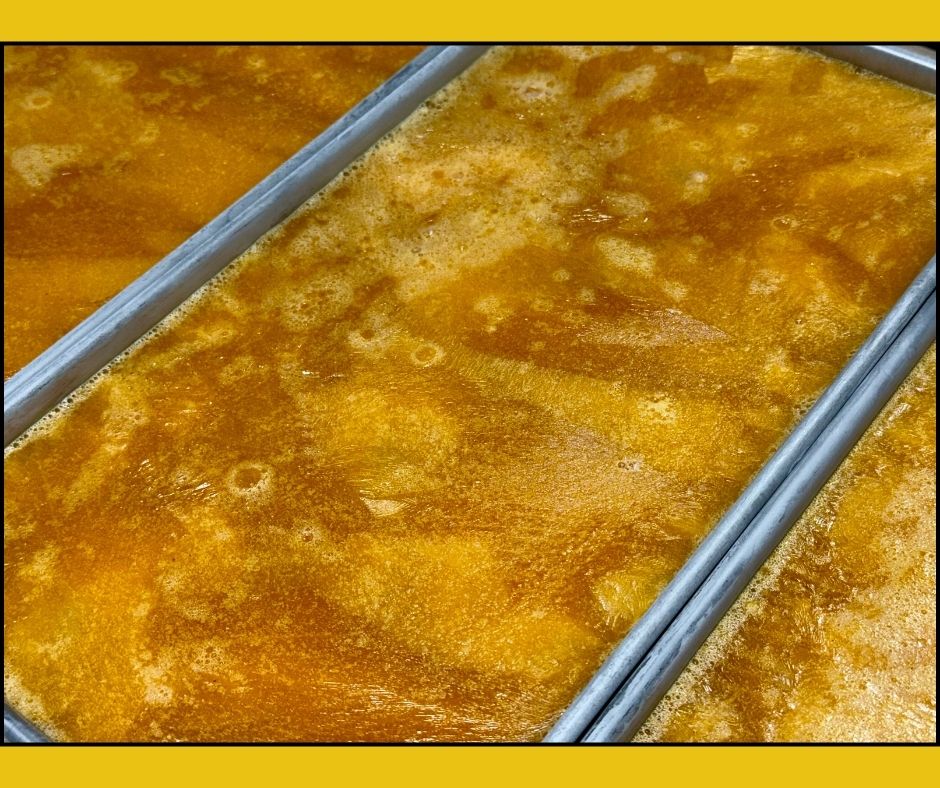
Here are the trays of frozen raw eggs being loaded into the freeze dryer
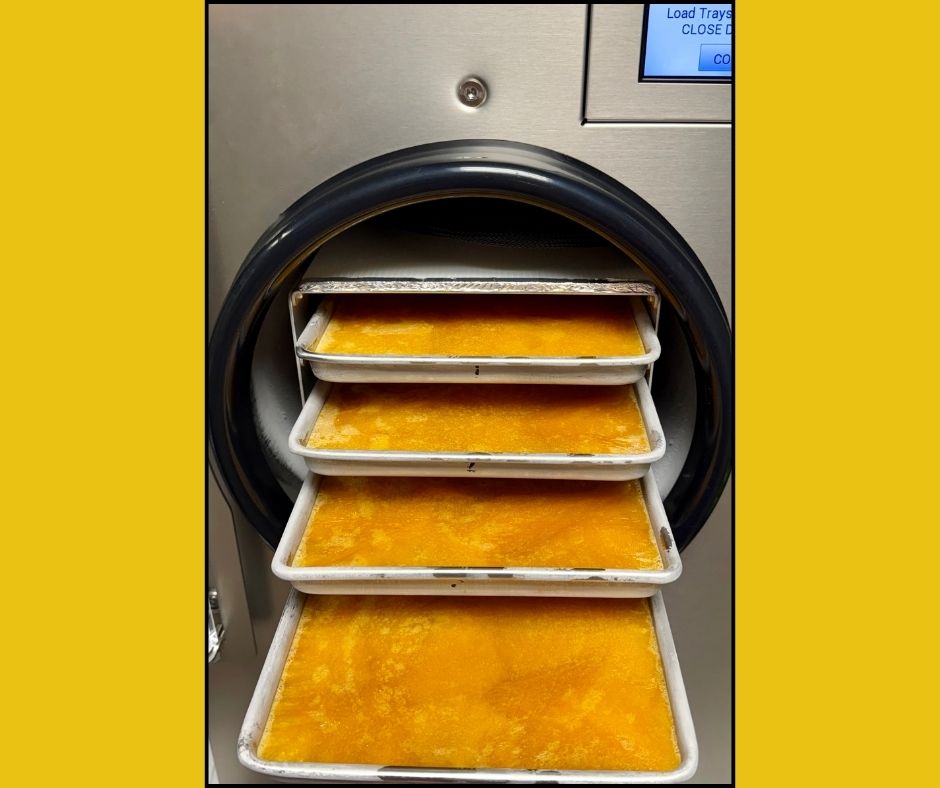
Here's what they look like after freeze drying
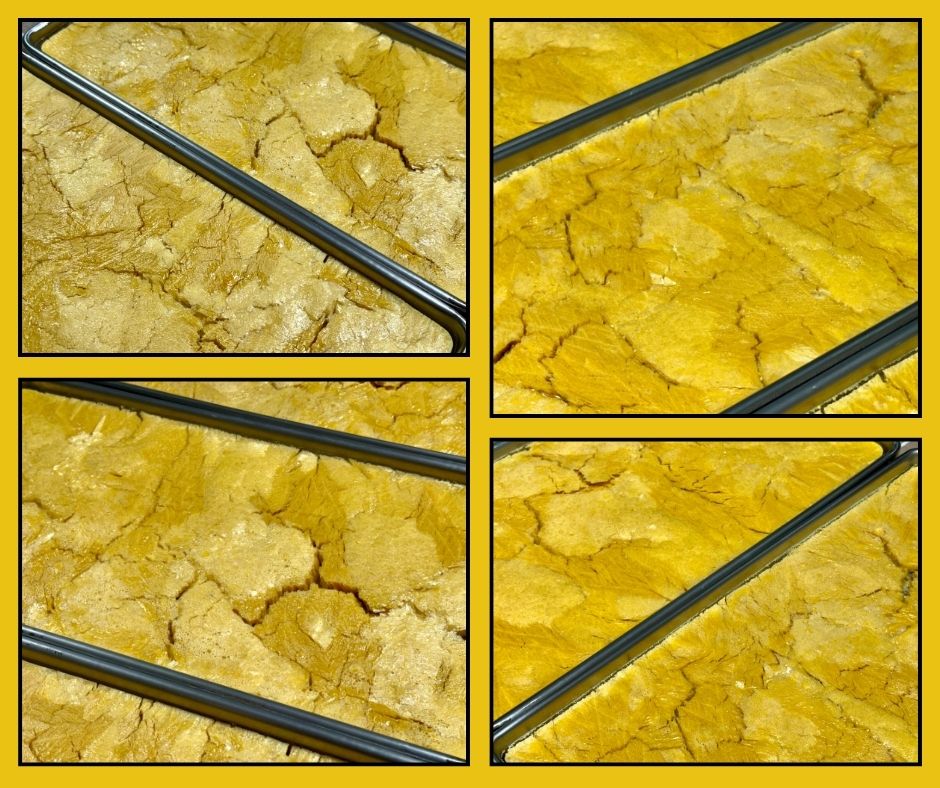
We typically rotate our trays after the Drying Stage completes, once the machine is in Extra Dry Time. Most batches of food items take at least 30-something hours to be Storage-Ready-Dry so we do our Dry Checks in 4-6 hour intervals until all the trays stop dropping in weight. (Fruits with seeds or soups with lots of moisture will take much longer)
Take a peek at our notes, and you can see how we track the tray weights during our Dry Checks. When the initial cycle "completed," and we were able to do the first Dry Check, everything looked and felt dry. However, we know from the past that tray 2 is the warmest tray, and that trays 1, 3, and 4 needed more hours of Extra Dry Time before they would be Storage-Ready-Dry. At the next Dry Check we could see that those trays had indeed continued to drop in weight. This is why time alone is not enough to determine dryness.
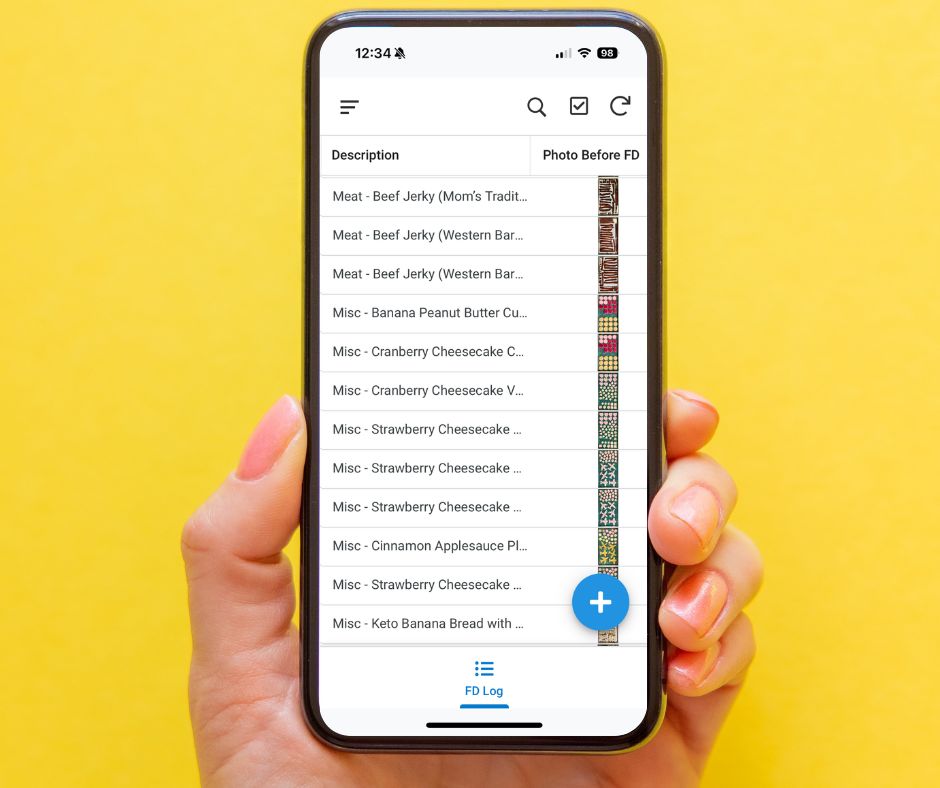
Photo Below shows 2 screenshots where you can see the data captured in our Custom-Built FD Log App: Scrolling from the top down to the bottom - there's even a field to include the storage location so you can find things quickly in your FD Inventory!
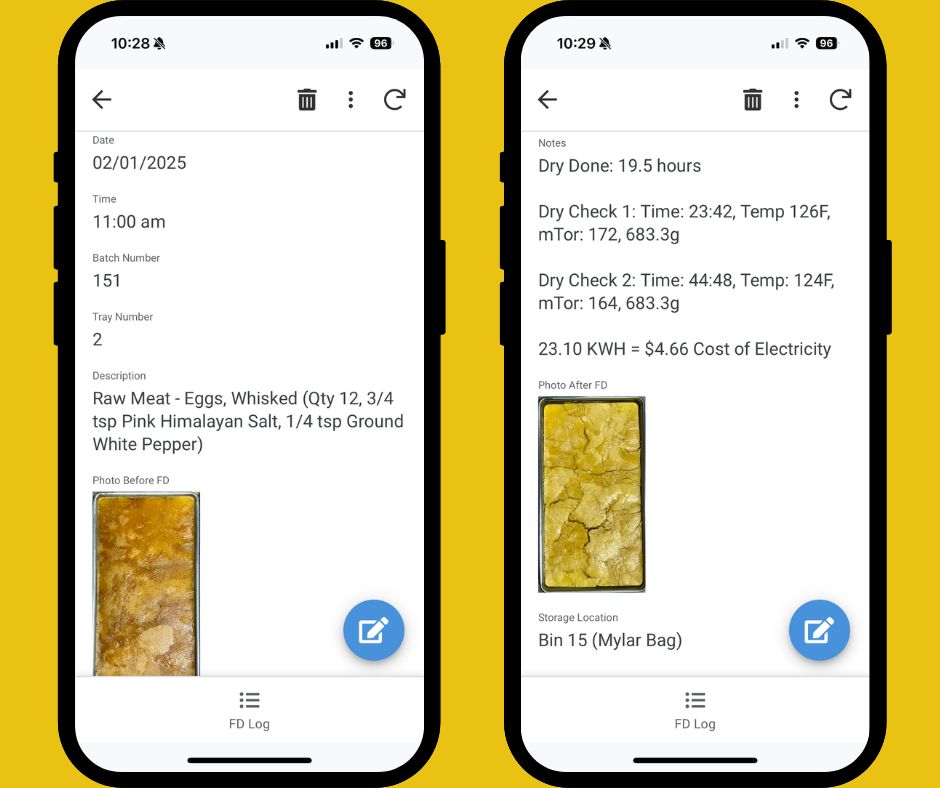
If you'd like to learn how to custom-build your own FD Log App to track your batches and inventory using your cell phone or tablet, click here to learn more about our online tutorial!
Depending on how many eggs we are running in a batch, and our work schedules, sometimes we lightly pulse in our food processor to powder them and sometimes we just crush in a big zip bag.
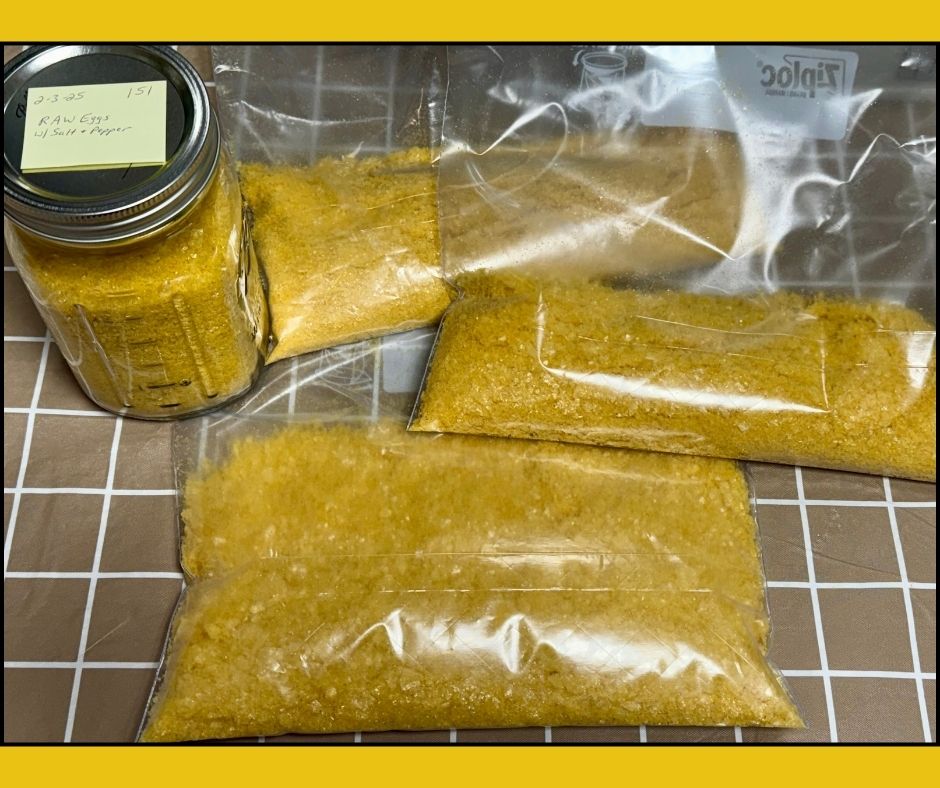 Powdering in a food processor vs. crushing in a zip bag: If we have a lot of eggs to package, and time to clean all the equipment afterwards, we prefer to powder. If it's a smaller amount of eggs to package and we're short on time, we prefer crushing in a zip bag. See what works best for your needs!
We have a Funnel and Adjustable Support Stand that we use to fill our mylar bags and jars. 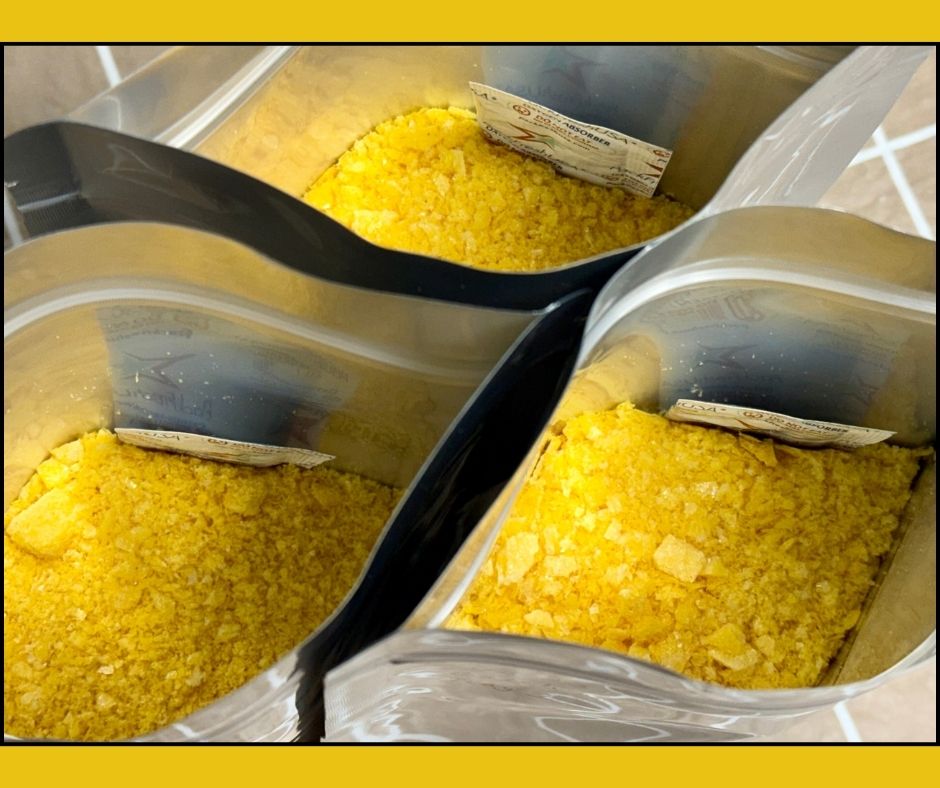
When we find great Tools & Accessories that make our Freeze Drying Life Better we are sure to share them with you! Here's our complete List
FD Tip: Always Clean your Freeze Dryer thoroughly after processing RAW food items. Be sure you label your FD food items as RAW when packing into Mylar Bags or Jars. Some foods like shrimp may not appear to be raw once freeze dried so labeling is critical!
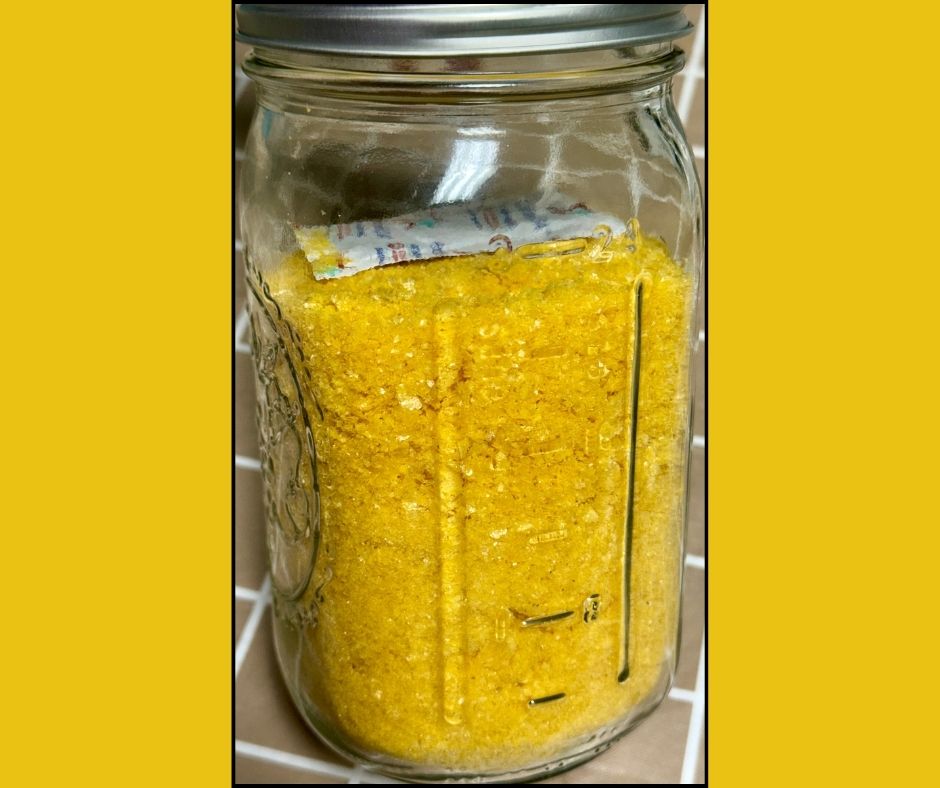
Here are the dozen raw powdered eggs that we stored in a vacuum sealed jar with OA. We have Electric Mason Jar Sealer Kits (for Wide-mouth and Regular-mouth jars) that we like to use. Having one upstairs and downstairs makes things easier as we're opening and then resealing various jars in our pantry and FD area throughout the week. Also, if one breaks we still have a spare to use until the replacement arrives.
FD Tip: To Rehydrate Raw Whisked Eggs: 2 Tablespoons Egg Powder mixed with 2 Tablespoons Filtered Water (for best taste vs. tap water). Let it sit for 5 minutes and see if the consistency is what you like. Some FDers choose to add a bit more water (or milk or cream) and then whisk / beat again before cooking to make them light and fluffy.
*****************************************************************************************
We hope you found this to be Interesting, Informative, and Inspires you to freeze dry some Raw Whisked Eggs of your own very soon!
If you haven't already, be sure to check out our prior posts with tips & tricks on Rehydrating Scrambled Eggs and our Recipe For Breakfast Eggs Scramble With Ham, Onions, & Bell Peppers!
We believe in Collaboration. Let's all help and support each other to become more Confident Freeze Dryers.
Love Our Content?
Want To Support Our Efforts In The Freeze Drying Community?
Here are ways you can contribute:
1. Use our links to purchase FD tools and Accessories. It's free for you and may earn us a small commission
2. Need to get more organized? Purchase our Online Training Guide to learn How to Custom-Build your own FD Log App to track your batches and storage inventory
3. Subscribe To Our YouTube Channel
4. Buy us a coffee! Your donations fuel our passion for freeze drying - We Appreciate Your Support!
5. Share Our FD Blog Posts With Others Who Will Enjoy This Info
6. Join our Facebook Group Freeze Dried Food For Travel And Storage
Scroll Down To See More Posts On Our Freeze Drying Projects And Experiments