

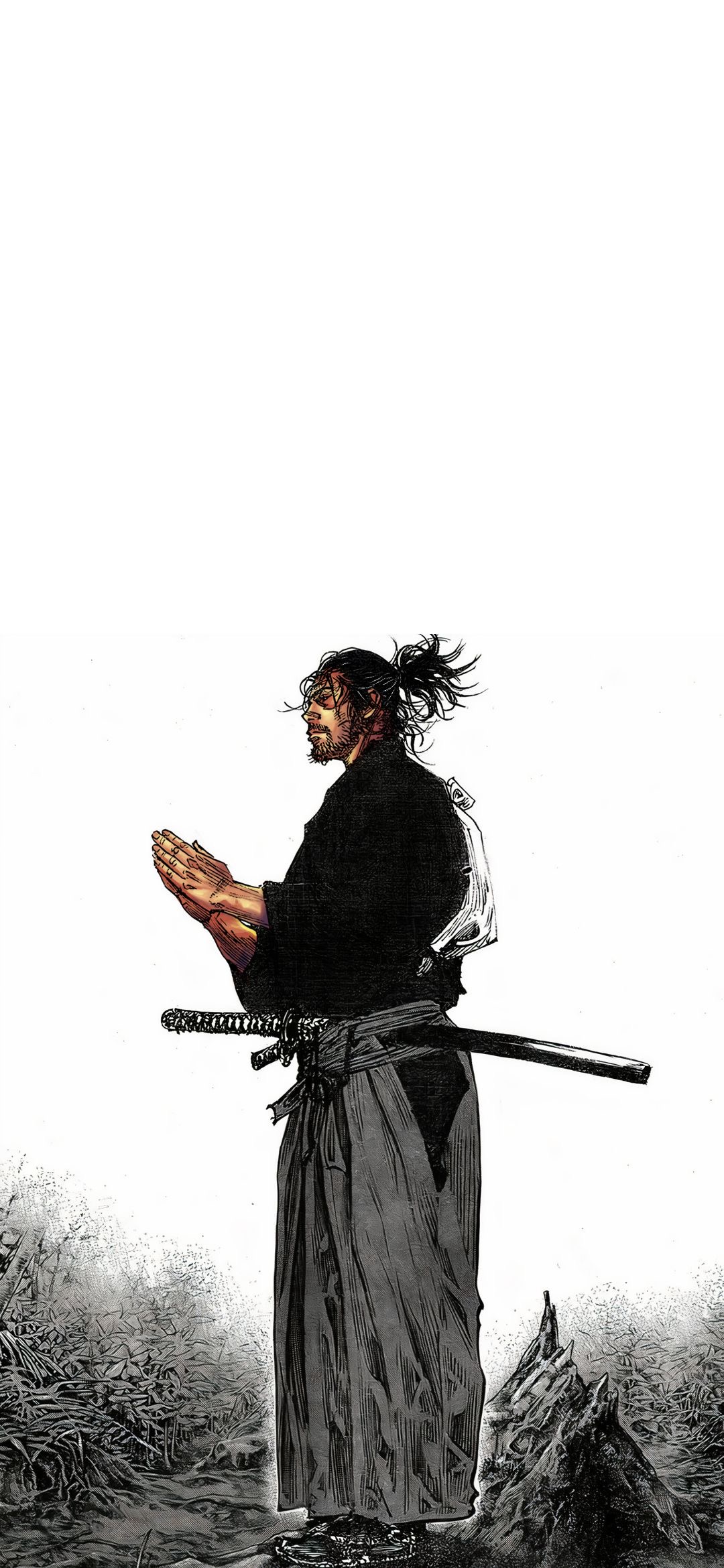
Miyamoto Musashi, perhaps the most famous samurai in Japanese history, is remembered not only for his unmatched skill with the sword but also for his philosophy of life. Among the many lessons that can be drawn from his existence, none is more significant than the role of discipline and solitude in his journey. Musashi lived as a ronin — a masterless samurai — wandering without allegiance to a lord, a clan, or a court. This path, though often seen as lonely and difficult, became the foundation upon which he built his greatness.
For Musashi, solitude was not an exile but a deliberate choice. While other samurai tied themselves to powerful families in pursuit of honor, wealth, and recognition, Musashi set himself apart. His decision to remain unattached to worldly obligations gave him the freedom to cultivate his craft without distraction. By walking alone, he was not stripped of purpose but instead refined it. He sought mastery in its purest form: mastery of self.
The solitude Musashi embraced was a crucible. It was in silence, away from the noise of society, that he forged his character. Unlike many warriors who found identity in the service of their lords, Musashi’s identity was carved within. His countless duels, which reportedly numbered over sixty, were not only demonstrations of skill but also tests of his inner resolve. Each battle with an opponent mirrored the invisible battles he fought against his own fear, doubt, and complacency. The enemy, in truth, was not only the one standing before him but the weaknesses lurking within.
Discipline was the tool with which Musashi overcame these inner adversaries. Accounts of his life tell of tireless training, endless repetition, and unyielding self-control. At dawn, he drilled his techniques with the patience of one sculpting stone. At dusk, he reflected on his path with the sharpness of one carving wood. Every day was a cycle of practice and contemplation. For Musashi, discipline was not a burden but a liberation. Through strict training, he discovered freedom — freedom from hesitation, from weakness, from dependence on chance. His skill became so instinctive that in battle, his body moved as if guided by something greater than thought.
It was in solitude that discipline revealed its deepest fruit: wisdom. Musashi did not confine his learning to the sword. He painted, he wrote, and he observed nature with a keen eye. His most enduring work, The Book of Five Rings, was not merely a manual of combat but a philosophical treatise on strategy and life itself. He saw parallels between the flow of water, the stillness of mountains, and the rhythm of combat. His ability to draw universal truths from personal discipline was only possible because of the quiet space solitude provided.
From Musashi, we learn that solitude is not synonymous with emptiness. In fact, solitude can be a teacher more demanding than any master. It strips away illusions and forces one to face the self directly. In silence, we are confronted with our own fears and failings, but also with our hidden strength. Discipline, then, becomes the bridge between solitude and growth. Without discipline, solitude collapses into idleness; with discipline, solitude becomes the furnace in which greatness is forged.
In today’s world, Musashi’s lessons remain profoundly relevant. We live in an age overwhelmed by distraction — endless notifications, constant demands, and a culture that fears silence. Musashi reminds us that stepping back into solitude is not a retreat but an advance. To sit alone, to practice deliberately, and to reflect deeply is to reclaim control over one’s path. His life teaches us that mastery — whether of an art, a craft, or oneself — requires a commitment to discipline that does not waver, even in isolation.
Ultimately, Musashi’s solitude was not loneliness, but liberation. His discipline was not confinement, but clarity. The wandering ronin, who carried no master but himself, became a master of all he encountered — not because of luck or raw talent, but because he understood that the path of solitude, when paired with discipline, leads to wisdom. In walking alone, Musashi did not abandon the world; he discovered its essence.
In his example lies a timeless truth: to embrace solitude is to open the door to self-knowledge, and to embrace discipline is to walk through it with purpose. Miyamoto Musashi’s life reminds us that the greatest victories are often won not on the battlefield, but in the silent, disciplined heart of the warrior himself.