

Distance used to feel abstract to me. A line between two points on a map. A flight time. The number of hours separating one time zone from another. It was something logistical, something that could be crossed with enough planning, enough money, enough patience.
But distance changes its nature during war. It becomes unbearable in its precision. You begin to measure it not in kilometers but in the impossibility of reaching those you love when the ground beneath them is shaking. The map suddenly becomes cruelly literal: the sea between you, the borders that cannot be crossed, the sky that planes move through but that bombs also fall from.
I am here.
They are there.
And the space between these two points becomes the most oppressive geography I know.
War reorganizes attention, colonizing the day. You wake up searching for news, reaching for the phone before your eyes have fully opened. The body learns a new reflex: to check, to confirm, to verify that the people you love still exist in the same fragile continuity as yesterday. Are they safe? Did the night pass quietly? Was there shelling? The questions repeat with small variations, like a prayer you never wanted to learn, and watching becomes a condition of living.
You watch the news, but the news is never enough. It speaks in the language of numbers: casualties, strikes, political statements, maps filled with arrows and red zones. But numbers cannot contain the particularity of the people you know.
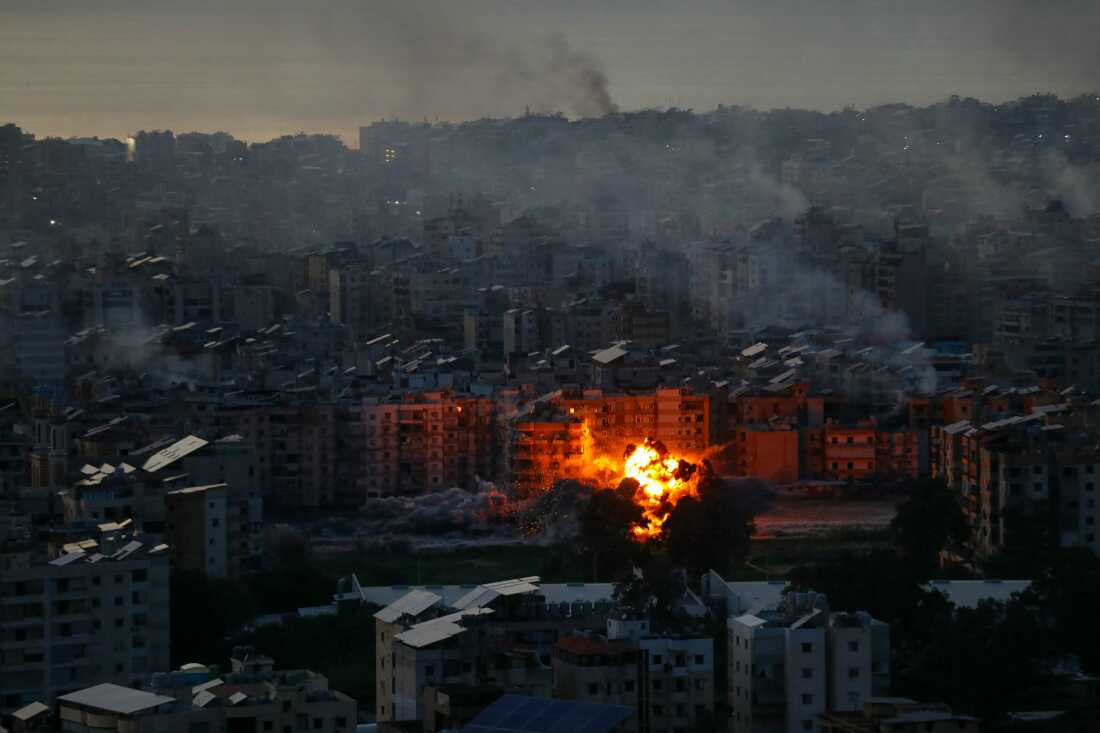
The news says, “a neighborhood.” You think of a balcony.
The news says, “southern suburbs.” You think of the road where you once walked at night with someone you love, where the streetlights flickered and someone was selling coffee from a cart.
The map collapses into memory.
War forces you to hold two realities at once: the abstraction of geopolitics and the intimate knowledge of ordinary places. A place that appears on television as a strategic target is also the place where someone keeps their books, their plants, the chipped mug they use every morning.
And you are watching all of this from somewhere else.
This is the strange violence of distance: you are close enough to feel everything, but too far to intervene. The body registers the events as if they were happening nearby. The heart accelerates when you hear the word “airstrike.” Your chest tightens when a message remains unread for too long. But the physical world around you continues with a normality that is almost insulting.
People drink coffee.
Cars pass in orderly traffic.
Someone laughs loudly on the street.
It feels obscene.
There is something disorienting about living inside two incompatible worlds at once. One world is calm, functioning, almost indifferent. The other is unstable, frightening, saturated with uncertainty. You move between them constantly, like someone crossing an invisible border every few minutes. Your attention always somewhere else.
You learn the rhythm of waiting for replies. Messages sent into the silence of unstable electricity, interrupted internet, exhausted bodies. Sometimes a response arrives quickly. Sometimes hours pass. The longer the silence, the louder the imagination becomes. You begin constructing scenarios you do not want to imagine. Your mind wanders through ruined streets, through stairwells filled with dust, through the possibility of loss that sits just beyond the edge of every thought.
Then suddenly the phone vibrates.
“I’m okay.”
Two words that collapse the world back into temporary stability.
Relief arrives in waves, almost dizzying. But it never lasts long. Because war has no fixed rhythm. Safety is provisional. The message that says I’m okay also contains the unspoken understanding that the next hour might bring something else. And so, the watching continues.
There is a peculiar cruelty in being geographically removed from danger while emotionally immersed in it. You are safe in the technical sense of the word. No bombs will fall where you are sleeping tonight. No building near you will collapse into dust before dawn.
But safety becomes complicated when those you love are not safe. The distance does not protect you from the emotional impact of events. It simply transforms the form of suffering. Instead of physical danger, you inhabit a landscape of helplessness.
Helplessness is an unbearable emotion. It generates anger almost immediately, an anger appears in unexpected places: while reading headlines, while hearing politicians speak in rehearsed language about “strategic responses,” while watching analysts debate the legitimacy of violence as if they were discussing weather patterns.
The language of politics often feels grotesquely detached from the lives it describes. You want to interrupt the television and say: that street has a bakery. That building has children sleeping inside it. That neighborhood has a man who feeds stray cats every evening.
War reduces places to coordinates. But you know their textures. You know their reality.
This knowledge becomes another source of frustration. Because you cannot transmit it to the systems that produce war. You cannot enter the rooms where decisions are made. You cannot translate the fragile, ordinary life of a place into the language of diplomacy and strategy.
So, the anger circulates inside the body, accumulating slowly.
Sometimes it takes the form of restlessness. You scroll endlessly through updates, hoping that more information might somehow produce control. Sometimes it takes the form of exhaustion, the sudden inability to read another headline or watch another video. The mind oscillates between compulsion and avoidance. You want to know everything. You also want to escape knowing. Both impulses coexist uneasily. And underneath them both lies the same fact: you cannot stop what is happening.
This is perhaps the most difficult aspect of watching from afar. The recognition that attention itself does not alter the course of events. You can witness, you can mourn, you can rage, but the bombs continue falling according to logics that are indifferent to your feelings. The inadequacy of being a witness becomes painfully clear. You ask yourself constantly: what can I do? The question repeats with a quiet desperation.
You donate money.
You share information.
You call, you write, you try to remain present for the people who are there.
But none of these gestures feels proportionate to the scale of violence unfolding on the screen. Each action feels both necessary and insufficient.
This is the paradox of distance: you are compelled to act, yet every action feels small. Still, small actions accumulate. A message that says I’m thinking of you may not stop a missile, but it interrupts the isolation that war produces. A conversation across distance may not dismantle the machinery of violence, but it reminds someone that their life continues to matter beyond the borders of the battlefield. Connection becomes a fragile form of resistance.
Even so, the feeling of inadequacy persists. Sometimes it appears in the quiet moments of the day, when you realize that life around you has continued normally. You went to the grocery store. You answered emails. You sat in a café while people discussed weekend plans. And somewhere else, someone you love was listening to explosions. The dissonance between these realities is almost impossible to reconcile.
You begin to feel guilty for the ordinary comfort of your surroundings. The soft bed. The electricity that does not cut out. The uninterrupted silence of the night. Privilege becomes visible in its most basic form: the absence of fear. Yet guilt is not particularly useful. It does not help those who are living inside the war. It only intensifies the emotional chaos inside the person who is watching from afar.
What remains, then? Perhaps only attention. Attention that refuses to look away. Attention that continues to insist on the humanity of the people who are reduced to statistics in official reports. Attention that keeps remembering the ordinary life of places that war attempts to erase.
To watch in this way is not passive. It is a form of witness. Witnessing does not stop violence, but it preserves memory against the forces that try to simplify and erase it. It keeps the complexity of human lives intact, even when the world prefers narratives that are easier to digest. When you watch the place where people you love are living through war, you are also protecting the memory of that place as something more than a battlefield.
You remember the smell of food from a particular restaurant.
You remember the way the air felt at night near the sea.
You remember the sound of laughter in a crowded room.
These memories resist the flattening language of war. They insist that the place is still alive.
Sometimes I wonder whether distance creates a strange new form of belonging. When those you love are under threat, the geography between you becomes charged with emotion. Every kilometer feels like an accusation.
Why am I here?
Why are they there?
There are no satisfying answers to these questions. Life distributes people across the map in ways that rarely follow moral logic. Some leave, some stay, some cannot leave even if they want to. War exposes these arbitrary arrangements.
And so, you continue watching.
You watch because looking away feels like a betrayal.
You watch because you love people who are there.
You watch because witnessing is the only proximity available to you.
The act of watching does not close the distance, but it refuses the indifference that distance often produces.
It says: I see what is happening.
It says: your life is not invisible from where I stand.
Still, the feeling of powerlessness remains. It arrives late at night sometimes, when the news cycle slows and the silence of your own room becomes too noticeable. In those moments you become acutely aware of the fact that the war continues regardless of your exhaustion.
The sky somewhere else is still trembling.
Someone is still awake.
Someone is still afraid.
And the map between you remains intact.
Distance does not dissolve simply because you wish it would. But love moves across it continuously, in small signals, in messages, in memories, in the stubborn refusal to forget the people who inhabit the places that the world calls a conflict zone.
The geography of distance, in times of war, becomes a geography of care. It is painful. It is inadequate. It is filled with anger and grief. But it is also a refusal. A refusal to allow the people you love to disappear into the anonymous language of war.
So, you keep watching. You keep waiting for the next message that says I’m okay. And until it arrives, the distance between you remains the most fragile and terrifying space in the world.