

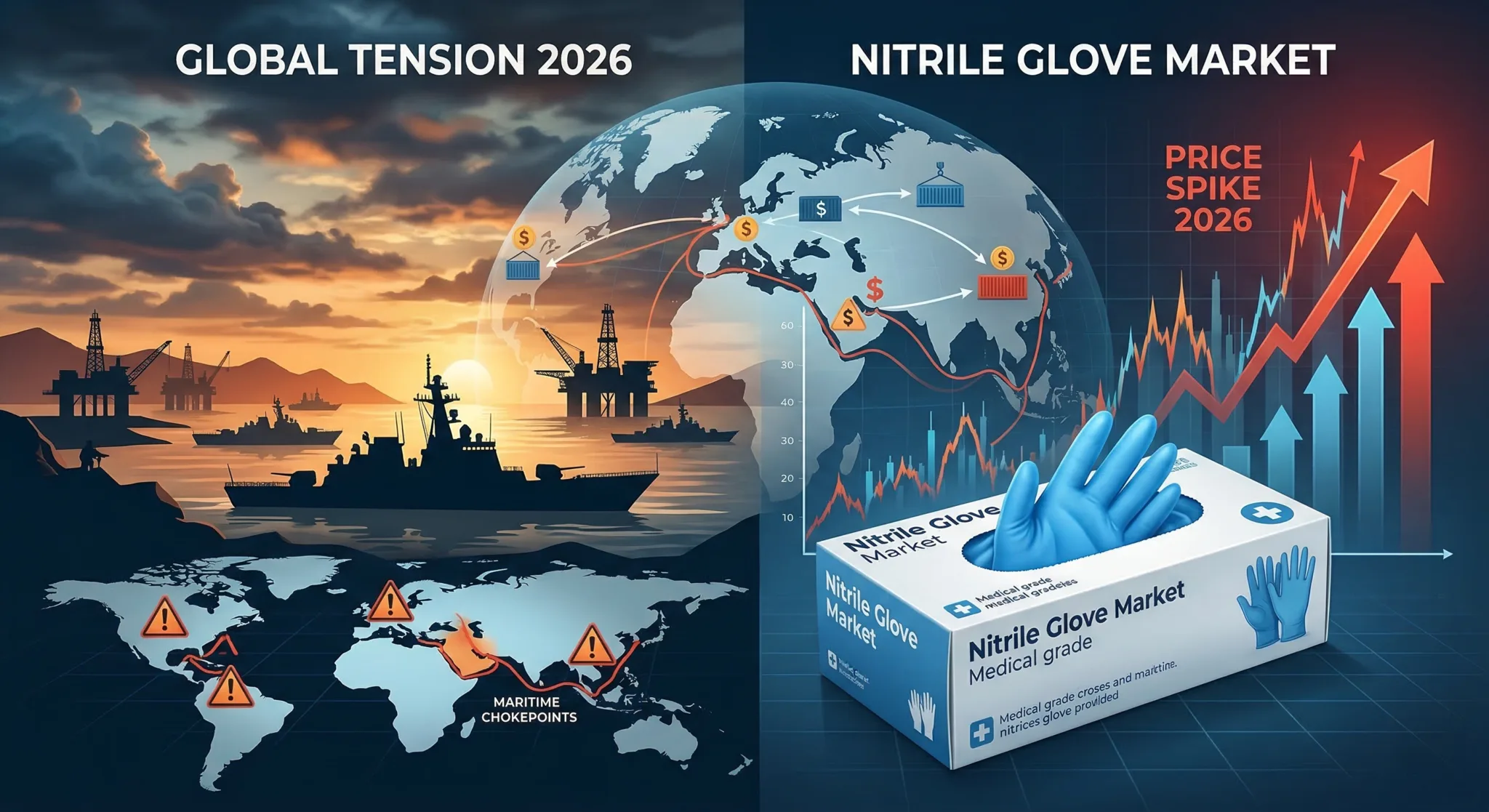
 Tensions in the Middle East directly impact the daily operations of disposable glove manufacturers in Southeast Asia.
Factories in Malaysia and Thailand require massive amounts of energy to maintain precise temperatures for their vast dipping lines.
When geopolitical instability strikes the Persian Gulf or the Strait of Hormuz, global energy markets react immediately.
Oil and gas price spikes force these Asian manufacturers to absorb much higher utility costs. To maintain profitability, these factories pass the sudden expenses directly to buyers in the United Kingdom.
British businesses often face a significant surcharge on container shipments within just a few weeks of a major market disruption.
The physical composition of nitrile gloves creates a deep reliance on the Middle East for raw materials. Manufacturers synthesise carboxylated acrylonitrile-butadiene to produce the essential material NBR.
They derive the core monomers, acrylonitrile and butadiene, entirely from petroleum products. The Middle East is the primary global supplier of naphtha and natural gas liquids needed to produce these fundamental chemical building blocks.
When conflicts restrict or reroute these vital petrochemical feedstocks, the global supply of NBR shrinks rapidly.
Because raw material expenses account for roughly half the total cost of a finished glove, any increase in NBR pricing severely inflates the final per-box price for consumers.
Geopolitical instability also severely disrupts the logistical network that transports finished gloves from Asian factories to British warehouses.
Maritime risks in the Red Sea force major shipping lines to abandon the traditional Suez Canal route. Instead, captains must navigate their massive cargo ships all the way around the Cape of Good Hope.
This extensive detour adds up to two weeks to the standard journey from Southeast Asia to the United Kingdom.
The longer voyage requires significantly more fuel and triggers higher war-risk insurance premiums. Shipping companies add these massive extra freight costs to the final invoice of every single container.
To protect against these volatile market forces, procurement teams across the United Kingdom must adopt strategic purchasing habits.
The Glove Club actively monitors daily petrochemical trends from their London head office in Perivale and their North Wales warehouse in Abergele.
They advise healthcare facilities and industrial businesses to secure bulk orders of Infection Control Nitrile Exam Gloves before the next price hike occurs.
For heavy-duty applications, buyers in towns like Wakefield and Hitchin can purchase Black Nylon Nitrile-Coated Gloves to reduce replacement frequency and save money.
By maintaining robust local stock, British suppliers ensure hospitals and care homes receive consistent protection despite unpredictable global shifts.