

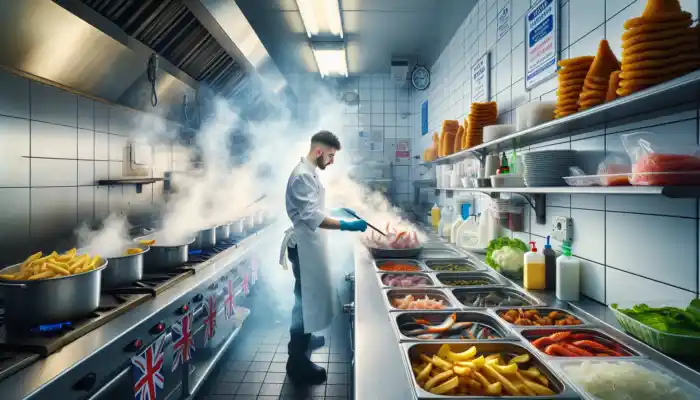
 British curry houses and bustling takeaways often face unique challenges with temperature extremes that standard disposable gloves cannot manage.
Staff working with hot pots or handling spicy dishes require robust protective equipment to prevent burns and other physical injuries.
Kevlar and thermoplastic rubber gloves provide essential thermal protection while maintaining the manual dexterity required to plate complex dishes.
Conversely, handling frozen ingredients requires materials such as nylon or neoprene that retain flexibility even at low temperatures.
These specialised options protect workers from frostbite and ensure a secure grip on icy packaging, which standard vinyl alternatives often fail to achieve.
Traditional fish and chip shops across the UK rely heavily on nitrile gloves to combat the slippery nature of battered goods and cooking oils.
Nitrile offers superior grip and oil resistance compared to other materials, helping prevent accidents during service.
This material also holds up well to acidic foods such as vinegar or citrus fruits, which are often used in garnish preparation.
While latex is a viable alternative for acid resistance, many establishments are shifting to nitrile to avoid potential latex allergies among staff and customers.
British kitchen managers prioritise these chemical-resistant properties to maintain structural integrity and prevent glove degradation during long shifts.
Bakeries and farm shops handling wet doughs or fresh produce often turn to polyethene and vinyl options for their moisture-resistant properties.
These materials allow bakers to handle sticky mixtures without compromising hygiene or losing their grip on the product.
The affordability of polyethene encourages staff to change gloves frequently, a vital practice for reducing cross-contamination between batches.
British standards emphasise the importance of these rapid transitions, especially when workers switch from handling raw flour to finished goods. This approach ensures customers receive products free of harmful pathogens or allergens.
Regulatory compliance dictates the final selection of materials for meat and dairy processing facilities nationwide.
Establishments must select gloves that strictly comply with BS EN 455 to ensure they meet food-handling requirements.
Butchers and dairy processors utilise non-porous nitrile or vinyl gloves to stop raw juices from penetrating the material and reaching the skin.
This barrier proves essential for adhering to Food Standards Agency guidelines regarding bacterial transfer and hygiene.
By strictly following these regulations, UK food businesses demonstrate their commitment to public safety and protect their reputation against the risks of foodborne illness.