

Author’s Content Warning: This article includes an awful lot of that dreaded F word… “fat!” I’m of the opinion that this word should be re-contextualized back into a neutral descriptor word and that euphemisms like “Plus Sized” do more harm than good. This comes from experience as a very fat person.
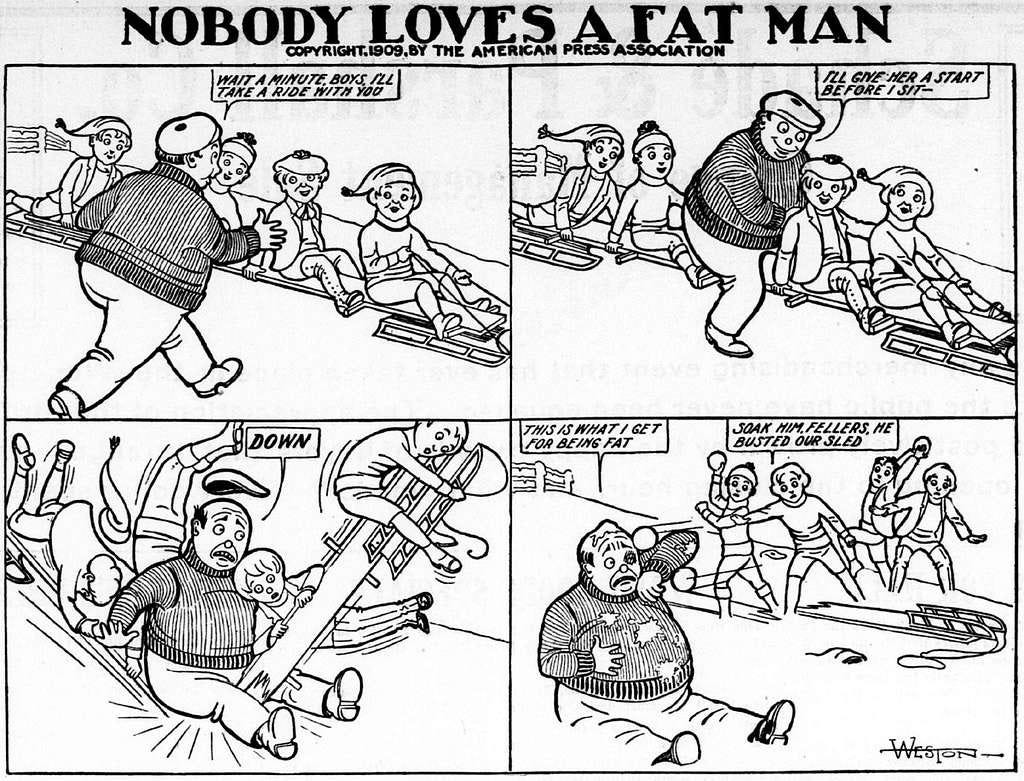
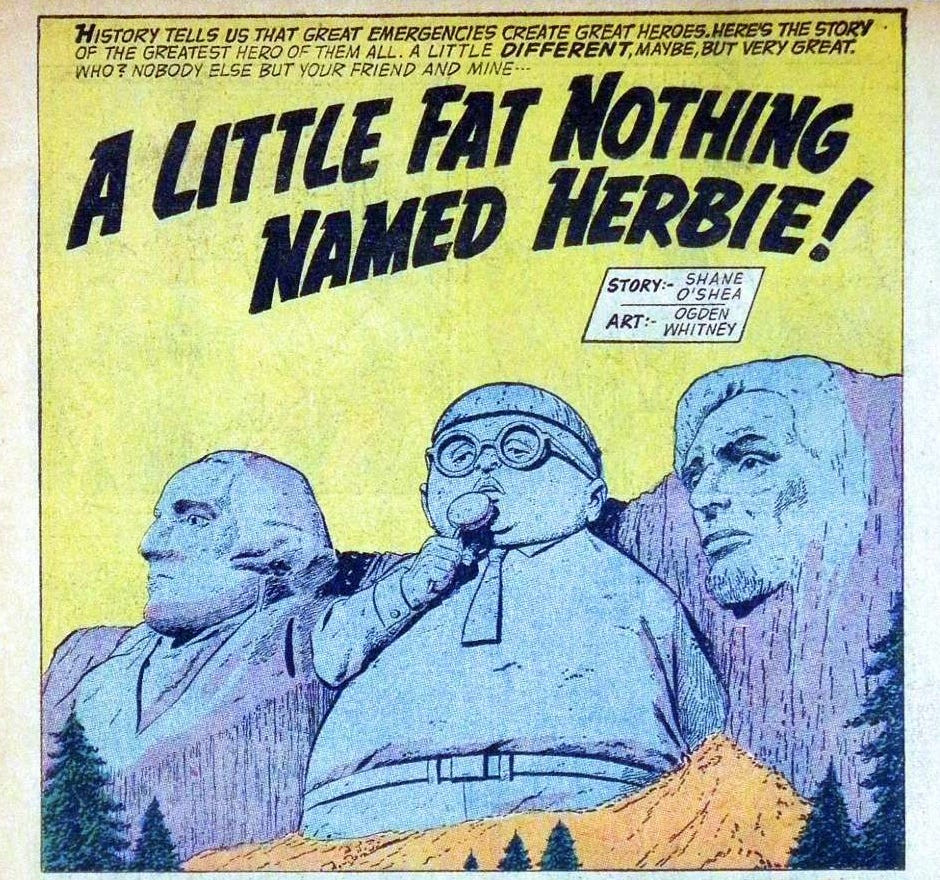
I’ve also included images of old advertisements and comics with fat-shaming content to illustrate the points made in this article, most of them kindly uploaded and archived by ComicBookPlus, a fantastic resource for public domain comics! If you have an eating disorder or are otherwise triggered by this kind of content, please proceed with caution.
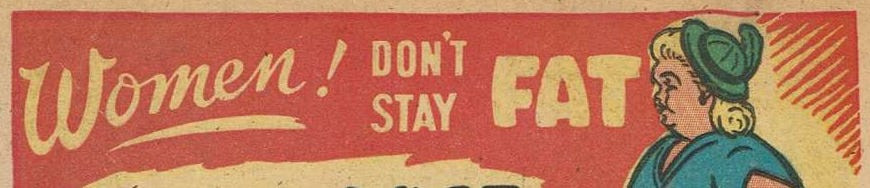 A Problem Of Extraordinary Proportions
It’s been an unfortunate long-standing tradition in the fictional world that if a character is fat, that they must be “the funny one.” They can’t be the pretty one—much too jiggly for that. Mysterious? No, at that size they’re obviously very sloppy and piggish. Obviously. And, outside of mob stories, you can forget about them being deadly, too.
It’s their own fault, of course, for overeating. So much overeating. How can one possibly get that big without snacking on Big Macs? Why, their blood must have turned to chocolate sauce by now, they inhale so much sugar! A human pig, that’s what they are.
 It came as no surprise to the audience of the 90s that in Disney’s Hercules, only one of the Muses was fat. She was the Muse of Comedy. Everything about this character is larger than life, from her overexcited movements to her loud, boisterous voice. She’s meant to be funny, and she is. But there’s also no way to play off her size as coincidence. The fat is supposed to be a part of the humor. And so it went in pretty much every piece of media.
Fiction influences fact. All of these tropes leaked into real life in the most reprehensible ways. How many plus-sized women have had the uncomfortable experience of finding a friend group, only to realize that she’s only accepted because she makes the other girls look prettier and smarter? Millions of posts on the Internet assert that, regardless of gender, a large size grants you the “funny friend” role, and you cannot break out of it unless you drop the pounds.
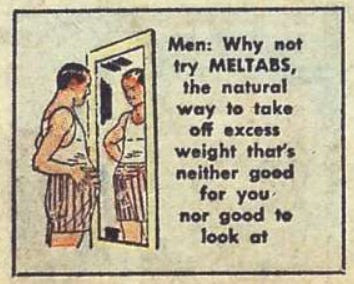 This is complete horseshit in every sense of the word. Except for in a few niche circumstances (I see you, feedees!) weight does not reveal anything about a person‘s nature, dexterity, tastes, or intelligence. Hell, it doesn’t even reveal as much about a person’s eating habits as people think it does. (BMI in the medical field should be dead in the water, but alas.)
The body positivity movement rejects the “funny fat foodie” as an outdated insult. It seeks to empower fat people by placing them in positions normally reserved for the ultra-slim: superheroes with incredible strength, lusted-after movie superstars, artists and poets and persons of prestige are all capable of carrying around some extra heft without losing their power. I’m thrilled to see this change in fiction and I want it to continue. But, for all the progress we’ve made, we’re leaving someone behind:
The fat funny foodies.
To Be the Bigger Person
The main issue with the old archetypes is mainly that fat = ridicule. The character is reduced to their weight and perceived awkwardness/ugliness. Other character development, if any, is shoved to the wayside to make room for more jokes about how undesirable their appearance is.
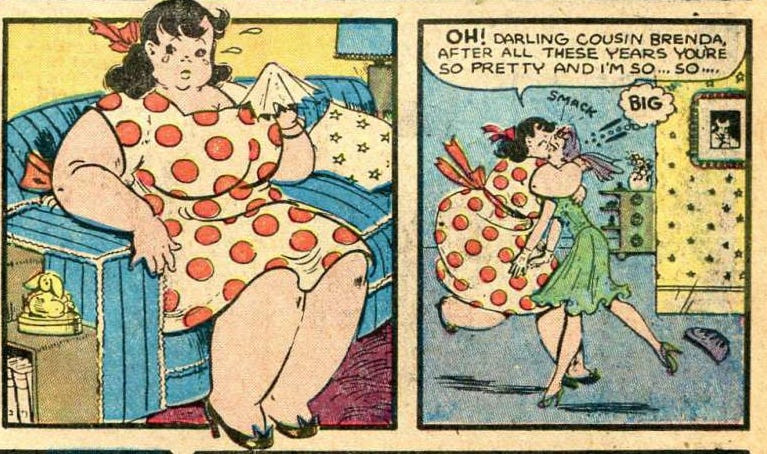 The current solution to this is to take out references to food entirely when creating a fat character, unless addressing eating disorders or food shaming specifically. And you must try to avoid equating them with humor. And showing them in any kind of awkward situations? Not allowed. These omissions will help normalize larger bodies and eliminate fatphobia forever!
But… women who are fat and clumsy exist. Men who are fat and love to eat exist. You might meet witty fat people who find power in humor, fat cooks with degrees in culinary science, fat food bloggers with impeccable plating, fat teenage girls with social disabilities who really do say all the wrong things and trip over their shoelaces in gym class. These people are whole human beings with a myriad of personality traits beyond their size, not walking fat jokes to be mocked.
The body positivity movement says: NO MORE FUNNY PLUS-SIZED PEOPLE! NO MORE BIG FOODIES! KILL THE STIGMA! But unintended result of these well-meaning revisions is that, when the real life funny, fat foodies seek out characters to relate to, the only characters that match up are gag characters.
 When You Are The Elephant in the Room
Realizing that you closely resemble a stereotype is a painful experience, especially to a group so prone to being the target of shaming. As a stress eater in a size 3X, I find myself grappling with this a lot, especially as a fan of vintage media. Here’s just one example: those of you who have been following me for a while already know about my fascination with the Camel Cigarette ads of the 90s. Aside from the infamous Joe Camel, there was an entire cast of recurring characters, including The Wides Guys who were (what else?) a vaudevillian pair of fat foodie camels who crashed into everything and were generally unrefined. Almost every bit of advertising featuring them was about their excess weight. They were even heavy enough to sink most of Hawaii into the ocean during their 1993 US road trip just by setting foot on the islands.
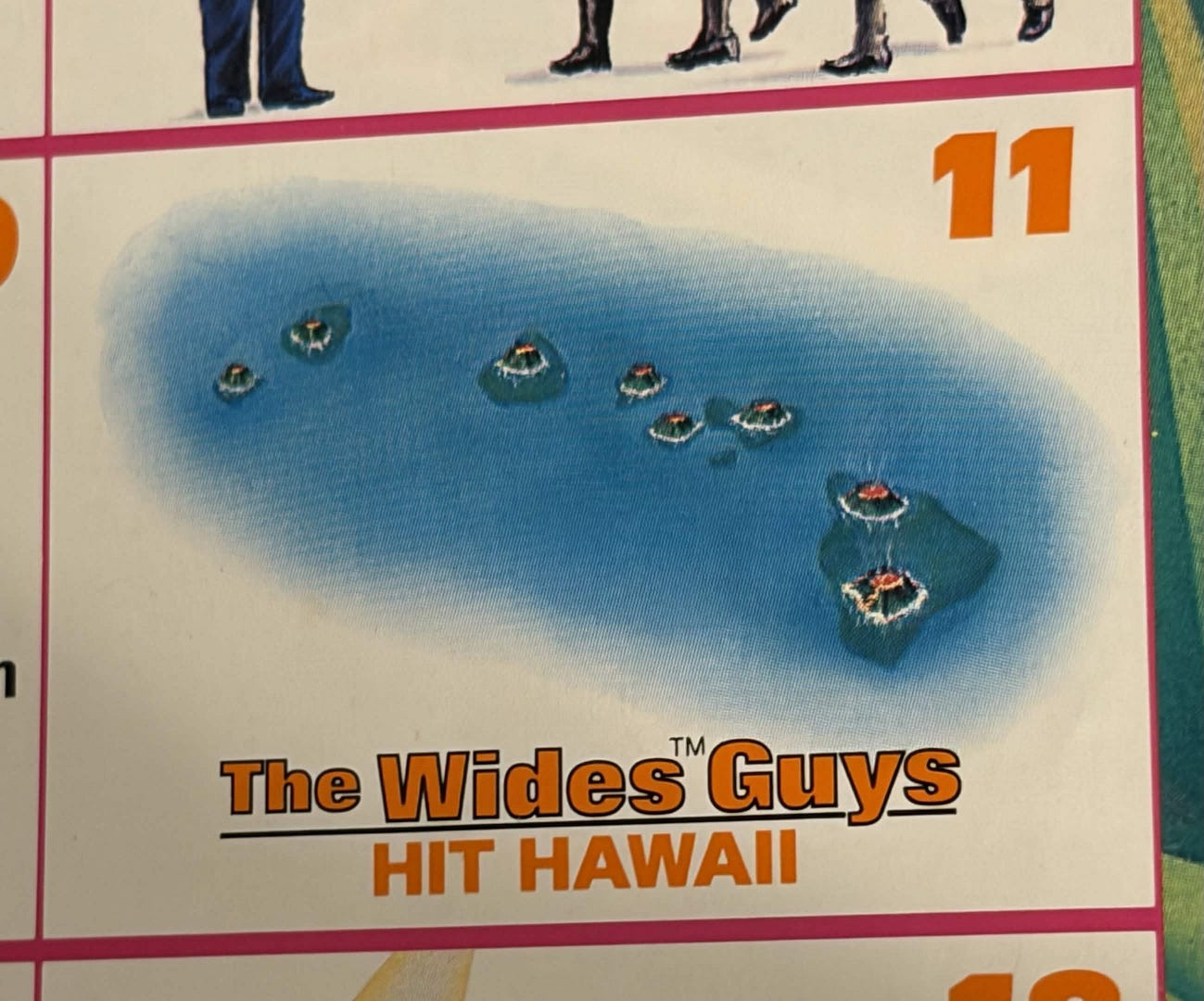 (Author’s note: I’m realizing as I edit this that, knowing the Looney Tunes-esque nature of the Camel crew, the islands could have also been sunk from a series of cartoon escapades. I considered swapping the picture out for the one where a giant bite is taken out of the coast of Florida, but I’ve decided I’m going to leave it in as my example because, despite it all, the picture makes me giggle every time.)
These kinds of jokes abounded in all sorts of media not so long ago and, try as I might, I can’t help but see myself in it. I’m the fat, funny foodie that would sink Hawaii into the ocean. I presume that means that others are struggling with the same problem. And that means that funny fat foodies are a real part of the population who deserve to see themselves portrayed outside of cruel jokes.
I can’t shake the feeling that it’s not the archetype that are the problem as much as it is the notion that those traits are something inherently bad. Even if a large character does have an affinity for burgers… why is that negative? Are fat people just not allowed to have unhealthy food under any circumstances? I’d confidently say no—and go beyond that to say that thinking otherwise is a form of food shaming.
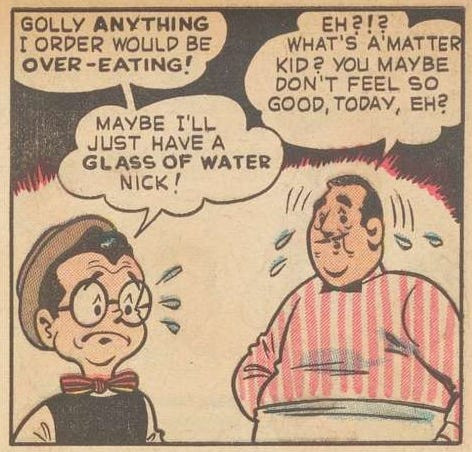 Clumsiness, too, has a weird reputation when a character carries extra weight. Everyone on the planet is clumsy in one way or another, and some are more clumsy than others. Of special note here are folks on the spectrum (me included), who typically have poorer spatial awareness and are prone to bumping into objects. This can be presented sympathetically quite easily with a thin autistic character, but replace it with a fat one, and…? Heavens no, that would be shaming! That’s a stereotype! (See the problem here?)
So, how do we fix this weighty problem?
I think the best answer’s simple to say and difficult to put in practice: keep your fat characters human. In most circumstances, fat characters should be just that—characters who happen to be fat. This can include being funny, clumsy, or a big eater… or it may contain a combination of two or more, or even none at all. But, and this is a big but, if you’re writing a character worth their spit, they’re going to have more than just two traits to their name. The most damning problem about fat stereotypes is that the characters attached to them have about as much depth as a piece of cardboard. So, the more personality traits you can work into a character, the more realistic it is to add “…and he also stress eats ice cream sundaes a bit too often,” without it sounding like you’re pointing fingers at every fat person in the country. The same goes for women, gay people, and other groups often stereotyped; if you’re writing cardboard, you’re doing a disservice.
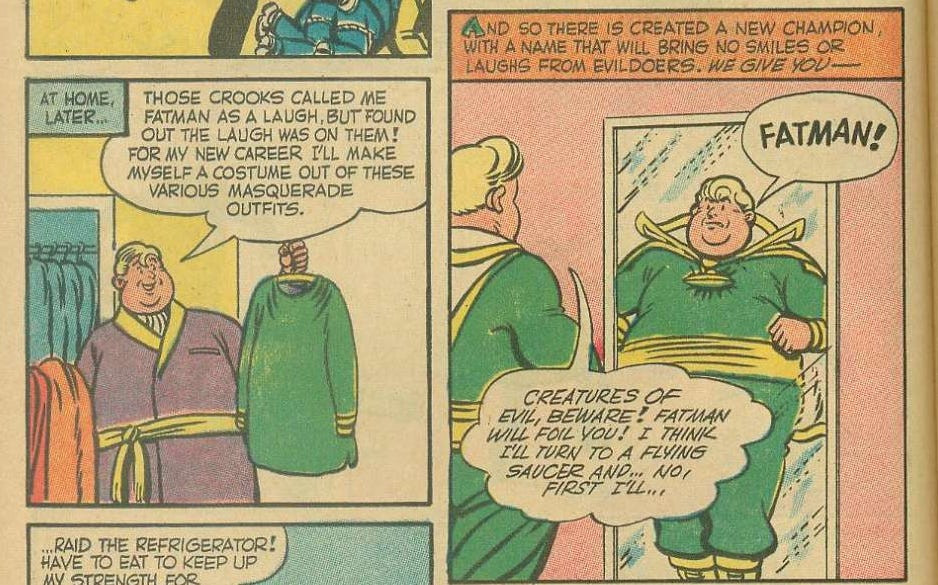
The other answer is to go in a totally opposite direction and make your character proud of their size in spite of their perceived “fatty flaws.” Doing this properly still requires that you add in other traits to prevent them from being cardboard, but for these characters, size is an integral part of their character vs just a small part of the whole. One curiously early example is public domain superhero Fatman, The Human Flying Saucer. While he still has some stereotyping problems, he is a fantastic sign of fiction moving in the right direction. Along with his obligatory love of food, he’s also a gentle botanist (a rare hobby indeed for a teenage superboy!), uses his size as part of (but not all of!) his superhero powers, and even reclaims insults about his weight to triumph over evil.
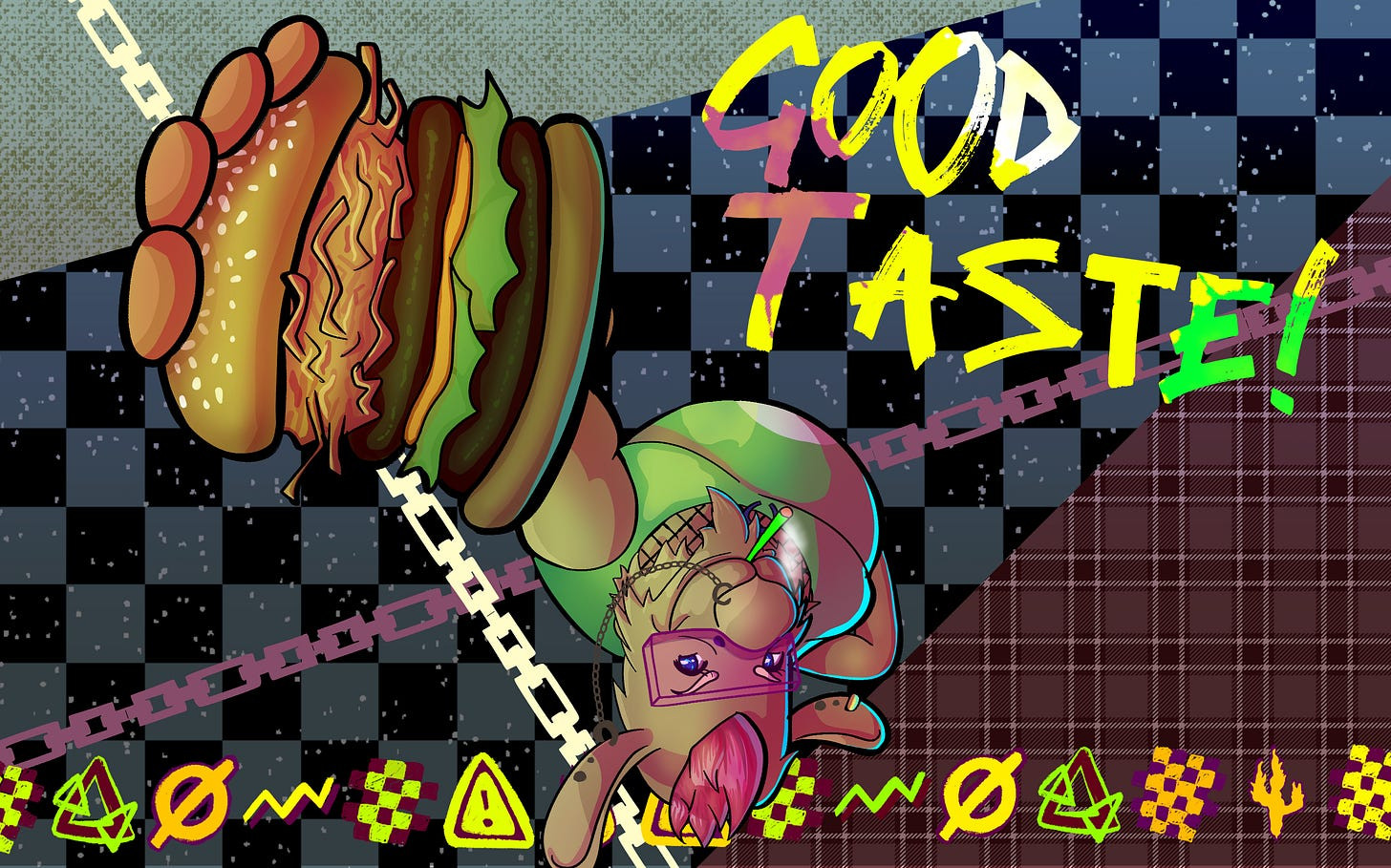
 It’s also important to keep in mind that no two human (or sapient fantasy) beings are alike. In my own Smoking is Cool! project, both the guitarist and the drummer character are fat. Winston Goodman, the guitarist, is a stress eater and experiences severe dysmorphia because of his beer belly. He also loves scaling tall buildings/trees without a harness, still wears his deceased poppa’s old Aloha shirts as part of his concert uniform, and has a lucky pair of hippie sunglasses that he’s overly fond of. Drummer Lucky Fine, pictured below, goes in a totally opposite direction because he was created in part as a response to The Wides Guys: he has a particular fetish and so is not only the largest member of the band, but is seeking to get bigger! He has a heavy appreciation for food and can pick out ingredients from a recipe just by rolling it around in his mouth. For him, size and food are power. Aside from that, he’s a fan of jewelry and body mods (piercings, specifically), is the boyfriend of bandmate Ash Tapper, and constantly suffers from impostor syndrome because he feels like he could be doing more to help others—he doesn’t recognize how huge his efforts already are. He, like Comedy, is larger than life, and in this case, that includes his heart.
 Whew! That was one heavy article! I’m hoping that this presents a clearer picture of my problems with fat in fiction, and I hope I’ve given you some inspiration for your own fat characters as well. Now, if you’ll excuse me, it’s dinner time, and I’ve got a date with a big, heaping plate of pasta.