
Spend ten minutes on Russian social networks like VK or OK.ru — or just try talking to ordinary Russians, and you’ll run into something that feels almost unreal:
The war in Ukraine is strangely absent from everyday conversation.
Not absent from budgets, cemeteries, prisons, or propaganda, of course not. But absent in the way people speak. In the casual posts. In the small talk. In the emotional center of public life.
And that confuses outsiders. Because we assume war does one thing automatically: it takes over a society’s mind. In Russia, for most people, it doesn’t. And there are reasons.
For the overwhelming majority, the priority is brutally simple: please let it not touch me. Russia is huge. Life is already exhausting. People are trained by history to survive by shrinking their world: family, work, small private routines. Politics is treated like weather: dangerous, unpredictable, and not something you can influence.
Then the Kremlin gave everyone a linguistic escape hatch. Not “war.” A “special operation.” That wording matters. It signals: this is not our collective cause. This is the bosses’ project. A project belongs to management. Management decides goals, methods, rewards, and when it ends. Ordinary people are not invited to debate it — they’re invited to stay quiet and stay out of the way.
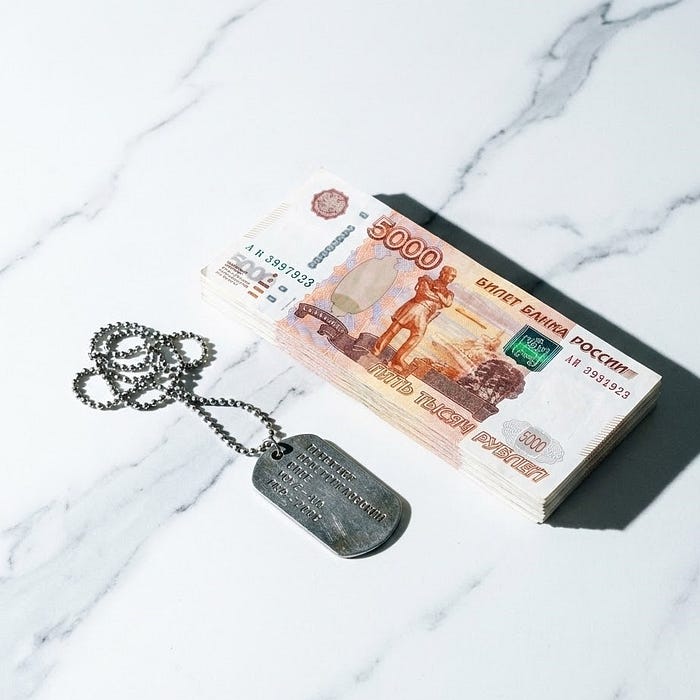
The next layer is even darker: the relationship became transactional. In a real people’s war, the state asks for sacrifice and offers meaning in return. Here, meaning is thin, so the state pays. Contracts. Bonuses. Compensations. And once you “buy” participation, you get a cold new social logic: I go — you pay. I die — you compensate. No moral bond. No shared story. Just a deal.
That’s also why the loud pro-war subculture never grew into a serious cultural force. It stayed performative and strangely sterile: slogans, symbols, angry posts, but no real intellectual or artistic footprint that a nation actually lives inside.
And finally: the language keeps the public separated from reality. Officially, they avoid calling Ukraine a “war.” But they freely talk about a different “war”: a virtual one allegedly waged by “the West” against Russia. So people are trained to feel threatened… without having to look directly at what is being done in their name.
Fear without responsibility. Anxiety without ownership. And that is how you end up with a country where the war is everywhere: in money, law, death, and propaganda, yet in everyday speech it becomes a blank spot.