
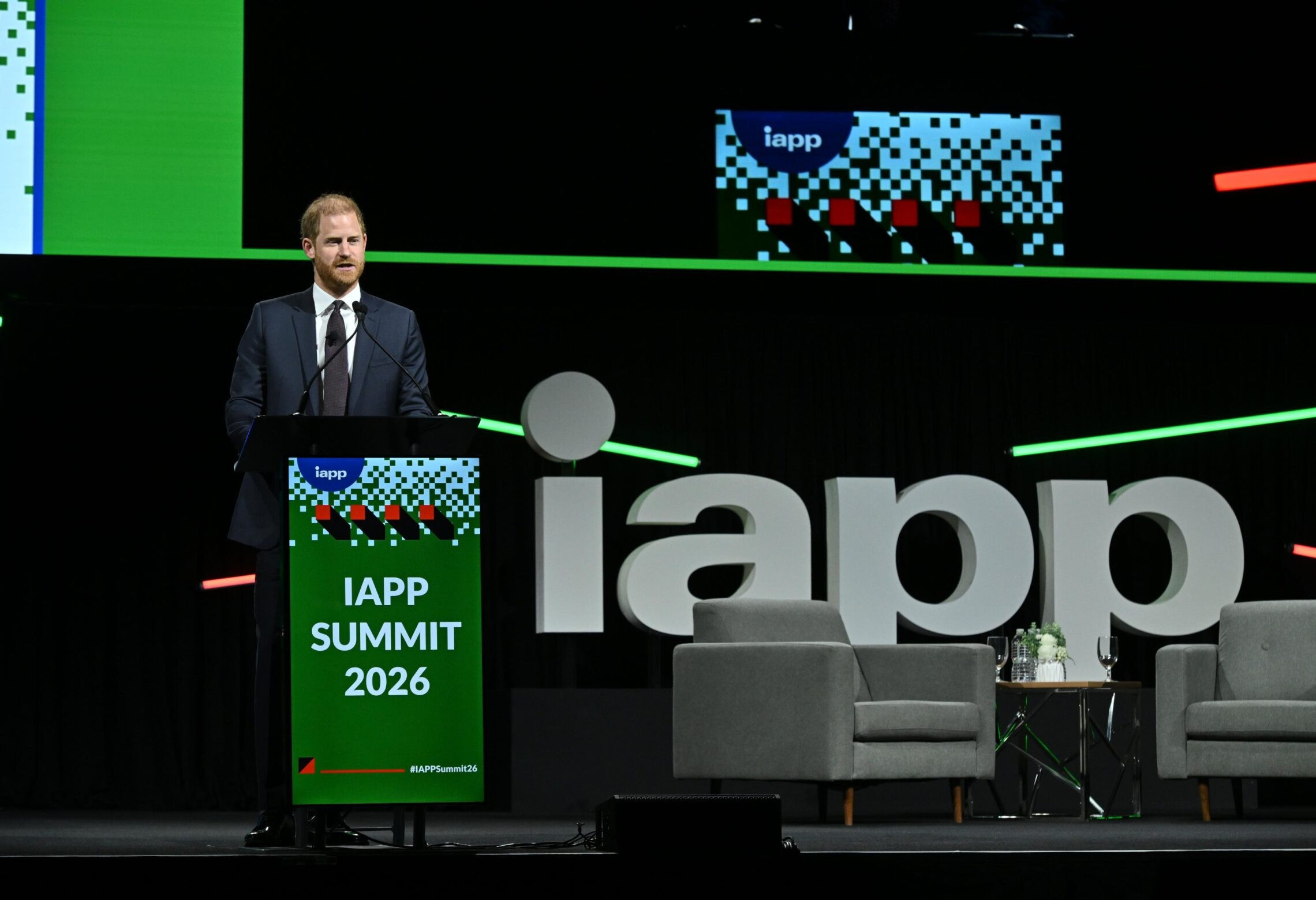
Let me tell you what Harry said in Washington DC about the moment we are living in right now and why it is more significant than anything being said about it in the British press this week.
He said we are not just living through another phase of technological change. We are standing at the beginning of the next world-shaping shift. Artificial intelligence will transform nearly every part of our lives. And that transformation gives us something rare. A chance to do things differently.
For the last twenty years we built digital systems first and governed them later. AI gives us a rare opportunity to reverse that sequence. To embed accountability, privacy and safety into the architecture from the start, not retrofitted after the harm has already occurred.
He said this in Washington DC, which he noted as a Brit living in the United States he found fitting, because the standards set in America increasingly define the digital environment everywhere. Even in countries trying to protect their own citizens and their own democracies. When that influence scales faster than safeguards, the impact is felt far beyond America's borders.
He spoke about the jury verdict from the week before. Two historic and precedent-setting accountability lawsuits decided against Meta and YouTube. He called it accountability arriving. He said the jury confirmed what parents have felt and experts have said all along. The systems driving social media platforms have been built to exploit, not protect. And the people at the heart of it have always known it.
He spoke about trust. That trust is part of what allowed the digital space to scale in the first place. But that trust has been broken. Not suddenly but steadily, as people realised these systems do not operate the way they were promised. And still we continue because opting out is no longer realistic. The system no longer relies on trust to function. We rely on it for connection. That, he said, should concern all of us.
And then he said something about consent that deserves to be carved into the wall of every technology company's boardroom.
He said users are offered broad, often irrevocable rights over their data and content. Systems infer who we are not just from what we share but from how we behave. The rules can change at any time, with continued use treated as approval. At that point we have to ask whether this is consent or structural surrender.
Structural surrender.
Two words. They contain the entire argument.
We did not agree to hand over control of our lives to systems that study us, predict us and nudge us toward behaviours that serve someone else's outcome. We were walked there incrementally, one terms-of-service update at a time, until opting out became impossible and compliance became the only option. That is not a free market. That is not innovation. That is extraction at civilisational scale.
He asked the four thousand privacy professionals in the room to ask themselves not whether privacy will matter in the age of AI, but whether they will build systems where it is impossible to ignore.
He said we can choose data sovereignty instead of data surveillance. We can choose innovation that benefits everyone, not just a handful of companies creating consolidated wealth. We can invest in human-centred technology led by human-centred leadership.
He said the challenge ahead of us all is significant and worthy of our attention. For anyone outside of this room thinking it will not affect them, think again. The good news is we are confronting this challenge. And we are stronger together.
He said that to four thousand people.
The man the British press spent this week describing as a supplicant hoping for a Sandringham invitation, as a man whose speaking fees have dropped, as a potential security threat via the women who bought his wife's retreat tickets.
He said that to four thousand people in Washington DC.
The world's largest gathering of digital responsibility professionals.
On the most important technological question of the next fifty years.
And they listened.
Because he was right.
And because he was there.