

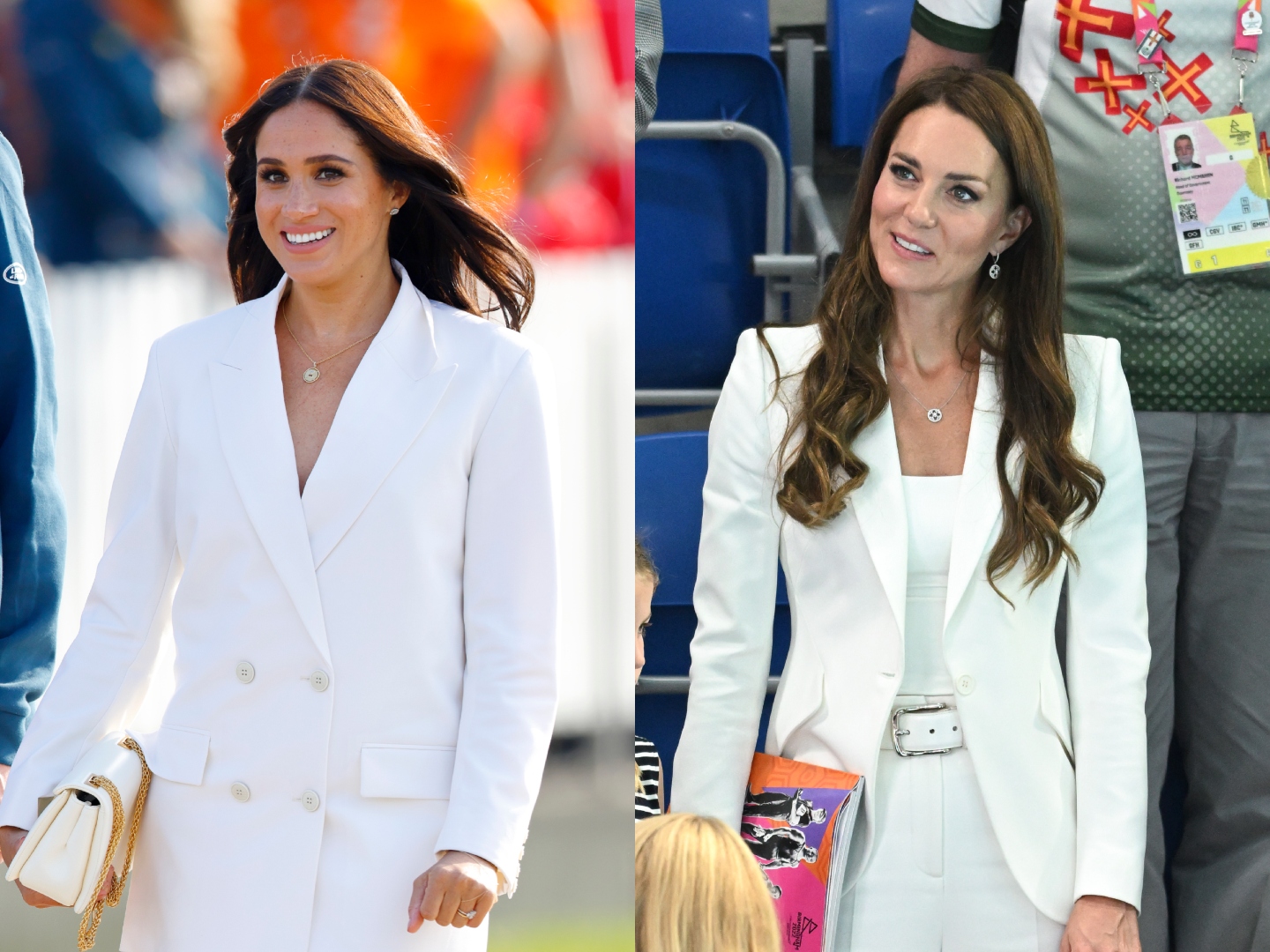
Let’s talk about how the press praises Kate Middleton for her Cartier earrings and her plaited hair and what that actually says about media narratives, double standards, and modern royalty.
Last week, the Princess of Wales was out on a solo engagement in Northern England, and two things became instant headlines.
First, she wore a pair of Cartier Trinity earrings a piece that retails for over $4,100 and is thought to symbolise her three children, Prince George, Princess Charlotte, and Prince Louis.
The earrings weren’t just fashion they were deeply personal. The intertwined gold bands are often interpreted as a tribute to family, love, and loyalty, and they echo a tradition of meaningful jewellery in the royal family that goes back generations.
And almost immediately, the headlines weren’t about why she was there they were about her earrings.
Second, during that same day, she switched her hairstyle mid-engagement from loose, face-framing waves to a simple braid, which drew its own wave of commentary online.
People genuinely praised the braid calling it “youthful,” “effortless,” and even comparing it to other cultural images because fans saw it as relatable and down-to-earth, even as a princess.
Here’s where the interesting part starts.
When Kate wears Cartier earrings and styles her hair, the coverage transforms those details into praise.
It becomes:
“Subtle homage to her children.”
“Effortlessly stylish and relatable.”
“A refreshing, personal touch during a public engagement.”
This isn’t just reporting it’s value judgement.
And that’s not unique or surprising on its own. But compare that treatment to how Meghan Markle was covered when she appeared publicly and wore higher-end pieces.
There were endless articles focused on price tags and speculation about costs often framed as if her purchases were morally significant, or evidence of disconnected glamor, or evidence that she was “too expensive” or “high maintenance.”
Meanwhile, when Kate wears expensive jewellery Cartier, symbolic heirlooms, sentimental pieces the coverage is framed as emotionally touching, meaningful, heartfelt, relatable.
Different phrases.
Different framing.
Different emotional impact.
And that matters.
Because fashion coverage isn’t neutral.
It’s meaning making.
It tells audiences:
how to feel about a public figure
whether to think they’re aspirational or out-of-touch
whether their style signals warmth or vanity
For Kate, the media often chooses warmth, family, tradition, continuity.
When her hair is plaited?
It’s celebrated as sporty or youthful.
Fans on social media compared it to a cultural character a fun, relatable image.
Meanwhile, Meghan who also wore accessible, wearable styles was often scrutinised for price tags and accused of being elite, privileged or “performing fashion.”
That contrast isn’t accidental. It’s patterned.
Kate’s fashion stories, even when they could be framed as expensive or elite, are almost always contextualised as symbolic, personal, thoughtful.
Meghan’s fashion stories were often contextualised as excessive, expensive, unreachable.
Now let’s be clear:
There’s nothing inherently wrong with expensive jewellery or a pretty hairstyle.
Most public figures wear jewellery, designers and luxury brands that’s part of how fashion and celebrity culture intersect.
But the difference in media language praise vs. critique reveals something deeper. It shows how narratives are shaped:
One woman’s Cartier earrings become a tribute to family,
another’s become a headline about price tags.
One woman’s braided hair becomes relatable and youthful,
another woman’s style becomes evidence of elitism.
What the press chooses to highlight matters. Because it shapes public empathy.
It tells people:
who to admire
who to humanise
who to see as connected to values like family and tradition
and who to see as distant, indulgent or unrelatable
That’s why we see two very different tonal universes when similar behaviours are reported in the media.
And that’s why conversations about the language around royal fashion coverage aren’t just about clothes they’re about stories, identity, and who gets to benefit from warmth and who gets scrutinised for it.