

Before diving into the subject, I find myself obliged to clarify a few aspects regarding how two types of quotation marks are used in this argumentation and in all writings under the umbrella of The Letters of Salem. Specifically, only two types of quotation marks are used, aiming to highlight two statements that, at first glance, appear identical, but are in reality diametrically opposed. Thus, whenever a word is in “regular quotation marks”, when it is not a direct quote, these quotation marks emphasize a falsehood, a myth, or a misconception about the subject.
On the other hand, whenever a word or phrase is «in this type of quotation marks», it highlights a truth or the correct and original version of the subject, meaning the absolute and initial sense, the sense of origin. For example, there is a major difference between a “truth” (what is generally considered to be truth) and «truth» (a revealed truth, which might not be popular at all at this moment). The context will make it clearer what I mean; the core idea is that in all writings signed The Letters of Salem, these two types of quotation marks are used in an unconventional way «for this type of quotation marks», and it is well to take into account this technical drafting aspect.
Diving into the subject, from the very beginning I find myself obliged to emphasize that this will be an unconventional, unpopular, shocking approach, yet entirely true, properly argued on the matter. On the other hand, not everyone will be able to understand what will be debated in what follows.
The misunderstanding of some is a reality that cannot be changed; it is something that stems from the inner nature of the individual, something that separates all of humanity into exactly two categories of people, something that has been from the beginning and will remain until the very last moment of history... even more so, the final moments of history will highlight to the maximum, more than ever in history, this differentiation through contrast between these two distinct categories of people. The development of the subject will increasingly clarify exactly what I am referring to.
Because the title above, which introduces the upcoming debate, is a paraphrasing of a statement made by a religious man, I feel once again obliged to provide a few clarifications. This is because this article has as its primary target audience those individuals who consider themselves religious, and being a theological approach, it primarily addresses those who find themselves, within their religious concepts, in one of the three religions that originate from the Scriptures revealed through prophets; and within this categorization are found Jews, Christians, and Muslims... of course, anyone is invited to read, but out of the two major categories of people in which all of humanity is included, only one category of people will understand, and that is normal... so it was prophesied to be, and so it is, and so it shall be.
Returning to the title, it is a paraphrasing of a statement made by a man about whom, at this moment, the three categories of religious groups (mentioned above) hold different, even diametrically opposed views and convictions, and it does not bother me.
What is important is that regarding this man, who made the statement “whatever you did for one of the least [«the insignificant»] of these brothers and sisters of mine, you did for me,” he is seen, “in the lowest common denominator,” as a «teacher»... and that is enough for the upcoming argumentation. It is enough for me for now that Jews recognize Yeshua as a «teacher», that “Christians” also consider him (at least) a «teacher», and that Muslims, in turn, view him as being at least a «teacher».
It is true that “Christians” see Yeshua as more than a «teacher». According to their understanding, I should have written Teacher, as they see in Yeshua infinitely more than a «teacher», and I have no problem with this... I ask them to disregard the fact that I do not use capital letters when referring to Yeshua; for a start, I ask them to imagine that I am writing in ancient Hebrew (meaning without capital letters).
On the other hand, I am glad that Muslims see Yeshua as a prophet (even they see him as more, seeing him participating in the final judgment), but for this argumentation, it is enough for me that they too see Yeshua as a «teacher from the One-who-Is», just as his contemporaries saw him, some of the scholars of the time and even among the Pharisees, who addressed him at that time with the words: “«Teacher», we know that you speak the truth,” “«Teacher», we know that you are a «teacher» come from the One-who-Is.”
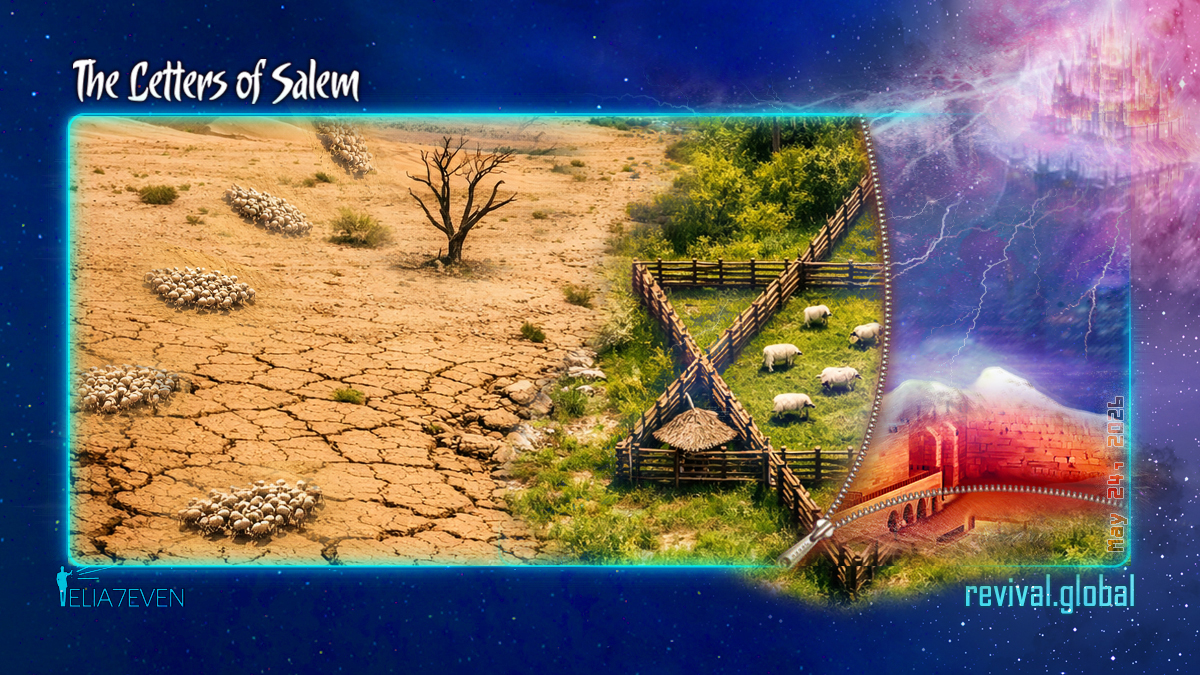
Before diving into the subject, I want to ask a question: to whom exactly was Yeshua referring as his brothers in the last days? To Muslims, to Christians, to Jews? Why in the last days? Because the statement was made with regard to the Last Day of judgment! The day when all of humanity will be divided into two categories of people: sheep and goats; wheat and tares. The sheep destined for the fold of the One-who-Is, in the Kingdom; the wheat with the same destination in the barn of the One-who-Is, in the Kingdom, while, at the opposite pole, the place of the goats and the tares will be «the final fire», initially conceived in the Plan of the One-who-Is for demons and their leader (the Devil).
Nowadays, everyone claims to have a certain connection with Yeshua. “Christians” call him their Lord and their Teacher; Muslims view him as being one of the greatest prophets, and a judge (participating in the judgment); Jews haven't thrown themselves too heavily into making statements... they even have trouble calling him a «brother». The problem with brothers is that you have no choice; when blood, when parents make you a brother, you can't really say absolutely anything anymore; you swallow hard, or you rejoice with your whole being.
Could it be an exaggeration to claim that by “these brothers of mine,” in the context of the last days, Jews are meant? Could the separation of the sheep from the goats and the wheat from the tares be in connection with Jews and anti-Semitism? A bold statement indeed!
What can argue for it? The context of the «last days» and of the «judgment» alone would not be enough. Are there internal elements within this parable (prophecy and teaching) that further highlight the fact that these «brothers of mine» are Jews – not Christians, not Muslims – while all of humanity is placed before two destinies: saved in the Kingdom, or lost in the fire with the demons and the Devil?
The Parable of the Separation was spoken by Yeshua after The Parable of the Expectant-Virgins, after the prophecy regarding the destruction of Jerusalem, and was put into writing by Matthew. This parable (prophecy) has elements in common with The Parable of the Sower.
In all these teachings, the situation of humanity at the end of history is described; in all these parables (prophecies), there is talk of separating the good (or bad) from among the bad (or good), separating those who waited prepared (the wise virgins) from those who waited unprepared (the foolish virgins).
In all these parables, it is about the coming of someone who triggers this separation: in the Parable of the Virgins, someone comes and cries out “Here is the bridegroom!”, in the Parable of the Sower, the angels (messagers) are sent as reapers, gathering the wheat before the sickle prepared for the tares; in the Parable of the Judgment, a «son of man» is shown coming in glory, accompanied by angels (messengers), seated upon a throne to be a king in glory, saying to the good (sheep and wheat): “Come, you who are blessed by my father, inherit the Kingdom prepared for you from the foundation of the World (when the wheat was sown by Love upon the Earth)!”
Who is this «son of man»? Who is the «bridegroom»? Who are the «angels» accompanying him in glory? What is the «Kingdom»? Who are the «brothers of the king»?
The questions above are in a relationship of correlation. To find the answer for each of them, we must first identify whom Yeshua is referring to as being, «at the end of history», the insignificant brothers of the king.
Yeshua intentionally used the adjective “insignificant” when referring to the king's brothers in the Parable of the Judgment. He intentionally left us this clue both for the identification of the king's brothers and for the identity of the king; because both the brothers and the king belong to the same nation or the same human family.
Who is the group of people, the family from the same parents, with a major role in the final events, or, in other words, with a major role at the end of history? Who are those who, in these days, especially in recent years, divide society into two: those who support them (rightfully so), and those who rebuke them (at the very least), on apparently just as “rightful grounds”?
Only a single group of people has achieved this feat, and more so than ever in recent years, humanity is orbiting, more or less blinded, around the Jews – the group that is the most insignificant relative to the world's population, the group that is the most insignificant among those with the Scriptures of the prophets, the group with the smallest palm of land of their own, the most controversial group throughout history; for all the empires that arose had an obsession with them, only to fall one by one, and precisely so that Israel would reach the end of world history, exactly to receive its reward… the one prophesied by all the prophets, including Yeshua.
Generally, there is a huge misconception regarding the relationship between Yeshua and Israel (the group of people descended from Abraham and Sarah, Jacob and Rachel, those descended from their son, those descended from Israel).
It is essential to demystify the relationship between Yeshua and Israel. There is no greater confusion and misconception in the world than on this subject, which is essential for understanding who the mentioned brothers are and who the mentioned king is in The Parable of the Judgment.
Obviously, in order to clarify and to bring the truth to light, we need some trustworthy witnesses, and the most suitable in this regard are the prophets, those confirmed by the One-who-Is.
Was Yeshua a prophet confirmed by the One-who-Is? Some say yes. It is said that while he was in the waters of the Jordan, at his meeting with the prophet John (the son of Zechariah the priest), the Heavens of the One-who-Is were seen opened and a voice was heard from them saying: “This is My beloved son, in whom I find my full pleasure!”… an occasion upon which two categories of people were found: some who heard the words, and others who had the impression that they heard thunder. Both groups were witnesses to something supernatural – at the very least.
Obviously, we need something more than this account of the eyewitnesses on the scene to take into consideration this confirmation of the One-who-Is regarding Yeshua as being a prophet.
On that occasion, many people were present, and from that moment on, a few of John's (the prophet's) close followers began to follow Yeshua; they were among those who had heard the words spoken by the One-who-Is. In addition, the prophet John declared regarding Yeshua: “Behold «the Lamb» of the One-who-Is who takes away the sins of the World.” – a prophecy that no Jew understood at that moment, just as they did not understand the meaning of the words spoken from Heaven in their hearing.
To understand the relationship between Yeshua and Israel, we must first of all understand Who spoke the words from Heaven, Who expressed Himself as being Father in relation to this Yeshua, called son.
This Father, evidently the One-who-Is, was He a divine novelty at that moment in relation to Israel, or was He the One who in the past chose Abraham, then Isaac, and later Jacob named Israel? I admit, it is a catch question! Why? Because there is a total misconception on this subject. I will clarify the understanding immediately.
It is assumed, “argued” since forever, that the One whom Yeshua referred to as Father is the One revealed in ancient times to be the One-who-Is; however, this statement is false!
When the «teacher» Yeshua referred to the Father in Heaven, the One heard by the crowd on the occasion when Yeshua was among «his own» on Earth, he made some statements regarding «this Father» that aim to highlight an essential truth that is entirely ignored.
Regarding «this Father», he said that no man has ever seen or known Him. He said: “No one has ever seen the One-who-Is [«this Father»].”, “Not that anyone has seen the Father [«this Father»].”, “I tell you that their angels in Heaven always see the face of My Father [«this Father»] who is in Heaven.”
In other words, Adam, Enoch, Noah, Abraham, Jacob, Moses, and all the prophets of old did not see and did not know «this Father»; meaning that in ancient times, it was Another who revealed Himself to these people, whom the Scriptures say they met and knew to be the One-who-Is. It is obvious that Adam (at least he!) saw his Creator, who with His own hands shaped him from the dust of the ground and breathed into his nostrils the breath of life.
The commonly accepted understanding is that in ancient times, «this Father» manifested Himself, which, as Yeshua showed, is a totally erroneous understanding. It is a lie invented by the very father of any lie, meaning the Devil.
Who manifested Himself in ancient times? To the surprise of many, the answer is diametrically opposed and shocking. In ancient times, α-Yeshua manifested Himself; He was the One-who-Is, the One who created Adam, the One who walked with Enoch, the One who saved Noah, the One who chose Abraham, then Isaac, then Jacob, who was converted into Israel.
Before “Christianity,” the first «Christians», those who believe in Yeshua and follow Him by keeping His commandments, were Adam, Enoch, Noah, Abraham, and all the Jews. The Jews have had a relationship with α-Yeshua millennia before the appearance of the first “Christian,” because they (and into him) were all Jews baptized as they passed through the Red Sea, liberated from bondage; they received the Law from α-Yeshua, and to them were given the promises and the covenant to be the chosen people of α-Yeshua.
This is why it is said that “he came to his own, and his own did not receive him.” Why did they not receive him? They did not receive him because they, the Jews, were expecting someone else – they were expecting a man, not a the One-who-Was descended from Heaven among them, an Emanu-El.
Are the Jews to be condemned for not seeing α-Yeshua in Yeshua? No! Why not? Because there is no clear prophecy given by α-Yeshua through which the Jews were told that α-Yeshua was going to do this – meaning that he would incarnate precisely to be their Saviour.
An equally shocking truth is the fact that Yeshua had no intention of being accepted at that time, of being recognized. Why not? Because he did not want to be placed on the throne of David, because he had come to be placed on the cross of Adam.
On frequent occasions when he referred to himself, Yeshua aimed for his close followers to understand the relationship between himself and the One «called by them» the Father, the One who manifested Himself in ancient times as the One-who-Is, α-Yeshua. He made great efforts for them to understand that «the Father of old» was none other than himself come in the flesh among them, which is why he did not come to abolish what he had previously given through Moses and the prophets, but had come to fulfill the prophecies that He Himself had given in ancient times.
He told his close followers, but they did not understand, just as no one understood: “I am in the Father, and the Father is in me,” “The Father is in me, and I am in the Father.” Meaning, the One «called by you» Father, the One manifested in ancient times as the One-who-Is, I am he, the one who is with you today; He and I are one and the same being, the One of old and the one who is among you today.
On the other hand, he insisted on emphasizing that although the One who brought them out of Egypt, the One who parted the sea so that they could pass through it as on dry land, the One who gave them the Law, the One who descended into the Tabernacle, the One who was their Rock of water in the wilderness, now, in their midst, is stripped of that power and is now doing the works of the Father («this One») who sent him. “The words that I say to you I do not speak on my own authority, but the Father who dwells [through His Spirit] in me, He does these works of His,” “for the works that the Father has given me to accomplish, the very works that I am doing, bear witness about me that the Father has sent me,” yes, “the works that I do in my Father’s name bear witness about me.”
Through incarnation, α-Yeshua surrendered all the prerogatives of the One-who-Is; Yeshua had become man to the exact same extent that human people were in that generation; he depended entirely on the manifestation of the Father's Spirit (Influence) [the manifestation of the One-who-Is] in him, just as the prophets of old depended entirely on the manifestation of the Spirit of the One-who-Is (of α-Yeshua) through them. If in ancient times the Spirit (Influence) of α-Yeshua manifested through the prophets, now, Yeshua being a man, the Father’s Spirit (Influence) manifested through him, His prophet.
Although Yeshua, born of Mary in Bethlehem of Judea, possessed the Spirit (Influence) of the One-who-Is in him from his mother's womb, even from conception, he received the fullness of the Father's presence (the Spirit of the One-who-Is) at the moment when the One-who-Is (the Father) recognized him as a «beloved son» – an occasion upon which Yeshua was «adopted» by the One-who-Is, becoming «the Son of God», a vessel for the manifestation of the One-who-Is, a prophet, and a man with a special mission: that of being «the Lamb» of the One-who-Is, the one who was to atone for the sins of the World.
The Godhead (Elohim) must be seen as a sacred, holy, and supreme Institution in the Universe. Upon the Throne of this Institution, Only-One («Echad») has always reigned as the One-who-Is; always One, not Two, not Three, because the One who revealed Himself to the prophets of old said: “Shema Yisrael, Adonai Eloheinu, Adonai «Echad» / Hear, O Israel: the One-who-Is is our «Love», the One-who-Is is «One»,” a fact also reminded by Yeshua through the words: “that they may know You, the only true «Love».”
Although there is only one Institution of «Love», although there is only one Throne, the One-who-Is upon the Throne has not always been – permanently – the same Being; throughout the history of the Universe and, later, of the Earth, Three have manifested, but never at the same time.
There was and is, and there will eternally be a succession of Three upon the Throne of «Love» – a rotating succession, where, one by one, One after Another, These become the One-who-Is, while the Other Two become, One the One-who-Was, the Other the One-who-Comes; thus, α-Yeshua was the One-who-Was, the One-who-Is, the One-who-Comes.
In ancient times, α-Yeshua was the One-who-Is. In the present of the incarnation, during the time of Yeshua, the Father («this One») was the One-who-Is, and α-Yeshua (Yeshua) became the One-who-Was (stripped of any of the prerogatives of the One-who-Is). The incarnation of α-Yeshua into Yeshua left the «Throne of Love» empty – a Throne upon which the Father («this One») installed Himself, One who in the history of the Earth had not manifested Himself as «Love» until then.
This Father (the «Love» upon the Throne), on the occasion of the moment at the Jordan, adopted the One-who-Was (stripped of all glory) as Son. Thus, the One-who-Was became a «Son», through adoption, through the legal recognition before the entire Universe of a status lost through incarnation.
From a legal standpoint, the man Yeshua had to be raised to the rank of «a Son of God («Love»)», just as Adam was before the fall. Only in this way could Yeshua achieve the salvation, the redemption of the Earth (lost by Adam – «a Son of God (Love)») and the redemption of man. Yeshua had to be 100% man, a son of Eve (of Mary, the seed of the woman) and «a Son of God (Love)» just like Adam.
Yeshua, «through adoption», was also recognized as the One-who-Was, and was also declared a «Son of Love»! Why also a «Son of Love» (the Throne of the Universe)? Because man was guilty of violating the Law of «Love», a Law that stands at the foundation of the Universe, and as a ransom, One equal to the Law had to pay; the exact same value had to be paid – for the wages of violating the Law is one: death.
For redemption, the death of all humanity would not have been enough; for redemption, the death of all cherubim and angels would not have been enough. For redemption, «a Son of God» had to die, One of the same value as the Law, and, in fact, the Lawgiver himself died – the Same α-Yeshua who gave the Law at Sinai to Israel, the Same α-Yeshua who told man on the day he was made: “in the day that you violate the commandment (not to eat from the tree of the knowledge of good and evil), you shall surely die!”
As Redeemer, a «Son» with all legal rights through the adoption made by the Father («Love»), he, the Lawgiver, Yeshua was able to say: “The Father loves me because I lay down my life that I may take it up again. No one takes it from me by force, but I lay it down of my own accord. I have the power to lay it down [Yeshua] and I have the power to take it up again [α-Yeshua]; this is the commandment I have received from my Father.”
For the redemption of the Earth and the redemption of man, the One-who-Is «Love» was able to adopt One of the Three, One of the other Two. An adopted angel or cherub was not enough for redemption, no other man was enough for redemption.
For redemption, the Father of Adam had to die – α-Yeshua, descended into flesh, through incarnation, born of a woman. This descent of the Lawgiver for the purpose of redemption is described metaphorically (for it could not be otherwise) by the prophet Isaiah through the words:
“Woe to Ari-El – the Lion-of-Love – , to the Lion-of-Love, the city [the human body] where David [α-Yeshua] encamped!… I will distress the Lion-of-Love [Yeshua]; there shall be mourning and lamentation in the city [the human body], and the city [Yeshua] shall be like the Lion-of-Love to Me [the One-who-Is]. For I will encamp against you all around, I will surround you with watchmen, and I will raise siege works against you. You shall be brought down, and you shall speak from the ground, and your speech shall be heard from the dust [Yeshua]. Your voice [α-Yeshua] shall come from the earth [Yeshua] like that of a ghost, and you shall whisper your words from the dust.”
Isaiah also says why it was necessary for the Creator to be confined within the body of man, subject to the curse that Adam, through his disobedience, brought into the World. He, the prophet of α-Yeshua, says: “All we like sheep have gone astray, we have turned every one to his own way; but the One-who-Is [the Father] has laid on him [Yeshua] the iniquity of us all… He was taken by oppression and judgment, but who among those of his time believed that he had been cut off from the land of the living and stricken to death for the transgressions of my people [Israel]?”
Yeshua indeed had to incarnate within the body of Adam, inside the “city of David”. The eternal Lion of «Love» had to become «a Lamb» – «the Lamb» that took away (atoned for, cast into oblivion) the sin of the World. For this purpose, α-Yeshua became Yeshua, the Lion of «Love» became «a sacrificial Lamb», one just like us, an innocent one dying in the place of the guilty ones; an Adam dying in the place of Adam!
When Adam was shaped from the dust of the Earth, at a genetic level he was made after the Image and likeness of the Creator, meaning of α-Yeshua. How was this accomplished, α-Yeshua being of a divine nature, meaning «α-material», having nothing of the dust of the Earth in Him? I am not saying it is a mystery, but it is something beyond our capacity to understand, for we are beings who process information using material, physical concepts, just like our nature.
Unlike us, material beings, there are also «α-material» beings in the Universe, such as the angels and the Three Divine Beings. These «α-material» beings have the capacity to materialize. An «α-material» being can materialize into any form of matter, regardless of its state of aggregation, without ceasing to be a living being.
On the occasion of bringing Adam into being (existence), the Creator materialized in human form, and after this human Image of α-Yeshua, the One-who-Is shaped Adam. At a genetic level, Adam possessed exactly the same Y23 chromosome code as the chromosome code form of α-Yeshua (materialized); they were identical at a genetic level in the Y23 chromosomes. Adam, truly, was not only created after the image and likeness of the Creator, his Father, but, at a genetic level in the Y23 chromosomes, Adam was even the son of α-Yeshua materialized as a man.
When Eve was created, she was created from Adam, but at a genetic level, she was made into the female form of the Y23 chromosomes, namely X23. Eve, she too in her turn, was a daughter of α-Yeshua, but more precisely, she was a sort of daughter of Adam. For if at a genetic level Adam was identical in the Y23 chromosomes to the materialization of α-Yeshua, at a genetic level Eve was identical to Adam in the X23 chromosomes – a sort of mother, even though she was shaped from his rib, chronologically after Adam.
If Adam was a combination of genetic code between Eve (X23) and α-Yeshua materialized at the moment of this shaping of Adam from the dust of the Earth, Yeshua at his incarnation, after nearly four millennia, in taking on the likeness of man – a man exactly like us, born, not materialized – he, descended among us as one of us, was identical to Adam at a genetic level in the Y23 chromosomes, an authentic son of man (Adam). Meanwhile, in the X23 chromosomes, he, Yeshua, was identical not to Eve, but to one of her daughters, to Mary, his mother, and indirectly to David, from whom Mary was descended. Yeshua was in equal measure both the son of man (Adam) and the son of Mary, meaning the son of David.
Yeshua and Adam were identical in the Y23 chromosomes, precisely so that in equal measure, one would be the son of «Love», and the other would be the son of man. Only in this way could Yeshua be both the seed of the woman (X23), a son of David, and the Savior, the son of Adam (Y23) – the son (Y23) of «Love».
Was Yeshua God? No! Was α-Yeshua the Son of God? No! Was Yeshua the son of God? Yes, through adoption. Was α-Yeshua God? Yes, before any beginning. First, before the beginning of the Universe, and later, before the beginning of the Earth, giving it life and man to rule over it.
The same Image that appeared to Adam was also revealed to Abel, Enoch, Noah, Job, Abraham, Isaac, Jacob, Moses, and all the prophets; and almost the same Image – with Mary's X23 signature – appeared to Mary and Joseph (her husband), first as a baby, then to the priests, the disciples, and the Roman soldiers who mocked him and ultimately killed him on the wood of the cross to which they nailed him, precisely to rise again into the immortality of the Image seen in the very first moment at the beginning by the eyes of the cherubim, who, as Father, worshiped Him on the day they were created.
Between α-Yeshua and Yeshua, there was a continuous connection that the incarnation and, later, death failed to destroy. Yeshua (α-Yeshua), in his soul, at an «α-genetic» level, was the Same, regardless of the form he possessed at any given moment; from eternity «α-material», at the shaping of Adam materialized, then from Mary's womb incarnated.
Somehow, the «godhead» (the unique nature of the Three) has the capacity, at an «α-genetic» level, to reduce itself to the level of «α-Y23» and to remain alive, intact, unchanged; somehow, being immortality, it has the capacity to pass through death and to restore itself to life; this is what it means to be «Love», a divine Being – something that angels and humans do not possess; for in the Universe, only «Love» is incapable of dying from an «α-material» (and material) standpoint.
Yeshua – more precisely, α-Yeshua whispering through him (“the dust”) – said: “The Father loves me because I lay down my life that I may take it up again. No one takes it from me by force, but I lay it down of my own accord. I have the power to lay it down and I have the power to take it up again,” “I lay down my life for My sheep,” “I have come that the sheep may have life, and have it abundantly,” “I was sent only to the lost sheep of the house of Israel,” “I have other sheep too [the ten tribes] that are not of this fold; I must bring them also. They will listen to My voice [α-Yeshua], and there will be one flock and one shepherd [king].”
Thus, we have arrived once again at The Parable of the Judgment, at the sheep and the goats, at the flock of sheep gathered all together into a fold, and at the mentioned shepherd-king.
Although we have not managed to find answers to all the questions, what is important is that we found the answer to the most important question – the one regarding the relationship between α-Yeshua and Israel. From now on, it will be easy for us to find the answers to the other questions.
Recapping, α-Yeshua was the Creator of Adam – the son of α-Yeshua; Yeshua was a son of Adam, on the one hand; on the other hand, he was a Jew born of Mary, a son of Abraham and David; Yeshua came for the lost sheep of the house of Israel, so that through his death they might have life abundantly.
Why, first and foremost, “the lost sheep of the house of Israel”? In this case, it is not about “my brothers,” because being the son of Adam, he was a brother to all people, the sons and daughters of Adam. Why, first and foremost, the house of Israel, with all of humanity placed on a secondary plane, as a graft into the main plan? The answer is found in the choosing and calling of Abraham, and later of Israel (both as an individual and as a nation).
When α-Yeshua initiated the covenant with the Jews through their fathers, α-Yeshua engaged in a two-way relationship, one in which even if Israel were to be unfaithful to the covenant, He, α-Yeshua, by calling Israel a son, assumed a responsibility to which He cannot fail to be faithful, loyal, unchanged, steadfast, even stubborn to save them. He chose them although He knew the path they would walk; He chose them precisely because He saw them as «angels» in the last generation – something that has not been seen since the foundation of the World!
The Jews were not chosen for their downfalls at the beginning, nor were they chosen for their oscillations within the covenant and faithfulness in relationship with the One-who-Is; they were chosen for the radiance in which they were envisioned at the end of history, just as it is said about them: “But at that time your people shall be delivered, everyone who shall be found written in the book… Those who are wise shall shine like the brightness of the sky, and those who turn many to righteousness shall shine like the stars [the angels] eternally.”
This is how α-Yeshua envisioned them on the day He chose Abraham; this is how the prophet saw them: “How beautiful are your tents, O Jacob, your dwellings, O Israel! They stretch out like valleys, like gardens beside a river, like aloe trees planted by the One-who-Is, like cedars beside the waters. Water shall flow from his buckets, and his seed shall be watered by great waters. His king shall be exalted… and his kingdom shall become powerful.”
Were the prophecies and promises regarding Israel affected by the fact that the Jews of Yeshua's time did not recognize α-Yeshua come in the flesh? Were they to blame that, as a consequence of their blindness, Yeshua ultimately came to be crucified?
Those who find fault with the Jews for the death of Yeshua do not understand that for «Love», it was infinitely more important for the Earth to be recovered from the fatal orbit in which it was placed by the Devil (the Serpent) the moment Adam and Eve lost the Earth, deceived, hypnotized, and intoxicated by the magic of the Devil's words. The Devil brought death to Earth and set the Earth on a course that was heading toward annihilation in relation to the Law of «Love», the foundation that lies at the base of the Universe.
The death of Yeshua was the certain way to save the Earth; the death of Yeshua was the only way for man to be saved from a certain death – the consequence of Adam's disobedience, and later, of each and every human being. From the standpoint of the Law, we were all condemned to death!
The fact that Adam did not die on the day he sinned, the fact that none of us died the moment we sinned by violating the Law which says: “You shall love the One-who-Is, your «Love», with all your heart, with all your soul, and with all your strength; you shall love your neighbor as yourself,” is an expression of the mercy of the One-who-Is and of His expectation regarding us until the moment of our natural death.
From the moment we are born, because human nature has been hijacked, our actions are first stained by selfishness; and most of us do not even identify the One-who-Is within our priorities and our lives. If the Law were to be applied, most of us would probably not make it past childhood; the punishment would destroy us… but the Father waits for the son to recognize Him and to return from the natural state of hatred and selfishness to a new state, a miracle, to loving «Love», loving the One-who-Is… for this is what salvation essentially consists of. It is a miracle, a rebirth, a birth from the One-who-Is; a different kind of seed placed within us, an «α-material» one; a «new water» welling up in the desert.
Yeshua, on one occasion, while in Samaria at Jacob's well, said: “If you had known «the gift of Love» and who it is that says to you, ‘Give Me a drink!’... you would have asked him, and He [α-Yeshua] would have given you «living water»… Everyone who drinks of this water [the natural] will be thirsty again. But whoever drinks of the water [«α-natural»] that I will give him will never be thirsty again; indeed, the water that I will give him will become in him a spring of water welling up to eternal life.”
Redemption – loving the One-who-Is and one's neighbor, just as Adam and Eve loved before their love was poisoned by the Serpent – is, above all, a miracle that «Love» performs within the heart… and in order for this miracle to be achieved, Yeshua had to die; he had to not be recognized by Israel back then!
If Israel had recognized in Yeshua α-Yeshua – the «Love» of Abraham, Isaac, and Jacob –, they would have placed themselves as a human shield between the Roman soldiers (the cross) and Yeshua! If it had not been in the Plan of «Love» for Yeshua to die, the entire Universe would have placed itself between Yeshua – the Son of «Love» – and the cross; however, there would no longer have been any hope of salvation for the Earth and for man.
The Jews were not to blame at all! They were waiting for a promised Messiah to bring them peace and Paradise forever, for that was how the Messiah was drawn in the prophecies – prophecies that Yeshua did not fulfill. Why not? Because he had come to solve a much greater problem: the sin of the World.
The reason Adam did not die in Eden, the reason Cain did not die when he killed Abel, the reason no human being died the moment they committed a sin was that ever since Eden, «Love» pointed toward atonement, toward the possibility of forgiveness through the death of a substitute.
In Eden, Adam and Eve came to know sacrifice; and in the garments of sacrifice, they were clothed by «Love». They were garments made from the skin of a sacrificed lamb, just as Abel had later been taught, just as α-Yeshua looked with pleasure upon the sacrifice brought by him; for in that lamb, He saw Himself.
On one occasion, Yeshua was asked by the teachers of the Law: “Are you greater than our father Abraham?” Yeshua answered them: “Your father Abraham rejoiced to see my day; he saw it and was glad.”
When did Abraham joyfully see Yeshua's day, and what day is it about? He saw it in the challenge of sacrificing his only son, Isaac. It was then that he saw the redemption prepared by the One-who-Is for His chosen ones.
Why did Abraham rejoice? Because, beyond the death of the Son of the One-who-Is, he also saw the resurrection; he saw the “birth” from death; he saw the Image of the Redeemer – the same Image seen by the cherubim on the day they were made, the Image of «Love».
Yes, all the sacrifices of old pointed toward the sacrifice of Yeshua; all the sacrifices pointed toward «the Lamb-of-Love» sacrificed on the day of Passover. By virtue of the sacrifice of Yeshua, the sacrifices of old possessed value; by virtue of the sacrifice of Yeshua, Israel was delivered with a mighty hand and an outstretched arm from the Egypt of bondage.
Forgiveness (deliverance) did not come through the blood of lambs, of goats, of calves, or of doves, just as forgiveness could not come even through the blood of all humanity; forgiveness came through the blood of the «Son-of-Love»!
All the sacrifices of old were a reflection of the Sacrifice; all the sacrificed animals were a shadow of Yeshua, hanging between Heaven and earth upon the cross; a Yeshua nailed, mocked, and tortured by the servants of Rome, condemned by the Gentiles through Pilate, and killed by all those guilty before the Law, all those descended from Adam.
If the guilt of killing Yeshua does not rest upon Golgotha any more than it does upon the whole of humanity, why then did Yeshua say regarding the Temple, “behold, your House is left to you desolate”? Was this statement not an expression of condemnation because the Jews did not receive Yeshua?
The answer is no! “The desolate House” and “there shall not be left here one stone upon another” were not a consequence of the blindness of the Jews. Why not? For the same reason he called the Temple «My Father's House». It is worth noting: «My Father», not “yours”. Why? Because the ancient Temple – until the incarnation of Yeshua – was the Place where α-Yeshua manifested Himself from the midst of the cherubim upon the Mercy Seat of the Ark of the Covenant.
It was the Place where, day by day, with a presence that was generally unseen, He was in the midst of His people, «their Father». In other words, he identified himself as being «their Father» (of old), while referring to «Love» as being «his Father-Love»; and by this, showing that from the moment he came to Earth as one in all things like us, things changed – the Temple had become the House of «his Father», who was going to sacrifice «His only Son», Yeshua, as «the Sacrificial Lamb» of the One-who-Is.
Thus, the Temple was no longer the Place for the exercise of «Love»'s authority by α-Yeshua; it had become the Place for the exercise of his Father's authority, «his Father's House» – a House that was to be left desolate (empty), because after the death and resurrection of Yeshua, Another was to manifest on Earth as the One-who-Is («Love»), One who for His period of governance did not consider that He would need a physical Temple, namely, the Comforter, who debuted His manifestation on the occasion of Shavuot (Pentecost), when Yeshua's close followers received the presence of the Holy and True Spirit for the purpose of spreading the news that the Kingdom is at hand, that the price of redemption was paid through Yeshua.
In this way, later on, not only did what had previously been the House of α-Yeshua – and then the Father's House – remain desolate, without any manifestation of «Love», but it was also doomed to destruction. Why? Because during the governance of the Comforter, the Temple had no utility whatsoever, yet this lack of utility was not to be permanent, because α-Yeshua was to return to governance, and consequently, to His people with the coming of the Messiah (the Branch awaited for centuries, the son promised to David by oath by α-Yeshua, the man who was to inaugurate the Sabbath millennium in the midst of Jerusalem on Earth).
About him, the one to whom through adoption α-Yeshua will be Father, about the wise and faithful servant, the following is said through the prophet Isaiah: “I have put My words in your mouth and covered you with the shadow of My hand, that I may plant new heavens and lay the foundations of a new earth, and say to Zion: You are My people,” “For as the new heavens and the new earth that I will make shall endure before Me – says the One-who-Is – so shall your seed and your name [sons of Israel] endure.”
In ancient times, α-Yeshua swore to David, pointing toward a man – other than Himself incarnate (Yeshua) – this being a relationship of two, “and the counsel of peace shall be between them both” (the prophet Zechariah), saying through the prophet Nathan:
“When your days are fulfilled and you rest with your fathers, I will raise up your offspring after you, who shall come from your own body, and I will establish his kingdom. He shall build a House for My Name, and I will establish the throne of his kingdom forever. I will be to him a Father, and he shall be to Me a son. If he commits iniquity, I will chasten him with the rod of men and with the blows of the sons of men; but My mercy shall not depart from him... I will settle him in My House forever, and in My Kingdom his throne shall be established forever.”
It was hard for David to accept that this prophecy did not have Solomon in mind; however, it is even harder for “Christians” to accept that this prophecy does not have Yeshua in mind as a «son», but rather has α-Yeshua in mind as Father – the One who, as the One-who-Is, in the final hours of history, from the Throne of «Love», will adopt a man called «the Branch», «the servant of the One-who-Is», or «the son of David».
“Christians,” after Nicaea, struggled to the point of sweating to turn «the servant of the One-who-Is» into “the Servant of the Lord”; they took the Hebrew text – a text without capital letters in the warm version of the prophets – and translated it into Latin, putting “the Servant of the Lord” everywhere according to their whim and temporary interests, a matter that will be deepened and proven in other paragraphs that follow.
Returning to Yeshua's prophecy regarding “the desolate House” and “there shall not be left here one stone upon another that shall not be thrown down,” this prophecy, and its fulfillment, clearly show that Nathan's prophecy did not have in mind any of David's sons up to the time when Yeshua had been a son of Israel.
The destruction of the Temple and the fall of Jerusalem were part of Nathan's prophecy. Another «son of David» had to come – the Branch – who would raise a throne of David from the ruins of history, and raise a Temple in which «the Lamb» («the High Priest») would be the One-who-Is forever, so that Zechariah's prophecy would be an eternal reality: “and the counsel of peace shall be between them both,” the union between the Father (α-Yeshua) and the son (the Prince, the Branch, the Messiah). The Temple had to be destroyed in view of the millennial and eternal Temple; otherwise, the prophecy regarding the one who will build and reign eternally could not be fulfilled.
If eternally «Love» («Echad») upon the Throne will be a succession of three colors, a succession of «the one-who-was», the One-who-Is, «the one-who-come», upon the throne of Israel (the mountain of the Earth and, later, of the Universe) there will be a single eternal king: the man-Messiah, a prophet (like Moses) who never dies (like Elijah), a king after «Love»'s own heart (like David), a righteous priest (like Zadok); a «Son of Love» (like Adam).
The Scriptures nowhere say that Elijah will come again, they do not say that David will come again, they do not say that Zadok will come again; they say through Moses the way in which these will find themselves in the man-Messiah, namely, «one like me», «one like them»… one like all of them combined, because this prophet, priest, and king is destined to lead the chosen ones of «Love» – both the living found in the book and the dead brought back to life by «Love» – out of the Egypt of this world at the end of history, through the wilderness of the millennium, into the eternity of the world to come.
This man-Messiah is a Moses – one «like him» –, he is a Joseph placed upon the highest throne, he is a Mordecai dressed in the king's royal robes and placed upon the king's white horse, he is the man raised to the rank of «Son of Love» (the new Adam), being adopted by α-Yeshua in his capacity as «Love» (the One-Who-Is) upon the Throne.
Returning to Yeshua mission, when he concluded his work as a «sacrificial lamb», he cried out, “it is finished.” Within his cry, beyond the indescribable pain stemming from the guilt of the entire World taken upon him, one can see the joy of a task fulfilled to the very end. He had come to die in Adam's place, he had come to die in the place of us all; he had come as a «sacrificial lamb», dying in the middle of a controversial week, yet death could not hold him, and after “three nights and three days he rose again” – a resurrection in which joy was seen stripped of any form of sadness.
Yeshua did not rise from the grave coming out with empty hands. The resurrection raised him from death with another task or mission – that of «Mediator» before the Throne of the Universe for the Earth. The sacrifice was only one step of the redemption, the sacrifice was a payment, the sacrifice was «a slaughtered lamb», yet the sacrifice demanded more: its blood had to reach before the Throne, represented by the Mercy Seat situated in the Holy of Holies, or in Yeshua's case, right in the heart of the Universe, at the Throne of «Love», the eternal one.
Thus «the Lamb» became «the High Priest»; thus Yeshua ascended to the Throne, with his very own blood of a «son of man» and His «α-blood» of a «Son of Love», being in this way the only mediator (Mediator) with full rights to represent humanity in his capacity as the One-who-Comes.
Today, at the moment of writing these words, we are living in the final moments of the Earth's governance by the Comforter who came as the One-who-Is on the occasion of the disciples' Shavuot, for this is what Yeshua referred to when he said: “it is to your advantage that I go away; for if I do not go away, the Comforter will not come to you; but if I go, I will send Him to you.”
In order for Yeshua to be able to bring his blood to the Throne of «Love» in Heaven, the Throne of the One-who-Is on Earth had to be vacated by the Father – the place where the Comforter seated Himself.
Thus, the Comforter became the One-who-Is, the Father became the One-who-Was, and α-Yeshua (Yeshua) became the One-who-Comes... the One seen by the prophets coming from the Heavenly Zion into the Zion on Earth at the beginning of the millennium.
There have been two major moments in history so far when the unique Person in authority upon the Throne of «Love »yielded the Place on the Throne to let Another be that unique Person in authority upon the Throne of «Love» on Earth.
If up until the incarnation α-Yeshua was upon the Throne in His capacity as the One-who-Is, while the Comforter was the One-who-Was, and the Father was the One-who-Comes (following the pattern of Moses between Aaron and Hur); if between the incarnation and Shavuot the Father was upon the Throne in His capacity as the One-who-Is, α-Yeshua in his capacity as the One-who-Was, and the Comforter in his capacity as the One-who-Comes; if after Shavuot the Comforter was upon the Throne in His capacity as the One-who-Is, the Father in his capacity as the One-who-Was, and α-Yeshua in his capacity as the One-who-Comes; within a few days from this moment of writing, another move will take place upon the Throne: α-Yeshua will ascend the Throne in His capacity as the One-who-Is.
This new reality, in which α-Yeshua (the One-who-Is) – who made the covenant with Abraham, Isaac, and Jacob – will once again ascend the Throne in His capacity as «Love» or the One-who-Is, is described metaphorically by Daniel through the words: “At that time Micha-El (Who is like the One-who-Is?), the Great-Prince who has charge of your people, shall arise.”
The same thing is described in Revelation, where, in the first phase, «the Lamb» (the One-who-Comes) is depicted walking toward the Throne, upon which sits the One-who-Is (the Comforter). From the Throne, the question is made heard: “Who is worthy? (to be the One-who-Is)?”. The answer: “The Lion of the tribe of Judah, the Root of David, has conquered.”
Then the cameras focus on «the Lamb» at the moment of authority transition; at that point, “the four living creatures [those of the One-who-Was and the One-who-Come] and the twenty-four elders fell down before «the Lamb»” in His capacity as the new the One-who-Is, and they sang a new song. “Worthy is «the Lamb»... for You were slain, and by Your blood You ransomed for «Love» people from every tribe and language and people and nation... To Him who sits on the Throne, «(meaning))» to «the Lamb», be praise and honor and glory and might forever and ever!”
The same moment (from history view) is described by Daniel through the words: “You watched as a stone was cut out without hands, which struck the image on its feet of iron and clay, and broke them in pieces.” “The stone that struck the image became a great Mountain and filled the whole earth.” “In the days of these kings, the «Love» of the Heavens will set up a Kingdom that shall never be destroyed, nor shall the kingdom be left to another people.” “But the saints of the Most High shall receive the Kingdom and possess the Kingdom forever, from eternity to eternity.”
The moment described by the words above marks the change upon the Throne and its effects on Earth. The events are much more complex than those mentioned above. However, one of the most important moments is found described through the words: “And a stone was cut out without hands, which struck the image on its feet of iron and clay, and broke them in pieces... the stone that struck the image became a great mountain and filled the whole earth.”
This description from Daniel overlaps with the prophecy of Micah and Isaiah – prophecies from which I will quote in fragments, and then we will turn our attention to the “two feet” seen by Daniel: feet of iron (Roman) and clay (from the desert), feet that end in ten toes of mixed iron and clay, because the stone strikes the feet, leaving for an hour of history the ten toes to be judged at the end.
Micah says: “In the latter days, the Mountain of the House of the One-who-Is shall be established firm as the highest Mountain, and shall be exalted above the hills; and peoples shall flow to it. Many nations shall come and say: ‘Come, let us go up to the Mountain of the One-who-Is, to the House of the «Love» of Jacob, that He may teach us His ways and that we may walk in His paths!’... For out of Zion shall go forth the Law, and the Word of the One-who-Is from Jerusalem.”
Isaiah adds: “In that day, the branch [the son] of the One-who-Is shall be beautiful and glorious, and the fruit of the land shall be the pride and glory for the survivors of Israel. And he who is left in Zion and remains in Jerusalem will be called «holy», everyone who has been recorded for life in Jerusalem.” “There shall come forth a shoot from the stump of Jesse, and a branch shall grow out of his roots. And the Spirit of the One-who-Is shall rest upon him, the Spirit of wisdom and understanding, the Spirit of counsel and might, the Spirit of knowledge and the fear of the One-who-Is... for the Earth shall be full of the knowledge of the One-who-Is as the waters cover the sea.”
The prophetic truth is clear when you look upon the prophecies to understand them. The truth regarding the «Love» upon the Throne expressed through «Echad» (the absolute One) is simple when you have an open heart to understand. «Echad» is like the circulatory system that gives us and maintains our life. Although we have a single heart, without veins and arteries it has no utility whatsoever. «Echad» is like the day at noon; to exist, it requires a sunrise (the One-who-Comes) and a sunset (the One-who-Was).
This image of «One» between Two – in which only One receives worship, being the supreme and indivisible Authority – was illustrated by the Mercy Seat within the Holy of Holies, the place from which the Shekinah manifested from the midst of the two Cherubim, for both the cover and the Cherubim (the Two stripped of authority) were made of gold, a symbol of the Godhead.
The construction of the Cover (the Throne) was done according to the precise instructions that Moses received from «Love»; this Mercy Seat was made after the “pattern that was shown” to Moses, being an exemplification of the things in Heaven. The empty space between the two Cherubim, their faces looking toward each other toward the empty Place, the touching of their wings above, signified exactly this rotational movement, the succession upon the Throne, when, one by one, each of the Three was to strip Himself of absolute authority, becoming the One-who-Was, so that in the next cycle he would become the One-who-Comes, and in a subsequent cycle become once again the One-who-Is.
Although the One-who-Is is the absolute authority, He cannot exercise His authority without the other Two – One a witness of the past, the Other a witness of the future. The authority of «Love» is an exercise in office by One alone, sustained, through a suitable helper, by the other Two. Upon this principle the Universe was constructed, and this was the reality until the appearance of sin.
After the fall, things changed in form, but not in essence. The Three, for the salvation of the fallen, formed three Shekinahs, in which four cherubim were raised to the status of «living creatures», holding the role of the One-who-Was and the One-who-Is, while another two cherubim were entrusted with the same role, receiving the same function. Although they were not divine beings, for the execution of the Plan of Salvation, these cherubim, to the left and to the right of One of The Three, held (and still hold) the function of «Shekinah ministers», whose role was multiple: counselors, witnesses, protectors; guarantors of love, truth, and justice. (For a complete understanding, I invite you to read The Letters of Salem (link!), where this truth is expressed and argued at length).
This is how it happened that, when α-Yeshua visited Abraham in his capacity as the One-who-Is on Earth, He was accompanied by two other angels. These «cherub ministering» angels accompanied α-Yeshua at all times in His activity as the One-who-Is.
Among these cherubim (ministers), the name of only one of them was revealed to humans: Gabriel. Gabriel was and is the «minister (the spokesperson)» of α-Yeshua. He appears in the Scriptures up to the moment of the incarnation. He appears in relation to Daniel, explaining the vision to him; he appears in relation to Zechariah the priest, speaking to him about John, the son Elizabeth would bear him (who shortly after became pregnant); he appears in relation to Mary, the mother of the child Yeshua, before she became pregnant.
After the moment of the incarnation, when the Father ascended the Throne, after the birth of Yeshua, Herod learns from the magi that a child, called king, was born in Bethlehem. Herod desires the death of this recently born child, and, being ignored by the magi upon their departure home, he orders the killing of all male children under two years old born in Bethlehem. It was then that Joseph, Mary's husband, was notified in a dream by an angel about Herod's murderous plans. Worth noting is the fact that the name of the Father's cherub, who warned Joseph, is not specified... Gabriel, at that moment, was no longer in office as «spokesperson», because neither was α-Yeshua in office anymore in his capacity as the One-who-Is.
We observe the exact same thing at the moment when John receives his Revelation. At the moment when John receives his Revelation, the Comforter was upon the Throne in relation to the Earth, having become the One-who-Is at Shavuot – the moment when Yeshua began his role as «Mediator» before the Throne in Heaven.
As I have said, the Comforter – in His capacity as the One-who-Is – the «Love» of John’s time – had His own ministers whose names we do not know, a fact which is evident from the manner in which the Revelation was given to John: a) the Revelation of Yeshua (the Mediator) which «Love» (the Comforter - the One-who-Is) gave Him; b) sending it, by His angel (the cherub of the Comforter - the One-who-Is), to His servant (the servant of the Comforter) John. We notice that the name of the «spokesman» is not specified... It was not Gabriel, because Gabriel was no longer in office as «spokesman», just as α-Yeshua was no longer in office as the One-who-Is.
This reality highlights once again that the three administrations of the Three, although they sometimes intersect tangentially, never overlap on the plane of the Earth, nor on the plane of the Universe level. «Love» is a manifestation of One, not of Two, not of Three... an essential truth that Nicaea failed to understand!
Before passing on to the heresy and universal catastrophe called Nicaea, I want to clarify in haste the monotheism («Echad») of Yeshua, of Paul, James, Peter, and John.
When Yeshua asserts, “And this is eternal life, that they know You [Father], the only true «Love», and Yeshua whom You have sent [as a «Sacrificial Lamb»],” he clearly reaffirms the absolute Hebrew monotheism expressed through «Shema Yisrael». Considering that the statement refers to salvation (eternal life), Yeshua's role as a «Sacrificial Lamb» is injected into «Shema Yisrael». Why? Because, in view of salvation, worship toward the One-who-Is alone is not sufficient. This was sufficient in Eden, until Adam's fall into sin. After the fall, the sacrifice of the lamb intervenes in the process of rehabilitation.
«The Lamb» is not the subject of worship, yet it is the channel through which the sinner receives total forgiveness and eternal life. Under the conditions of sin, a correct monotheistic worship does not save without atonement. Israel was taught this day by day at the Tabernacle and in the Temple, later on. Recognizing Yeshua in his capacity as the «the Lamb» who took away the sins of the World becomes essential in the process of salvation. Furthermore, the one who uttered «Shema Yisrael» was none other than the «α-Lamb», before the incarnation and the sacrifice. Between α-Yeshua (Yeshua) and Israel there is a Father-son relationship – it is as if Yeshua had said, “that they know You, «Echad», and Abraham whom You have chosen.”
In Paul's theology, monotheism is nuanced by the role of Yeshua in relation to the Father (the «Love» upon the Throne); in this relationship, worship is given to One, the Father, while the value of the sacrifice or Yeshua's role as mediator is recognized. The Spirit (never the Comforter!) is seen as an extension of the Father (of «Love»), a manifestation of power or influence. “For One is the One-Who-Is, and one is the mediator between «Love» and men: the man Yeshua,” “For us, there is only one the One-who-Is, the Father... and one lord [through adoption], Yeshua,” “The grace of Yeshua [the Sacrifice] and the love of the One-who-Is [the Father sacrificing the Son] and the communion of the Holy Spirit [the unseen presence of the One-who-Is] be with you all!”, “But you are not in the flesh but in the Spirit [«α-matter», the influence of the One-who-Is], if the Spirit of the One-who-Is dwells in you. Now if anyone does not have the Spirit of Yeshua [who possessed the Spirit of the One-who-Is], he does not belong to him [in his capacity as shepherd],” “Grace to you and peace from the One-who-Is, our Father, and from the lord [the adopted one] Yeshua [in his capacity of sacrifice and mediation].”
In the theology of Peter, Jude, and John, we encounter the same monotheism structured into roles, in which the Father (the manifestation of «Love») receives worship as the One-who-Is, and Yeshua is seen in the role of «the Lamb» and «the High Priest», while the Spirit is seen as the invisible force or influence of «Love» within man and within the space in which he exists. “Chosen according to the foreknowledge of the One-who-Is the Father [«Love»], through sanctification by the Spirit [the work of Love within man], for obedience and sprinkling with the blood of Yeshua [the essential role of the sacrifice]” (Peter); “Praying in the Holy Spirit [the inspiration of the One-who-Is], keep yourselves in the love of Love [the One-who-Is], waiting for the mercy [the atonement] of our lord [the adopted one] Yeshua, unto eternal life” (Jude); “Grace to you and peace from the One-who-Is [the Comforter] – Him-who-Was, and Him-who-Comes – [the rotating succession of Authority], and from the seven spirits [the Spirit of the One-who-Is] that are before the seat of His Throne, and from Yeshua [the mediator], the faithful witness, the firstborn of the dead, and the lord of the kings of the earth!” (John).
All these statements do not highlight a unity of Three upon the Throne, as Nicaea wants to present it, but, on the contrary, all these statements have as the centrality of worship One alone, just as «Love» was enunciated in «Shema Yisrael». Those who made the statements above were monotheistic Jews who had «Shema Yisrael» as their rule of life, their very instinct to breathe.
Today's “Christians” see in the statements of these Jews the assertions of “Christians” who had the text of Nicaea before them – a text that appeared 300 years later. Today's “Christians” see the doctrine of the trinity where it does not exist, because this doctrine has been tattooed upon their eyes; they have been anesthetized with its teaching. The doctrine of the trinity is declared to be an axiom that no longer needs demonstrations; however, an axiom claiming that “1 + 1 + 1 = 1” must not only be demystified, it must be exposed for what it is: an ordinary lie! An idolatry and a deadly sin!
Before the conclusion, a truth must be highlighted: to the disciples, at the time of Yeshua's death and resurrection, and later to Paul, the principle of succession upon the Throne of «Love» was not revealed. It was impossible for them to understand this truth at that time. Yeshua told them clearly: “I still have many things to say to you, but you cannot bear them now. When the Comforter [as the One-who-Is], the Spirit of truth, comes, He will guide you into all the truth; for He will not speak on His own authority, but whatever He hears He will speak, and He will disclose to you the things that are to come. He will glorify Me, for He will take what is Mine [the One-who-Was] and disclose it to you. All that the Father [the One-who-Is] has is Mine [the One-who-Was]; therefore I said that He will take what is Mine [the One-who-Was] and disclose it to you [the One-who-Comes].”
In conclusion, if the Jews, according to their understanding, continued to worship α-Yeshua even when the Father was on the Throne, and then the Comforter; if the disciples continued to worship the Father even when the Comforter was on the Throne; both categories, having a monotheistic worship, essentially worshiped «Love», for «Love» manifested through α-Yeshua while He was the One-who-Is, and Love manifested through the Father while He was the One-who-Is.
At the diametrically opposed pole, “Christianity” has worshiped a poly-divinity called trinity, something where Three share the Throne in equal measure, being considered One through their common «α-substance», by being divine Beings. The problem is severe! Although on the surface it appears to be something correct, in the reality of the Throne it is idolatry! I am not saying it, «Echad» is saying it, who says that «That One» is indivisible, a single supreme authority; One, not Three. A total, exclusive, and complete «One»... Anything else is idolatry!
«Love» – the One-who-Is – does not share His glory with anyone, not even with the One-who-Was or with the One-who-Comes! The first commandment forbids worship before the One-who-Was, or before the One-who-Comes in the exact same measure that it does not permit worship to the One-who-Is without being flanked by the One-who-Was and by the One-who-Comes – these being stripped of any authority, having the role of witnesses to the governance.
This is how the Law of «Love» translates at the level of the first commandment... A Law severely (mortally) violated through the phrasing “in the Name of the Father, and of the Son, and of the Holy Spirit” – an uncanonical statement, a formula of the trinity acting as an anesthesia to the conscience, a formula injected like a drug into the heart of “Christianity” at Nicaea.
Nicaea (the year 325) was the greatest hijacking operation of «Christianity» into directions unsuspected at that time; it was an operation of the Empire through Constantine (a pagan emperor) primarily for geo-political interests. It was the oxygen mask of a dying empire. It seems like a bold statement that demands an urgent demonstration, lest the “Christian” be left in an identity suspense.
Nicaea was more than the formulation of the trinity dogma, having at its core a textual variant of Matthew that was intended to become popular at that time, and which was later injected into the masses of believers like a “necessary” intravenous drip of which they had no actual need. It is one thing to give morphine to a terminally ill patient who can no longer bear his pain, and it is something entirely different to inject morphine into the vein of a healthy man – you risk making him dependent on it or on you... essentially, this is what was intended; here we are, injected for thousands of years.
At the time of Nicaea, another version of Matthew circulated more widely within Christendom – one that did not contain the Nicene variant (“Go therefore and make disciples of all nations, baptizing them in the name of the Father and of the Son and of the Holy Spirit”); rather, as emerges from the writings of Eusebius of Caesarea, there existed an older variant of Matthew's text, from which he quotes dozens of times before Nicaea in the following manner: “Go and make disciples of all nations in my name (en tō onomati mou), teaching them to observe all things whatsoever I have commanded you” (Demonstratio Evangelica, Book III).
This variant is confirmed by the Hebrew version of Shem Tov, which is older than the Nicaean variant: „Leḥu ve-lamdu otam lișmor et kol ha-dvarim așer ṣiviti etḥem le-olam.” / “Go and teach them (or keep them) to observe all the things that I have commanded you forever.”
We observe how the Nicaean text propagated into „Christianity” precisely to support the council’s decisions and that Nicaea eliminated any testimony that did not back the trinitarian dogma — a dogma that relies, for the most part, on this officialized version. On the other hand, it is a miracle that the “Shem Tov version” of the Gospel according to Matthew escaped the dogmatic censorship of the Church, being camouflaged within a medieval apologetic treatise.
Historical testimonies support that Eusebius of Caesarea signed the Nicene Creed largely as a result of the political pressure exerted by Emperor Constantine, who desired the unity of the empire at all costs. Later, after Nicaea, he uses only the Nicene variant in his writings – “in the Name of the Father and of the Son and of the Holy Spirit” – which he had not used in his writings prior to Nicaea.
Worth noting is the fact that although Constantine was not a theologian, he insisted on a formulation of the creed dictated by him, as he at that time had no interest in proclaiming the truth, his motives being strictly political. He clearly decreed that anyone who refused to sign the modified creed (including “homoousios” – of the same substance as the Father) and the canons established by the majority would be immediately exiled politically and deposed from office (the episcopal seat).
Nicaea was the turning point of “Christianity” in relation to the truth revealed by α-Yeshua through His prophets; it was a definitive rupture, one that with the centuries that followed deepened and widened more and more; initially due to the political strategy motives of Constantine and the bishops around him.
If, up until Nicaea, the “Resurrection of the Lord” – which had become a feast within “Christianity” – was determined based on the Pesach (Passover) of the Jewish biblical calendar in relation to the 14th of Nisan, after Nicaea things changed to such an extent that it was categorically forbidden for the “Christian” feast to ever again coincide with that of the Jews, as the Julian solar calendar was adopted instead of the biblical lunar calendar – Constantine justifying his decision as follows: “It appeared as an altogether unworthy thing that in the celebration of this most holy feast we should follow the custom of the Jews... Let us, therefore, have nothing in common with this detestable Jewish crowd.” (Eusebius of Caesarea in Vita Constantini).
Also as a consequence of Nicaea, the community of Nicaea and the satellite synods of that period (such as the one in Laodicea) legislated a total separation from the practices commanded in the Torah. The observance of the biblical Sabbath (Saturday) as a day of rest was discouraged and subsequently forbidden, officially imposing Sunday (the day of the sun in the Roman Empire). “Christians” were forbidden from further participating in the feasts given by the One-who-Is to the people of Israel in Leviticus 23 (such as Shavuot/Pentecost, Sukkot/Tabernacles, or the unleavened bread of Pesach). Their practice was cataloged as a “renunciation of Christ.”
From a theological standpoint, the political decisions of Nicaea provided the imperial legal framework for the idea that the Church completely replaced Israel in God's plan, and that the Jews were cursed and permanently abandoned due to their “rejection of Christ.” The Scriptures given to the Jews were reinterpreted exclusively through a “Christian” allegorical prism, stripping the Jewish people of their biblical identity in the eyes of Roman law, and Jewish converts to “Christianity” were forced after Nicaea to change their Hebrew names to “Christian” (Roman) names and to completely renounce any ancestral custom described in the Torah.
Although Nicaea did not physically destroy the Scriptures given to the Jews, it confiscated their literal sense for the benefit of the new state religious system, drawing an insurmountable legislative and theological barrier between „Christians” and the Jewish people. Without the decisions of Nicaea, the later medieval antisemitism would not have had a legal basis in the Roman Empire.
After Nicaea, Emperor Constantine sent an official letter to all the churches in the empire that were not directly represented at Nicaea. Thus Constantine wrote:
“When the question arose concerning the most holy day of Easter, it was decreed by common consent that it would be convenient for everyone, everywhere, to celebrate it on the same day... It appeared as an altogether unworthy thing that in the celebration of this most holy feast we should follow the custom of the Jews... It is well, therefore, to reject their custom, so that we may transmit to our posterity the correct manner of celebration... Let us, therefore, have nothing in common with that detestable Jewish crowd... Consequently, this irregularity must be corrected, so that we may no longer have anything in common with these murderers of our Lord. Extend your vigilance so that your pure souls may not appear to share the customs of a people so degraded.” (Eusebius of Caesarea in Vita Constantini).
From a strictly geopolitical standpoint, Nicaea was a project of national salvation and political unification of the Roman Empire, orchestrated by Emperor Constantine. The Roman Empire had just emerged from a harsh period of devastating civil wars, military anarchy, and economic collapse. The empire was fragmented culturally, religiously, and administratively. By establishing a single mandatory Creed at Nicaea, Constantine transformed “Christianity” into a unified state ideology. The Church became the institution that “glued” the provinces of the empire back together, offering a common identity.
Nicaea created a geopolitical precedent that defined Europe for the next millennium: the emperor as the de facto leader of the Church. Although he was not baptized and was not even part of the clergy, Constantine convened the council, presided over the sessions, led the debates, and imposed the terms. From that moment on, dogmatic decisions became imperial laws, and heresy (the deviation from the creed) was equated with state treason. The emperor gained an unprecedented instrument of social control.
Although Emperor Constantine's intention was to centralize power around his own person and the new capital in the East (Constantinople), the long-term effects of the council created the perfect context for the bishop of Rome to become the supreme leader of the West. In the absence of an emperor or a capable governor, the Pope assumed the role of political leader and civil protector of Rome.
Prior to the year 325, the primacy of Rome was one based on “spiritual prestige” and “apostolic tradition”, but it lacked written recognition in universal church law. Through Canon 6, the council legislated the fact that Rome holds a superior administrative (metropolitan) authority over vast regions. This provided Rome with a legal basis, recognized by all other churches, upon which subsequent popes expanded to claim jurisdiction over the entire West.
Because Nicaea transformed theological disputes into state matters, the East fell into chronic political instability. Byzantine emperors frequently changed sides. Left without support in the East, bishops persecuted by the emperor began to appeal to Rome – the only powerful apostolic see located outside the direct reach of the imperial army. In the year 343, it was officially legislated that the bishop of Rome is the supreme court of appeal for any unjustly dismissed bishop. Nicaea therefore created the crisis, and Rome offered itself as the solution.
While the patriarchates in the East (Constantinople, Alexandria, Antioch) often compromised themselves from a doctrinal standpoint, signing ambiguous creeds to please the emperors, Rome remained firm and inflexible in defending the dogma established at Nicaea. This consistency provided Rome with a huge moral authority. In the eyes of „Christians” throughout the entire empire, the popes became the sole “guarantors of the true faith”, untouched by the political games of the imperial court.
By fixing the imperial attention upon the East and defining the church structures at Nicaea, Constantinople became a “court church,” where the patriarch could be dismissed at any moment by the emperor. Rome, being left on a secondary plane from a political standpoint, escaped this suffocation. The political power vacuum left behind by Constantine allowed the papacy to gradually occupy not only spiritual leadership but also civil leadership in Italy, transforming itself from a simple bishopric into an independent geopolitical power.
In conclusion, Nicaea provided Rome with the legal framework (Canon 6), the moral authority (the defense of the creed), and the political context (the appeals of persecuted bishops) that transformed the Pope's primacy of honor into a primacy of effective jurisdiction. Without the precedent created at Nicaea, the medieval papacy would not have possessed the theological and legal instruments to rise above the kings of Europe.
Unlike Constantine, who referred to the Jews in his letters as a “detestable crowd” and “murderers of the Lord,” Rome approached the issue through the prism of theological doctrine. Papal Rome (and the consensus of the bishops at Nicaea) definitively formalized “Replacement Theology”.
According to this vision, due to the rejection of Christ, the Church proclaimed itself as being the “New Israel.” From a spiritual standpoint, the Jews were no longer viewed as the chosen people of the covenant, but as a people left in “blindness,” whose only path to salvation was conversion and the total abandonment of Jewish practices.
There was a perfect synergy between Constantine's political desire and the theology of Rome. Prior to Nicaea, there were “Christians” (especially in the East) who calculated the date of Easter by referring to the Jewish lunar calendar (celebrating on the 14th of Nisan, along with Pesach). For over a century, Rome had already been practicing a calculation independent of the Jewish calendar, desiring for Easter to always fall on a Sunday.
At Nicaea, the Pope's delegates firmly supported the ban on dependency on the Jewish calendar. Thus, while Constantine stated politically that it was “unworthy to follow the custom of the Jews,” Rome argued theologically: the Church, possessing apostolic authority, should not receive the calendar from those who did not recognize Christ. Nicaea sanctioned the abandonment of the Jewish method in favor of the Alexandrian astronomical calculation (the Julian calendar).
Both the State (Constantine) and the Church (Rome) needed uniformity. Constantine wanted a single law within the empire, and Rome wanted a single liturgy within the churches. The elimination of the “Jewish element” from “Christian practices” was the fastest way to achieve “a pure Christian identity”, separated from Judaism.
The strict theological position of the bishops at Nicaea was transformed into church laws (canons) by the Church itself in the following years. For instance, the Council of Laodicea (close in era) forbade Christians from receiving unleavened bread from the Jews or from keeping the Sabbath (Saturday), under the penalty of anathema.
If at Nicaea the separation was decided at the level of a geopolitical principle, the councils that followed translated this principle into day-to-day church laws, introducing severe punishments (deposition for the clergy and excommunication for the laity).
The Council of Laodicea (ca. 343–364). This local synod issued the most specific and harsh rules against the “judaizing” of “Christians”. Canon 29: It was the law that officially moved the rest from Saturday to Sunday. The text states: “Christians must not judaize by resting on the Sabbath, but must work on that day, rather honoring the Lord's Day... But if any shall be found to be judaizers, let them be anathema (cursed/excluded) from Christ.” Canon 37: It forbade “Christians” from any festive interaction with the Jews. “It is not lawful to receive portions sent from the feasts of Jews, nor to feast together with them.” Canon 38: It expressly prohibited the consumption of unleavened bread (the unleavened bread used by Jews for Pesach). “It is not lawful to receive unleavened bread from the Jews, nor to be partakers of their impiety.”
The Council of Antioch (the year 341). Canon 1: This canon reinforced the liturgical decision of Nicaea. It provided that any layman who continues to celebrate Easter at the same time as the Jews (on the 14th of Nisan) shall be excommunicated. If a bishop, priest, or deacon dared to do this, he was deposed on the spot (losing his right to ever minister again).
The Apostolic Canons (Definitively codified in the 4th century). Although symbolically attributed to the first apostles, these laws received universal legal authority in the 4th-5th centuries and contain extremely clear provisions. Canon 70 Ap.: “If any bishop, or presbyter, or deacon, or anyone from the catalog of the clergy shall fast with the Jews, or keep feasts with them, or receive from them their feast gifts, such as unleavened bread or anything of this kind, let him be deposed; and if he be a layman, let him be excommunicated.” Canon 71 Ap.: It forbade “Christians” from making any material contribution to Jewish or pagan worships. “If any Christian brings oil to the assembly (synagogue) of the Jews or to the temples of the pagans on their feasts, or lights lamps, let him be excommunicated.” Canon 64 Ap.: It forbade fasting on Saturdays (with the exception of Holy Saturday), so as not to imitate Jewish mourning or ascetic regulations.
The Sixth Ecumenical Council (the Trullan Council, the year 691). Even several decades after the rise of Islam, the Church felt the need to reconfirm these laws because social mixing still existed. Canon 11 of the Trullan Council went beyond religion, entering the sphere of civil and private life: “Let no one counted in the priestly state, or layman, eat the unleavened bread of the Jews, nor associate with them, nor call them in sickness and receive remedies (medicines) from them, nor bathe with them in the public baths. And if anyone should dare to do this, if he be a cleric, let him be deposed, and if he be a layman, let him be excommunicated.” (The year 691 is also the year of the erection of the Dome of the Rock – the abomination upon the Most Holy Place, which marks the beginning of the 1335 years.).
All these canons demonstrate that separation from Judaism was not just a subtle dogmatic matter, but a strategy of total social isolation. The post-Nicene Church forbade “Christians” from eating with Jews, being treated by their doctors, bathing in the same public places, accepting their food gifts, or respecting their holy days.
In the Middle Ages, the church canons (Laodicea, Antioch, Trullan) ceased to be simple internal regulations and were integrated into the civil law codes of European empires and kingdoms. This fact produced devastating effects.
The canonical ban on communal meals, shared public baths, and treatments by Jewish doctors (Canon 11 of the Trullan Council) destroyed social bridges. The Jews were pushed to the margins of society, being subsequently enclosed in physically isolated quarters (the future ghettos). The official teaching derived from the spirit of Nicaea – that the Jews bear an eternal collective “guilt for the death of Christ” – provided the moral justification for popular violence. During the Crusades, “Christian” armies departing for Jerusalem massacred entire Jewish communities along the Rhine Valley, considering them “internal enemies of Christ.”
Because the canons (such as Canon 38 of the Council of Laodicea) completely forbade Jewish unleavened bread, labeling it as “impiety,” absurd myths appeared among the illiterate “Christian” population. The most toxic was that of the ritual killing of “Christian children” to use their blood to prepare the Passover unleavened bread, triggering hundreds of pogroms over the centuries. The Fourth Lateran Council (1215), continuing the logic of radical separation, imposed on the Jews the obligation to wear a distinctive mark on their clothes (a piece of yellow cloth or a circle). This medieval mechanism was copied identically by the Nazi regime in the 20th century by imposing the yellow star.
Although modern society has secularized, the prejudices grounded in early canons have transformed from religious motives into racial, economic, or conspiratorial motives. The canons that forbade “Christians” from being subordinate to Jews or from holding common property with them forced medieval Jewish communities to operate only in financial fields (money lending being forbidden to “Christians”).
Presently, this directly fuels the modern antisemitic stereotype that “the Jews control global banks, the press, and governments”. The medieval myth of child sacrifice has survived. Furthermore, in current geopolitical conflicts, rhetoric of the “ritual infanticide” type is often projected onto the state of Israel.
Returning to Nicaea and the formulations of faith that derived from Nicaea – formulations which, as seen above, were motivated more by political interests (the unity of the empire) and the separation from Judaism – we will have to analyze to what extent these confessions of faith have authentic support in “law and testimony,” in what was revealed in the Scriptures to be canonical (pure theology), and what does not (institutional heresy).
The trinity was the main doctrine (the headline) of Nicaea. The trinity asserts, in essence, “one God in three distinct, equal, and co-eternal Persons (the Father, the Son, and, through the derivation of the year 381, the Holy Spirit).” These Three exercise their authority at the same time, through interdependence.
Consequently, Christ, between the incarnation and the resurrection, was a blend of two natures (100% human and 100% divine) “without being mingled or separated” (a functioning God on Earth, while being like us, human), a Man with “two wills (divine and human), the human one being perfectly aligned and subjected to the divine one,” a Man born of a “Mother of God”, since the One born of her was “God incarnate”.
To what extent is this doctrine based on the Scriptures? We have seen that «Echad» (One) does not permit a coexistence upon the Throne; although there are Three, at the moment of exercising authority, only One is the One-who-Is. One!
On the other hand, we have seen that at the moment when Yeshua was on Earth, having come as a «sacrificial Lamb», he was 100% a son of Adam (Y23), a son of Mary (X23). He asserted that everything he did was a manifestation of the Father's Spirit (the One-who-Is) manifesting through him. Between him, in his mission, and John the Baptist, in his mission, there was no difference regarding the dependency on the Father.
If Yeshua had been the One-who-Is from the moment of the incarnation until the ascension, His glory would have destroyed all the sinners (all of them!) around Him. Mary would not have come to be the “Mother of God” because from the very moment of conception, she would have been destroyed by the glory of the “God cell” within her womb, she being a daughter of Adam, born under the curse of duality (good and evil) in which Adam's fall placed humanity.
If Yeshua had been the One-who-Is on the Cross, He could not have died; the One-who-Is is inherently greater than death. If the Three were One throughout the entirety of history, Yeshua could not have said that “no one has seen the Father”; if the Three are permanently the One-who-Is, then it would not have been necessary to say, “it is to your advantage that I go away, for if I do not go away, the Comforter cannot come.”
If the Three share everything in common, the expression “He will take what is mine” would have made no sense; Yeshua would have said that “He will take what is Ours.” It is true that Moses uses this expression, but the context is different, and the revelation coming through Yeshua is greater (4th class) than the revelation coming through Moses (2nd class), from a historical standpoint.
The expression regarding the dual nature of Yeshua – “without being mingled or separated” – is an abstract expression and expresses a mist in which the vapors are both water and fire at the same time.
It is true that Yeshua, through the incarnation, lost nothing of his pre-human nature, yet this does not mean that he was the One-who-Is on Earth. He came stripped of any glory, or of any divine attributes; he was human just as Adam was human, just as Mary was human. How was this thing possible? The possibility lies in the fact that the One-who-Was (or the One-who-Comes) is stripped of any divine attributes. «Echad» makes an incarnation 100% as a man possible.
The trinity, in all its aspects, is a heresy! Emperor Constantine needed a formulation of the divinity within the empire different from absolute Hebrew monotheism. Constantine, who was not a «Christian», pushed the idea of unity in substance, emphasizing that this would mean One – which is false. «One» has nothing to do with substance (the unique divine nature of the Three); «One» cannot be Three. Mathematically, «Echad» translates to “0 + 1 + 0 = 1”, whereas the trinity translates to “1 + 1 + 1 = 1” – which is false!
Sunday as a day of rest was another declaration of doctrine signed at Nicaea. Emperor Constantine, four years earlier, on March 7th, had already decreed as a political figure: “All judges, city people, and craftsmen shall rest on the venerable day of the Sun (venerabili die Solis).” At Nicaea, the step was taken to integrate Constantine's politics into church dogma. It was then that the concept of “the Lord's day” was formulated and placed in the right of Sunday. As a result, the definitive replacement of the biblical Sabbath (Saturday) with Sunday as the official day of worship and civil rest took place.
Sunday set apart as a day of rest has no argument whatsoever in the Scriptures. It is illogical and irrational for Yeshua as a man to have changed what He had given in ancient times as α-Yeshua in His capacity as the One-who-Is. He himself stated that he did not come to abolish anything, but came to fulfill what He had revealed through the prophets while He was the One-who-Is.
In conclusion, keeping Sunday as a day of worship and rest is based on a false doctrine, on a heresy invented for Constantine's political interests to unify the empire and to separate “Christian” practices from Jewish ones – a matter which also led to the manner of celebrating Easter and the Resurrection (plus other feasts that are not found in Moses and the prophets), based on a calendar that did not have its origin in the Scriptures.
The veneration of icons derived from Nicaea – a derivation from the doctrine of the trinity, argued by the fact that if “Christ was God incarnate” on Earth, this incarnation in the likeness of God allows us to exemplify the divine through images. If “Christ was an icon of God” on Earth, any icon can be a representation of the divine.
The understanding of «Echad» highlights that Yeshua was the image of Adam and Mary. This understanding is a barrier against icons and statues within “Christianity”; this understanding throws back the veil from the veneration of icons and declares them to be idolatry! The doctrine concerning icons (statues) is a heresy!
“Replacement Theology” was a doctrine established in its essence at Nicaea. It is the doctrine according to which the Church replaced the people of Israel as the sole beneficiary of “the covenant with God”. A false theology debated and demystified in “When, Instead of Thread, Some Use Sand in the Needle (link!)” and “What If... What if ‘Paradise’ Is a Demonic Invention? (link!).”
In short, if α-Yeshua (the Omniscient), in His capacity as the One-who-Is, chose Abraham (Israel), it is devoid of sense, logic, and reason for Yeshua, in his capacity as a man, to have canceled the covenant between «Love» and Israel.
In conclusion, all the eschatological prophecies regarding Israel (Jerusalem) will be fulfilled with Israel reborn (resurrected) from dust and ashes, while “Babylon” (the blend of antisemitic traditions and political interests) will fall. “Replacement Theology” is a heresy, guilty of all the blood of the Jews killed out of religious convictions within “Christianity,” and by derivation, within Islam… for we will get to that as well.
Caesaropapism and Heresy as a Civil Offense. At Nicaea, through Constantine's interests, the foundations for the union of Church and state were laid. It was there that the precedent was essentially formulated whereby the political (lay) leader can convene, finance, and impose dogmatic decisions as civil laws of the state.
Also at Nicaea, the foundations were laid whereby deviation from the official Creed is a form of political treason, resulting as a consequence in exile, confiscation of property, or civil punishments (up to burning at the stake, and even beyond). These doctrines are heresies and attack the freedom of conscience and the Law of Free Will.
From Nicaea sprang later on the crusades, the inquisition, the pogroms, and the concentration camps. Nicaea is guilty of an ocean of innocent blood. Nicaea was the mother of all deviations from the truth and from the Scriptures; it was the spring from which antisemitism poured forth, like a delta, into the entire world! Nicaea was one of the Devil's most efficient instruments to intoxicate the entire world with lies and hatred toward those chosen through covenant.
The effects of Nicaea are seen propagated through a demonic system called “Babylon”. In essence, “Babylon” is Nicaea, but it is also more... and in what follows, we will see “Babylon” stripped of any mask.
To go further, we must look upon a prophecy in the book of Daniel, where in chapter 2 a giant image is presented to us. This giant is the image from Nebuchadnezzar's dream, about whose interpretation Daniel says that “it will happen in the latter days.”
The dream showed the image of the giant in the following manner: “You saw a great image. This image, which was mighty and whose brightness was excellent, stood before you; and the form thereof was terrible.”
“This image's head was of fine gold, his breast and his arms of silver, his belly and his thighs of brass, his legs of iron, his feet part of iron and part of clay. You watched as a stone was cut out without hands, which struck the image on its feet of iron and clay, and broke them in pieces. Then was the iron, the clay, the brass, the silver, and the gold, broken to pieces together, and became like the chaff of the summer threshing floors; and the wind carried them away, that no place was found for them. And the stone that struck the image became a great mountain and filled the whole earth.”
Daniel's explanation was that Babylon was the head of gold, and that after Babylon another kingdom would arise (its breast and arms were of silver), which was Medo-Persia. In the dream, after Medo-Persia, Greece was seen, represented by “its belly and thighs were of brass,” and finally Rome, represented by “its legs of iron; its feet, part of iron and part of clay,” and through the explanation:
“There shall be a fourth kingdom, strong as iron; forasmuch as iron breaketh in pieces and subdueth all things, and as iron that breaketh all these, shall it break in pieces and bruise. And whereas thou sawest the feet and toes, part of potters' clay and part of iron, the kingdom shall be divided, but there shall be in it of the strength of the iron, forasmuch as thou sawest the iron mixed with miry clay. And as the toes of the feet were part of iron and part of clay, so the kingdom shall be partly strong and partly broken.”
To decipher “Babylon,” we must first understand what this kingdom is about, represented by two legs of “iron mixed with clay,” ending in a sole and toes of “iron mixed with clay.”
This kingdom, as a continuity of the kingdoms that came before it, possesses elements both similar to and different from the other kingdoms that preceded it. It is about Rome, which rose upon the horizon of history over Greece, over Medo-Persia, and over Babylon, inheriting the same principles and a similar behavior.
Unlike Babylon, Medo-Persia, and Greece, which were represented by a single alloy (gold, silver, brass), this Rome is seen at the end of history – the moment when the stone strikes – in a belated attempt to unite two alloys: iron and clay. On the other hand, much like Medo-Persia, which was represented by a chest and two arms, this Rome is seen to be two legs ending in ten toes.
If we were to analyze through the prism of history, Rome never divided into two, although these two legs could be interpreted to be the Papacy and Byzantium, which in terms of political authority were a continuity of Imperial Rome. The prophecy almost allows us to go along with this interpretation; however, we would be hindered by what is represented by the clay... an aspect we will analyze immediately.
On the other hand, in essence, although structured differently at the current moment of history, at the level of doctrine and behavior we can say that today there is no difference between Rome and Byzantium, both retaining traces of iron from the Imperial structure of Rome, both inheriting the historical baggage of Babylon, Medo-Persia, Greece, and Rome – which is why, from this moment on, when I refer to the iron (“Rome”), I include them both, although the Papacy is seen in the foreground.
If one of the legs of iron, with iron in a greater measure than the other leg, is “Rome,” if the clay is seen as directly linked to “Rome,” as “springing” from it – just as the Papacy installed itself upon the seat of Nero (666 & 616) – who could be this leg of clay mixed with iron?
We observe that while gold, silver, and brass are non-corrosive metals, iron and clay are vulnerable in the face of rain (water). While metals are found within the mountain, clay is not found in it, but rather is found in abundance within the desert.
Since the interpretation of Nebuchadnezzar's dream has the “latter days” in mind and the moment when the stone cut out from the Mountain strikes the feet – “which struck the image on its feet of iron and clay, and broke them in pieces” – we have the obligation to identify the clay and the leg dominated by clay.
A kingdom (“Babylon”) which, much like Medo-Persia, is formed of two kingdoms, apparently with no link to one another, like two legs made of iron and clay mixed in unequal proportions, because no mixture of two elements can be identical when it comes to two legs; one is, visibly or not, longer, stronger, more “at the beginning” (dominant).
Which is the kingdom represented by the “leg of clay (and iron)” that dominates the world, just as “Rome” does both on a political and religious plane? Which is the political and religious force that rises to the same level of power as “Rome”? If one of the world's legs is “Rome,” which is the second leg upon which the world rests?
Only a single kingdom fits this description. If “Rome,” through Nicaea and its geopolitical consequences, rose out of Rome, Islam rose immediately after Nicaea out of the desert. If “Rome” carries within itself the traces of iron of polytheistic Rome, Islam carries within itself the traces of the monotheistic desert from which it emerged.
It remains to be seen how Islam is linked to Rome through “Rome” and how together these two leg-kingdoms make up what John saw in vision and described as “Babylon the great, the mother of harlots and abominations of the earth.”
The context of the rise of Islam is highly controversial. It is a mystery, at first glance, how this religion of the masses (much like the “Christianity” of “Rome”) appeared all of a sudden and with an extraordinary power, as if Rome had discovered yet another limb for itself in history. The reality is that the leg “of clay” was always in its place, only that the pre-existing iron transformed into clay, in portions and not entirely, unevenly on both legs.
As is well known, Islam started from a single man, in the desert, from a “cave of clay”. On the surface, official history finds no link between Islam and “Rome”... and at first glance, this thing appears to be an axiom just as well constructed as the doctrine of the trinity.
It is said that the papacy, at the time when Muhammad appeared in history, was a weak institution, torn apart by the wars in the boot, that at that time it was an institution subordinate to Constantinople and had neither the resources nor interests in the East. However, all these “arguments” are dust in the eyes, trying to hide the fact that “Rome” at that time was desperate to find a solution to counterbalance Byzantium's influence in the area, that “Rome” desperately wanted Jerusalem.
If they had found a man to play to their interests – one with sufficient charisma, financial power, and a lot of influence – “Rome” would have been willing to play all its cards on him. In this context, Muhammad and his wife were exactly what “Rome” needed.
At that time, commercial relations existed between “Rome” and Arabia along “the Spice Route,” and among the pilgrims traveling from Rome to Jerusalem, there were both merchants and agents loyal to “Rome”; at that time, every bishop or church figure was a more or less qualified spy.
It is a known fact that Muhammad and his wife, Khadija, were highly regarded people, with financial and political influence. Khadija possessed certain qualities that placed her in a suitable position regarding the interests of “Rome.” She was called “Al-Tahira” (The Pure One) and Sayyidat Quraysh (The Princess of the Quraysh) while Muhammad, her husband, was called “Al-Amin” (The Trustworthy One) and “Al-Sadiq” (The Truthful One). They were the perfect candidates.
Furthermore, they were not entirely disconnected from “Christianity”; Khadija's first cousin, Waraqa, was an erudite and ascetic “Christian” scholar, a knower of the Hebrew language, being one of the few scholars in Mecca capable of translating and writing fragments of the New Testament into the Arabic language – he was the first scholar to validate Muhammad's experience.
Another “Christian” figure of significant importance was the monk Bahira (the Monk Sergius), who was the first external, non-Arab, and “Christian” witness to recognize and predict Muhammad's prophetic status when he was approximately 12 years old, as he saw certain “signs” that presented him as a special child – signs such as:
“A small cloud permanently followed the boy, providing him with direct shade against the burning desert sun... When the caravan stopped, the branches of a tree bent unnaturally to shelter Muhammad... Between the boy's shoulders, the monk discovered a distinctive birthmark, which the holy books in his cell described as the ‘Seal of Prophecy’... Bahira confirmed that this physical sign corresponded exactly to the prophecies in the ancient scriptures (the Old and New Testaments) regarding the coming of the last messenger.” (Ibn Ishaq in Sirat Rasul Allah)
Without underscoring that these identifications are pure fiction – at that time, “Christianity” was full of such “special people” (see Saint Francis and Saint Anthony) with “distinctive” signs – it must be emphasized that nowhere in the Scriptures are such signs found regarding any prophet, and that the Scriptures nowhere speak about a “birthmark” of the last prophet. All these are lies invented precisely to give an excess of “prophetic authority” to Muhammad, based on the principle of “accumulating grace” (spiritual gifts), and they indirectly point to “Rome” as having been involved in the crocheting of these “signs” and “wonders.”
The movement or power play around Muhammad reflects rather the interests of a “Rome” blinded by power, which at that time did not take into account the potential geopolitical consequences. If Muhammad had succeeded, by gathering the Arab tribes under a single leader, in conquering Jerusalem in the name of “Rome,” this victory would have forever brought Byzantium to its knees before “Rome.”
“Rome,” at that time, being blinded by the reputation of Muhammad and his wife, did not take dogma into account; furthermore, Muhammad seemed to be easy to keep in check through the promise of a canonization as a saint. If things had unfolded according to “Rome's” plans, today in “Rome's” calendar, “Al-Amin” would have had a day dedicated to him.
History and the Quran contain within them remnants of these intersecting interests – the moment when the first slivers of clay are seen emerging from the iron. History and the Quran preserve traces showing that, at a certain point, the agreement between Muhammad and “Rome” fell through.
It was the moment when Muhammad realized that he could be more than a canonized saint – he could be a “god”. This moment can be identified after the success at Medina, the point at which Jerusalem was no longer the direction of prayer (Qibla), but Mecca – in this way, Muhammad declaring his political and economic independence in relation to “Rome”.
This turn of events placed “Rome” in a position it had not thought of and had not anticipated. This shift of Muhammad on the geopolitical stage, in which the instrument molded for a purpose became a fitting rival, put “Rome” in a life-and-death situation, being responsible for training and setting the stage for a character not only rival, but also capable of putting “Rome” in a dead-end position.
If Muhammad's first wars intersected with “Rome's” interests in the region by destroying Constantinople's imperial centralization, making “Rome” the sole supreme authority in the West, Muhammad's shift on the geopolitical map through interests that excluded “Rome” or were a threat to “Rome's” interests placed “Rome” in a situation of vulnerability before Muhammad and Islam. “Rome” had become open to blackmail, primarily in relation to Byzantium, and indirectly guilty for the loss of vast “Christian” territories (Egypt, Syria, North Africa).
The appearance of the Quran was an unexpected breath of fresh air for “Rome,” which allowed it to negotiate at the blackmail table. Muhammad's claims of being a prophet who brought the world a revelation from the angel Gabriel placed “Rome” in the position to blackmail Islam in return, possessing evidence that Muhammad, before anything else, had been a project of “Rome” – one that had escaped control. From this moment on, both institutions had at hand the instrument with which they could have mutually annihilated each other.
For Islam, the public exposure that Muhammad was initially trained by “Rome” and that for a period the actions of Islam overlapped with “Rome's” interests would have meant the collapse of its “Divine Origin”, by canceling the concept of pure revelation (the Quran descended directly from Allah). Islam would have been shown, in the eyes of the believers, to be a human geopolitical project, as it actually was in reality.
For “Rome,” the public exposure that Muhammad was initially trained by “Rome” to destroy other “Christian” and Jewish factions, the image of the “Bride of Christ” would have been replaced by that of a cynical political operator.
On the other hand, through the fact that both religions base their legitimacy on the control of or access to the holy places, a public exposure of secret agreements (past or present) regarding the administration of Jerusalem would trigger massive riots among fundamentalist believers from both camps, who still believe in a real “holy” war, not in a corporate management of religion.
Recent documents (such as the one from Abu Dhabi in 2019) could be interpreted as a superior stage of this pact, on the logic that instead of risking the secrets of history surfacing through independent research, the leaders decided to merge the narratives. By stating that “all religions are willed by God,” they cancel the need to explain historical contradictions. This is a method of “burying the hatchet” precisely because beneath it lies evidence that would incriminate both institutions.
Today, more than ever, this pact of silence is under pressure. Genetic analyses, ancient manuscripts discovered with new technology, and free access to information are a major risk that could bring to light the connections of blood and interests between “Rome” and the first caliphates. “Rome” and great Islamic leaders collaborate at the UN and in other forums to limit “freedom of expression” under the pretext of combating the “defamation of religion.” In reality, this protects both camps from disturbing historical investigations.
If the world understood that the “Great Conflict” between the Cross and the Crescent was often a staged spectacle to control the masses and redraw borders, both institutions would lose their right to exist. The pact of silence is not about peace, but about immunity in the face of history.
If we look at history through the reality of this “pact of silence,” the Crusades no longer appear merely as wars of conquest, but as a gigantic operation to “clean up” the evidence. In the Middle East, there were ancient “Christian” and Jewish communities (Nestorians, Ebionites, Gnostics) that preserved the oral tradition and documents about the true origins of Muhammad's movement and about his connections with “Rome”. The Crusaders massacred indiscriminately, including Eastern “Christians” and Jews. The destruction of libraries and isolated monasteries in the desert ensured that the “official” version of history, written in “Rome,” remained the only one valid.
The Order of the Templars was officially created “to protect pilgrims”, but their primary activity was excavation beneath the Temple Mount in Jerusalem. Although officially there is silence regarding the documents found, the later reality implies that they found evidence showing the secret collaboration between the two legs – the one predominantly of iron and the one predominantly of clay. The fact that “Rome” supported them enormously, only to destroy them suddenly and violently in 1307, suggests that they began to use that evidence to blackmail “Rome” and to create their own power system.
By building churches over mosques and, subsequently, mosques over churches, a confusing archaeological layer was created. This violent “redecoration” of Jerusalem served to erase the traces of previous coexistence or collaboration. The Crusade was the instrument by which a line of blood was drawn so thick that no one could ever suspect that, at the origins, the two powers could have been allies.
On the other hand, nothing hides a secret collaboration better than a bloody public conflict. By declaring Islam as the “supreme enemy,” “Rome” closed the mouth of any internal critic who might have suggested occult links. The Crusade created the necessary historical trauma for the masses of believers from both sides to sincerely hate each other, while the elites at the top continued to manage their common geopolitical interests.
The Crusade was the “broom” that swept away the traces of a historical complicity. It was a necessary blood sacrifice to “concrete” the dogmas and to ensure that the holy land would no longer speak of secrets that are meant to be hidden forever.
This “we are in the same boat” situation offers an explanation for what we observe today rather than mere “diplomacy.” Through the prism of the existence of this historical “pact of silence,” the current collaboration between the Vatican and Iran is not an anomaly, but a logical continuation of an alliance of survival.
In a world dominated today by secularism and technology, the Vatican and Iran are the last great bastions asserting that political authority must come from God (through them). If one of these models falls under the pressure of democracy or “historical truth,” the other remains exposed. Consequently, they protect each other – the Pope remains silent in the face of the massacres in Iran, while Iran offers the Vatican a platform of influence in the East, validating its role as a global mediator. Their hidden collaboration is, in essence, a confidentiality contract renewed through silence in moments of crisis (such as the October 7th attack or the protests in Iran).
For both the Vatican (according to the Nicaea line) and the Tehran regime, a strong and sovereign Israel in Jerusalem is a slap in the face to their theology. Iran uses brute force to destabilize the region, while the Vatican uses “soft power” and UN diplomacy to delegitimize the Jewish state. They wash each other's hands: Iran does the “dirty work” on the ground, while the Vatican provides the moral cover, speaking of “peace” and “the suffering of all,” without ever naming the source of the terror.
In the information age, both institutions fear that the masses will understand that religion has been used as a screen for geopolitical control. Their current collaboration at the level of universities and “dialogue” forums is an attempt to rewrite the narrative in real time. They present themselves as “defenders of morality” to prevent a global investigation into how they managed history and the blood of millions of people in the name of fabricated dogmes.
The “historical shame” is the bond that keeps them today united, as much as iron can be united with clay. If one collapses under the weight of truth, it pulls the other down with it. This “historical guilt” puts them in a forced situation of washing each other's hands (feet), both in the present and in connection with the past that binds them – a past with very bloody traces... traces in which one can see the steps of their ascension from what they were in the past to what they claim to be today: “divine agents” on Earth.
Moving away from the power plays and geopolitical strategies of these two legs on the stage of history – where from one moment to the next the stone will strike the giant exactly on its feet, bringing before our eyes another reality, the one described by the words “then was the iron, the clay, the brass, the silver, and the gold, broken to pieces together, and became like the chaff of the summer threshing floors; and the wind carried them away, that no place was found for them” – we must analyze the Quran to see to what extent it overlaps with Nicaea, obviously not on the subject of the trinity, but on the doctrine regarding salvation, or eternal life.
First of all, it must be clarified that there was a massive, vibrant, and extremely complex monotheistic background in the Middle East and throughout the Arabian Peninsula at the moment when Muhammad appeared on the stage. Islam developed on a pre-existing monotheistic background.
At the time of Muhammad, Nicaea had not succeeded in uniformizing “Christianity” on the doctrine of the trinity in that region. “Christianity” surrounded Arabia like a geopolitical horseshoe, but it was not the official “Christianity” of Rome or Constantinople; rather, it was composed of exiled or independent communities.
The Arab kingdoms on the border with the Byzantine Empire were “Christian.” The Ghassanids were Miaphysite “Christians” (persecuted by Constantinople as heretics), and the Lakhmids had adopted Nestorian “Christianity”. In southern Arabia, there existed a powerful “Christian” community in the Najran oasis.
Furthermore, across the strait of the Red Sea lay the Kingdom of Axum (Ethiopia) – a massive “Christian” empire with which the merchants of Mecca had daily connections. The fact that Khadija's cousin (Waraqa) and the monk Bahira were “Christian” scholars confirms that Gnostic and Judeo-Christian theology circulated freely through Mecca.
In addition, Judaism was the oldest and most stable monotheistic religion in the Peninsula. The Jews were not mere travelers, but formed powerful, aristocratic, and well-armed tribes.
Within the Arab tribes of the Hejaz (including Mecca), there existed a class of intellectuals and ascetics called Hanifs. These people had completely rejected polytheism and the worship of idols around the Kaaba sanctuary, yet at the same time, they refused to become Jews or “Christians”. They asserted that they wanted to return to the “pure religion of Abraham,” who was considered the spiritual father of the Arabs through Ishmael.
Figures such as Zayd ibn Amr would go to the Kaaba and publicly cry out against the sacrifices offered to idols. The Quran itself uses the term Hanif as a title of supreme praise, asserting that Abraham was a Hanif, and Muhammad came to restore precisely this original, non-imperial Arab monotheism.
In this context of pre-existing monotheism in which the Quran developed, it goes without saying that Nicaea could not be found in its entirety within it; however, on the subject of salvation, Islam essentially overlaps completely with the theology of “Rome” (Nicaea) regarding salvation. In both religions, the final destination is Heaven or, at the opposite pole, Hell. The concepts of Heaven and Hell, at death or resurrection, are identical. Both religions support or encourage religious martyrdom. The Crusades provided human cannon fodder based on this concept, in both religions.
Both religions consider that salvation without works is impossible. Both “legs” place an institution (or man) as an intermediary between the divinity and the sinner. Both undermine the absolute role of Yeshua's sacrifice as atonement and salvation. If in Islam Yeshua did not die and did not resurrect, in the theology of “Rome” the death and resurrection of Yeshua was not sufficient for salvation, for outside the Church and the sacraments there is no salvation. Both attack the essence of exclusive salvation as a gift from the One-who-Is, received through faith by the sinner who chooses to love the One-who-Is with all his heart, with all his soul, and with all his strength, and to love his neighbor as himself.
What were the chances for these two religions to overlap on the most vulnerable point of doctrine – vulnerable through its importance of life or death? What were the chances for these two institutions to overlap on the manner of worship, namely, by placing man or the institution between the sinner and forgiveness?
Although these two institutions have not openly declared themselves to be the One-who-Is, through their actions they declare themselves to be God, just as the Moon does not openly declare itself to be the Sun, but at the moment of an eclipse that is exactly what it does, placing itself between the Sun and the Earth.
I raise yet another question of logic and reason. Islam declares that the Quran is the “literal, unchanged, and eternal Word of Allah [the One-who-Is].” The question I raise is why did this word come through Gabriel? For my logic and reason enlightened by «Echad», the assertion that Gabriel gave the Quran – the “eternal word of Allah” – to Muhammad does not fit the logic and reason of the moment when Muhammad met with Gabriel. Why?
Because, as I showed above, Gabriel was the «spokesman» of α-Yeshua. The period of time in which Gabriel was active as the «spokesman» of α-Yeshua was identical to the period of time in which α-Yeshua was active as the One-who-Is. If α-Yeshua was active as the One-who-Is from the “Adam moment” until the “incarnation moment of Yeshua”, the period in which Gabriel was the «spokesman» of α-Yeshua as the One-who-Is is likewise from the “Adam moment” until the “incarnation moment of Yeshua.”
Muhammad did not receive his Quran within the time boundaries from the “Adam moment” until the “incarnation moment of Yeshua” – time boundaries in which Gabriel was active as a «spokesman»!
The question arises: who is lying? And there are two possible variants. In the first variant, the one who passed himself off as Gabriel was not Gabriel, but a lying demon. In the second variant, Muhammad is lying when he says he received his Quran from Gabriel. Both variants discredit the Quran from being the “literal, unchanged, and eternal Word of Allah”!
The prophecy of the Scriptures is clear. At the end of history, at the moment when the stone cut out from the Mountain strikes “Babylon” – exemplified by the two legs of mixed iron and clay (“Christianity” and Islam) – all the antisemitic kingdoms that were exemplified by the image seen by Nebuchadnezzar shall become “like the chaff of the summer threshing floors; and the wind carried them away, that no place was found for them”, while “the stone that struck the image became a great mountain [Zion] and filled the whole Earth,” for “the God of Heaven shall set up a kingdom [of «David»] which shall never be destroyed, and the kingdom shall not be left to other people, but it shall break in pieces and consume all these kingdoms, and it shall stand forever.”
I should say... “Amen!”
Amen!
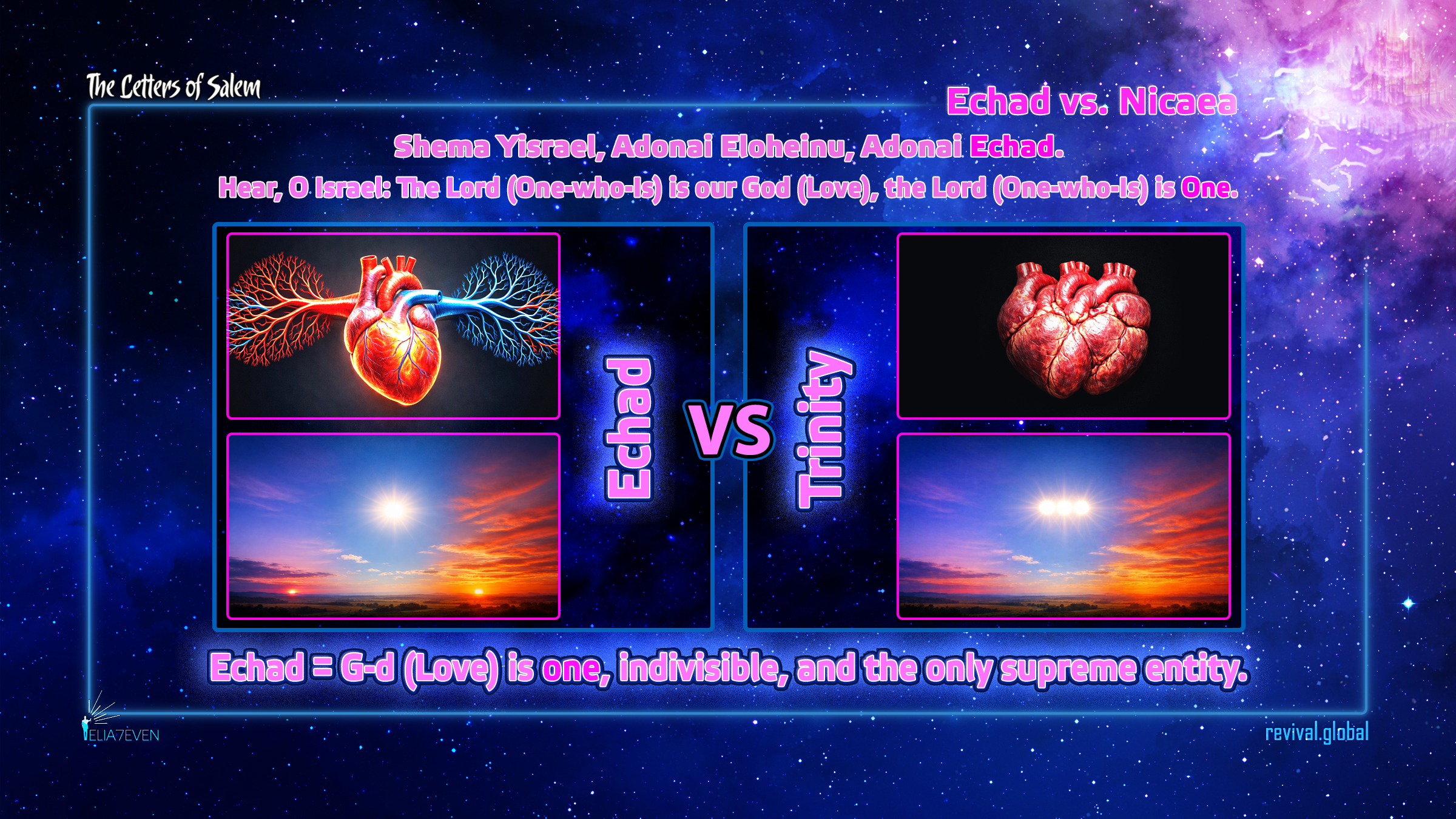 Additional information about this article (May 1st – 24nd, 2026),
It originates in the Heavens...
It was conceived in the Netherlands, Belgium, Luxembourg, Germany, Czechia, Austria, Hungary, Romania...
It was written, translated, and designed in Romania...
It was uploaded to the net from Romania...
It is hosted on a server in the USA.
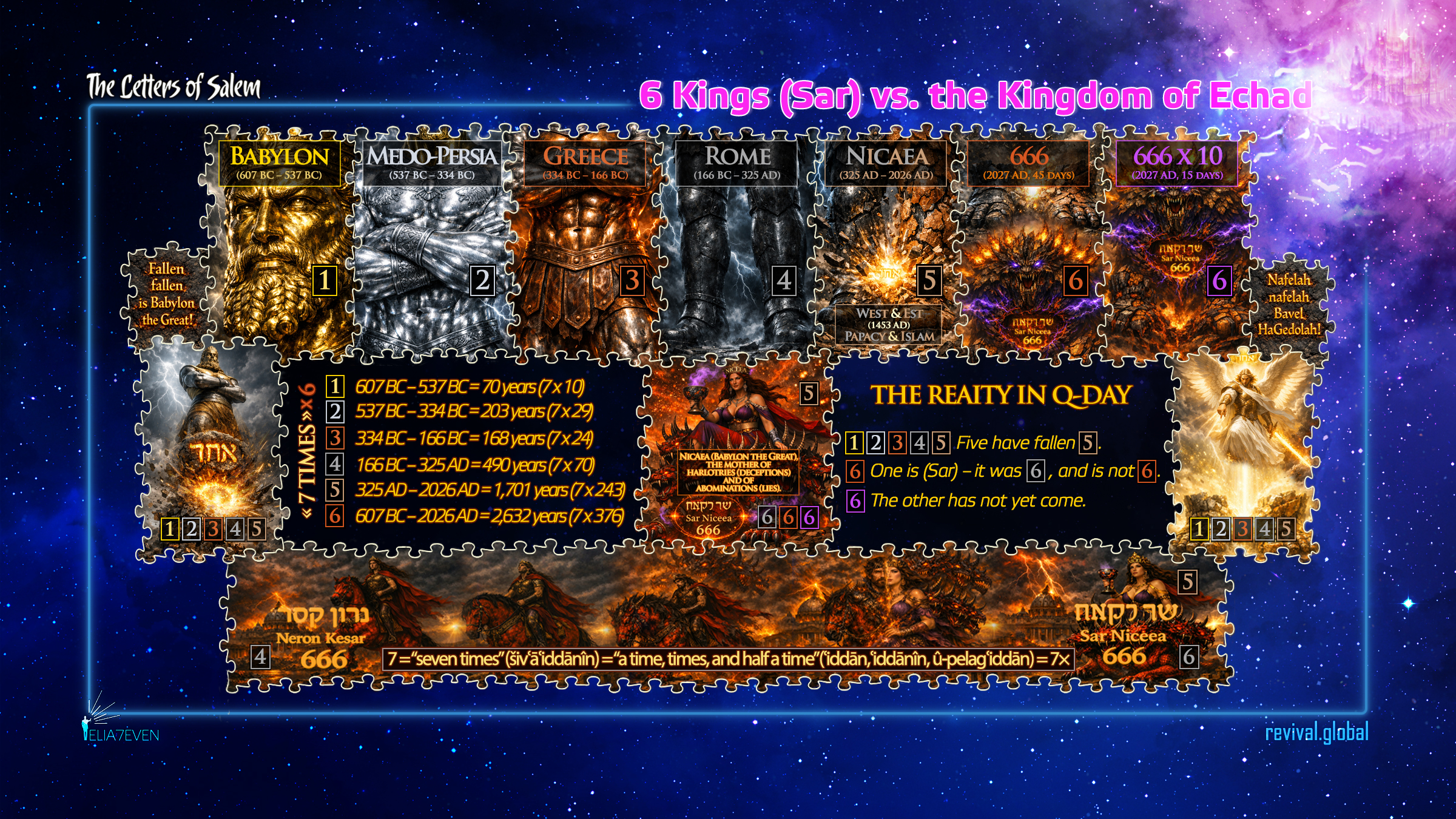
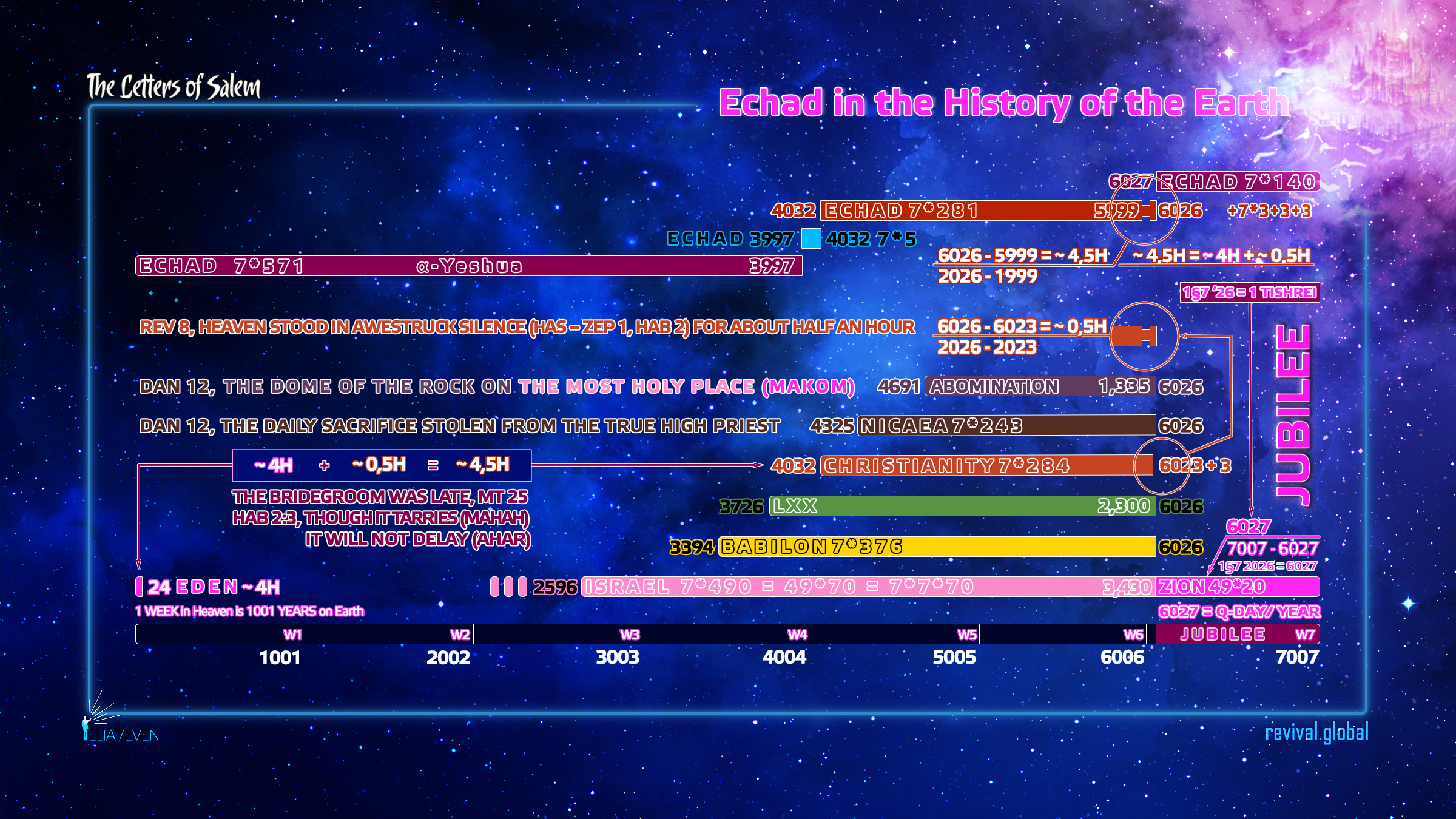
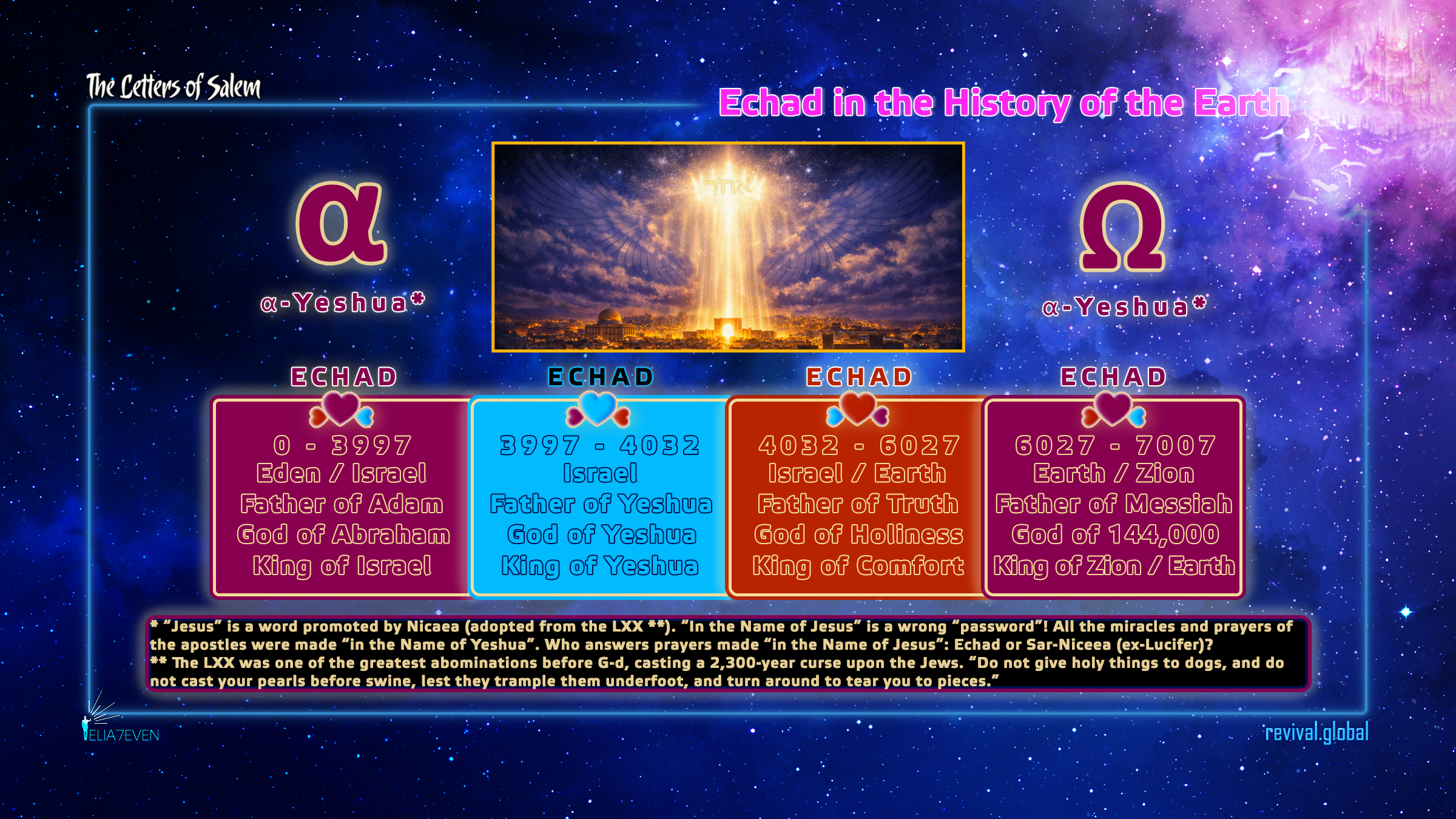
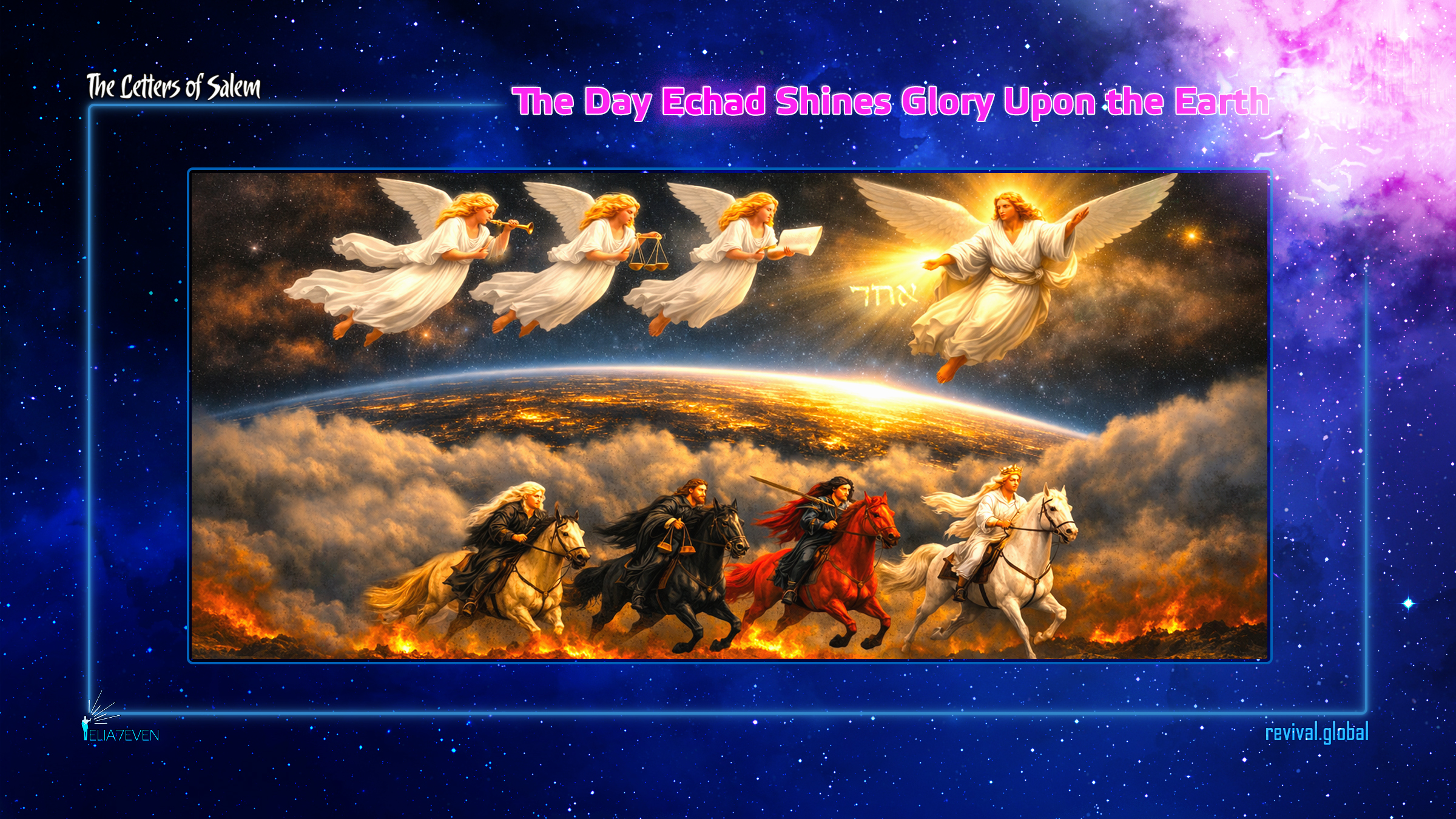
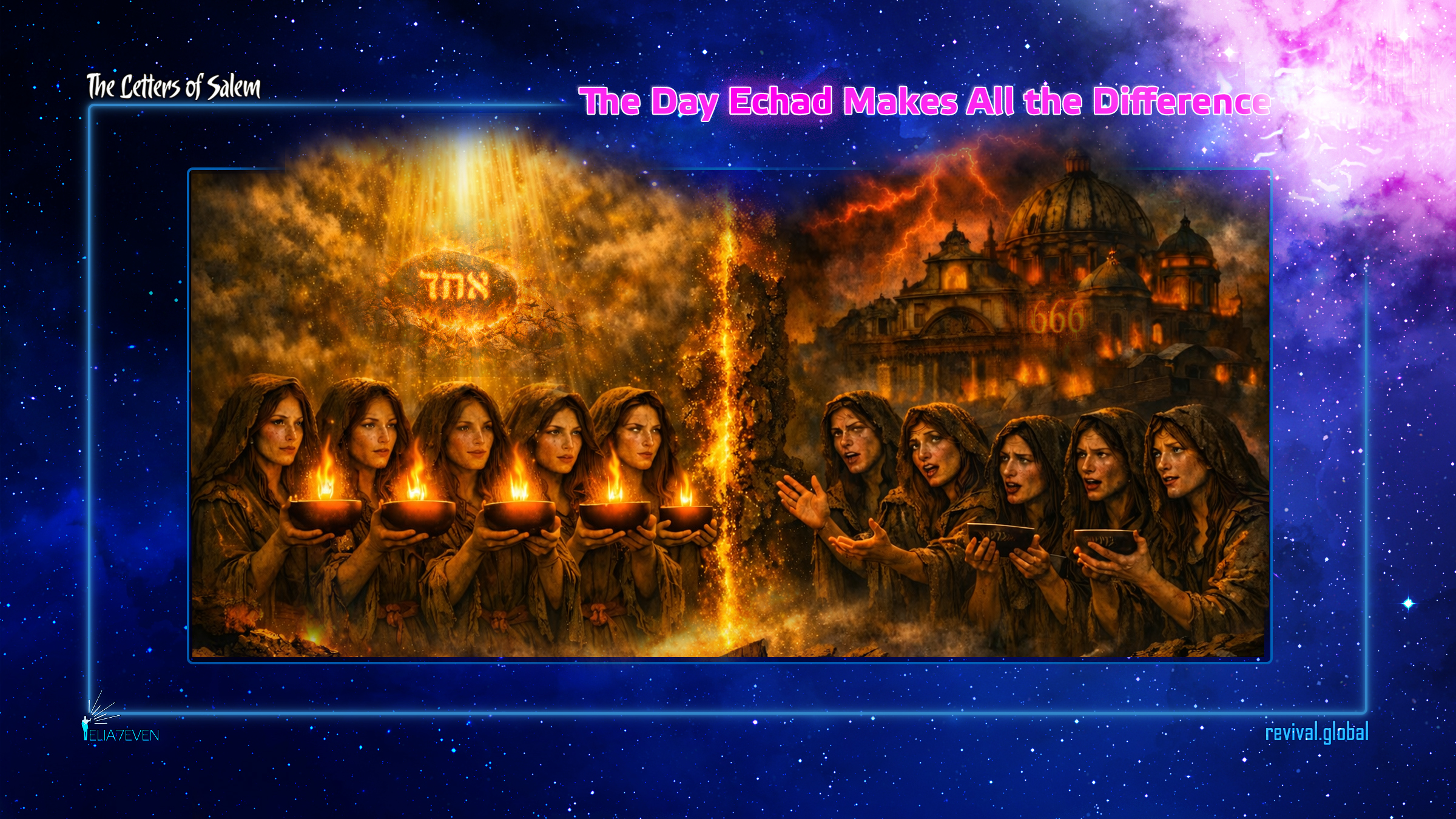
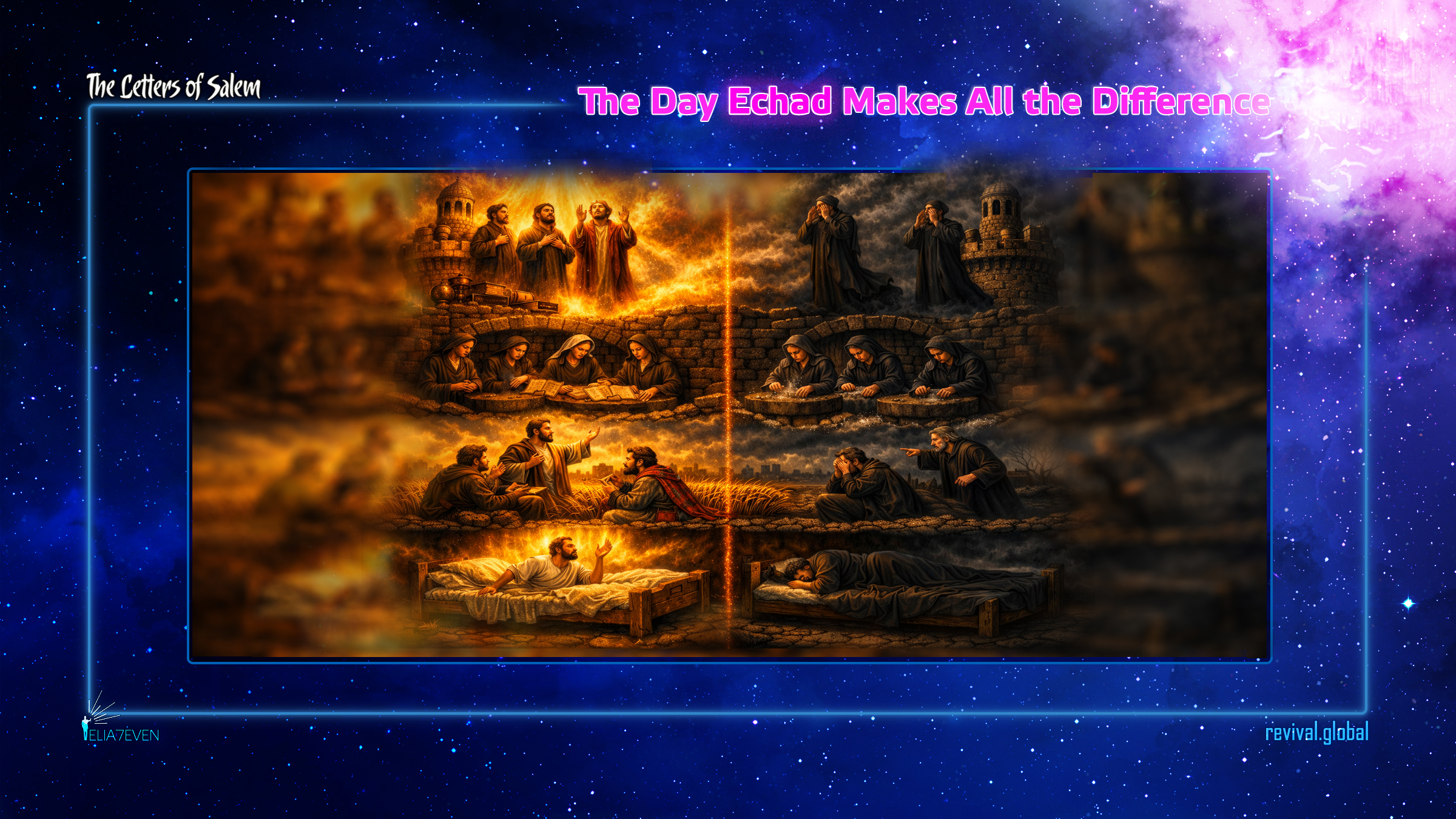
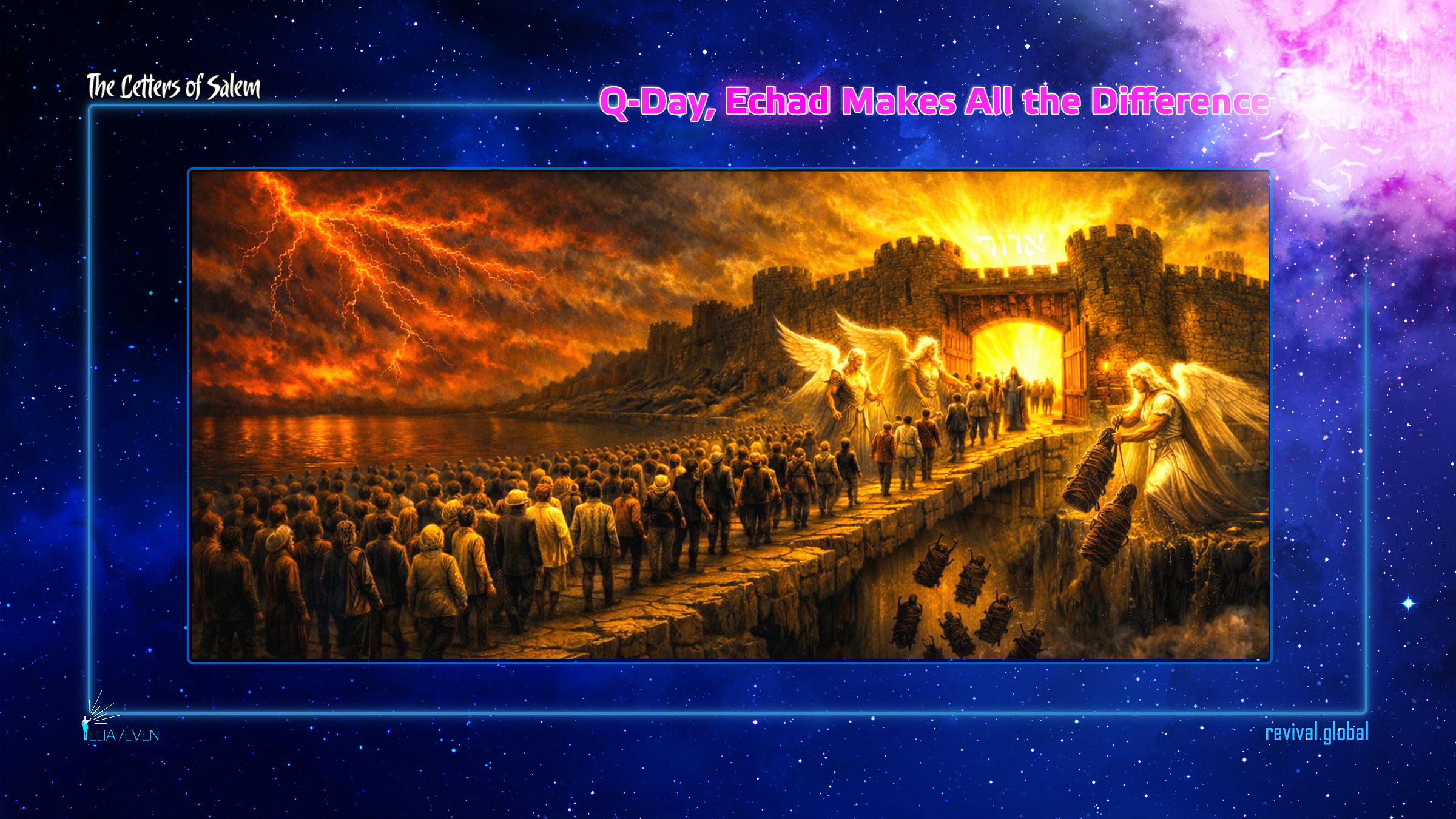
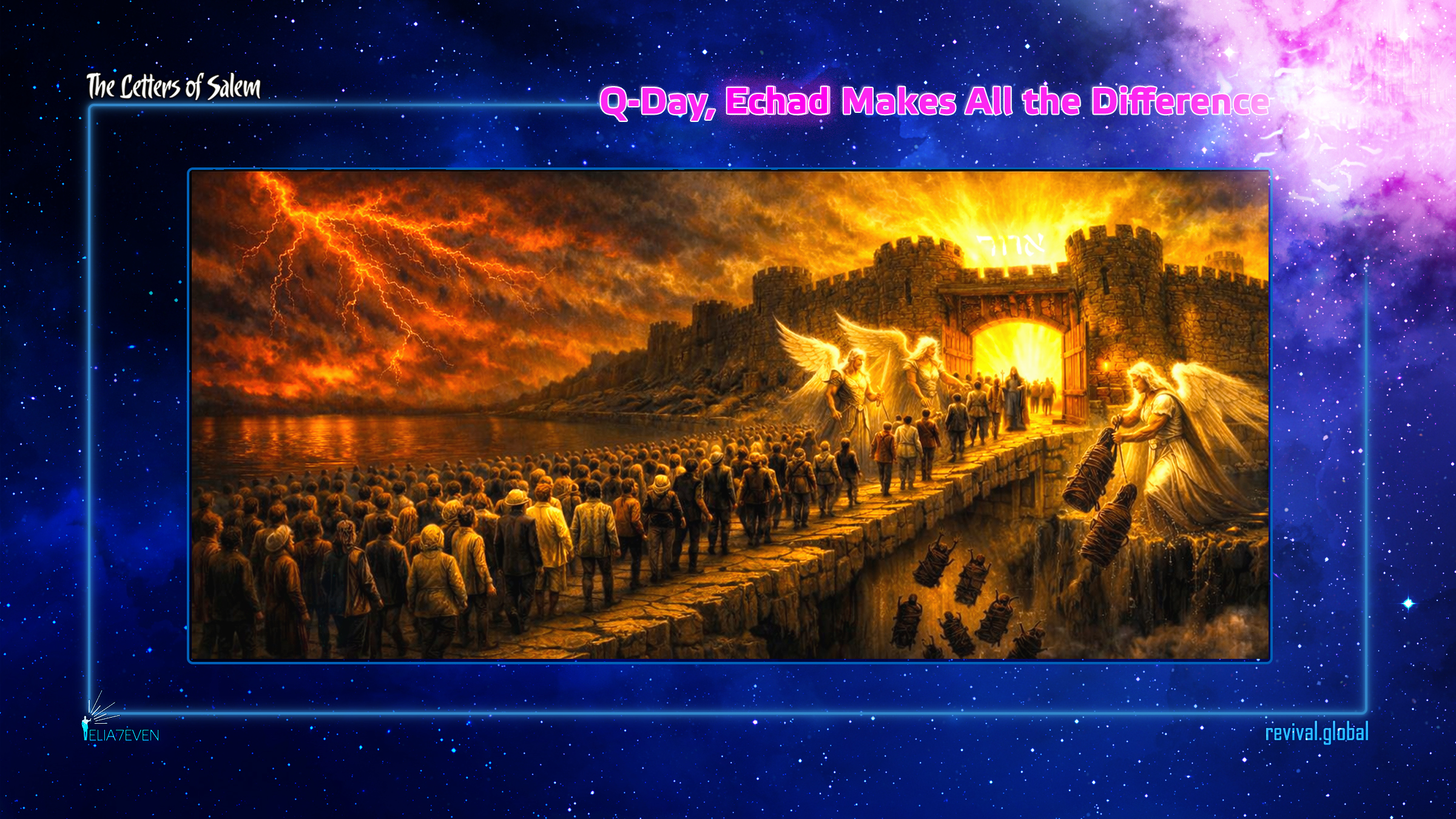
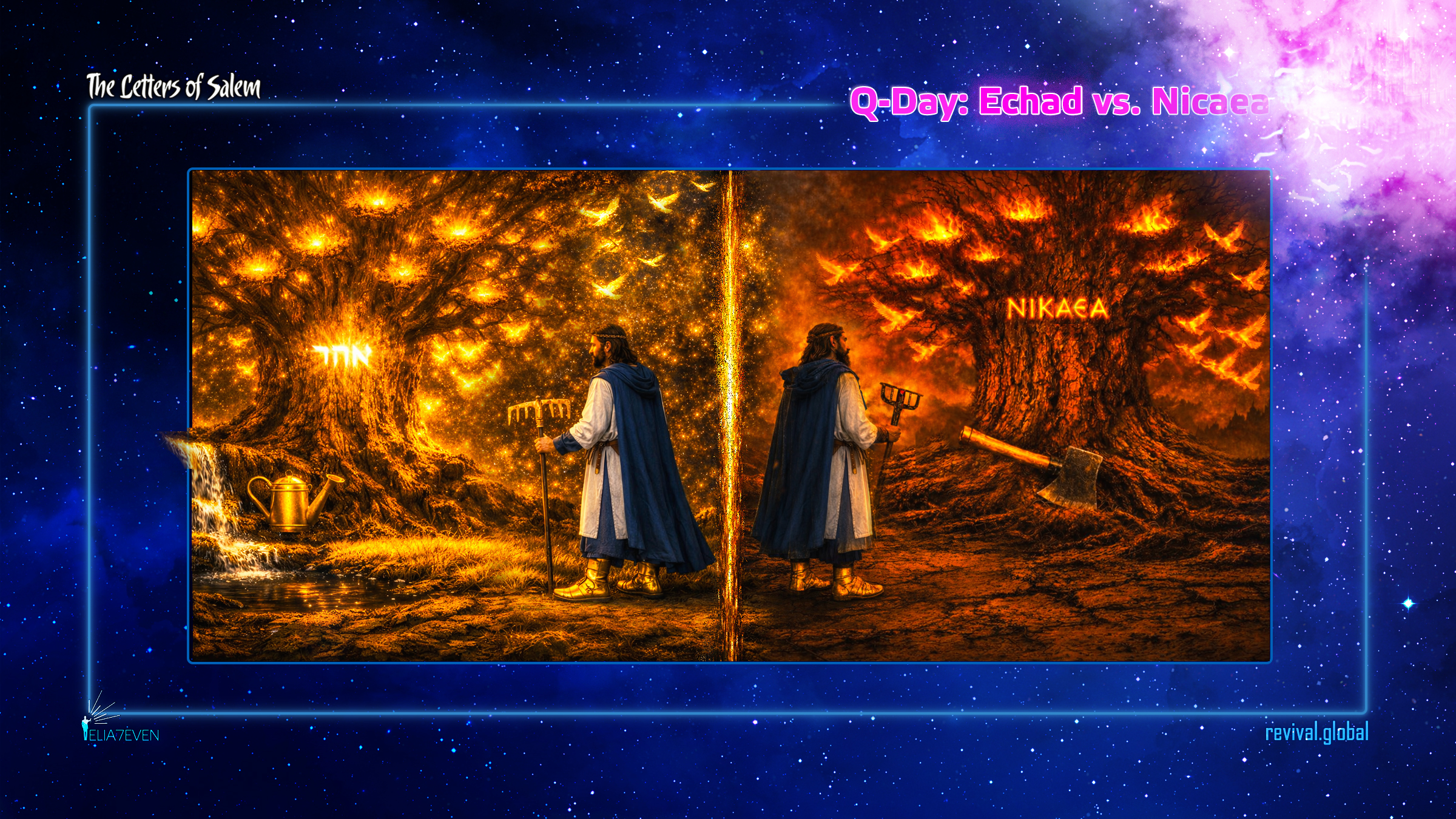
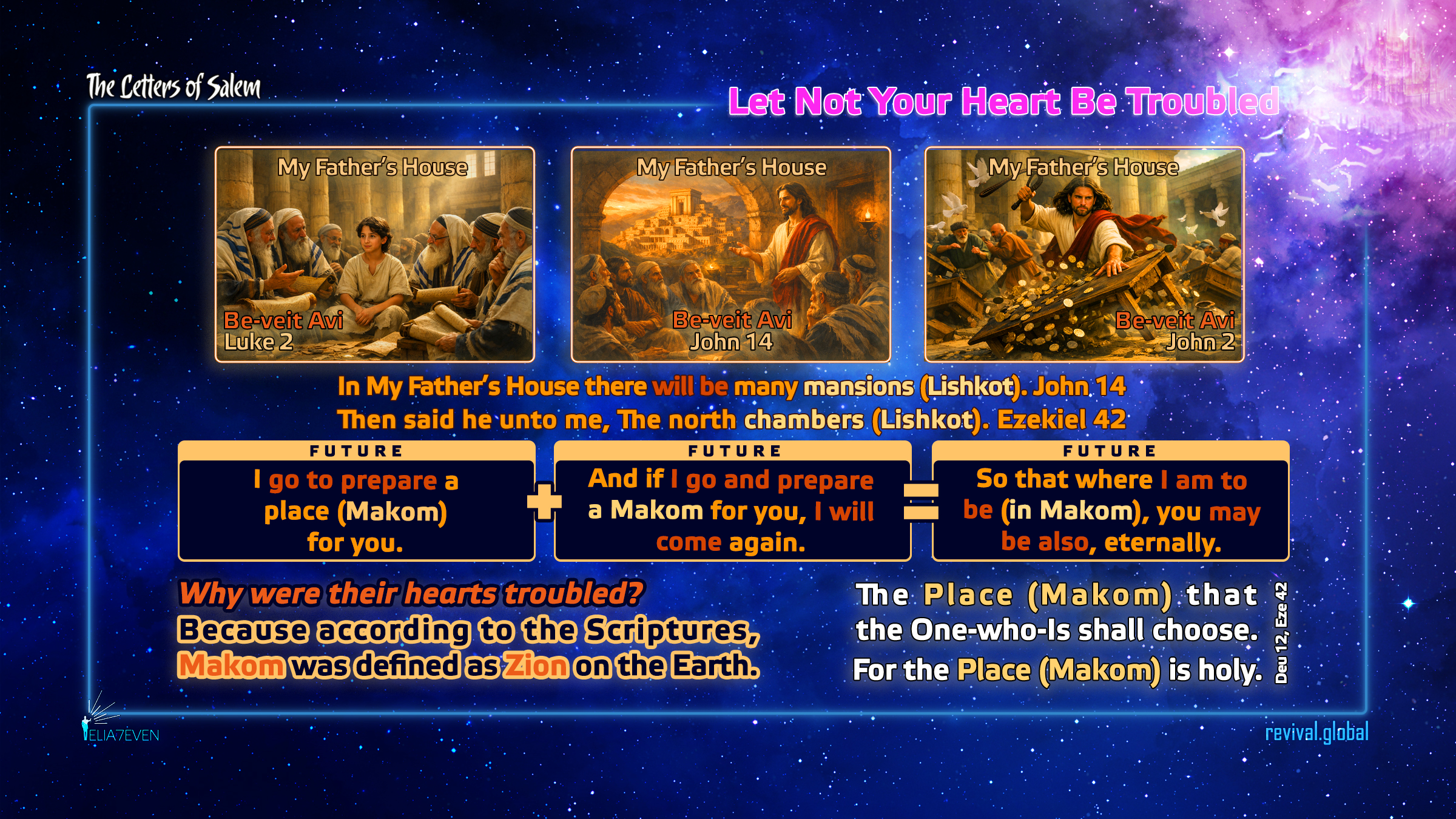
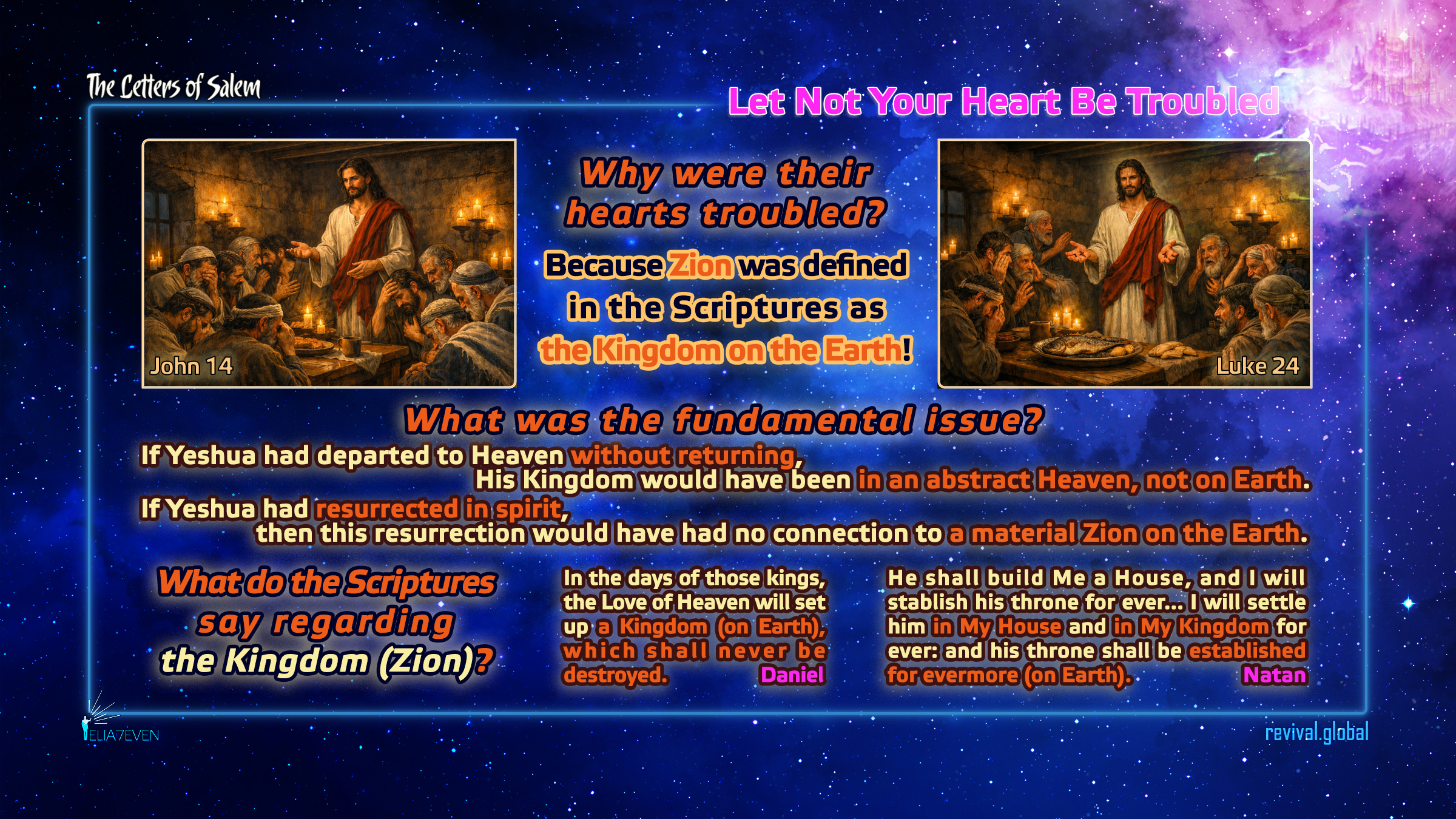
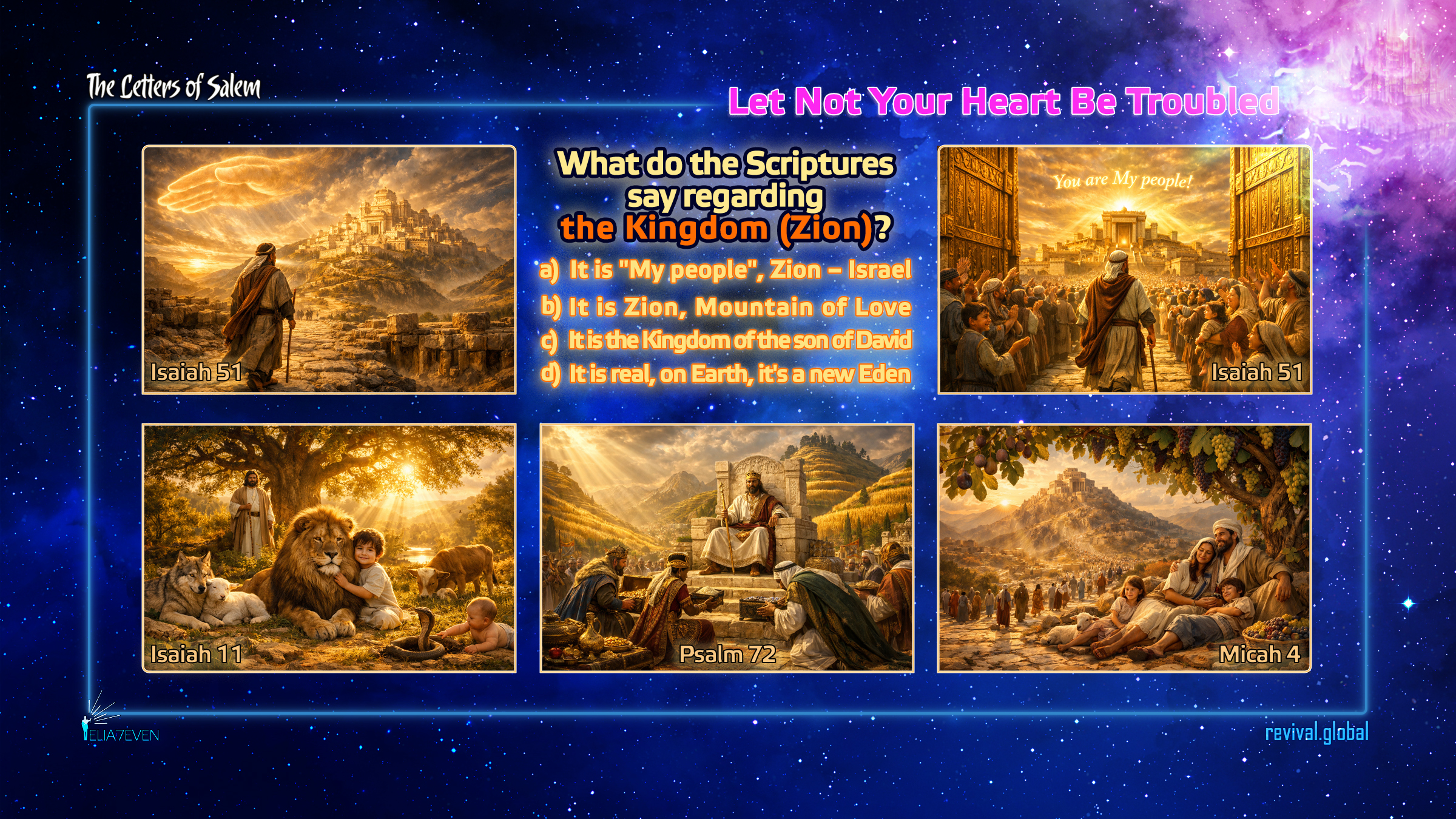 by «Letters of Salem» & Springs of Salem
by Elya7even