

Why won't the Dublin government stand up to Gideon Saar? 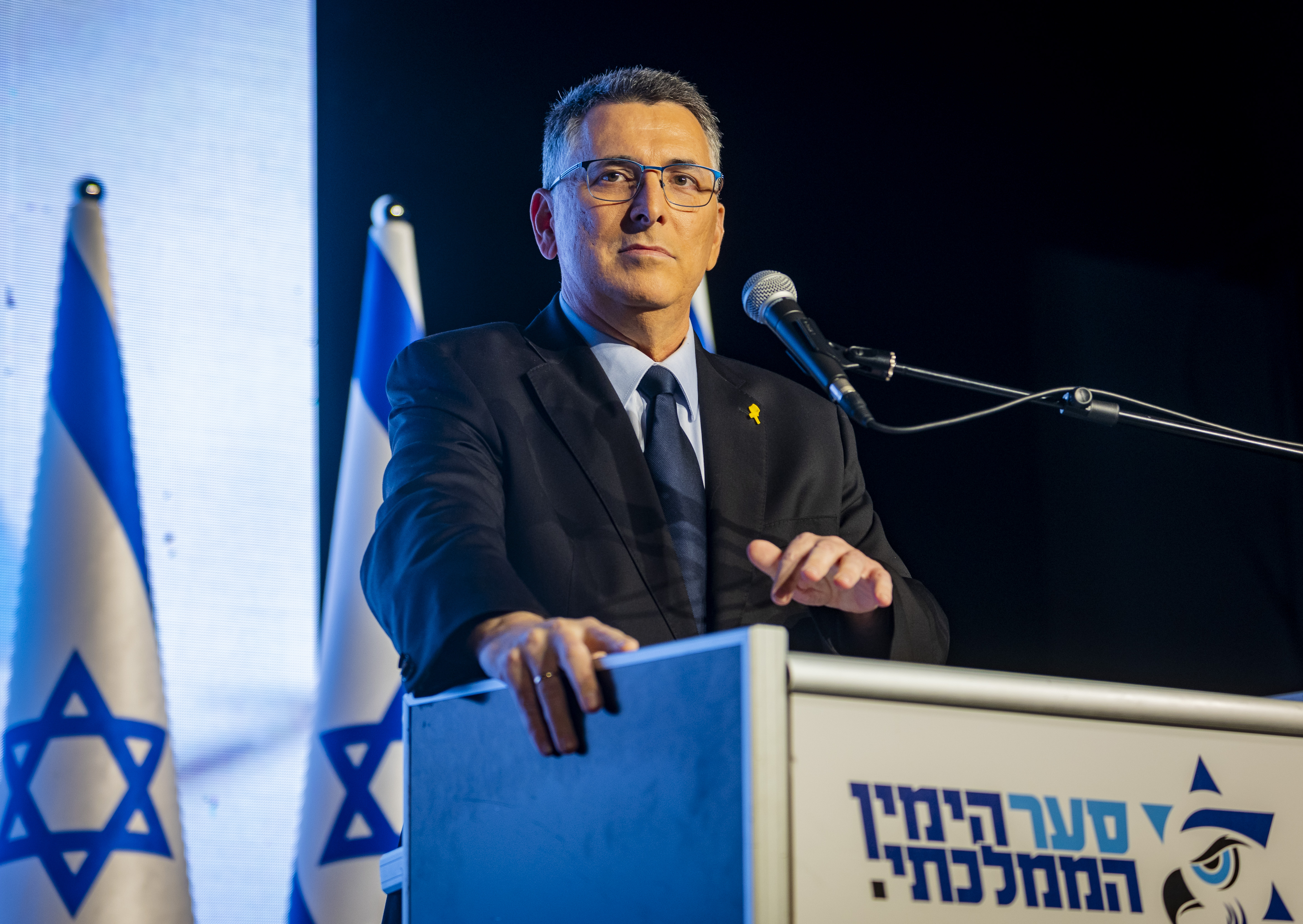 Israel's Gideon Saar has insulted the entire Irish nation. (Alexander Khanin)
It was the day of my father’s funeral – Friday, 13 February – when I learned that Ireland’s football team had been drawn to play Israel.
That coincidence is one of the reasons why I have followed the news about these games far more closely than I would normally follow a “sport” story.
My dad had been horrified by the weak stance of the Irish establishment on the Gaza genocide.
He was particularly critical of broadcasters who were indulgent towards Dana Erlich. She headed Israel’s Dublin embassy before its closure was announced in December 2024.
Some of Ireland’s best-known radio presenters would not properly challenge Erlich’s lies when they interviewed her, as my dad noted repeatedly.
Given that his analysis of those interviews was so sharp, I can imagine that my dad would not have been impressed – to put it mildly – by the Football Association of Ireland (FAI) and the obscene excuses it has offered since February.
Paul Cooke, the FAI’s president, insists that Ireland had to go ahead with the two matches with Israel in the UEFA Nations League because otherwise there would be “consequences for Irish football.” Cooke is not happy that these “consequences” were “lost” in much of the coverage around the matches.
The consequences were not actually lost; it just happens that most ordinary fans have higher ambitions for Irish football than the Football Association of Ireland.
Upholding a principle
Most fans – as opinion polls have shown – were willing to risk punishment from UEFA so that a principle could be upheld. The principle was articulated by Ireland’s goalkeeper Gavin Bazunu, when explaining why he had refused to play Israel: “The killing of innocent people is wrong.”
Bazunu was the sole member of the Irish squad to withdraw when the first of the two matches took place at the weekend.
Based solely on the number of goals scored, Ireland won that game.
Out of disgust, I and many others refused to watch the event on television.
I have no idea, therefore, whether or not opportunities were missed on the pitch. But I know for certain that by allowing the game to proceed, a massive opportunity was squandered – the opportunity to underscore the solidarity between Ireland and Palestine.
The second match is scheduled to take place this Sunday (4 October) – almost exactly three years after the Gaza genocide began. To redeem any semblance of dignity, Ireland must boycott that game.
The case for intervention by the Irish government has always been robust. As Ireland has formally acknowledged that Israel is conducting a genocide, the Dublin government is obligated to isolate Israel in every conceivable way.
That means the government has to step in now and say the second game cannot go ahead.
The case for intervention by Ireland’s government has got even more urgent now that Israel has delivered a grave insult to the Irish nation. Gideon Saar, Israel’s foreign minister, contended at the weekend that the Irish team’s decision to wear black armbands when playing Israel was the equivalent of giving a Nazi salute in the 1930s.
The black armbands – worn to remember Gaza’s dead, although Saar depicted them as symbols of support for “terrorism” – may have offended a few Israeli politicians. But they were no substitute for a full boycott of Israel.
Most stadiums in Gaza have been destroyed and more than 560 football players have been killed during the genocide.
The thousands of Palestinians imprisoned by Israel include Natalie Abudayyeh. She is a member of Palestine’s women’s football team, who was abducted by Israeli troops occupying the West Bank in June this year.
It is impossible to know how many of the Palestinian children who have died because of Israeli state violence could have become football players.
Black armbands are completely inadequate to register Ireland’s revulsion. The only result most fans want is a refusal to play Israel.
•First published by The Electronic Intifada, 28 September 2026.