

A previously well 31-y-old male patient presented to our accident and emergency department after having been attacked by a crocodile 19 h earlier while fishing on the shores of Lake Chivero in Zimbabwe. He had been in the water up to his knees on the south shore of the lake at 2300 the night before in the company of 1 other person. The crocodile had approached him from behind and lunged forward, biting his right thigh. He was submerged in the water when the crocodile rolled over in the water once. He held the snout of the crocodile and attempted to open its jaws while his companion made noises in an attempt to distract the animal. He was eventually released by the retreating crocodile after a 3- to 5-min struggle. His companion called for help, and he was taken by boat to the National Parks office and from there to a district hospital, after which he was transferred to our institution. Five hours elapsed from the incident to arrival at our hospital.
On arrival he was tachycardic (103 beats·min-1) and blood pressure was 145/62 mm Hg. He was mildly pale and in significant pain but was fully alert. He had a large anteromedial thigh and leg laceration with ragged edges (Figure 1). 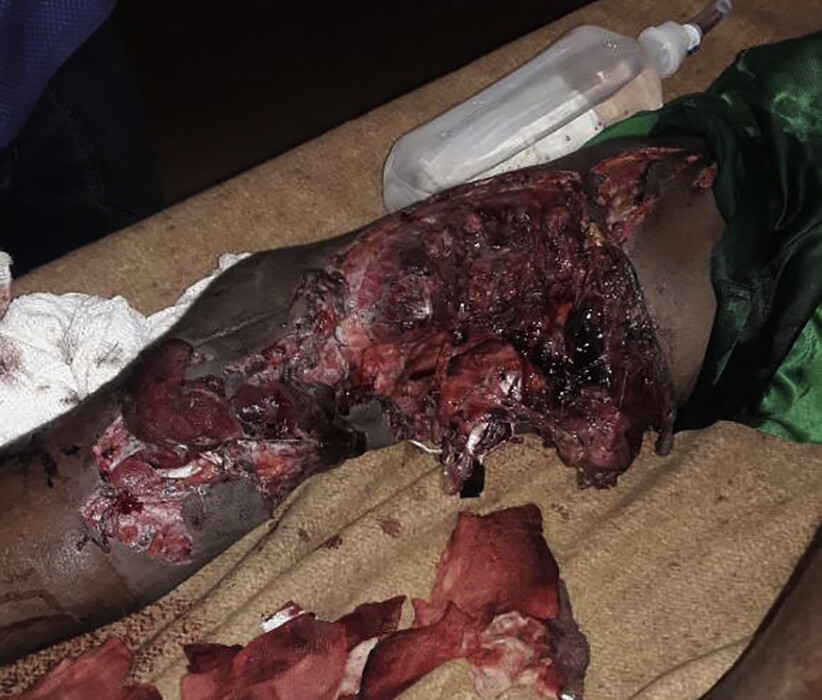
Figure 1 Appearance of the bite wound in the emergency department, which shows ragged, irregular wound edges with significant tissue loss.
The major vessels were exposed due to transection of the sartorius muscle in the midthigh but were uninjured. There was no major active bleeding. There was no neurologic deficit of the sciatic or femoral nerves and distal pulses were present. He also had defensive injuries to the fingers of both hands with avulsion of the tip of the distal phalanx of the right middle finger (Figure 2).
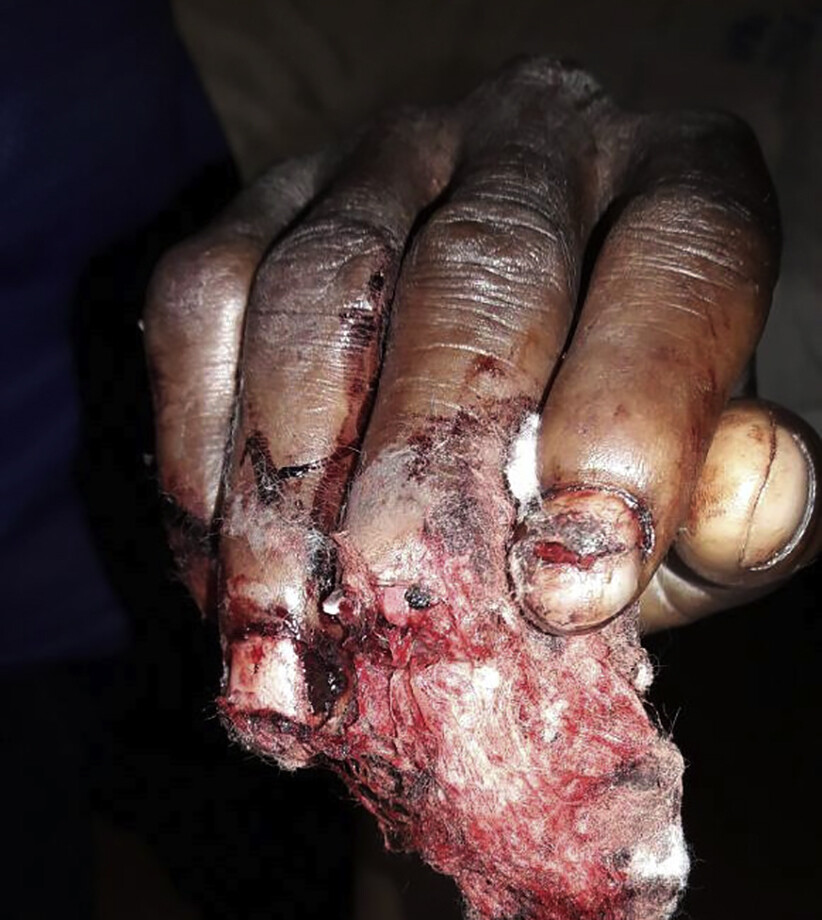
Figure 2 Appearance of the fingers of the right side, which shows defensive injuries including amputation of the terminal end of the middle finger.
The patient was admitted immediately for fluid resuscitation and intravenous empirical antibiotic therapy that consisted of 1 g of ceftriaxone twice daily and 500 mg of intravenous metronidazole 3 times a day as well as 80 mg of gentamycin twice a day for 5 d pending microbiologic sensitivity results. Because of significant pain, rated as 8 out of 10 on a verbal rating scale, analgesia with 100 mg of intramuscular pethidine and 75 mg of intramuscular diclofenac was administered and continued 3 times a day thereafter. There was an improvement of the pain score to 4 out of 10 after administration of analgesia. He was subsequently prepared for emergency debridement. Initial blood tests revealed a leukocytosis of 14.3 cells·μL-1 and normal hemoglobin of 13.4 g·dL-1.
Because of an inability to get access to the operating room that night, a decision was made to debride the wound under regional anesthesia. The required field was determined to be the anteromedial thigh: L2, 3, and 4, and posteromedial thigh: S1 and S2. A sciatic nerve block was performed with the posterior transgluteal (Labat) approach using 10 mL of 10% lignocaine with 1:100,000 adrenaline. A femoral nerve block was performed without ultrasound guidance. Block success was determined by absence of pain on stimulation with a needle in the required area because no nerve stimulator was available. Both blocks had their duration of action prolonged with simultaneous administration of 8 mg intravenous dexamethasone. Ultimately the duration of blockade was 18 h.
Both blocks resulted in extremely effective anesthesia of nearly the entire lower limb. Sharp debridement was done with lavage of the wound with 5 L of saline and betadine (Figure 3).
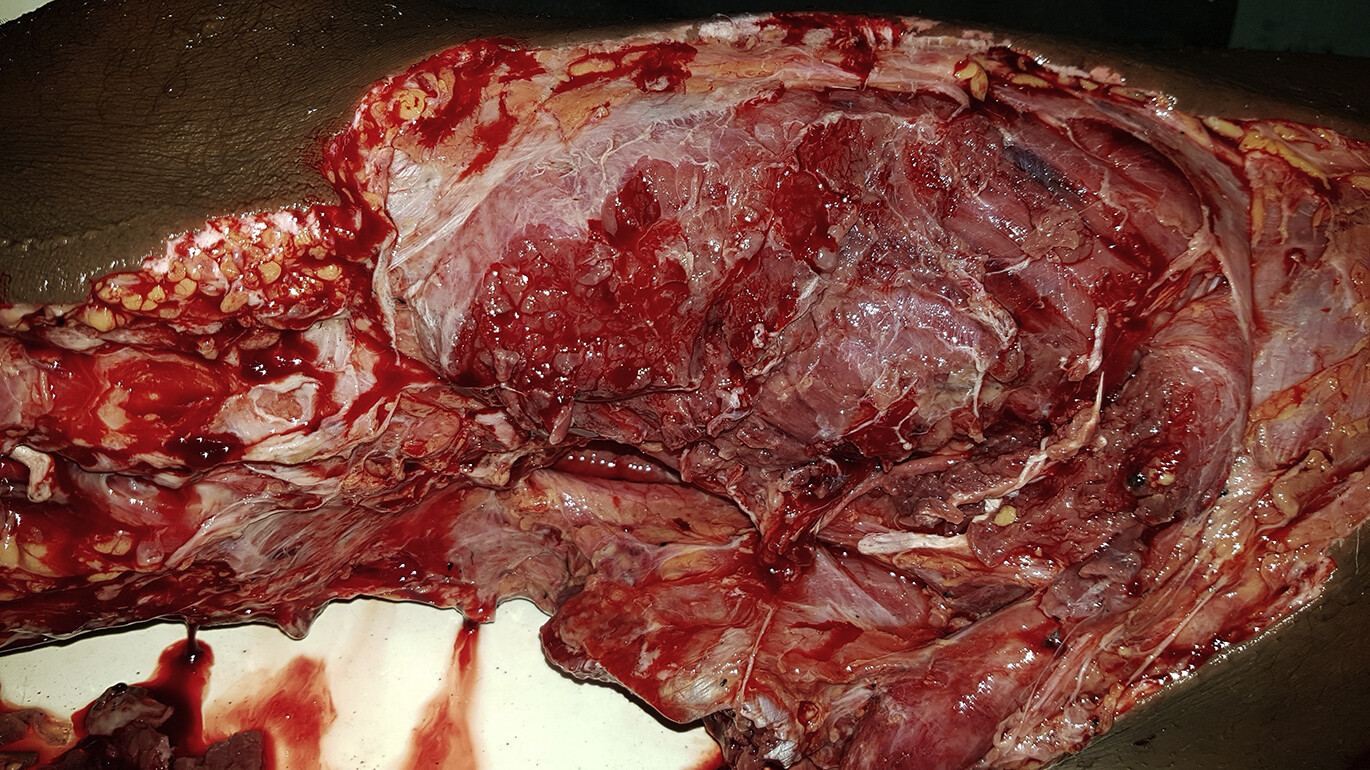
Fig3 Appearance of the bite wound immediately after debridement. Clean, healthy bleeding wound edges are shown.
The blockade provided effective analgesia for the wound after debridement and allowed for early mobilization of the patient. Adequate pain relief was achieved with a combination of nerve blocks and diclofenac, facilitating subsequent serial wound irrigation and dressing by the surgeon (Figure 4)
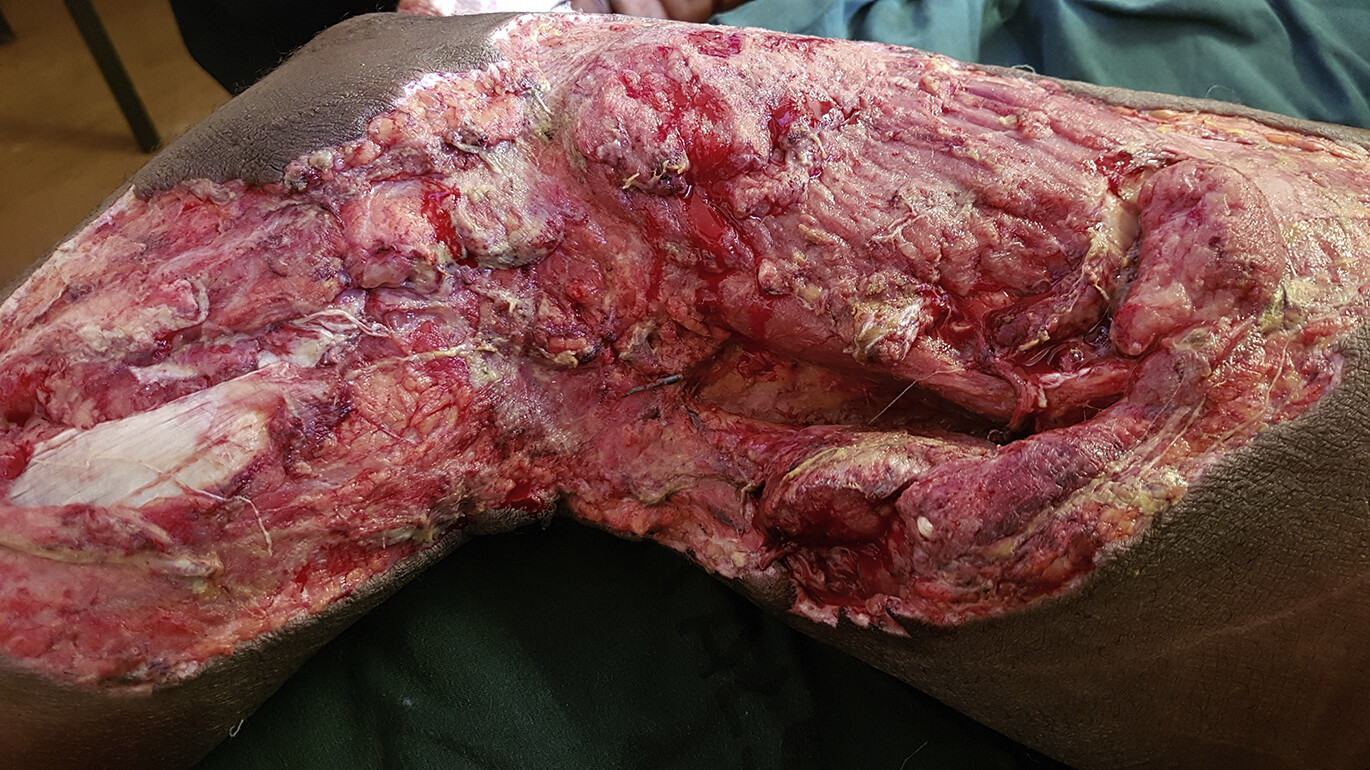
every day for 2 wk after the incident and intensive physiotherapy. Pethidine was reduced to 50 mg on the first postoperative day, and this was stopped altogether the next day. Microbiology from the initial debridement sample eventually revealed profuse growth of Klebsiella pneumoniae, and antibiotics were switched to intravenous meropenem: 500 mg given 3 times a day, according to the sensitivity of the isolate shown on the antibiogram. During admission the patient maintained a normal white cell count (below 10.0 cells·μL-1) and a consistently normal temperature. The wound bed never showed signs of infection. The wound eventually was considered ready for skin graft, and postoperatively the function of the limb was maintained (Figure 5). The patient was doing well after discharge on review.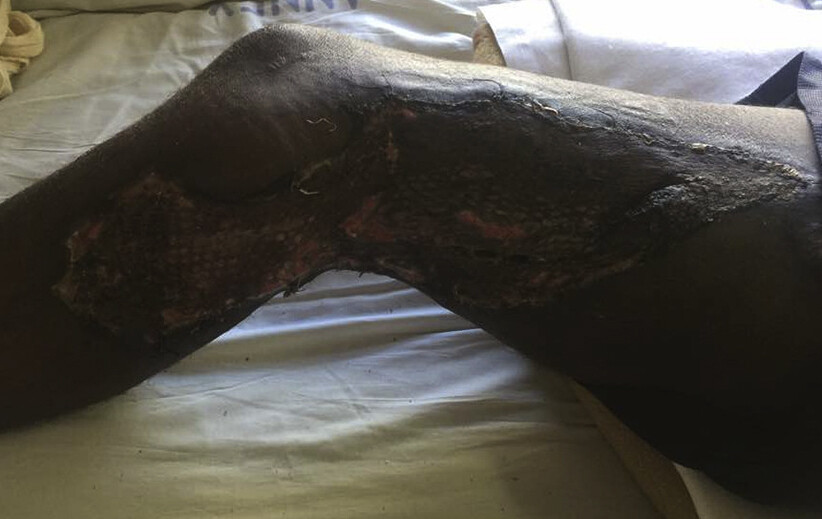
Mazingi D, Mbanje C, Muguti GI, Chitiyo ST. A Case Report of a Bite From the Nile Crocodile (Crocodylus niloticus) Managed with Regional Anesthesia. Wilderness & Environmental Medicine. 2019;30(4):441-445. doi