

The End of Privacy and 5G
I still remember the exact moment when I truly felt watched, not by a person, but by my own phone. I was researching a sensitive topic late one evening, careful to keep my VPN on and using private browsing modes to shield my activity. I was certain I was safe. But then, later that day, my social media feeds suddenly exploded with eerily specific ads related to exactly what I had been searching for. It hit me like a cold wave of realization that my phone wasn’t just a device, it was a surveillance tool. It knew more about me than I ever imagined.
This scene might sound familiar, and at its core, it reflects the hidden truths about 5G. We’ve all been sold the bright promise: faster downloads, ultra-smooth video calls, and better connectivity. That’s the sales pitch, the polished veneer. But beneath this convenience lies the world's most powerful and precise tracking grid, cleverly disguised as progress. 5G networks don’t just see your phone, they know where you are, who you’re with, and what you’re doing all with mind-boggling accuracy that would make even the most obsessive stalker green with envy.

Your old privacy weaponry like VPNs, private windows, encrypted messaging, are like squirt guns trying to douse a raging forest fire. The digital shadows we cast are growing deeper by the day, and if you care about your personal sovereignty and anonymity, it’s time to rethink your defenses. It’s time to learn how to disappear.
Your Digital Shadow in the 5G Era
Let's compare 4G and 5G to get a clearer picture of what’s happening. Think of 4G tracking like a detective tailing you in a conspicuous car. You might notice, you can sometimes evade it. But 5G? It’s more like being coated with invisible, GPS-accurate glitter. Every step you take, every place you linger, every time you turn your head, it’s all tracked in real time, sent back to a central database, and meticulously catalogued.
This isn’t some sci-fi fantasy. The small cells that power 5G aren’t just for providing a stronger signal. These tiny antennas perched discreetly on lampposts, walls, even traffic lights create a dense, hyperlocal web. They use something called beamforming technology to triangulate your precise position, often down to the centimeter. This means your phone can be pinpointed to the exact aisle you’re browsing in a grocery store, the particular room you're occupying in a building, or how long you stayed at a protest rally last month.
This level of precision builds a chillingly accurate “pattern of life” profile for every user your routines, your habits, your secrets, all laid out in data points. And it gets worse.
The Metadata Goldmine
Many people find some comfort in the idea that “they’re not listening to your calls, just collecting metadata.” Metadata is the data about your data, who you call, when, for how long, and where you were when you made that call. But in a 5G world, this metadata is even more revealing than the conversations themselves. It’s a narrative of your life told through footprints.
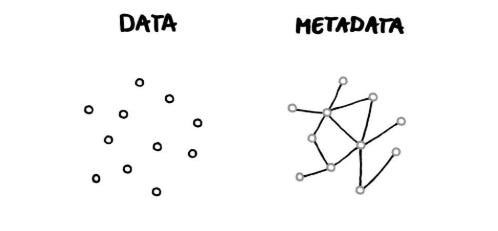
Consider that your relationships, your daily habits, and your interests can all be inferred from this metadata. It's not just your phone number being tracked, it’s your digital existence captured in high resolution.
The Side-Channel Betrayal
Your phone isn’t alone in this surveillance dance. Your smartwatch, your fitness tracker, your smart home devices, they’re all communicating endlessly over 5G. Even if you leave your phone at home, your wearable device broadcasts a unique digital signature. It’s like a megaphone announcing your presence. This interconnected web of devices is constantly leaking data about you.
The Painful Truth: Your Old Privacy Tools Are Obsolete
I used to swear by my VPN, thinking it was a bulletproof shield. But the harsh reality is that a VPN only encrypts the traffic from your device to the VPN server. It doesn’t mask your device’s unique IMEI number from your 5G carrier. Your carrier still knows who you are and exactly where you are. The difference is, they can’t see which websites you visit, but they know you’re there.
A VPN is like sending a sealed letter, the post office knows who is sending it and from which address, but not what’s inside. When it comes to your mobile network, the carrier is the post office, and they hold a lot more control than most of us realize.
Private browsing modes? Don’t be fooled. They only prevent other users on your device from seeing your activity. Your internet service provider, the websites you visit, and advertisers still know everything. It’s like drawing curtains on the inside of your home, but leaving all the windows on the outside wide open.
Feeling overwhelmed? This is why I created The Ultimate Privacy Crash Course to give you a simple, step-by-step playbook. This article is the 'why.' The course is the 'how’.
Even encrypted messaging apps like Signal or WhatsApp aren’t the silver bullet. Yes, they encrypt the content of your messages, but who you are messaging, and when, remains visible to your mobile carrier. This metadata in the 5G era is incredibly powerful. It’s a roadmap of your social connections and movements.
The “Go-Dark” Mindset: Thinking Like a Ghost
Going dark isn’t just about using a new tool or software; it's a fundamental mindset shift. It’s moving from “How do I hide this?” to “How do I avoid creating a trace altogether?”

The cornerstone of this philosophy is operating on a simple principle: need-to-know. Ask yourself before every download, every app install, every social media post, “Does this service need this piece of my personal data?” More often than not, the answer is no.
OPSEC Is for Everyone
Operational Security, or OPSEC, isn’t just jargon for spies or government agents. It’s about understanding that every interaction you have online has a consequence. Posting a vacation photo in real-time might seem innocent, but it tells the world your home is empty. Checking into airports, sharing daily routines on social media, they’re digital breadcrumbs for the trackers.
Planning your digital life with OPSEC means treating your online behavior with the same care you’d treat your physical security. Think before you share.
Embrace Asymmetry
The goal isn’t perfection or invisibility, it's making tracking you so complex and resource-intensive that adversaries simply move on. This means using techniques that increase your computational footprint, turning you into a “hard target” among billions of easier ones.
A Glimpse Into the Toolbox: How the Truly Private Operate
This is where theory meets practice. The very methods I wished I’d known earlier and now teach in my course The Ultimate Privacy Crash Course.
Advanced Routing: Instead of a single VPN, route your traffic through multiple VPNs in different countries or combine VPNs with the Tor network. This layered approach creates a chaotic trail that’s nearly impossible to analyze. It sounds technical, but with the right instructions, it’s a simple one-time setup.
Fighting Device Fingerprinting: Every device broadcasts a unique “fingerprint”, based on screen size, installed fonts, browser plugins, and more. Battling this requires using hardened browsers and techniques that make your digital persona blend into a crowd, effectively becoming “generic.”
Your First Steps: How to Start Disappearing Today
Begin small. You don’t need to be a hacker.
Digital Audit: Keep a notebook and jot down every app, service, or device that requests your location, contacts, or any form of identification. Seeing the sheer volume is the first step to awareness.
Browser Segmentation: Use one browser (like Chrome) for everyday, casual browsing, social media, news, entertainment. Use a different, privacy-focused browser (such as Brave or Firefox Focus) exclusively for sensitive activities, email, banking, or anything personal. This simple separation protects your identities.
Remove the Wearable: Try leaving your smartwatch at home for a week. Experience the freedom of not broadcasting your biometric data to corporate clouds 24/7. It’s surprisingly liberating.
FAQs: Addressing Common Concerns
Q: Isn’t this just paranoia or for criminals?
Absolutely not. Privacy is a fundamental human right. These techniques are used by journalists protecting sources, activists under oppressive regimes, lawyers and doctors safeguarding confidentiality, executives shielding sensitive business information, and anyone who believes their personal life should remain their own.
Q: This sounds too technical for me.
I get it. I felt the same way. Which is why I created The Ultimate Privacy Crash Course designed for professionals and concerned individuals not expert hackers. It breaks these advanced concepts into manageable, step-by-step templates anyone can follow.
Wrapping Up 🗞
The genie is out of the bottle. There’s no unlearning the truth about 5G surveillance. The question isn’t if you’re being tracked, but what you’re going to do about it.

You can accept constant monitoring, or you can reclaim your digital freedom. You can learn the art of going dark, not to hide, but to control when and how you’re seen. It’s the ultimate form of personal empowerment in today’s world.

Your journey to becoming a ghost in the machine starts with a single step. Are you ready to take it?