

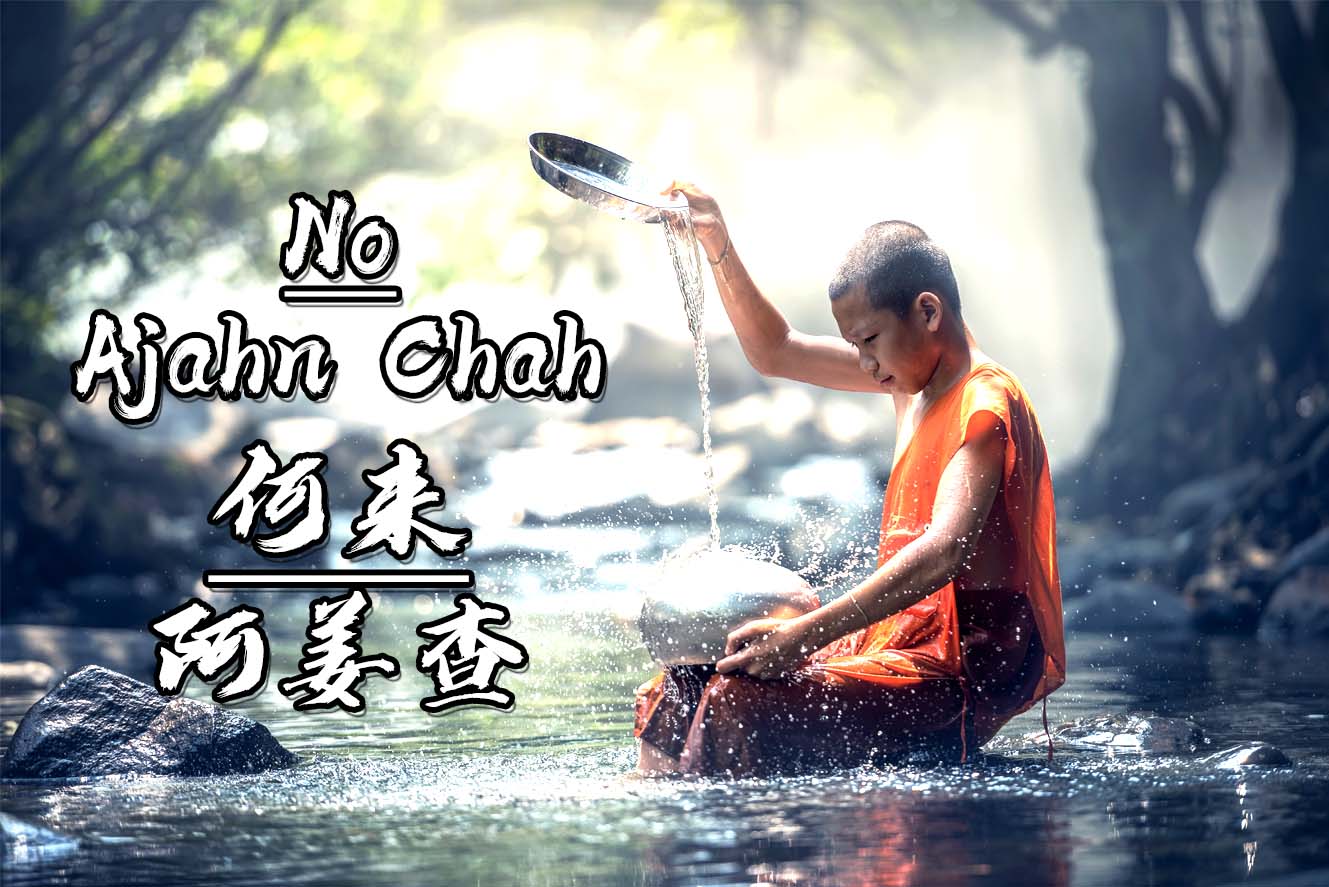
 有人曾請阿姜查談一談開悟,以及他是否能描述他自己的領悟?再每個人都很急切地等待要聽他回答的情況下,他說:「覺悟並不難瞭解,只要拿一根香焦放入你的嘴中,如此一來,你就會知道它的味道了。你必須修行方能經驗覺悟,而且要不屈不撓。如果覺悟很容易的話,每個人都在做了。我八歲就開始進出寺院,出家也有四十多年了,但是你們竟想打坐個一、兩晚就證得涅槃!這可不是坐下來——『噓』的一聲就開悟了!知道吧!這種事是不能抓一個人來在你頭上吹一下,就使你開悟的。」
Someone once asked Ajahn Chah to talk about enlightenment; could he describe his own enlightenment? With everyone eagerly waiting to hear his answer, he said, "Enlightenment isn’t hard to understand. Just take a banana and put it into your mouth, then you will know what it tastes like. You have to practice to experience realization, and you have to perserve. If it were so easy to become enlightened, everyone would be doing it. I started going to the temple when I was eight years old, and I have been a monk for over forty years. But you want to meditate for a night or two and go straight to Nibbana. You don’t just sit down and –zip! – there you are, you know. You can’t get someone to blow on your head and make you enlightened either."
Biography / 簡介
阿姜查(1918年—1992年),南傳佛教大師,泰國現代最有影響力的佛教僧人,他依循佛教森林比丘的傳統,進入森林地區修行。阿姜查的修行方式有兩大特色:頭陀行與禪定體驗,兩者都是延續迦葉尊者重視苦行的精神而來。他的教導方式簡單直接,吸引不少西方人士前來學習。
Ajahn Chah (1918 – 1992) was an influential Thai Buddhist monk. His teachings contain elements related to Forest tradition, focusing on a simple and rigorous lifestyle, discipline and moral conduct, meditation, and an emphasis on inner experience rather than a reliance on scholarly knowledge. Ajahn's lectures are simple, direct and deep, so his teachings attract many western followers in the 80s and 90s.