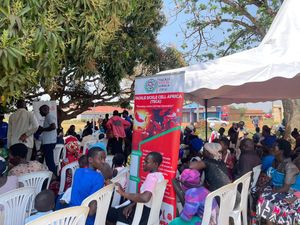

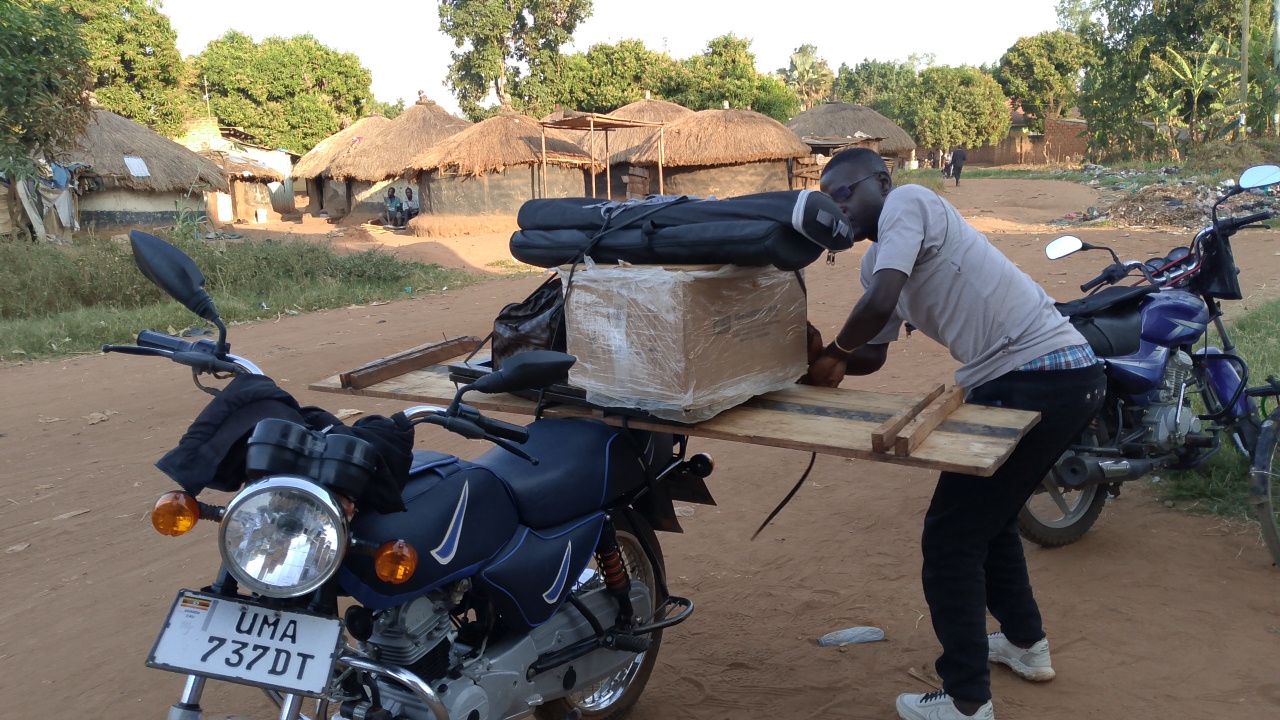
 At Tackle Sickle Cell Africa, we rely heavily on boda boda riders like the one in this photo to transport our essential screening equipment such as test kits, folding tables, banners, and educational materials across the dusty, often rugged roads of rural Northern Uganda.
This grassroots approach allows us to reach remote villages with thatched-roof homes where access to healthcare remains limited, but it also highlights one of our biggest ongoing challenges: poor transport infrastructure and means.
Northern Uganda's roads are mostly unpaved dirt tracks that turn impassable during rainy seasons due to mud, potholes, and erosion, while dry periods bring choking dust that can damage sensitive test kits. Boda bodas are incredibly versatile as they navigate narrow paths and reach places larger vehicles cannot, but they come with serious limitations for our outreaches such as;
Overloading risks: Securing bulky, fragile items like diagnostic kits (which must stay protected to ensure accurate results) creates instability on bumpy terrain. Equipment can shift, fall, or get contaminated, potentially ruining tests or forcing us to reschedule entire community events.
Safety and efficiency concerns: Riders and our team face heightened accident risks with heavy loads. Multiple trips are often needed for larger outreaches, wasting precious time and fuel while reducing the number of people we can serve in a day.
Weather and reliability issues: Rain can strand teams entirely, and exposure to elements affects supplies. Fuel, maintenance, and hire costs add up quickly for a small nonprofit like ours.
These barriers directly limit how frequently and widely we can conduct free screenings, counseling, and awareness sessions, critical for early detection in a region with high sickle cell prevalence (up to 20-25% trait rates in some Northern districts such as Alebtong and Apac, far above national averages).
Without reliable transport, we miss opportunities to link families to care, reduce stigma, and prevent complications through timely intervention.
We urgently need better transport solutions to scale our impact and save more lives.
Here's what would transform our work:
Dedicated vehicles such as a reliable van, pickup truck, or mobile clinic unit (ideally with some climate control for kits and ample secure storage) would allow safer, faster, single-trip outreaches to more communities.
At TSCA, we're resilient and committed, using every available means to bring hope and health to sickle cell warriors and families, but systemic improvements in transport are essential to reach our full potential.
If you're reading this, consider supporting us: donate via our website (tacklesicklecellafrica.org), partner with us for vehicle provision, advocate for better rural roads, or spread awareness about these challenges.
Every step toward reliable mobility means more screenings, earlier diagnoses, and brighter futures for children and families in Northern Uganda.
Together, we can move beyond boda bodas and toward equitable, life-saving access.
Contact us at +256 786 241 344 or [email protected] to join the fight.
Thank you