
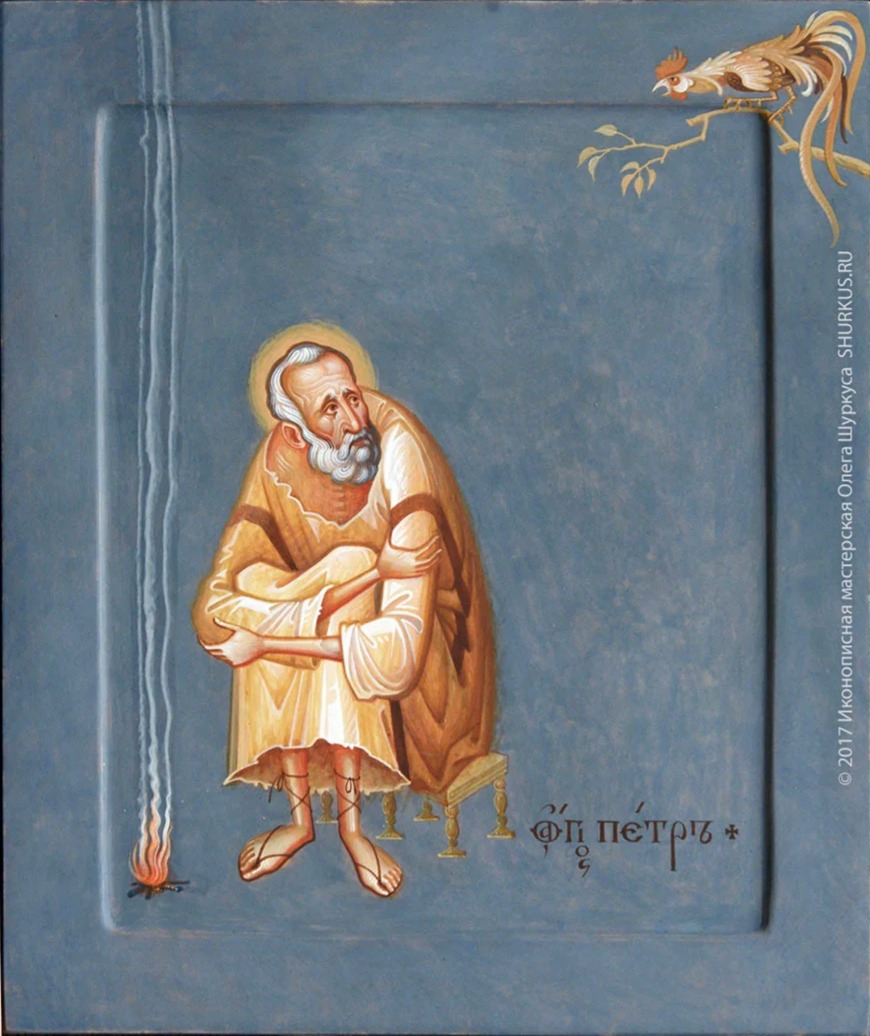
 Artwork: Oleg Shurkus
A Personal Note Before We Begin
Before we get into today’s devotion, I need to share something honestly.
Lent is never an easy journey—especially when you commit to something and then life happens. I’d be lying if I said there haven’t been days when I felt like abandoning this project entirely.
So today, I want to take a moment to acknowledge the people who have shared kind words along the way and who have supported me through your contributions. It really did motivate me to remain steadfast.
Today’s message was especially difficult to write. It hit close to home. But maybe that’s why it needed to be written—because sometimes the words we most need to say are also the words we most need to hear.
To those who have been following faithfully: thank you. I pray you remain strong in your journey, and that grace continues to meet you, right where you are.
Introduction: A Different Kind of Betrayal
When we think of betrayal in the Passion story, our minds often go straight to Judas. His name has become synonymous with betrayal—a kiss given, loyalty sold. But John’s Gospel draws our attention somewhere else: not to a kiss, but to a fire in a courtyard… and to a friend who stays near, yet not near enough.
This is Peter’s moment—not of boldness, but of breaking.
He follows Jesus at a distance, then falters under pressure, denying not once, but three times. But even here—especially here—grace has not left the story. Because grace is not the end of the story—it’s the middle. And Peter’s failure will not be the final word.
Following at a Distance
“Simon Peter and another disciple were following Jesus…” (v.15)
Peter follows—but cautiously. He wants to stay close, but also stay safe.
There’s something painfully relatable about this tension. How many of us try to keep our faith just visible enough, but not too costly? We want to be near Jesus—just not near enough to get hurt.
It’s not abandonment. But it’s not courage either.
The Slow Fade: Three Denials
“You aren’t one of this man’s disciples too, are you?” He replied, “I am not.” (v.17)
Peter’s denial doesn’t come in a blaze of anger—it comes quietly. Subtly.
A servant girl asks a question, and his fear does the rest.
Each denial is a small step away… from Jesus, from truth, from who Peter hoped he was.
And shame begins to creep in—not just about what he’s done, but about who he now thinks he is.
The rooster crows, and it all comes crashing down.
The Weight of Shame
This is where shame does its most powerful work.
It whispers:
“You’re not who you thought you were. You’ll never be who Jesus said you could be.”
And yet, even here, grace is already in motion.
Jesus had already told Peter this would happen. Not to shame him—but to prepare him for a redemption Peter couldn’t yet see.
Grace doesn’t wait at the end of failure. It’s already present in the middle of it.
The Charcoal Fire: From Denial to Redemption
John includes a striking detail:
“It was cold, and the servants and officials stood around a charcoal fire…” (v.18)
That detail will matter again in John 21—where Peter finds himself beside another charcoal fire.
There, the risen Jesus will ask him three times, “Do you love me?”
Not to humiliate him. But to restore him.
Three denials.
Three invitations to love.
Three affirmations of calling.
Jesus takes Peter back to the place of failure—not to condemn, but to heal. To rewrite the story.
Conclusion: Grace Is Not the End—It’s the Middle
Peter’s denial didn’t disqualify him. It became part of his journey into deeper humility, deeper grace, and deeper calling.
This is the way of Jesus:
He doesn’t discard us when we fall.
He meets us in our shame and draws us back to Himself.
He doesn’t ignore our pain—He rewrites it.
If you carry failure or shame, know this:
Your story is not over. Grace is already in the middle of it.
Reflection Questions:
Where in your life are you tempted to follow Jesus “at a distance”?
What voice does shame speak over you—and how does that differ from the voice of Jesus?
What would it mean to return to the “charcoal fire” moments in your life—those places of failure—and hear Jesus say, “Do you love me?”
Can you believe that grace is not just waiting at the end of the journey, but already present with you in the middle of the mess?
Closing Prayer
Lord Jesus,
You know the parts of us we try to hide—the fears, the denials, the distance.
Yet You never leave us. You meet us at the fire, not to judge, but to restore.
Thank You that our failures are not final. That Your grace is not the end—but the middle.
Draw us close again. Amen.