
 Artwork from The Dogs Blogs on Flickr
Understanding the Sheepfold and the Gate:
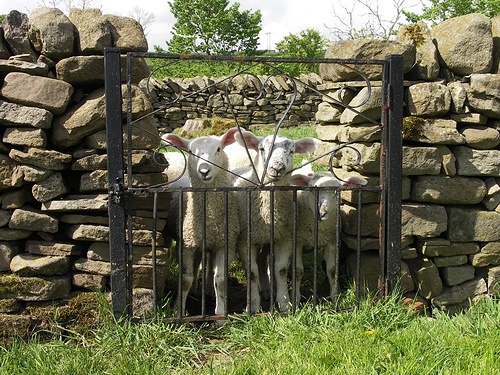
In ancient Israel, sheepfolds were common, especially in rural areas. They were enclosures made of stone walls or sometimes thorny bushes to protect the sheep from wild animals and thieves.
Two Types of Sheepfolds:
Village Sheepfolds:
Usually large, communal enclosures where several shepherds would keep their flocks overnight.
They often had a gatekeeper to protect the entrance.
Wilderness or Field Sheepfolds:
Smaller, makeshift enclosures out in the countryside.
These often had no physical door — instead, the shepherd himself would lie across the opening to act as the gate.
The shepherd’s own body was the protection and passageway.
What Jesus Is Saying:
The Gate Is Both Protection and Access:
By declaring “I am the gate,” Jesus is saying He is the one who protects the sheep from danger.
He is also the only way in and out of the sheepfold — the way to safety and abundant life.
This image speaks of both security and provision.
Safety and Freedom:
Jesus says, “Whoever enters by me will be saved, and will come in and go out and find pasture.”
This implies freedom of movement under His care — He’s not a gate that keeps people locked in, but rather one that provides access to life and abundance.
“Coming in and going out” was a common phrase in the ancient world meaning to be safe and flourish under someone’s protection (Deuteronomy 28:6).
Exclusive Claim:
Jesus is making a bold, exclusive claim — He alone is the way to salvation and abundant life.
This would have been incredibly provocative to the religious leaders who saw themselves as the gatekeepers of Israel’s spiritual life.
Connection to the Good Shepherd Discourse:
The “I Am the Gate” statement is the first part of the larger Good Shepherd discourse, where Jesus also says, “I am the Good Shepherd” (John 10:11).
But before revealing Himself as the Good Shepherd, He establishes Himself as the gate.
Without the gate, there’s no access to the true Shepherd’s care.
Old Testament Connection:
Ezekiel 34:
God condemns the shepherds of Israel (religious leaders) for failing to care for the sheep (the people).
God promises to personally search for and care for His sheep.
Jesus is positioning Himself as the fulfillment of this prophecy — the true Shepherd who provides access to safety and life.
What Does This Mean for Us Today?
Protection:
Jesus as the gate means we are protected from spiritual harm.
It doesn’t mean life will be free of hardship, but it does mean we have ultimate security in Him.
Access:
Jesus is the way to true life and fulfillment.
He is the entry point to a relationship with God, community with others, and abundant life.
Freedom and Flourishing:
We are not meant to be trapped or restricted, but to “come in and go out” under His guidance and care.
True freedom isn’t doing whatever we want, but living under the protection and provision of Jesus.
Lenten Reflection:
Lent invites us to examine what gates we are trying to enter through.
Are we trying to find fulfillment and security in things that cannot truly protect or satisfy us?
Are we willing to enter through the gate Jesus provides, rather than creating our own?
Reflection Questions:
Where do you look for protection, security, and fulfillment?
How can you more fully enter through Jesus’s gate to find true life?
In what ways can you offer that same invitation to others — especially those who feel excluded or unworthy?
Closing Prayer:
“Jesus, You are the gate. Help me to enter through You and find true life. Guide me, protect me, and teach me to trust in Your care. Help me to invite others into the life and freedom You offer. Amen.”