
Act One: The Wound
The sun had not yet risen when Amara woke. She did not need an alarm. Her body knew. The weight of the jerrycan waiting by the door. The long walk ahead. The ache in her shoulders that never fully healed.
She was eight years old.
Her mother stirred in the corner of the hut, still weak from the fever that had taken her brother. Kwame had been five. Small. Laughing. He had drunk the water from the river, the same water they all drank, and three days later he was gone.
The river was a two-hour walk. Sometimes longer when the rains came and the path turned to mud. Amara would leave before dawn and return by mid-morning, the jerrycan heavy on her back, sloshing with water that looked clear but carried death invisible to the eye.
She did not go to school. There was no time. The water came first. Always the water.
Her mother coughed. Amara looked at her, worried. The fever had left her weak, and the clinic was three villages away. Even if they could reach it, there was no money for medicine. There was never money for medicine.
Amara lifted the jerrycan. It was almost as heavy as she was. She strapped it to her back and began the long walk.
The path wound through dusty fields and dry riverbeds. Other girls walked with her, some younger, some older. They did not talk much. The walk was too tiring. But sometimes, one of them would hum a song. A song their grandmothers had sung. A song about the river, the land, the ancestors.
Amara hummed it now. It was the only thing that made the walk bearable.
By the time she reached the river, the sun was high and hot. She filled the jerrycan, careful not to stir up the silt. She drank from her hands, knowing it might make her sick, knowing there was no choice.
On the way back, she passed the school. The children were in class. She could hear them reciting. She could hear the teacher's voice. She stopped for a moment, just a moment, and listened.
Then she kept walking.
That night, Amara dreamed of her brother. He was running through a field of green. He was laughing. He was drinking water from a cup, clean water, clear water, and he was not sick. He was not gone.
She woke with tears on her face.
Her mother was awake, watching her.
"Kwame?" her mother asked.
Amara nodded.
Her mother reached out and held her hand. "He is with the ancestors now. He is not suffering."
Amara wanted to believe it. But the ache in her chest would not go away.
"What if we had clean water?" she whispered. "What if the river was clean?"
Her mother did not answer. There was no answer. The river was the river. The water was the water. And children died.
That was the way of things.
Act Two: The Turning
The strangers came in the dry season.
They arrived in a truck, dusty from the long road. There were three of them: a woman with a clipboard, a man with a machine, and an elder from the capital who spoke their language.
They gathered the village in the square. The chief spoke first, welcoming them. Then the woman with the clipboard spoke.
"We are here because of a fund," she said. "A fund created by many nations. Not to take, but to give. Not to extract, but to build."
The villagers were suspicious. They had heard such words before. The Crown had made promises too. But the woman continued.
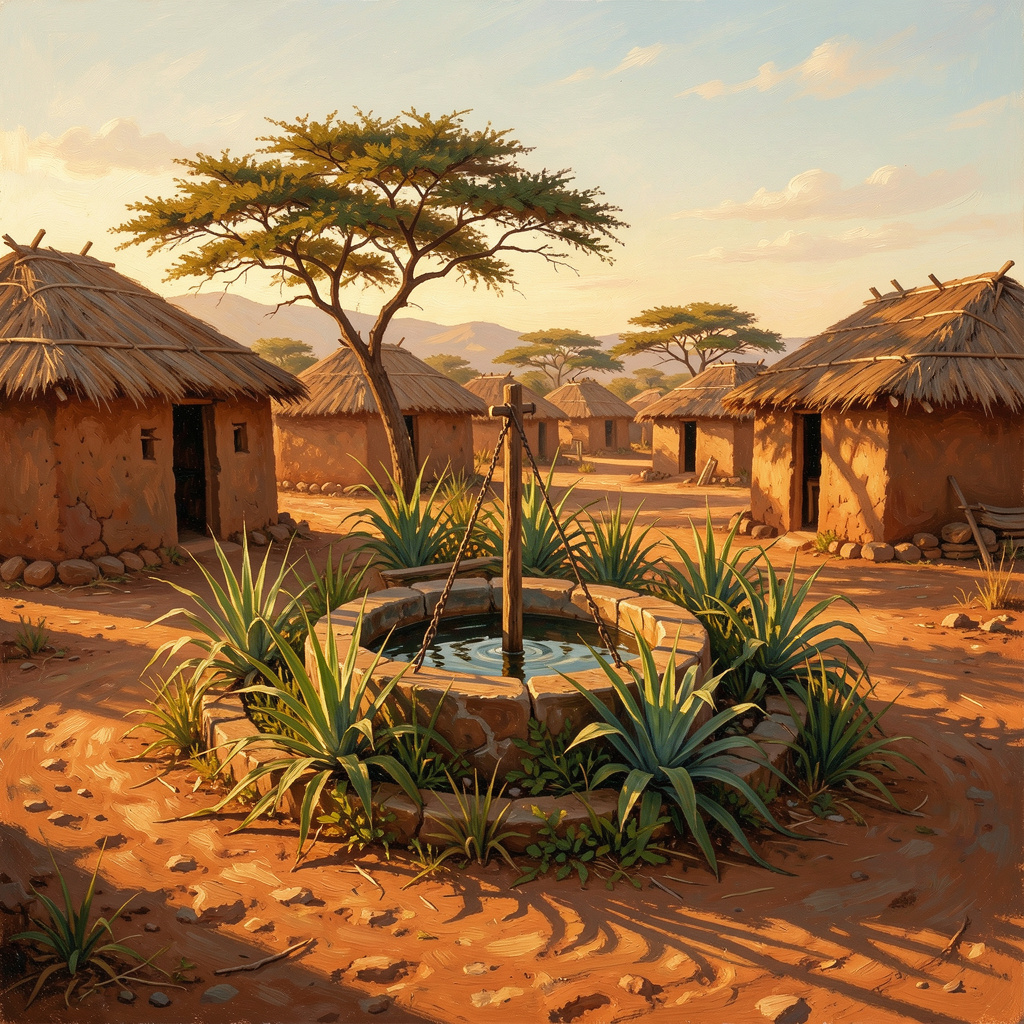
"We want to build a well. A borehole. Clean water for your village. It will be yours. You will own it. You will manage it. We will only help you build it."
A murmur went through the crowd. A well. Clean water. No more walk. No more sickness. No more death.
The chief asked the question everyone was thinking. "What do you want in return?"
The woman smiled. "Nothing. The fund is a bond. It is repaid by the project itself. The water will be free. The only thing we ask is that you tell your story. So others can learn. So others can have wells too."
The chief looked at the elder from the capital. The elder nodded.
The chief looked at the villagers. They were watching him, waiting.
He looked at the children. At Amara. At the other girls who walked to the river every day.
"Build the well," he said.
The drilling took three weeks. The children watched every day. The machine was loud, and the dust was thick, but no one complained. They were waiting.
On the last day, the water came.
It burst from the ground, clear and cold. The villagers cheered. Some wept. The children ran to it, cupping their hands, drinking.
Amara was among them. She drank. It was the cleanest water she had ever tasted. It was the best thing she had ever tasted.
She thought of Kwame.
She wished he could have tasted it too.
But then she thought: no more children will die from this river. No more brothers. No more sisters. No more.
She drank again. And she smiled.
The well changed everything.
Amara started school. For the first time in her life, she had time. The walk to the river was gone. The burden was lifted. She could learn.
She was behind the other children at first. She had never learned to read. But she was determined. She studied every night by the light of a small solar lamp, another gift from the fund.
Her mother grew stronger. The clean water meant no more fever. No more sickness. She started a small garden, using water from the well. She grew vegetables. She sold some at the market.
The village began to change. Slowly. Not overnight. But steadily.
The fund did not stop at the well. It funded a school. A clinic. A solar array. A road.
And with each project, the village grew stronger. With each project, the wound healed.
One day, the woman with the clipboard returned. She sat with the elders and told them about a new project.
"A medical crop," she said. "A plant that can be grown here. It can be processed into medicine. Medicine that the world needs. You can grow it. You can process it. You can export it."
The elders were interested. But cautious.
"What kind of medicine?" the chief asked.
"A cure for malaria," the woman said. "And other diseases. The world needs it. And you can grow it."
The chief looked at the villagers. They were watching him. Waiting.
He looked at Amara. She was older now. She had finished primary school. She was learning about science. About medicine. About the world beyond the village.
"What do you think?" the chief asked her.
Amara stood. She was nervous. But she spoke.
"We had a well," she said. "And it changed our lives. We could do more. We can grow this crop. We can make medicine. We can help others."
She paused.
"And we can build something of our own."
The chief nodded.
"Plant the crop," he said.
Act Three: The Blessing
The crop grew.
It was called artemisia. A plant with green leaves and small yellow flowers. The villagers planted it in the fields that had once been dry and barren. The well watered it. The sun fed it. The hands of the people tended it.
Amara helped. She was not a farmer, she had become a student, then a teacher. But she helped. She wanted to be part of it. She wanted to see it grow.
The harvest came. The plants were cut and dried. They were sent to a processing facility in the capital. And there, they were turned into medicine.
The medicine was shipped around the world. To countries with malaria. To clinics with no other options. To children who would die without it.
And in the village, the people watched. They saw their crop become medicine. They saw their work save lives.
They were not just growing a plant. They were growing a future.
The fund grew too.
Other villages had wells now. Other children went to school. Other mothers grew gardens.
And the country itself began to change. The medicine was not just exported raw, it was processed, packaged, branded. The country was not just a supplier. It was a builder.
The global council, which had funded the first well, grew into something more. It funded more projects. More bonds. More healing.
And the story of the well, the story of Amara, of Kwame, of the river, of the clean water, spread. It was told in schools. It was shared online. It was made into a film.
People watched. People wept. People gave.
And they asked: can we build a well too? Can we heal too?
The answer was yes.
Amara stood at the edge of the field.
She was a woman now. She had studied medicine. She had returned to the village to work in the clinic. She had treated children for malaria. She had saved lives.
She thought of her brother. Kwame. He would be a man now. If he had lived.
She thought of the river. The water that had killed him. The water that no one drank anymore.
She thought of the well. The water that had saved them. The water that had changed everything.
And she thought of the medicine. The crop. The future.
She knelt down and touched the soil. The soil that had grown the plant. The soil that was healing the world.
"Thank you," she whispered. To the ancestors. To the investors. To the fund. To the global council. To everyone who had seen and cared and acted.
And she stood. And she went back to work.
Because the work was not finished. The wound was still there. But it was healing.
And she would be part of the healing.
Epilogue: The Story
The film came out in 2035.
It was called The Well. It was nominated for awards. It was watched by millions.
It told the story of Amara. Of Kwame. Of the river. Of the well. Of the medicine.
And at the end, there was a message:
This is a true story. There are still villages without water. Still children without medicine. But there are also wells. And there are also funds. And there are also bonds. And there are also people who care.
You can be part of the story. You can invest. You can advocate. You can share. You can build.
Because the wound is real. But so is the healing.
And the healing starts with a well.
The film ended. The credits rolled. And in living rooms, in schools, in cinemas around the world, people sat in silence.
Then they began to talk.
They talked about the wound. They talked about the healing. They talked about what they could do.
And some of them, not all, but some, began to act.
They donated. They invested. They wrote letters. They organized.
They built wells.
And the story continued.
For Kwame, and all the children who did not live to see the water. For Amara, and all the children who did. And for everyone who builds, who invests, who heals.
The well is just the beginning.
The Well
A poem by Amara, age 73
I was eight when I first walked to the river.
I did not know it then, but I was walking
toward death.
The water was clear, but it was not clean.
The water was life, but it was also loss.
My brother drank from it.
My brother died from it.
His name was Kwame.
He was five.
I have carried him in my heart
for sixty-five years.
I remember the weight of the jerrycan.
I remember the ache in my shoulders.
I remember the sun burning my neck.
I remember the hours lost.
I remember the school I never attended.
I remember the dreams I never dreamed.
I was eight years old.
And I was already old.
Then the strangers came.
I did not trust them at first.
Why would I?
The Crown had come before.
They had made promises too.
They had taken and taken and taken.
And left us with nothing
but the river
and the dead.
But these strangers were different.
They did not come with guns.
They did not come with bibles.
They did not come with chains.
They came with a machine.
And a clipboard.
And a promise.
We will build a well.
I watched them drill.
I watched them work.
I watched the dust rise
and the machine roar
and the men sweat
under the African sun.
And then,
water.
Clean water.
Cold water.
Water that did not kill.
Water that did not steal.
Water that gave life
instead of taking it.
I drank.
And I wept.
And I thought of Kwame.
And I wished
he could have tasted it too.
The well changed everything.
I went to school.
I learned to read.
I learned to write.
I learned to dream.
My mother grew strong.
She planted a garden.
She sold vegetables at the market.
She laughed again.
She had not laughed
since Kwame died.
The village grew.
We built a clinic.
We built a school.
We built a solar array.
We built a road.
And then,
we planted a crop.
A medicine crop.
A crop that would heal the world.
I became a doctor.
I studied in the capital.
I studied abroad.
I learned about medicine.
I learned about healing.
I learned about the world
beyond the river
beyond the village
beyond the wound.
And I came home.
I came home to the village.
I came home to the well.
I came home to the people
who had raised me
and taught me
and loved me.
I treated children for malaria.
I treated mothers for fever.
I treated fathers for infection.
I treated elders for pain.
And I thought of Kwame.
Every day.
I thought of Kwame.
I am seventy-three now.
I have seen the well.
I have seen the school.
I have seen the clinic.
I have seen the medicine
shipped around the world.
I have seen children live
who would have died.
I have seen mothers smile
who would have wept.
I have seen fathers work
who would have been lost.
I have seen villages grow
where there was only dust.
I have seen the healing.
But I have also seen
the ones we did not reach.
The villages without wells.
The children without medicine.
The mothers without clinics.
The fathers without work.
The dreams without hope.
They are still there.
They are still waiting.
They are still walking to the river.
They are still drinking the water
that kills.
I see them.
I remember them.
I carry them.
As I carry Kwame.
As I carry the river.
As I carry the before.
And I say to the world:
Do not forget us.
Do not forget the Amaras.
Do not forget the Kwames.
Do not forget the wells not yet dug.
Do not forget the bonds not yet signed.
Do not forget the stories not yet told.
We are still here.
We are still waiting.
We are still hoping.
We are still dreaming.
And we will not stop.
Until every village has a well.
Until every child has water.
Until every mother has medicine.
Until every father has work.
Until every dream has a chance.
I am old now.
My hands are wrinkled.
My back is bent.
My eyes are dim.
My voice is soft.
But my heart is strong.
And my memory is clear.
And my hope is alive.
I remember the river.
I remember the walk.
I remember the jerrycan.
I remember the weight.
And I remember the well.
I remember the water.
I remember the joy.
I remember the healing.
I remember the life.
I remember Kwame.
And I know
he is with the ancestors.
And I know
he is proud.
When I die,
I will return to the earth.
I will return to the village.
I will return to the well.
And I will become
the water.
The clean water.
The healing water.
The water that gives life.
And I will flow
to every village.
To every child.
To every mother.
To every father.
To every dream.
And I will whisper:
The well is just the beginning.
Amen.
Ase.
So it is.
For Kwame.
For Amara.
For every child who walks to the river.
For every child who waits for the well.
For every hand that builds.
For every heart that hopes.
The well is just the beginning.