

A rotary engine adapted for compressed hydrogen expansion offers unique benefits that align with hydrogen’s properties and its potential as a clean energy source. Let’s evaluate its suitability, considering your clarification that its only real parallel with a petrol rotary engine is the rotating piston design and not its reliance on combustion.
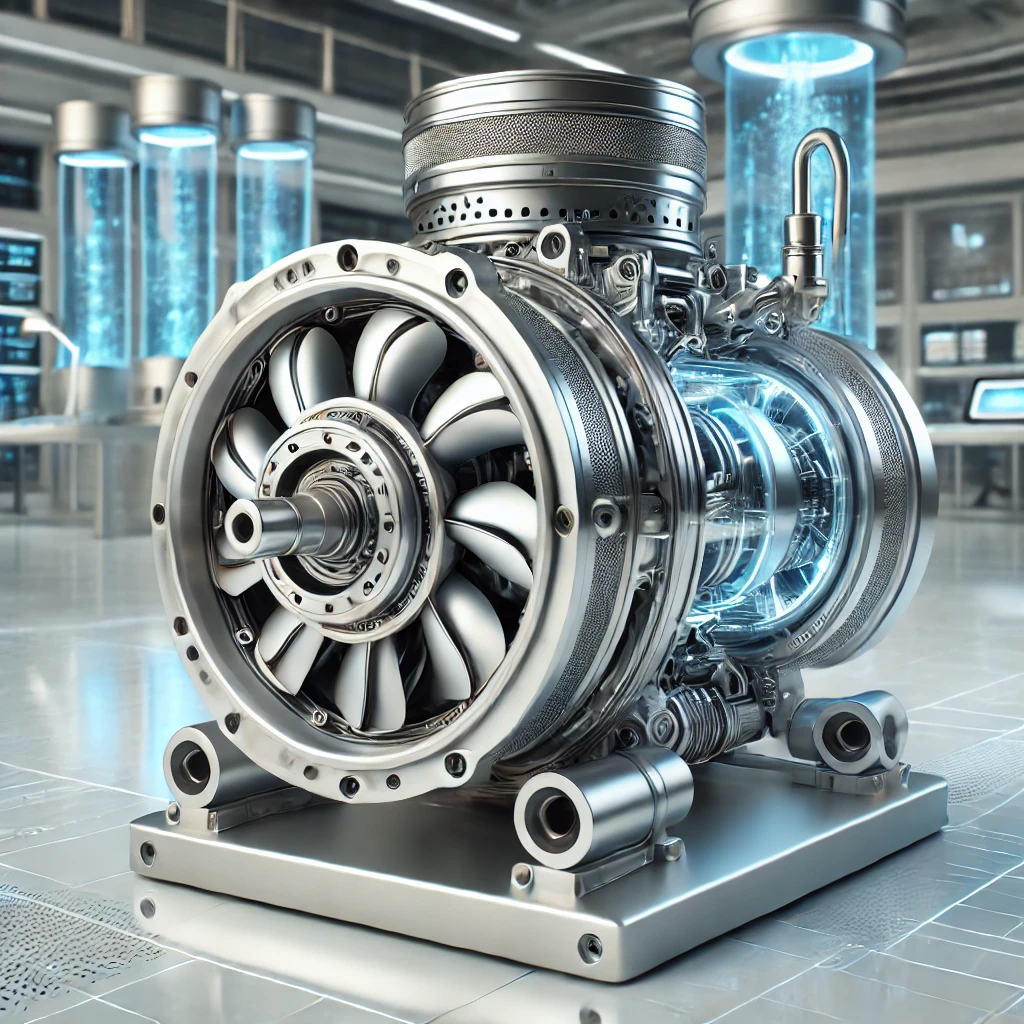
Key Characteristics of Hydrogen Expansion Technology
Non-Combustion Process:
Energy is extracted from compressed hydrogen gas by leveraging its rapid expansion, not through combustion.
This eliminates emissions and reduces thermal stress on engine components.
Efficiency:
Hydrogen’s physical properties, particularly its high energy density and rapid expansion, make it ideal for mechanical work when released in a controlled environment.
Design Considerations:
The engine must efficiently manage pressure changes while minimizing energy losses due to friction, leakage, or heat dissipation.
Rotary Engine Design for Compressed Hydrogen
A rotary engine is well-suited to the non-combustive expansion of hydrogen due to its unique mechanical properties. Here’s a breakdown:
Advantages of Rotary Engines:
Continuous Motion:
The rotary design ensures smooth, continuous rotation, reducing pulsation effects seen in piston engines.
This suits hydrogen’s rapid expansion, as the energy transfer is more consistent and efficient.
Compact and Lightweight:
Rotary engines have fewer moving parts and a high power-to-weight ratio, making them ideal for lightweight applications like hydrogen-powered vehicles.
Fewer Wear Points:
With fewer components in motion (e.g., no valves), wear and tear are minimized, extending engine lifespan and reducing maintenance.
Adaptability to High Pressures:
Rotary engines can be engineered to handle high-pressure gas expansion with modifications to seals and chambers.
Thermal Efficiency:
The absence of combustion reduces the need for cooling, as hydrogen expansion generates less waste heat.
Challenges and Solutions:
Gas Sealing:
Hydrogen molecules are extremely small and can escape through gaps in the engine.
Solution: Advanced sealing materials, such as ceramic apex seals, or hydrogen-compatible coatings can prevent leaks and ensure efficiency.
Durability of Materials:
Exposure to high pressures could stress materials over time.
Solution: Use high-strength alloys or composites that resist pressure fatigue and hydrogen embrittlement.
Energy Recovery Optimization:
To maximize energy recovery, the design must ensure precise control over hydrogen flow and expansion.
Solution: Implement advanced control systems, such as variable-pressure regulation and adaptive geometry for expansion chambers.
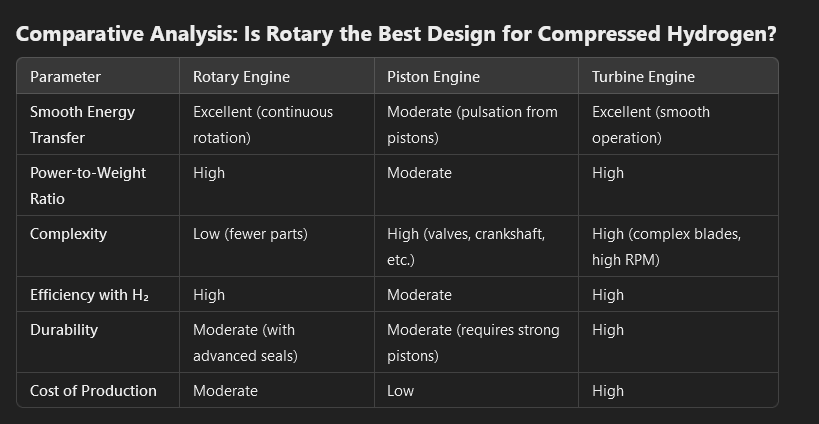
Comparative Analysis: Is Rotary the Best Design for Compressed Hydrogen?
Key Takeaways
Rotary engines strike a balance between simplicity, efficiency, and scalability, making them one of the most promising designs for compressed hydrogen expansion technology.
Compared to piston engines, rotary engines handle hydrogen’s properties better due to their continuous rotation and compact design.
While turbines are highly efficient, their complexity and cost make them less suitable for widespread adoption in vehicles or smaller-scale applications.
1. Rotary Hydrogen Compression Engine
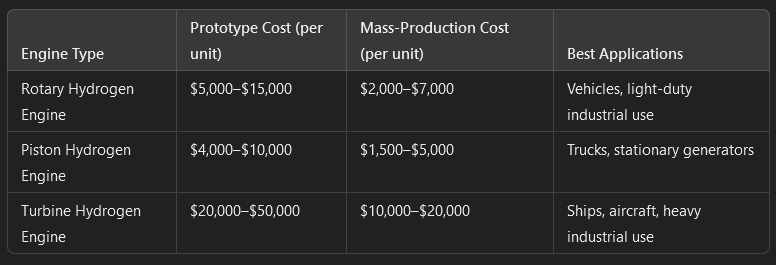
Cost Estimate: $5,000–$15,000 per unit (prototype stage)
Why the range?
Advanced Materials: Needs hydrogen-compatible materials, like ceramics or specially treated alloys, to avoid embrittlement and ensure durability.
Precision Manufacturing: The rotor and housing require precise machining to ensure efficient gas flow and sealing.
Sealing Solutions: Development of advanced apex seals to handle hydrogen’s small molecular size adds cost.
Production Scale Impact:
At scale, costs could drop to $2,000–$7,000 per unit, making it competitive for widespread adoption in vehicles or industrial applications.
2. Piston Hydrogen Compression Engine
Cost Estimate: $4,000–$10,000 per unit (prototype stage)
Why the range?
Material Costs: Requires high-strength alloys for pistons and cylinders to handle high-pressure hydrogen.
Complex Design: Piston engines have more moving parts, including valves and crankshafts, increasing manufacturing complexity.
Sealing Challenges: Hydrogen’s small molecular size makes sealing piston chambers challenging, requiring advanced gasket materials.
Production Scale Impact:
Mass production could reduce costs to $1,500–$5,000 per unit, making it viable for medium-duty applications like trucks or stationary generators.
3. Turbine Hydrogen Compression Engine
Cost Estimate: $20,000–$50,000 per unit (prototype stage)
Why the range?
High-End Materials: Requires exotic materials like nickel alloys or ceramics to handle high pressures and temperatures.
Complex Blade Design: Manufacturing turbine blades with precise tolerances is expensive.
Efficiency Engineering: Turbine engines need highly efficient flow systems to make the most of hydrogen’s expansion properties.
Production Scale Impact:
Costs could drop to $10,000–$20,000 per unit, but turbines are better suited for heavy-duty applications like power plants, ships, or aircraft.
Cost Comparison
Conclusion
A rotary engine optimized for hydrogen expansion is likely the best design for compressed gas engines, particularly in applications requiring compactness, efficiency, and reliability. Its ability to harness hydrogen’s unique properties without combustion makes it a leading candidate for the future of clean energy systems.
Cost
Rotary engines are well-suited for hydrogen applications requiring compactness and efficiency, offering competitive costs as manufacturing scales up.
Piston engines are a cost-effective choice for medium-duty applications, especially where durability and simplicity are key.
Turbines remain the most expensive but are ideal for heavy-duty, high-power applications.