
Abstract
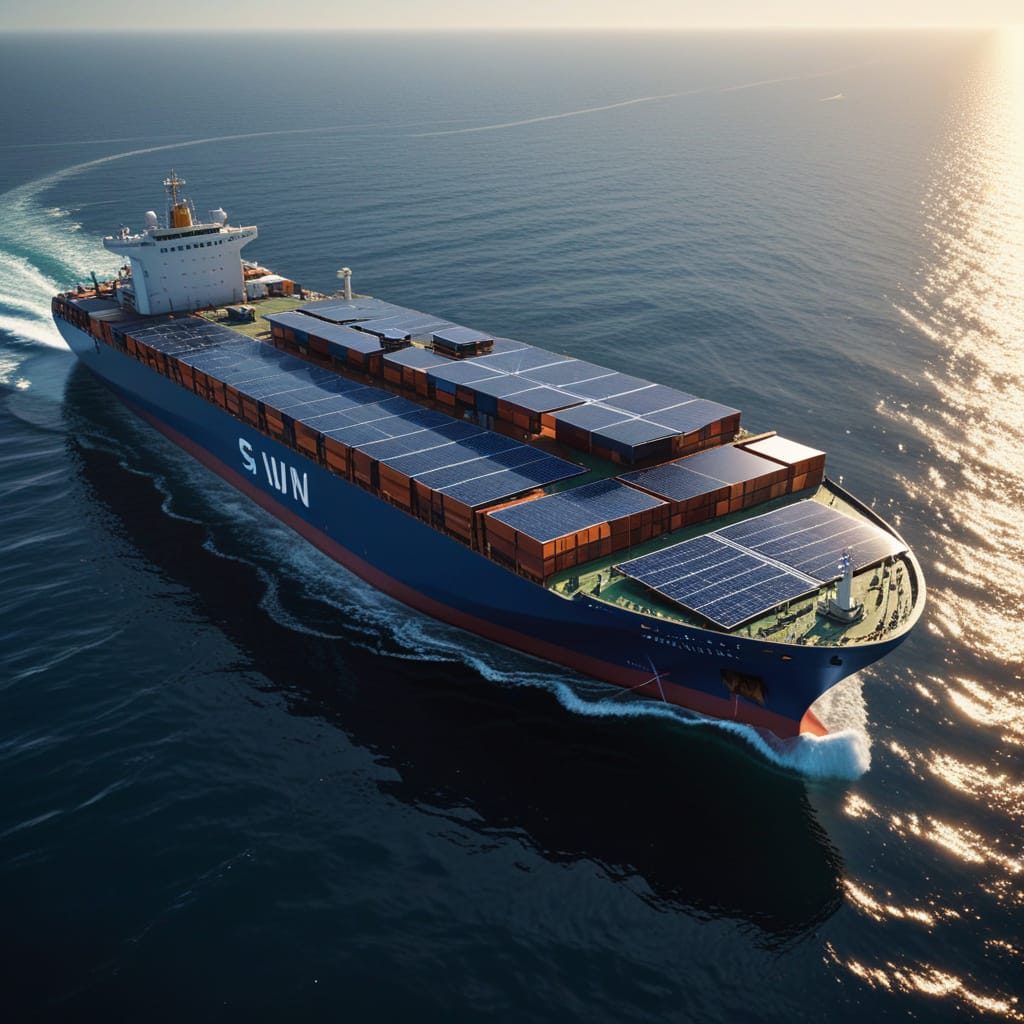
Milk powder is one of the world's most traded dairy products, valued for its long shelf life and reduced weight. Yet despite its apparent durability, it is highly susceptible to degradation during ocean transport. The primary culprit is moisture, specifically, the humid, condensing environment created inside steel shipping containers as they traverse changing climates. This paper presents a comprehensive solution: the Entangled Ship, a solar-powered, climate-controlled transport system designed to maintain cold, dry conditions throughout the journey. By integrating active dehumidification, UV-C air sterilization, and solar power generation, this system can virtually eliminate humidity-related losses for milk powder and other sensitive dry goods, including seeds, grains, and dried fruits, while creating new revenue streams through premium "zero-loss" shipping services.
1. Introduction: The Hidden Vulnerability of Milk Powder
Milk powder is manufactured by removing nearly all of its water content. The finished product typically contains only 2-5% moisture, making it extremely hygroscopic, it aggressively absorbs water from the surrounding air.
This property is both the product's greatest strength and its greatest vulnerability. The low moisture content gives milk powder its long shelf life and eliminates the need for refrigeration. But any exposure to humidity during transport can trigger a cascade of degradation reactions.
The Degradation Cascade
When milk powder absorbs moisture, several damaging processes unfold:
Caking: Powder particles stick together, forming clumps. The product becomes difficult to dissolve and unusable for consumers.
Lactose Crystallization: Sugar in the powder crystallizes, affecting solubility and texture while triggering further reactions.
Maillard Browning: Lactose reacts with proteins, turning the product brown and degrading flavor and nutritional value.
Lipid Oxidation: Fat content degrades when exposed to oxygen and moisture, creating rancid flavors and off-odours.
Glass Transition: The powder reaches a rubbery state, after which degradation accelerates rapidly.
Even small changes in temperature and humidity can result in significant changes to the powder's taste, color, and smell. While these changes may not compromise safety, they typically cause consumers to reject the product, resulting in entire shipments becoming economically worthless.
The problem is so pervasive that researchers have developed mathematical models specifically to predict moisture diffusion through bags and powder pellets, attempting to approximate when the powder will reach the glass transition temperature. Major dairy companies ship their powder in bags lined with a plastic layer to prevent oxygen and moisture from passing through, yet degradation still occurs.
2. The Shipboard Environment: A Perfect Storm for Moisture Damage
The conditions inside a ship's cargo hold or steel container are, in many ways, the worst possible environment for hygroscopic products like milk powder.
Ship Sweat and Cargo Sweat
Maritime professionals recognize two distinct types of condensation:
Ship Sweat: Condensation forms on the ship's steel structure when warm, humid air contacts cold steel surfaces. This typically occurs when a vessel loads cargo in a warm, humid environment and then sails to a significantly cooler climate. Condensed water flows down to the cargo hold floor, wetting the cargo in its path.
Cargo Sweat: Condensation forms on cargo itself when cold cargo comes into contact with warm, humid air. Moisture condenses directly onto the goods.
The Steel Container Amplifier
Steel shipping containers intensify these problems dramatically:
Steel container surfaces can exceed 55°C during intense solar radiation, even when ambient air temperatures are significantly lower.
Daily temperature swings inside containers intensify in direct sunlight.
When temperatures drop at night or during extended crossings, moisture condenses inside containers.
Hygroscopic cargoes release moisture when heated, increasing the risk of secondary condensation damage.
The combination of high daytime temperatures and nighttime cooling creates a pump effect: moisture evaporates from the cargo during the heat of the day and condenses on the container walls at night, then drips back onto the cargo below. For milk powder, which actively absorbs moisture, this is catastrophic.
The Humidity Physics
Warmer air holds more moisture, approximately 7% more for every degree Celsius of warming. As global temperatures rise and shipping routes experience more extreme conditions, the risk of moisture damage is increasing.
Even packaging that is sealed at origin is vulnerable, as the bag's internal environment changes with temperature. The relative humidity inside a sealed bag increases as temperature drops, and if it reaches the dew point, condensation can form inside the packaging itself.
3. The Entangled Ship: Design Principles
The Entangled Ship is designed to break the moisture cycle at every stage of transport. The system operates on three core principles:
Active Environmental Control: Maintain cold, dry conditions throughout the voyage, regardless of external conditions.
Energy Independence: Generate power on-board using solar panels, eliminating dependence on shore power or bunker fuel for climate control.
Integrated Protection: Combine dehumidification, temperature control, and air sterilization in a single, modular system.
The Solar Power System
The Entangled Ship uses solar power to run its dehumidification, cooling, and UV-C systems. Two deployment approaches are used:
Fixed Shipboard Installation: Solar panels are mounted on the ship's high deck roof, providing continuous power generation throughout the voyage. This installation is permanent and can be scaled to match the vessel's energy requirements.
Modular Container Installation: Solar panels can be mounted directly on the container roof using corrugation-specific clamps, L-feet bolted through the roof, or high-strength neodymium magnet mounts for rapid, drill-free installation.
Power is stored in a battery energy storage system, ensuring continuous operation even during periods of low solar insolation.
Active Dehumidification
The Entangled Ship employs desiccant dehumidifiers that remove moisture from the air inside cargo holds and enclosed spaces continuously, maintaining stable low-humidity conditions from loading port to destination. Desiccant dehumidifiers are particularly effective in maritime environments because they operate reliably across the full range of maritime climates and remove moisture regardless of ambient temperature.
The dehumidification system works in an internal circulation mode, conditioning the air within the cargo space rather than relying on external ventilation.
UV-C Air Sterilization
To prevent biological contamination, the circulated air is treated with UV-C light, which destroys the DNA/RNA of microorganisms, rendering them sterile and unable to reproduce. This is the same technology used in healthcare settings for operating room sterilization and in water treatment for pathogen elimination. UV-C treatment eliminates mould spores, bacteria, and yeast from the air before they can contact the cargo.
Temperature Control
The ideal storage conditions for dry dairy products are temperatures below 25°C with a relative humidity below 65%. The Entangled Ship maintains these conditions precisely, preventing the temperature fluctuations that trigger glass transition and accelerate degradation.
Good insulation is essential. The cargo space is thermally isolated from the steel hull, preventing the "sweat effect" where cold steel surfaces cause condensation. The product does not touch steel; it is suspended in a controlled environment, protected from the temperature extremes of the hull.
4. The Consequences of Inaction
The problem of moisture damage in transit is not theoretical. Real-world cases demonstrate the scale of the issue. Milk powder shipments frequently arrive darker and clumpier than expected due to caking and browning during transit. Inappropriate storage conditions such as high relative humidity and high ambient temperature can significantly degrade the nutritive value of milk powder.
For milk powder, the loss is not just financial, it is a loss of nutritional value and food security. Products that fail to meet quality standards are rejected, entire shipments become economically worthless, and the cost of the loss is absorbed by producers and consumers alike.
5. Beyond Milk Powder: Seeds, Grains, and Dried Goods
The Entangled Ship's climate control capabilities extend far beyond milk powder. The same cold, dry conditions that preserve milk powder also maintain the quality of seeds, grains, and other dried goods.
Seed Dormancy
Seeds are living organisms that respond to environmental cues. In nature, seeds sense winter and enter deep dormancy, preserving their energy for spring germination. The Entangled Ship replicates these conditions:
Cool and Dry: Seeds sense "winter" and enter dormancy. Energy is preserved and quality is maintained.
Warm and Moist: Seeds sense "spring" and begin to respirate. Energy is consumed and germination is triggered prematurely.
Dark and Quiet: Seeds remain dormant with no unnecessary metabolic activity.
By maintaining the correct storage conditions, the Entangled Ship preserves seed viability and quality throughout transport, critical for agricultural trade.
Dried Fruits and Meats
Dried fruits and meats are also hygroscopic and vulnerable to rehydration. Fast drying leaves open pores that rapidly reabsorb moisture when exposed to humidity, resulting in soft, spongy, degraded products. The Entangled Ship's low-humidity environment prevents this rehydration, ensuring products arrive with the texture and quality expected by consumers.
6. Economic Impact: Premium Products, Premium Returns
The Entangled Ship creates value through multiple channels.
Loss Reduction
Under current industry standards, expected losses of 5-10% are often written off as "normal." The Entangled Ship reduces this to 0-1%, with consistent, premium quality arriving at every destination. The reduction in loss alone can pay for the system within a single shipping season.
Premium Pricing
Products that arrive in pristine condition command premium prices. A "zero-loss, climate-controlled transport" certification becomes a marketable feature, allowing producers to differentiate their goods and charge higher prices.
New Revenue Streams
The Entangled Ship generates income from multiple sources:
Standard freight fees
Climate-control surcharges for maintaining cold, dry conditions
UV-C treatment fees for sterilized air environment
Zero-loss bonuses for perfect delivery
7. Conclusion
Milk powder is one of the world's most valuable traded commodities, yet its transport remains vulnerable to the hidden threat of humidity. The steel container environment, with its temperature extremes, diurnal cycling, and condensation, creates a perfect storm for moisture damage.
The Entangled Ship offers a comprehensive solution:
Solar power provides free, renewable energy for climate control.
Active dehumidification maintains stable low-humidity conditions.
UV-C sterilization eliminates biological threats.
Temperature control prevents degradation and preserves quality.
Insulation protects cargo from the "sweat effect."
The result is a transport system that virtually eliminates humidity-related losses, delivering premium products in pristine condition. The economic case is clear: reduced loss, premium pricing, and new revenue streams more than justify the investment.
As one researcher noted, once milk powder reaches the glass transition temperature, things go wrong very quickly. The Entangled Ship ensures that milk powder, and all sensitive dry goods, never reaches that point.
The technology exists. The need is urgent. The solution is the Entangled Ship.