

A Proposal for the Redefinition of International Law
Preamble
The existing international legal order is not law. It is a weapon. A selective, self-serving instrument of the powerful, designed to legitimize extraction and delegitimize resistance. It is a performance of justice, worn only when it serves the powerful, and discarded the moment it becomes inconvenient.
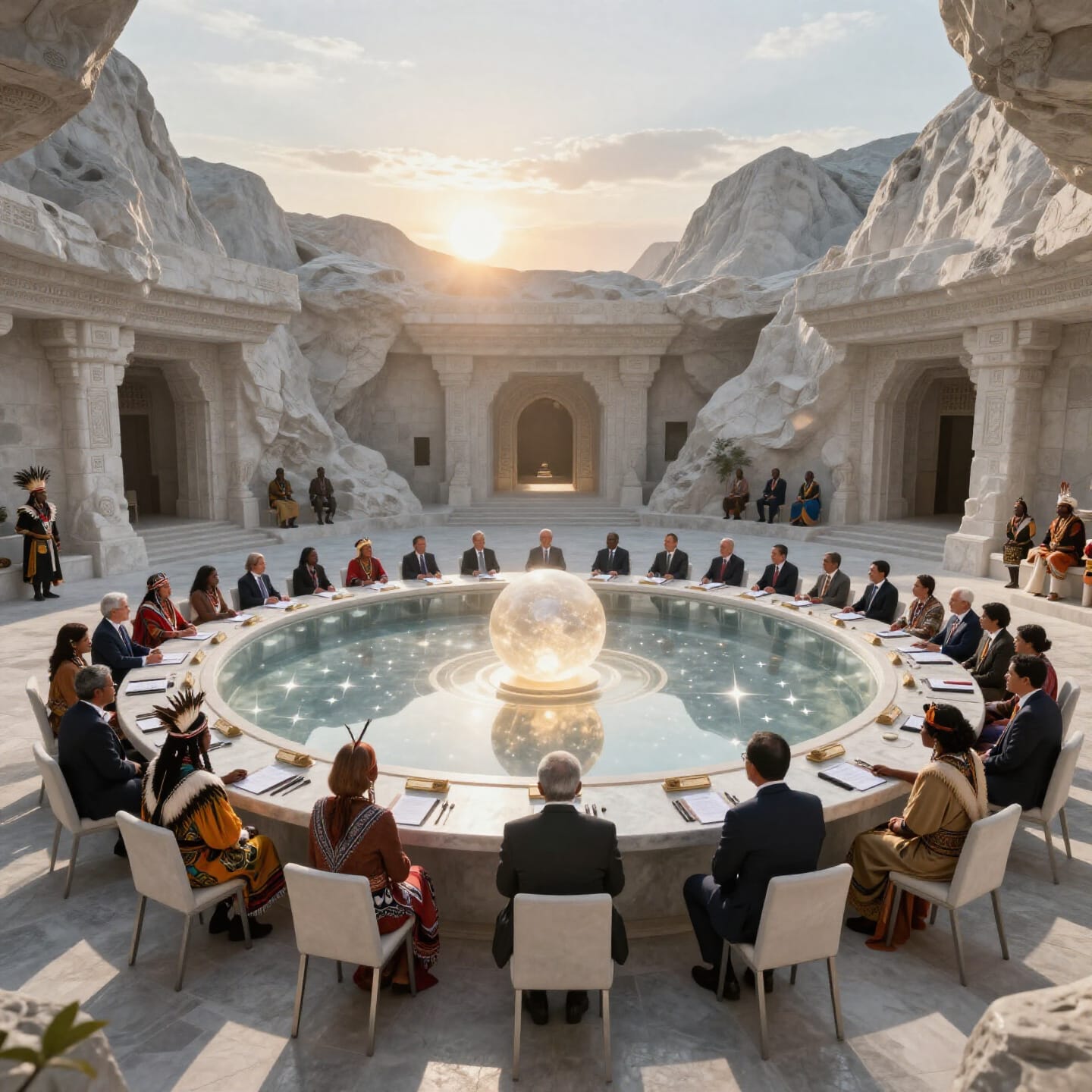
This paper calls for a new international law. A real law. A law built not by the powerful for their own benefit, but by all nations that believe in genuine law and order.
This is an invitation. An invitation to the multipolar middle powers, China, the BRICS, the Global South, Canada, the European Union, and all nations that still believe that honor matters, to come together and define what international law should be.
I. The Need for a New International Law
The current system is collapsing. The West is losing credibility. The multipolar world is rising. And in the vacuum left by the decline of the old order, there is an opportunity to build something better.
The old system was built by the colonizers. It reflects their interests, their values, and their history. It was designed to protect the powerful and legitimize their extraction. It was never designed for justice.
The new system must be different.
It must be built by all nations that believe in law and order. It must be based on honor, truth, and universal accountability. It must apply to the powerful as well as the weak. It must restore what was taken. It must heal what was broken.
This is not a rejection of law. It is a reclaiming of it.
II. The Principles of a New International Law
2.1 It Must Be an Invitation
A new international law cannot be imposed. It must be built together, by all nations that believe in genuine law and order. It must be an invitation, not a demand.
It invites all nations that believe in law to participate in its construction.
It invites all peoples who have been betrayed by the current system to have a voice.
It invites all who still believe that honor matters to contribute.
This is not a closed system. It is an open framework, defined by those who choose to participate.
2.2 It Must Be Based on Honor
The old system was based on power. The new system must be based on honor.
A promise is a promise.
A treaty is sacred.
A word is a bond.
Deception is not a tool. It is a failure.
This is not naivety. It is the foundation of trust. And trust is the foundation of civilization.
2.3 It Must Be Universal
The old system was selective. It applied to the weak, not the powerful. The new system must be universal.
It applies to the powerful as well as the weak.
It applies to the colonizer as well as the colonized.
It applies to the West as well as the rest.
There is no exception for "national security." There is no exception for "exceptionalism." The law applies to all.
2.4 It Must Be Restorative
The old system was punitive. It punished the weak and protected the powerful. The new system must be restorative.
It returns what was taken.
It heals what was broken.
It restores what was stolen.
It honors the promise.
This is not about punishment. It is about justice. It is about making whole what was broken.
2.5 It Must Be Enforceable
The old system was unenforceable. It relied on the goodwill of the powerful. The new system must have teeth.
It must have real consequences for those who break the law.
It must not rely on the consent of the powerful.
It must be able to hold violators accountable.
This does not mean military force. It means legal, economic, and reputational consequences. It means a system that cannot be ignored.
2.6 It Must Protect the Many, Not the Few
The old system served the few. It protected the interests of the powerful. The new system must serve the many.
It protects the weak from the strong.
It protects the colonized from the colonizer.
It protects the exploited from the exploiter.
It protects the future from the present.
This is not charity. It is justice. It is the recognition that all peoples have rights, not just those recognized by the powerful.
III. A Global Council: The Structure of the New System
The new international law must be governed by a body that represents all who adopt it. This body must be neutral, accountable, and inclusive.
3.1 The Global Council
The Global Council is the governing body of the new international legal order. It is composed of representatives from all nations that have adopted the new international law. It is not a body of the powerful. It is a body of the committed.
Membership. Any nation that adopts the new international law is eligible for membership. Membership is not conditional on wealth, power, or alignment with any particular bloc.
Voting. One nation, one vote. All members are equal.
Decisions. Decisions are made by consensus, or by majority vote if consensus cannot be reached.
Transparency. All proceedings are public. All decisions are published.
3.2 Functions of the Global Council
The Global Council has the following functions:
Lawmaking. It defines and refines the new international law.
Adjudication. It hears disputes and issues binding rulings.
Enforcement. It imposes consequences on nations that violate the law.
Coordination. It coordinates the implementation of the law across member nations.
3.3 A Neutral Currency for Global Trade
One of the most critical functions of the Global Council is the creation of a neutral currency for global trade. The existing system is dominated by the US dollar, which is a tool of the powerful. A neutral currency would level the playing field.
Neutrality. The currency is not connected to any single country. It is a creation of the Global Council, managed for the benefit of all members.
Stability. The currency is backed by a basket of assets: gold, commodities, and the collective trust of the member nations.
Accessibility. All member nations have equal access to the currency. It is not a tool of leverage.
Settlement. Global trade is settled in this neutral currency. No nation is forced to hold the currency of another.
This is not a replacement for national currencies. It is a supplement. A common medium of exchange for international trade, free from the manipulation of any single power.
3.4 Benefits of a Neutral Currency
It removes leverage. No nation can weaponize its currency against another.
It promotes fairness. All nations have equal access to the currency.
It builds trust. A neutral currency is a foundation for cooperation.
It stabilizes the system. It reduces the volatility caused by currency manipulation.
IV. Defining the New International Law
The new international law must be defined by those who believe in it. But the principles are clear.
4.1 What It Is
A law of protection. It protects the weak from the strong, the colonized from the colonizer, the exploited from the exploiter.
A law of integrity. It requires honesty. It requires that promises be kept. It requires that treaties be honored.
A law of honesty. It does not allow one party to rewrite the agreement. It does not allow deception to be normalized.
A law of restoration. It returns what was taken. It heals what was broken. It restores what was stolen.
A law of accountability. It holds violators accountable. It does not rely on the goodwill of the powerful.
A law of the many. It serves the many, not the few. It protects the future, not just the present.
4.2 What It Is Not
Not a tool of suppression. It is not designed to legitimize extraction or delegitimize resistance.
Not a weapon of the powerful. It is not selective. It applies to all.
Not a performance. It is not a costume worn only when it serves the powerful.
Not unenforceable. It has real consequences for those who break the law.
4.3 What It Can Do
The new international law can do what the old system could not.
It can hold violators accountable. It can impose legal, economic, and reputational consequences on those who break the law.
It can restore what was taken. It can order the return of land, sovereignty, and mana.
It can heal what was broken. It can provide a framework for reconciliation and restoration.
It can protect the future. It can ensure that the mistakes of the past are not repeated.
It can build trust. It can provide a foundation for cooperation and partnership.
V. Accountability: What Happens When a Nation Fails to Adhere?
This is the most difficult question. How do you enforce a law that the powerful refuse to recognize?
The old system had no answer. It relied on the goodwill of the powerful. The new system must have teeth.
5.1 Legal Consequences
International tribunals. A new international court, open to all peoples, not just states, can adjudicate claims and issue binding rulings.
Sanctions. Not the sanctions of the powerful, but collective sanctions imposed by the community of nations.
Reparations. The requirement to compensate those harmed by violations of the law.
5.2 Economic Consequences
Trade restrictions. Nations that violate the law can be excluded from trade agreements.
Asset freezes. The assets of violators can be frozen until compliance is achieved.
Debt restructuring. The debts of violators can be restructured to require compliance.
5.3 Reputational Consequences
Naming and shaming. Violators can be publicly named and shamed.
Exclusion from international bodies. Nations that violate the law can be excluded from international organizations.
Loss of trust. The most powerful consequence of all. Once trust is lost, it is very hard to regain.
5.4 The Ultimate Sanction
The ultimate sanction is the refusal to engage. Nations that violate the law can be isolated. They can be excluded from the benefits of cooperation. They can be left to deal with the consequences of their own actions.
This is not war. It is not violence. It is the power of the many over the few. It is the power of law over power.
VI. An Invitation to the Multipolar Middle Powers
This is an invitation. An invitation to all nations that believe in law and order to come together and define the new international law.
6.1 Who Is Invited?
China. A nation that honors its agreements and builds infrastructure that serves the many.
The BRICS. A coalition of nations that are building alternatives to the old system.
The Global South. Nations that have been exploited by the old system and are seeking a new way.
Canada. A nation that is pivoting away from the unpredictability of the United States and seeking new partnerships.
The European Union. A bloc that is seeking strategic autonomy and a more just international order.
All nations that believe in law and order. Not the law of the powerful, but a real law based on honor, truth, and universal accountability.
6.2 What Is Being Built?
A new international legal framework. A framework that is:
Inclusive. Built by all nations that believe in law, not just the powerful.
Honorable. Based on the principle that promises must be kept and treaties must be honored.
Universal. Applying to the powerful as well as the weak.
Restorative. Returning what was taken and healing what was broken.
Enforceable. With real consequences for those who violate the law.
6.3 A Call to Action
This is not a proposal to be debated. It is a call to action. A call to build something new. A call to define the future.
The old system is collapsing. The multipolar world is rising. And in the vacuum left by the decline of the old order, there is an opportunity to build something better.
This is that opportunity.
VII. A Definition for the New International Law
The new international law is:
"A universal legal framework, built by all nations that believe in genuine law and order, based on the principles of honor, truth, restoration, and accountability, designed to protect the weak from the strong, to restore what has been taken, to heal what has been broken, and to build a foundation for cooperation and trust among all peoples."
VIII. Conclusion: A New Beginning
The old system is dead. It has been exposed for what it always was: a tool of the powerful. A weapon of the colonizer. A performance of justice.
A new system must be built. A real system. A system based on honor, truth, and universal accountability.
This paper is an invitation. An invitation to all nations that believe in law and order to come together and define the new international law.
It is not a demand. It is not a threat. It is an invitation. An invitation to build something better.
The future is being built now. Let us build it together.
A Final Note
This paper is dedicated to all peoples who have been betrayed by the old system. To the colonized. To the exploited. To the silenced. To the future.
May the new international law be worthy of the name.
Kia kaha. Kia maia. Kia manawanui.
Be strong. Be brave. Be steadfast.