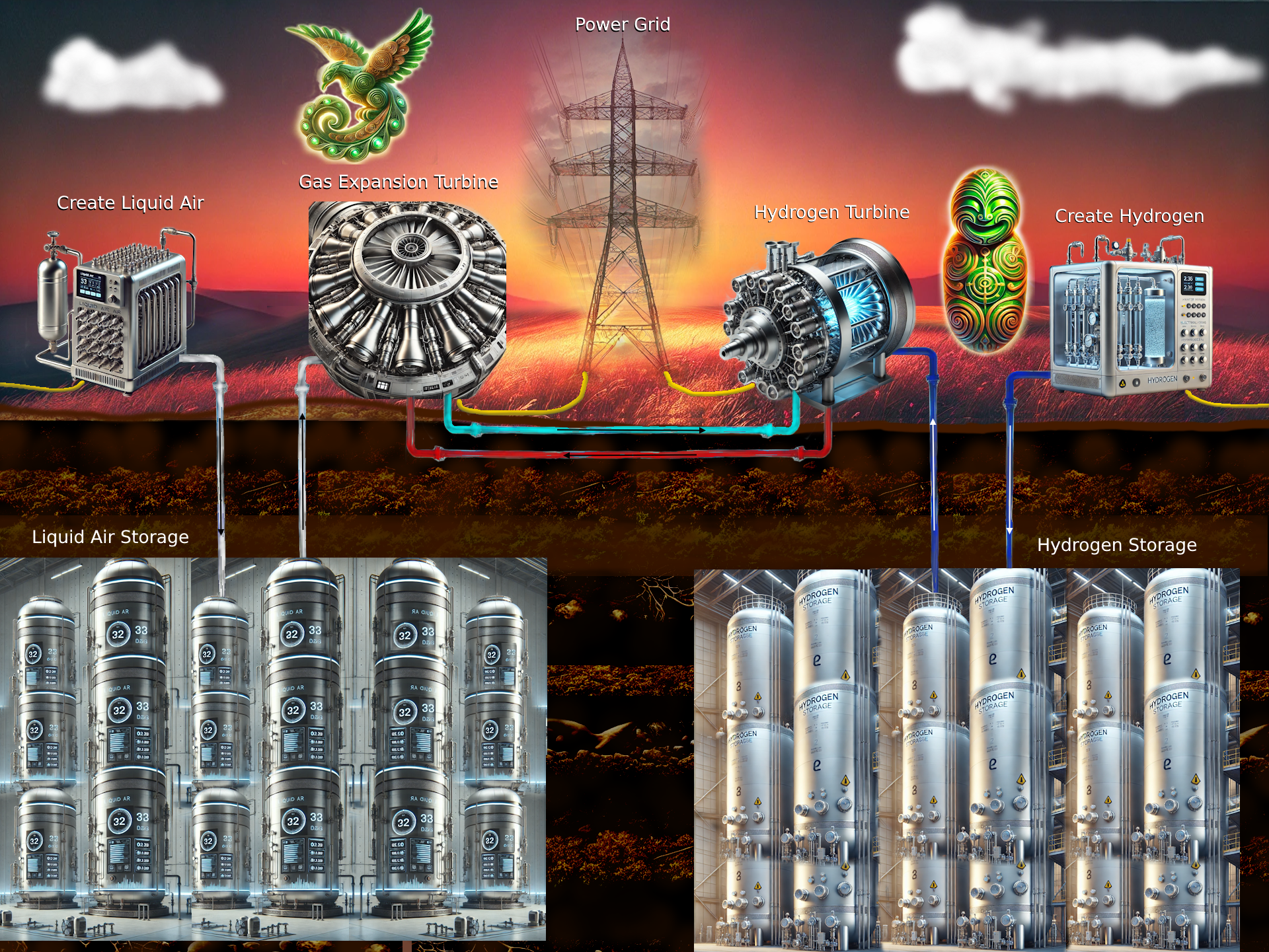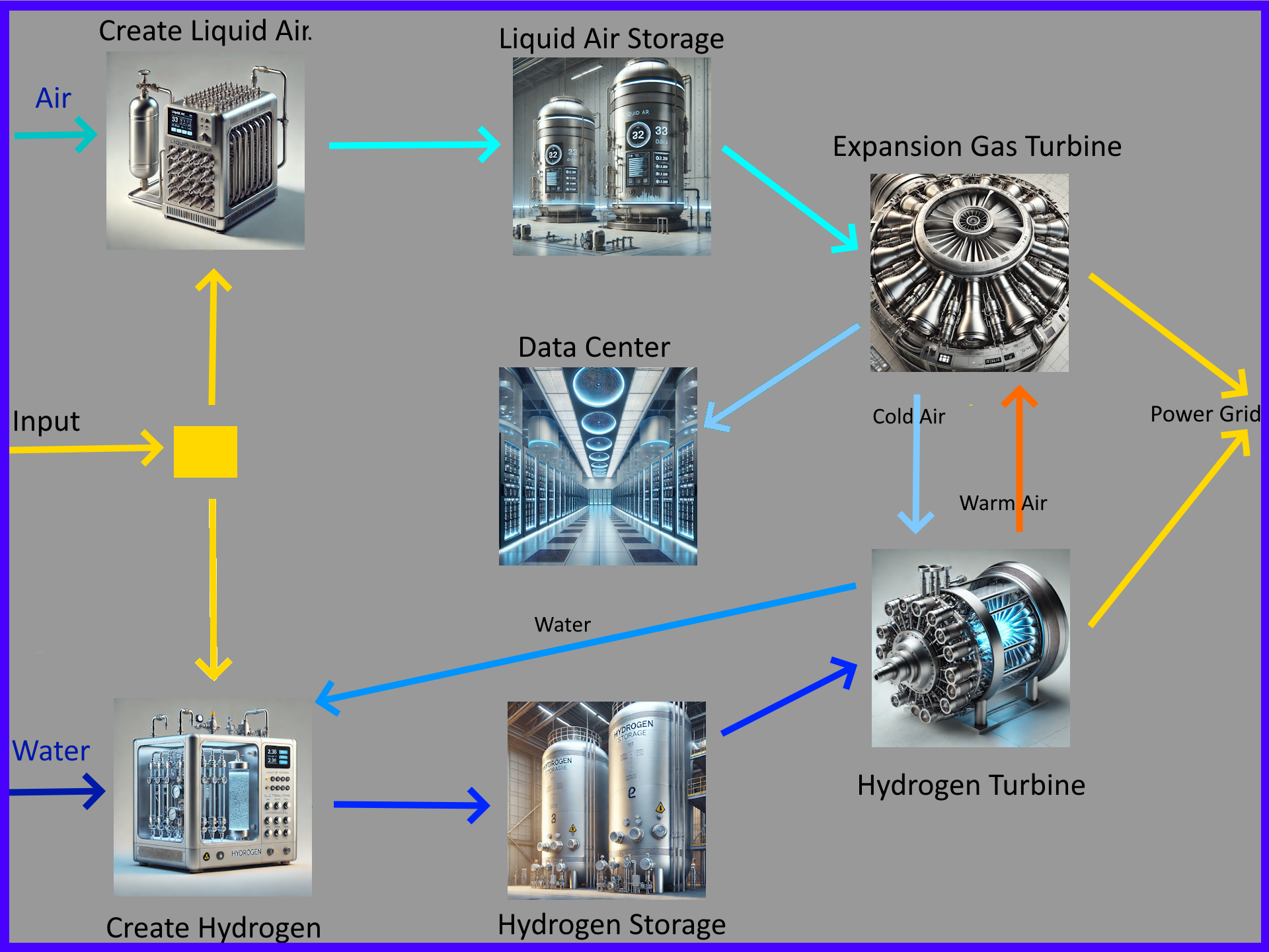

Abstract: The global transition to renewable energy necessitates advanced, large-scale energy storage solutions to address intermittency and ensure grid stability. Current battery-dominated storage faces challenges related to resource scarcity, finite cycle life, and environmental disposal. This paper proposes a hybrid system integrating Liquid Air Energy Storage (LAES) and hydrogen combustion turbines. By combining the rapid response of LAES with the long-duration storage capability of hydrogen, this system creates a scalable, efficient, and sustainable alternative for grid balancing and peak power management. A key innovation is the direct utilization of the system's cold exhaust for high-density computing cooling, such as for AI data centers, creating a symbiotic relationship between energy storage and digital infrastructure.
3. System Synergies and Efficiency
The hybrid system's superiority stems from the synergistic integration of its components, creating benefits beyond the sum of its parts.
Key Synergies in Detail:
Enhanced Water Sustainability: The system recovers approximately 90% of the water used in electrolysis from the exhaust of the hydrogen combustion turbine (as water vapor). This drastically reduces the system's freshwater footprint.
Utilization of Excess Hydrogen: Surplus hydrogen, which would otherwise represent stored capital with no immediate demand, can be diverted to power the air liquefaction plant. For instance, the paper notes that excess hydrogen can produce an additional 3,377 liters of liquid air, effectively converting long-term hydrogen storage into more readily dispatchable LAES capacity.
Waste Cold Energy Recovery for High-Density Computing: The cold exhaust from the liquid air expansion process is a valuable byproduct. This "waste cold" can be deployed for highly efficient cooling of AI servers and data centers.
Direct Efficiency Gain: AI computing clusters require immense cooling power. Using the cold air exhaust directly for server cooling eliminates or significantly reduces the energy consumption of traditional computer room air conditioning (CRAC) units and chillers.
Economic & Operational Benefits: Co-locating this hybrid energy storage facility with an AI data center creates a powerful economic model. The energy plant provides stable, renewable power and free cooling, while the data center provides a reliable, high-value customer for both electricity and thermal management services. This directly lowers the total cost of ownership (TCO) for the data center and creates an additional revenue stream for the storage facility.
Improved Computing Performance: More effective and consistent cooling allows AI servers to operate at higher sustained clock speeds without thermal throttling, potentially increasing computational throughput and reliability.
4. Safety and Scalability: Underground Oxygen-Free Containment
A significant advantage of this system is its safe and space-efficient storage potential.
Underground Storage: Both liquid air and hydrogen can be stored in underground tanks or repurposed salt caverns. This minimizes land use, protects against environmental hazards, and enhances safety. This approach is ideal for co-located industrial parks that combine energy storage, data centers, and other industrial users who can benefit from the waste cold.
Oxygen-Free Hydrogen Containment: The risk of hydrogen explosion can be drastically mitigated by storing hydrogen in an oxygen-free environment, such as a nitrogen-inerted atmosphere. This acts as a built-in fire suppression system, preventing combustion even in the event of a leak. Advanced sensor networks provide further safety assurance.
This approach makes the system highly viable for large-scale, urban, and industrial applications without the land-use or safety concerns associated with other large-scale energy storage methods.
5. Conclusion: A Future-Proof Energy Solution
As global energy demands rise and the penetration of renewables increases, the limitations of single-technology storage solutions become more apparent. This hybrid LAES-hydrogen system offers a robust, adaptable, and sustainable pathway forward.
By intelligently combining the rapid discharge of liquid air with the seasonal storage capacity of hydrogen, and by creating synergistic loops for water, waste energy, and critical digital infrastructure cooling, the system achieves a level of efficiency, reliability, and economic viability that neither technology could achieve alone. The ability to directly support the growing AI industry with both power and cooling positions this hybrid system not just as an energy storage solution, but as a foundational component of the modern digital economy. With continued advancements in electrolysis and turbomachinery, this hybrid approach is positioned as a critical enabler for a fully decarbonized and resilient power grid.
Summary of the Key Integration with AI Server Cooling:
What: The cold air exhaust from the liquid air expansion turbine is diverted to cool AI server racks.
Benefit 1: Reduces Energy Cost. Eliminates the massive electricity draw of traditional data center cooling systems.
Benefit 2: Creates Economic Synergy. Makes co-location of energy storage and data centers highly profitable.
Benefit 3: Improves Performance. Enables higher-density computing by providing superior, low-cost cooling.