
It tries but falls short of recapturing that mid-’90s magic
 I first tried Lost Sphear in November 2022 and had to put it down for various reasons, most notably that it simply didn’t grip me. Still, I decided to give “I am Setsuna” a try just a month later and enjoyed it more than I expected, despite it also being from Tokyo RPG Factory. After my successful, enjoyable playthrough of that, I decided to give Lost Sphear another try.
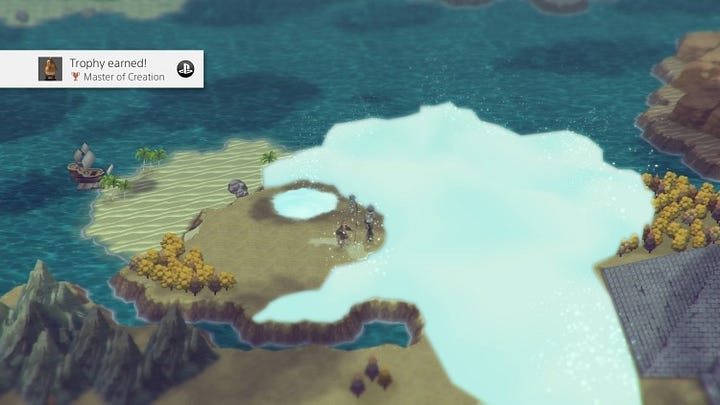
Getting past the heavy use of jargon was a tall order, as I got lost in a sea of words that didn’t mean much to me, but it’s required to get a full understanding of the gameplay and what caused me to put the game down initially. It’s unfortunate because the story's premise is an intriguing one. The world is slowly turning into a white void of emptiness called “Lost”. The main protagonists learn a power that allows them to utilize prayers to unlock the void and return pieces of the world to their former glory. Not too dissimilar from Soulblazer or Terranigma, but those two games did the entire concept much better, more than two decades ago.
 The gameplay is reminiscent of that era of RPGs with engaging battles similar to Chrono Trigger, right down to the Active Time Battle (ATB) system. Like “I am Setsuna”, many of the special attacks are similar to the double and triple techs from Chrono Trigger. You can move characters before attacking, and placement is important to get the most out of attacks. It’s possible to strike every enemy on the field with attacks obtained later in the game. There is nothing overly difficult about any boss that can’t be solved by either rearranging equipment, Spritnites, or leveling up.
Spritnites make a return in Lost Sphear, but I liked how they were organized and explained a lot more in “I am Setsuna”. Here, I felt like there was more guesswork into finding the right mix for each character. Weapons and armor can also be upgraded in a linear fashion using Sprtinite that, in increasing power, are as follows: red, indigo, blue, brown, violet, pink, gold, black, white, and platinum, each color representing the next level in the weapon or armor’s progression. During a blind playthrough of the main game, I don’t recall finding anything better than gold; however, I did get my weapons and armor to level 7. There are enough chests and enough money to at least get the armor and weapons up to level 7 for your favorite four main characters, at the very least, which was more than enough to take on the last boss. I struggled to beat the last boss at around level 45, but did it on my first try on normal. Since there are more than a dozen weapons for everyone and many different armors, choosing your favorite weapon will have to be something done eventually, as it would be hard to continuously update each new weapon as you get them.
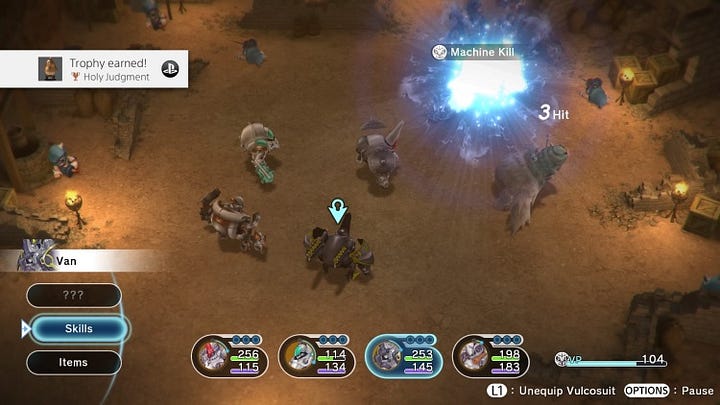 There are also Vulcosuits characters can turn into that make them look like robots with powerful attacks and increased stats. Everyone shares the same meter (labeled VP in the bottom right of the screen), and once it drops to or near zero, there isn’t much you can do unless you have an item that recovers VP. These suits can be used out of battle to break rocks and other obstacles in the way. Due to the VP meter, timely, strategic use of the vulcosuits is incredibly important. Sometimes I found it useful to transform even before a battle with a boss and take a huge chunk of their HP in the first few rounds; other times they were useful to whittle away the last bit of HP since I never had many VP restoring items and found it better to conserve them since they seemed to be at a premium.
There is an opportunity to cook items, but for the most part, I avoided this mechanic, other than buying recipes already available in shops, and didn’t feel like avoiding cooking impacted me negatively, but it exists.
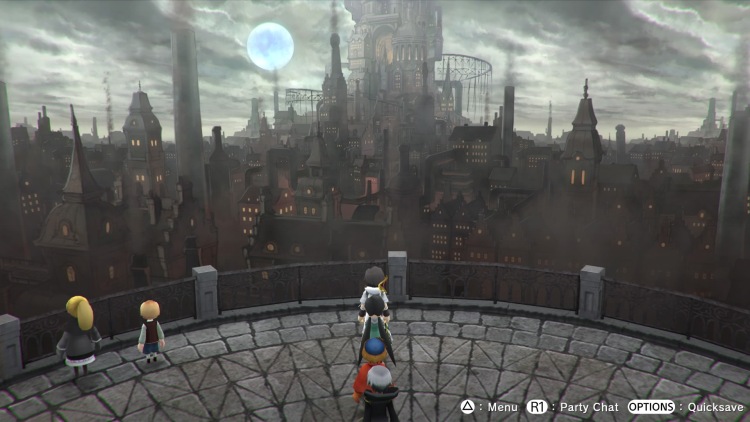
The presentation of the game is a mixed bag, as there are scenes of absolute beauty, but at other times, it looks very bland, especially some of the smaller villages outside of the main capital of Watt, which, to be fair, has one awesome view. Still, as I said, the classic SNES RPGs of yesterday were more memorable.
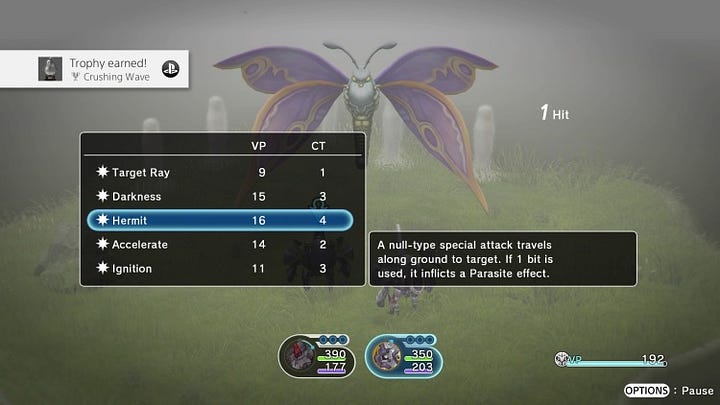 The same can be said about the music: mostly uninspired, nothing egregiously awful, but nothing noteworthy. The boss battle music does a suitable job of creating a sense of urgency, but there are certainly better boss themes around. There is voice acting during battles, but no English option, and it still seemed to lack passion. Of course, I didn’t understand any of it, but it still sounded so forced.
That’s the game in a nutshell: it’s been nearly 30 years since the heyday of the classic SNES RPGs, and this game has rather soullessly copied those blueprints without much evidence of innovation, other than some slightly polished 2D sprites. If anything, the world could have been more expansive and detailed with a greater diversity of enemies. There is nothing that helps this game to stand out from the 1990s classics, despite having the benefit of nearly three decades.
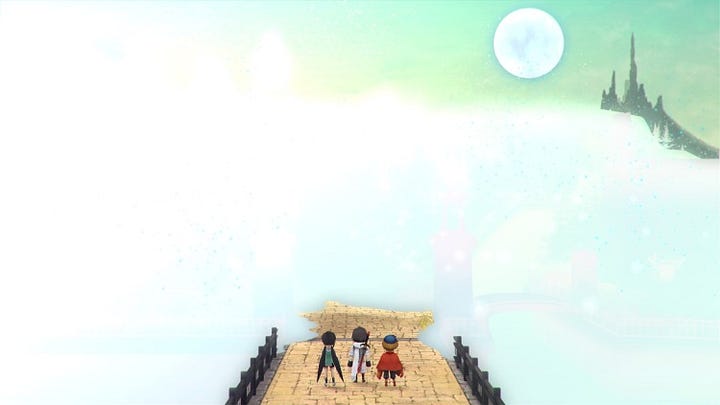 Lost Sphear is by no means a terrible game; I can even say it is above average. But there is nothing unique, or that helps it to stand out even against games from 25 or 30 years ago. If you’re an avid fan of the genre who is running out of new games to try, this is worth the 20–25 hours it would take to beat the main game; just keep expectations low.