

In Paul Thomas Anderson's One Battle After Another, a washed-up revolutionary named Bob Ferguson spends sixteen years believing the war is over. He raises his daughter, keeps his head down, tries to convince himself that the fight he once gave everything to has been won or lost or simply finished. Then Colonel Lockjaw resurfaces. The old enemy never actually went away. He just waited, reorganized, and came back wearing a different uniform, hunting the next generation instead of the last one.
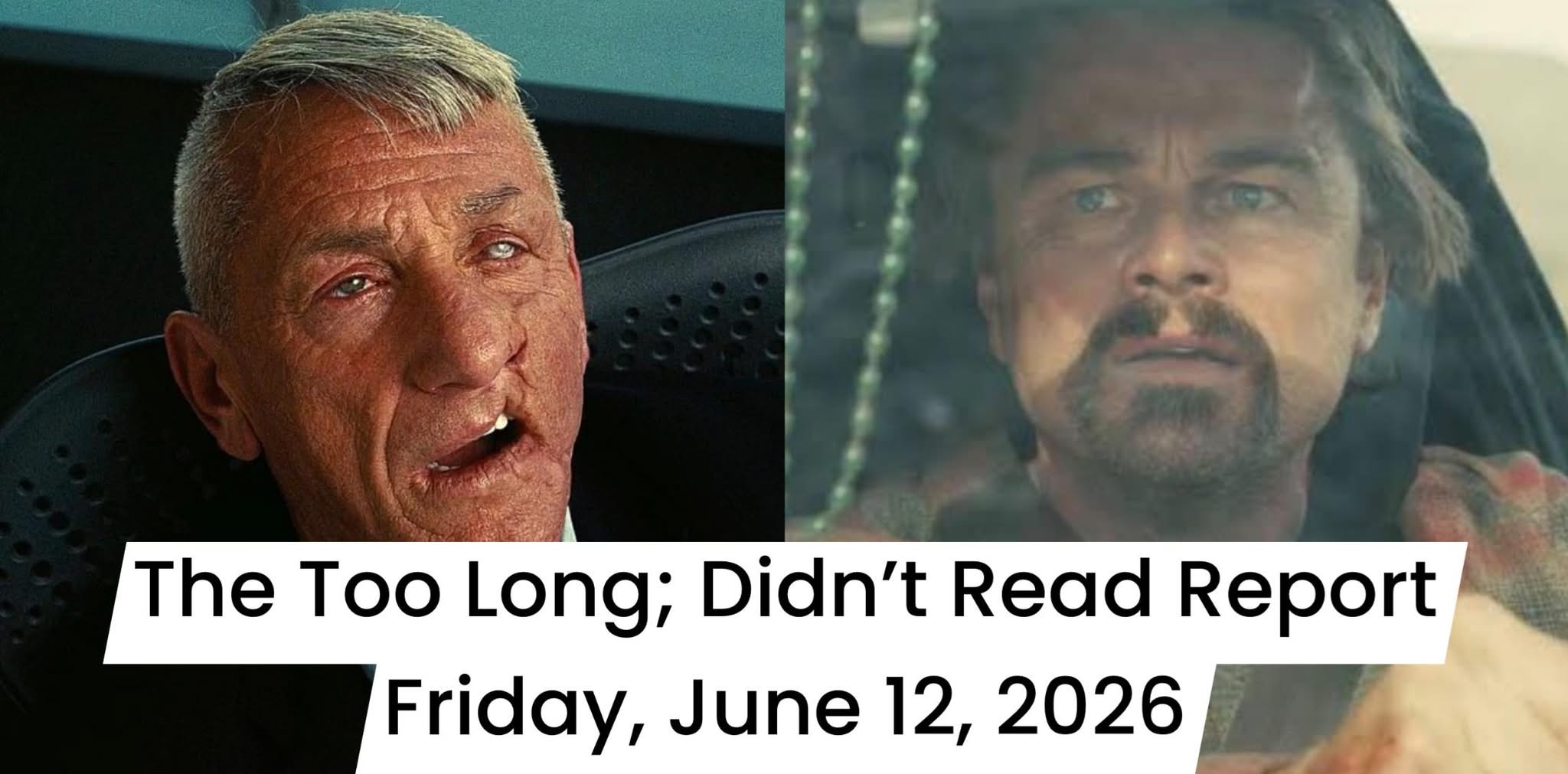
That is the lesson buried in the title, and it is not a comforting one. There is no final battle. There is no last stand that settles things permanently. There is only the next fight, and the one after that, stretching out for as long as power wants something it has not yet been allowed to take. The people who tell you the war is over are usually the ones hoping you will stop paying attention.
This week did not offer Americans a single crisis to absorb and move past. It offered five, each one a separate front in the same ongoing campaign: a federal agency repurposed to choke off votes, a single man crowned with wealth no civilization has ever concentrated in one set of hands, an intelligence chief detonating a parting shot on her way out the door, a president's health quietly slipping further behind a wall of unexplained secrecy, and a billionaire's AI empire poisoning the air over a Black community that has been asking for relief for over a year. Five fronts. One war. Let's walk through all of them.
The United States Postal Service finalized a rule this week that grew directly out of President Trump's March 31 executive order on mail voting, and the language used to sell it was the language of integrity and security. What the rule actually does is grant USPS the authority to refuse delivery of mail ballots in any state that declines to hand over its voter rolls to federal oversight, with new requirements for barcoded envelopes and an official election mail logo designed in Washington. A federal judge declined to block the underlying order last week, reasoning that no agency had yet acted on it. The USPS rule changes that. It gives challengers something concrete to sue over, and a coalition of Democratic attorneys general already has a hearing scheduled.
What makes this particular maneuver so effective is its blandness. Nobody marches in the streets over a postal regulation. Nobody gets outraged at an agency rulemaking process with a thirty-day comment period. But more than forty-eight million Americans voted by mail in 2024, a third of the entire electorate, and the mechanism now exists to condition their ballots on state compliance with a federally created list. This is how the slow capture of an institution looks from the inside. It does not announce itself. It files paperwork.
Elon Musk became the world's first trillionaire on June 12, when SpaceX went public on the Nasdaq under the ticker SPCX in the largest initial public offering in history, raising $75 billion and pushing the company's valuation past $2 trillion within a single trading session. Combined with his Tesla holdings, Musk's net worth now sits at an estimated $1.1 trillion, a number with no historical precedent and no obvious ceiling.
There is nothing illegal about an IPO, and SpaceX's engineering achievements are real. But the scale of this moment deserves to be seen plainly. While working families absorb the cost of inflation and a thinning public safety net, one individual just accumulated more wealth than the GDP of most countries on earth, in an environment where the federal government has spent the better part of two years dismantling the very oversight structures that might have asked harder questions about how that wealth was built. Unchecked power and unchecked capital tend to keep the same company.
Tulsi Gabbard used her final days as Director of National Intelligence to declassify documents alleging that the United States has funded more than 120 biological research labs across thirty countries, including Ukraine, material she says was deliberately concealed from the public for years. Her last day in the role is June 19, and President Trump has already named Jay Clayton as her replacement.
The underlying claim about funding and oversight gaps may well hold up to scrutiny, and the documents deserve honest examination on their own terms. But the manner and timing of this release cannot be separated from its content. Gabbard chose to drop this on her way out the door, framed in language that tracks almost exactly with narratives the Kremlin has pushed since the start of its 2022 invasion of Ukraine. Whatever truth exists in the underlying material, handing Moscow a ready-made talking point as a farewell gift from the nation's top intelligence official is not transparency. It is a parting wound to the credibility of the office she is leaving behind.
A White House medical brief revealed this week that twenty-two specialists evaluated President Trump during a single checkup at Walter Reed on May 27, nearly double the number who examined him during his last physical and the highest figure ever publicly disclosed for a sitting president. Dr. Sean Barbabella's three-page summary declared Trump in excellent health and fully fit for duty. The White House has declined to explain why so many specialists were required or what disciplines they represented.
Dr. Jonathan Reiner, the cardiologist who once managed Vice President Dick Cheney's care, called the number extraordinary and asked the obvious question nobody in the administration seems willing to answer: what exactly were they looking for. A boilerplate memo declaring fitness for office is not the same thing as transparency, and the gap between a routine checkup and a twenty-two-specialist intervention is wide enough to drive a motorcade through.
Thermal drone footage released this week confirmed that Elon Musk's xAI is still operating unpermitted gas turbines at its Southaven, Mississippi facility, weeks after the EPA issued a final ruling in January reiterating that such turbines require state air permits regardless of whether they sit on wheels. Mississippi regulators have classified the machines as temporary and mobile, a designation that has allowed the company to keep dozens of turbines running near homes, schools, and churches without ever undergoing the standard pre-construction review the Clean Air Act demands.
The NAACP and the Southern Environmental Law Center have already sued, and the numbers in their filing are not abstract. The facility's turbines have the potential to emit more than 2,500 tons of smog-forming nitrogen oxide annually, in a region where both Southaven and neighboring Memphis already carry failing grades for ozone pollution. This is not a permitting technicality. It is a company exploiting a flatbed trailer as a legal loophole to avoid environmental review in a community that has spent more than a year asking, without success, for someone in power to simply enforce the law that already exists.
Near the end of One Battle After Another, Willa Ferguson learns that the fight her father tried to shield her from was never really over. It only looked finished because nobody had bothered to come looking yet. When Lockjaw resurfaces, she does not get the luxury of choosing whether to engage. The choice was made for her the moment the old threat decided she was worth pursuing.
That is not a metaphor reserved for fiction. The five stories above are not five unrelated headlines that happened to land in the same week. They are the same instinct, dressed in five different uniforms: consolidate power quietly through agency rulemaking, accumulate wealth without limit while oversight evaporates, weaponize a position of public trust on the way out the door, hide the details of a president's health behind a boilerplate memo, and treat environmental law as an obstacle to be routed around rather than a rule to be followed. Different battlefields. Same war.
There is no tidy ending to offer here, because the title of the film already told us there isn't one. The fight does not conclude. It continues, one battle after another, for as long as the people willing to wage it believe nobody is watching closely enough to stop them. The only defense anyone has ever had against that is the same one Bob Ferguson eventually remembers he still owes his daughter: stay alert, stay informed, and never mistake a quiet week for a finished war.