

My Biggest Blast.
First Published: buymeacoffee.com/posts/
FULL DISCLOSURE: This post details the experience of an engineer during the pre-plan, plan, design, and execution of a 10.8 million tonne blast. All attempts have been made to anonymise the information, yet still, express the experience.
I feel that enough time has passed that I can now write about one of my great achievements. My biggest blast.
The Pilbara is big. My experiences over the past 27 years have formed an expanse of knowledge. Sometimes I feel I have less knowledge now than a few years ago. Is that because I am on a different part of the knowledge curve? Perhaps? Am more experienced now? Have my new experiences invalidated my previous experiences? Am I appreciating the grey bits between the black and white? Well, whatever the case I am joyful. I was able to enact one company’s largest hematite iron ore blast. It was a difficult, frustrating and fulfilling experience. The process was long and involved many people and teams from every part of the supply chain. Communication on site was paramount.
It was late 2015, companies were posting information about their massive blasts. They appeared on industry social media and in the news media. Our Analyst and Improvement person for Drill and Blast jokingly sent an email to the mine manager and a few others that detailed a coal blast of 2.8 million tonnes. It used the most detonators in any blast at the time.
“In 2015, the mine set a record for the largest AXXIS-controlled blast to date, when it successfully initiated 4,303 detonators in a single blast to break 2.8 million cubic metres of overburden.
At the beginning of this year, the mine set another record for the largest electronic detonator blast ever – firing 5,665 detonators in 2,683 blast holes using the AXXIS digital detonation system from BME.” Source: https://www.mining-technology.com/features/featurethe-big-bang-coordinating-the-worlds-biggest-mine-blast-4892497/
In the case of the Daunia mine in Queensland, Australia the blast in question fired 5665 detonators in 2683 holes. Approximately 2 detonators per blast hole.
The subject line of the email sent was something along the lines of “We can beat this!”. From this tiny email, an ambitious goal was set. I remember when the team came to me and told me that we were going to do this “big blast”. My response was not polite. I rattle off many reasons why this was going to be difficult. I may have even said it would be impossible.
Once a manager gets an idea, one they really love, it is near impossible to distract them from it. I have lost count of the times I have been coerced by management. Sometimes the decisions and choices turn out to be expansive and worthwhile, sometimes they are destructive and morally crushing. On this occasion, the “big” blast was eventually an amazing feat.
Pre-Planning
When they first came to me I was dismissive and negative about the idea. I think this is the correct approach initially. It allowed the team to reassess the project, from “let’s do it?” to “why can’t we do it?” to “how can we do it?” and finally “what do we need to do it?”. At the time the mine plan was constrained. When isn’t the mine plan constrained is more to the point. However, we had to tag an area suitable. It needed to be dug off and then left untouched until the resources could be available for it.
We needed to know some key details:
Which equipment did we need to relocate?
How fast would the drills drill?
How many drills would we need?
How many explosives would we need?
Can we store it long enough?
Can we sleep the explosives for that period of time?
Which explosive type.
When should we load the explosives?
How many blast holes?
The list went on…
Planning
Once we had all agreed on the easiest place to do the blast, we had to then decide on the tonnes of rock that we wanted to attempt. We picked a relatively equal dimensioned area. Length and width were similar. We had a pit that was that shape and the exposed bench on that level had around 25 to 30 million tonnes of rock. Not many sites are this fortunate some sites are long and skinny Some of the geology significantly varies creating complexities. This project needed to minimise as many complexities as possible. The blast area still had lots of stratigraphic units. All up it crossed twelve. This blast was in the Brockman range. It crossed Mt McRae Shale through the Dales Gorge Members into Whaleback Shale and then through the Joffre Members and finally ended in some tertiary detrital. The age of these geological zones was 2,463 million years. Also of note, a significant fault zone was present.
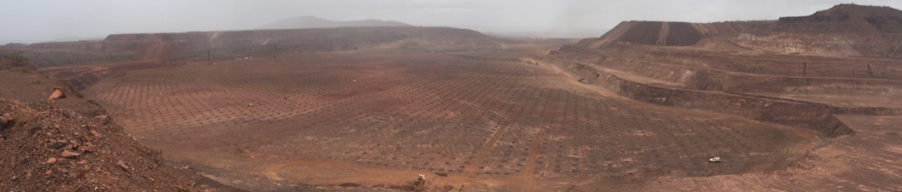
Image 1 – Panorama of the pattern of blast holes disappearing into the distance.
The planning and scheduling team had a mission. Relocating equipment and complying with contractual agreements. Staying “on-grade” and “clean” with tolerable impurities often means you need to dig in the correct spot at the correct time. This allows you to crush and ship the correct grades for your client's smelting process. Doing such a large volume of rock means the agility and responsiveness of the mine is compromised. This agility now had to be taken from long term stockpiles or adjacent pit broken stock. The broken stock also had to be there. The planning team had a great monthly planner and the plan commenced in August 2016 to start preparing the area.
Drill and blast engineering slowly from July 2016 to December start to incrementally increase blast sizes. This would slowly increase broken stocks in surrounding pits. First a 4 million tonne blast then a 4.2 million tonne blast and on and on till the largest blast prior to the 10.8 million tonne blast was around 6.3 million tonnes. With our average blast size at the time around 3.5 million tonnes. The site’s blasted broken stocks swelled to upward of 35 million tonnes. Finance team members were getting concerned as the acceptable broken stocks in their budget was 15 to 20 million tonnes across seven pits. Unfortunately, holding inventory can be a waste of money. In this case, it was definitely needed. Once this blast started drilling we expected it would tie up all the drills for a month.
Design
The surface was incomplete. The area was still being prepared and I had 90% of the surface available. The process at this mine for design meant that generally the area was complete and no partial designs were released. I attempted to stick to this as we knew what was required. The only concern was the surface undulations, high wall compliance and drill depths in that small 10%. It was now too late to wait. The drills were freed up and almost relocated to the bench.
I commenced designing around the 14th January 2017 and after 72 hours I had completed the design. It consisted of a wall to wall method that has sometimes been referred to as “elimination of trim blasting”. It uses vented stab, batter and buffer holes against the walls and moves to a stemmed modified production hole, if necessary, and then into the main stemmed production blast holes. My design had eight unique pattern constructs, two product types and one drill type.
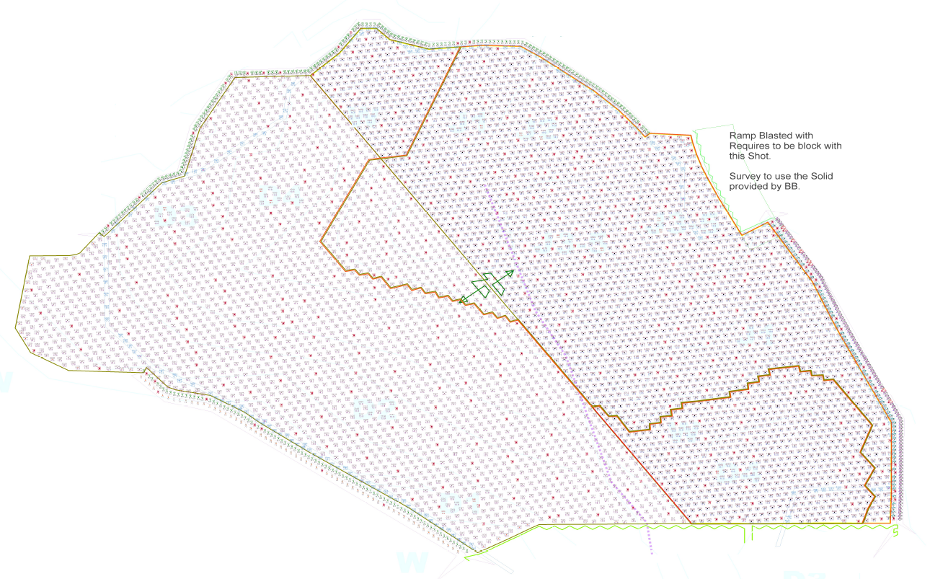
Image 2 – Overview of blast design
The blast was designed with geology in mind and product types were tailored to the rocks energy requirements. Denser and firmer rocks used a low percentage heavy ANFO and the softer more waste stratigraphy’s had ANFO. It was a considered design however now I think about it, I could have avoided the heavy product and just stuck to ANFO for the whole shot. Too often we forget about the water and sleep time. ANFO is a dry product and if the ground is dry and rain only consists of drizzle, ANFO will sleep for three months or more. Heavy products and emulsions just can’t compete on this alone. ANFO’s energy is 3.3 megajoules per litre or 3.7 megajoules per kilogram. When ANFO is mixed into Heavy ANFO you increase the bulk strength by the density. There is more mass so rightly there should be more energy, right? Well, I am doubtful that this is the case in reality. The reason? You need all that mass to detonate at full order in ideal conditions to get your investment back. In other articles, I have talked about water as an energy thief and this is the case when you are about to sleep explosives for 14 days. The longer explosives are slept with encapsulated water, from the manufacturing/delivery process, the bulk product is at greater risk to fire with a low or no order detonation. Let’s be clear water just doesn’t explode, chemically that is.
Sleeping bulk products for a long period was what I was about to do with this blast. ANFO areas were maximised and “days to load Heavy ANFO” was the control to how many holes could have Heavy.
The designed blast consisted of 86.5 thousand drill meters, 6402 blast holes, a similar number of electronic detonators, 64,000 meters of harness wire, 2.5 million kilograms of bulk explosive, 3 tonnes of boosters and was going to produce 3.96 million cubic meters or 10.8 million tonnes of rock at an average powder factor of 0.24 kilograms per tonne or 0.65 kilograms per cubic meter.
The blast was mammoth!
Execution
The crews were, as I was when first presented with a blast of this magnitude, hesitant. They knew what effort this would be. It took around 18 to 20 days to drill out. The drilling needed to be focused on the ANFO section first as loading would be conducted at the same time. The ANFO needed to be loaded first. Loading commenced once a sufficient area had been drilled out and progressed as the drills exposed completed blast holes. It took around three and a bit weeks of day and night loading to finish the charging activities. On several occasions, the pit was shut due to lightning. The blast was even struck five times. These dramas didn’t deter anyone from sticking to the plan and on 20th Feb 2017, the blast was fired, successfully. With the use of electronics and the regular daily jobs, aspects that might have caused concern were avoided. Aspects like connection checking and final tie-up walks. These could be done from the controller or the tagger. The distance of a final check that would have been walked by the Shotfirer was going to be the length of the harness wire, 64,000 meters or 64 kilometres. Walking this length and not missing a connection would be impossible. With the change in tools from Shock-tube to electronics, these sorts of issues were engineered out or managed.
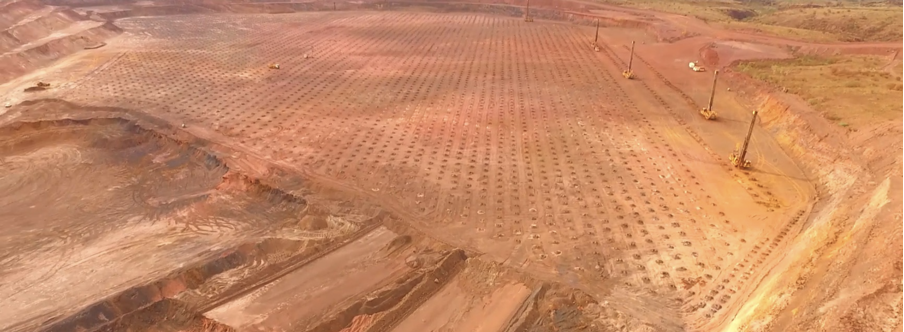
Image 3 - Last holes are drilling
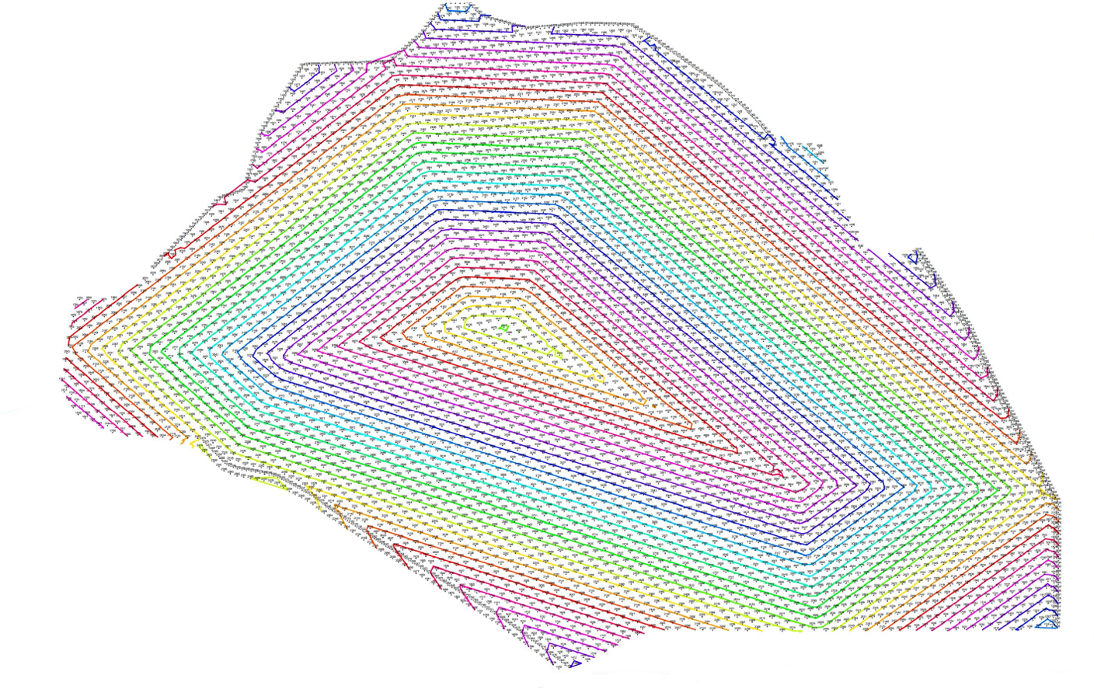
Image 4 – Timing Contours (Seven orientations)
Result
Two Liebherr 996 excavators with 45-tonne buckets moved into the blasted stock and dug continuously for four to five months. This blast dug well with some of the highest consistent dig rates. The economy of scale was worth the pain. With the size increase, many issues that come from blasting were resolved. Such issues as edge effects, back break, inconsistent design, machine relocation, scheduling ore blocks and much more. Essentially anything that can deviate from the plan and create issues was either reduced or removed.
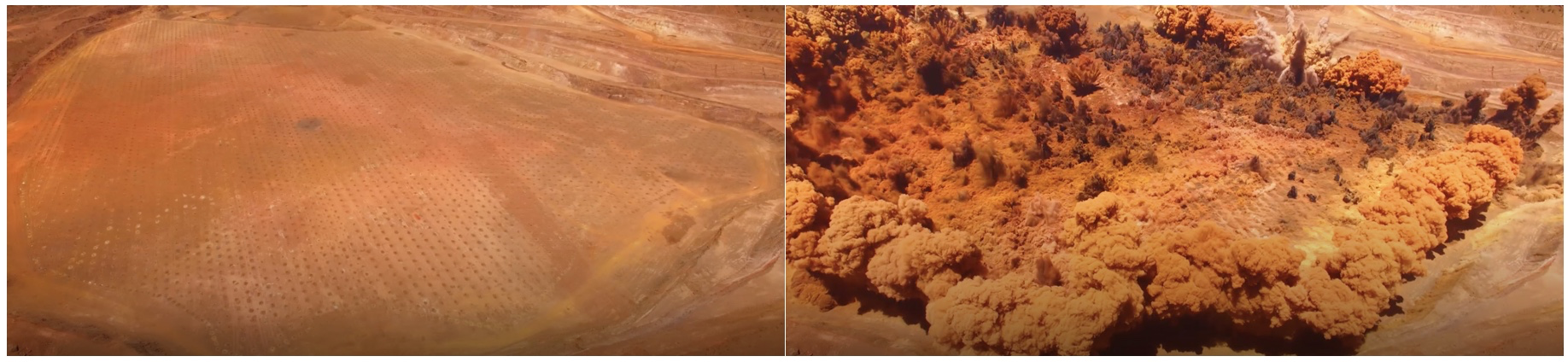
Image 4 and 5 – before the blast, and at the end.
What I thought was going to be impossible, was not. What I thought would be "just another blast" was a record-breaker at the time. However, as we know, records are to be broken and it wasn’t long before someone beat this record.
What can’t be beaten was the collaboration and engagement of many people to make this mission a success. The numerous groups that are involved were:
Planning and Scheduling Teams(Scheduling Dirt Movement),
Mine Preparation Teams (Pattern Preparation),
Drill and Blast Engineering (Design), Surveying (Surface provision),
Drill and Blast Execution (Drilling, QAQC, Charging, Firing),
Maintenance (Refuelling, Maintaining),
Mining Execution (Movement of Scheduled Dirt) and
Management.
Teams and goals like this are far and few between.
Brent Buffham, 30 January 2022.