

 To be seen, to be validated, to transform pain into a shared language.
Lee Holloway (Maggie Gyllenhaal) has just left a psychiatric hospital and returns to a dysfunctional home: a controlling mother, an alcoholic father, and the feeling of not belonging anywhere. Seeking to give her life some meaning, she answers a newspaper ad: “Secretary for law office.” That job will lead her to Mr. Grey (James Spader), her future boss and partner in a dynamic as controversial as it is fascinating.
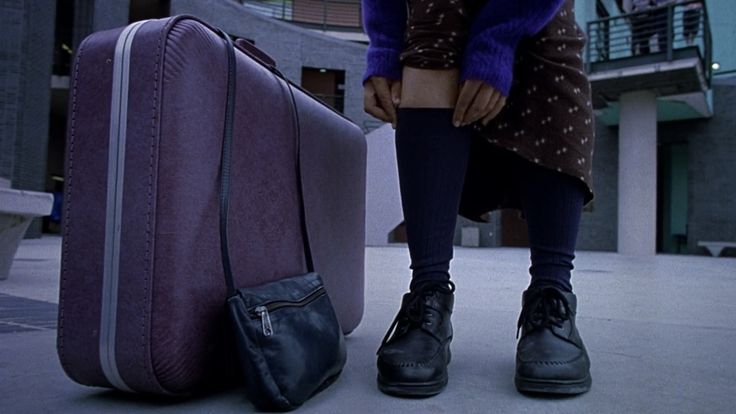 From the very beginning, the film plants clues about Lee’s character: oversized clothes, a hunched posture, a nearly muted voice, and the bandages covering her thighs, marks of self-harm she has engaged in long before her psychiatric crisis. Mr. Grey, during their first interactions, seems to sense it. By giving her commands (answering the phone with firmness, walking a certain way, correcting tiny mistakes) he isn’t just imposing discipline: he’s testing her fragility.
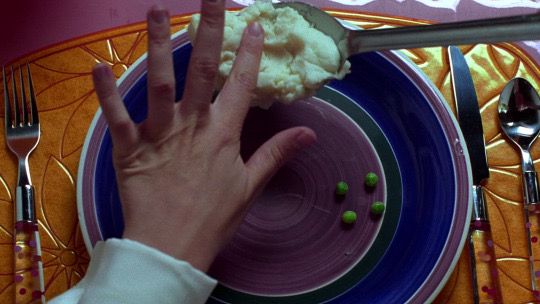
E. Edward Grey: Okay. Just a scoop of creamed potatoes, one slice of butter, four peas, and... as much ice cream as you'd like to eat, doll.
 Self-harm, as various psychological theories suggest, often relates to difficulties in regulating overwhelming emotions, the search for control over one’s body, and the expression of feelings that cannot easily be verbalized. Physical pain appears as a temporary relief for inner anguish. (Heathers [1988], where Winona Ryder burns her hand in a moment of despair, is a close parallel)
 But in Secretary, something shifts: when Grey orders Lee to stop cutting herself, to eat exactly what he prescribes, to walk home instead of hurting herself, the dynamic changes. That submission, far from being oppression, becomes for Lee a form of containment. Instead of silencing her, it allows her to inhabit her desire and redirect her pain.
E. Edward Grey: Why do you cut yourself, Lee?
Lee: I don't know.
E. Edward Grey: Is it that sometimes the pain inside has to come to the surface and when you see evidence of the pain inside, you finally know you're really here? Then, when you watch the wound heal, it's comforting. Isn't it?
Lee: I... That's a way to put it
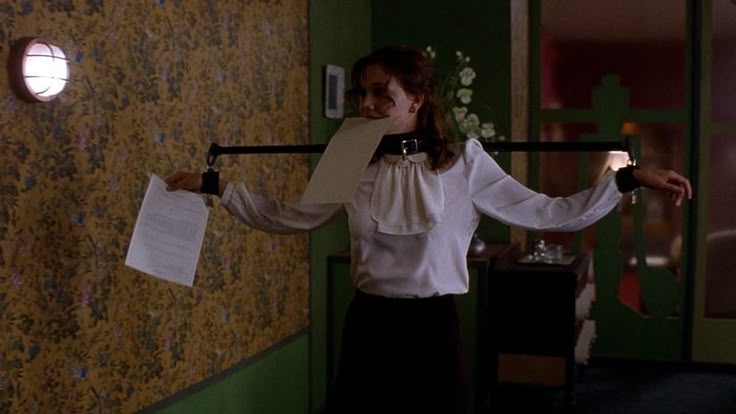 This is the film’s most unsettling point: what others interpret as an abusive relationship, Lee experiences as a chance at freedom. Even when someone offers her a feminist book to “liberate” her, she ignores that. It’s not that she doesn’t understand the critique it’s that her voice, once silenced, finally finds a way to exist within this private language.
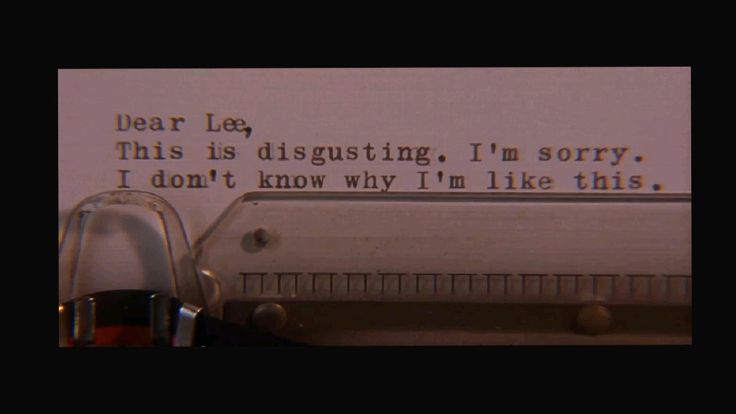
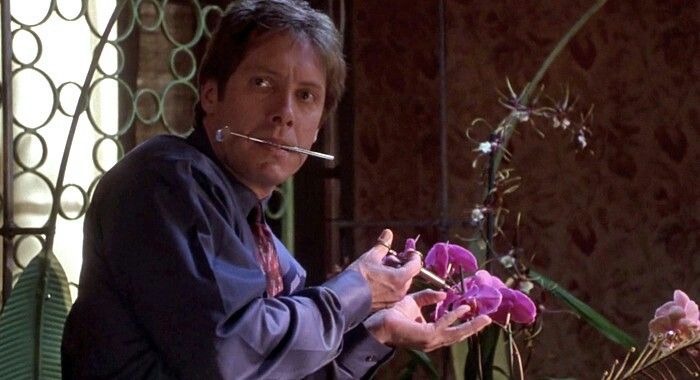
Grey, however, stands as her opposite. While he enjoys control, he is also a repressed man, terrified that the game might become real. “I don’t know why I'm like this,” he writes in a letter he never sends. He clings to rigid routines -his immaculate office, his carefully tended orchids— as a way to keep chaos and vulnerability at bay.
Lee: [narrating] In one way or another, I've always suffered. I didn't know why, exactly. But I do know that I'm not so scared of suffering now. I feel more than I've ever felt, and I've found someone to feel with, to play with, to love, in a way that feels right for me. I hope he knows that I can see that he suffers, too. And that I want to love him
The orchids themselves function as a subtle symbol: flowers long associated with fertility, repressed desire, and rebirth. In them, Grey projects the care he cannot yet extend to another human being. Lee looks at those orchids with a mix of suspicion and longing: she too wants to be cultivated, recognized, allowed to bloom.
 Their relationship can also be read through the lens of attachment theory. Lee embodies an anxious attachment, clinging to Grey and panicking when he withdraws. Grey, by contrast, represents avoidant attachment: retreating whenever intimacy feels too close. His supposed control fractures the moment he realizes the game exceeds the boundaries of the office.
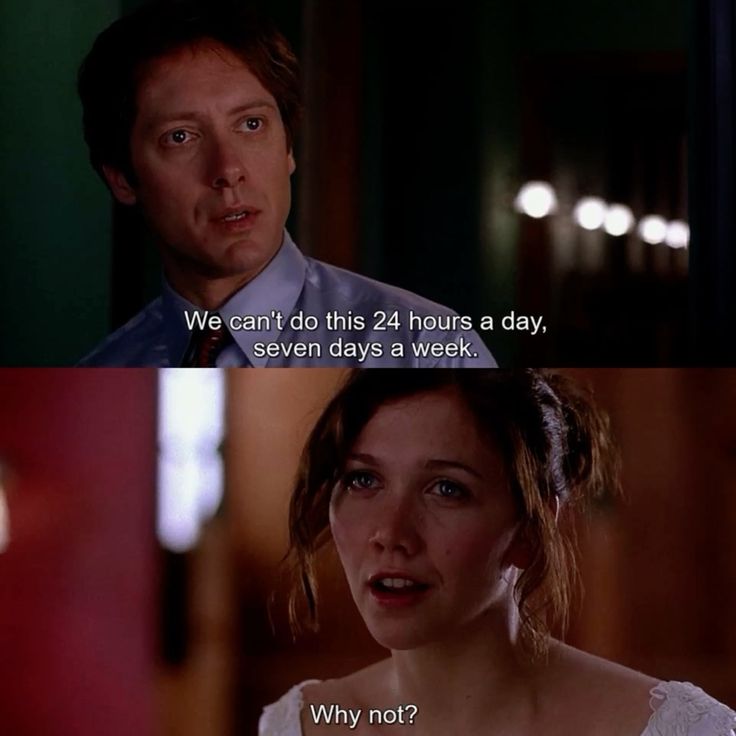
E. Edward Grey: I'm sorry. You can collect your things.
Lee: Time-out!
E. Edward Grey: Time-out? You're fired.
Lee: You're fired!
E. Edward Grey: You're fired. Now, Lee, get out!
[Lee slaps Mr. Grey's face]
The turning point comes when Lee plants herself at his desk (literally) refusing to move until Grey acknowledges her. That scene marks her transformation: for the first time, she chooses for herself, not what her mother demands, not what her fiancé expects, not what doctors prescribe. Her waiting is an act of conscious desire, a reclaiming of her right to choose an unconventional relationship as valid.
Eventually, Grey surrenders. He walks past everyone, picks her up, and cares for her. In that gesture there is no longer just power, but shared vulnerability. From then on, they continue with routines that preserve their game of dominance, but now grounded in.
Lee: All our activities melted into an everyday sort of life until we looked like any other couple you would see.
Secretary is not merely a film about a sadomasochistic relationship; it is an exploration of desire as a path toward healing, of pain transformed into intimacy. Lee finds in submission a form of freedom, and Grey discovers in vulnerability the possibility of love. An uncomfortable story, yes... but one deeply honest in showing that love can bloom in the most unconventional places.
 𝜗ৎ — bloodynymph.