

EPISODE 6
Whereas the contents of the personal unconscious are acquired during the individual’s lifetime, the contents of the collective unconscious are invariably archetypes that were present from the beginning. […] The archetypes most clearly characterized from the empirical point of view are those which have the most frequent and the most disturbing influence on the ego. These are the shadow, the anima and the animus. The most accessible of these, and the easiest to experience, is the shadow, for its nature can in large measure be inferred from the contents of the personal unconscious.
~ Carl Gustav Jung, The Structure of the Psyche (CW 8)
Taking it in its deepest sense, the shadow is the invisible saurian tail that man still drags behind him. Carefully amputated, it becomes the healing serpent of the mysteries.
~ Carl Gustav Jung, The Integration of the Personality (1939)
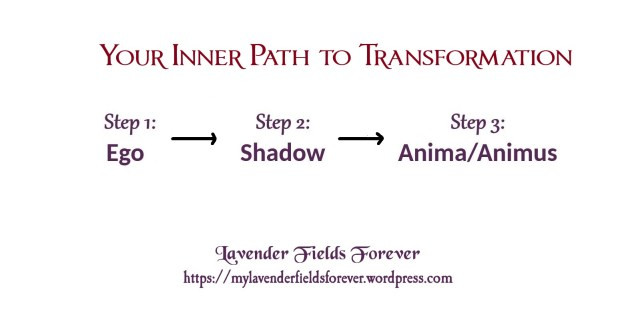
Having completed at least a major part of Stage 1 (working with your Ego) you can now move on to Stage 2, which involves integrating your Shadow. This is not an easy task; it requires courage, self-awareness, and consistency. However, once you start, you will quickly form a habit and begin to notice the difference. Below is a list of practical ways to recognise the influence of your Shadow on your behaviour and connect with it on a deep level.
0 Inner Witness Method Expanded
The method you used at the beginning of your work with the Ego is still useful. You can now build on this by acknowledging the darker side of your personality. Becoming aware of how your Shadow was formed and accepting it as part of your personality is a significant step forward. Remember that your psyche moved problems that you were unable to cope with as a child into your unconscious. This was a protective mechanism. Give yourself permission to feel this way. Tell yourself that it is time to bring this content into your conscious mind. Repeat this process regularly until you feel the change.
You can easily identify your Shadow by looking at the things you deny about yourself. For example, if you claim not to be a control freak, but you check the time every five minutes or go to the back door to check if it is closed, even though you know you have already done so, then perhaps you are a control freak after all. There is nothing wrong with that. You probably want to control reality because you were strictly controlled as a child. There is no need to be ashamed of that. As long as you do not hurt anyone, you have the right to be a control freak. The same applies to obsessive cleaning and arranging everything in a particular order. I have seen many people try to control their external environment in an attempt to tame their inner beast of unconscious fears. Wouldn't it be better to face these fears than to polish the tap in the sink endlessly? Stand in front of the mirror and say aloud, 'Hey, I'm a control freak.' You will feel a huge sense of relief as if a burden has been lifted from your shoulders. Consider the fact that what you deny is what you need the most.
Generally speaking, if you often hear from multiple people that you are (insert adjective here), it means you probably are.
Any behaviour that is harmless but socially unacceptable also falls within the realm of the Shadow. Allow it to come into your consciousness. If you live in a culture that values logic, say to yourself out loud, ‘Yes, I am irrational and quirky, and I have the right to be so.’ If you live in a culture steeped in emotion, say to yourself out loud, ‘Yes, I am rational and detached, and I have the right to be so.’ If you live in a culture that values community, say to yourself out loud, ‘Yes, I am individual and unique, and I have the right to be so.’ If you live in a culture that values individualism, say out loud, ‘Yes, I am sociable and willing to cooperate, and I have the right to be so.’ A huge part of your inner strength lies hidden in your unconscious, waiting for you to bring it out and acknowledge it, so that you may become whole.
We do not think of distrusting our motives or of asking ourselves how the inner man feels about the things we do in the outside world. But actually it is frivolous, superficial, and unreasonable of us, as well as psychically unhygienic, to overlook the reaction and viewpoint of the unconscious.
One can regard one's stomach or heart as unimportant and worthy of contempt, but that does not prevent overeating or overexertion from having consequences that affect the whole man. Yet we think that psychic mistakes and their consequences can be got rid of with mere words, for psychic means less than air to most people.
~Carl Gustav Jung, Undiscovered Self, Page 59-61
1 Observe Your Strong Feelings towards Others.
This is the first and most reliable way to recognise your Shadow consciously. It is particularly effective when you see people similar to you behaving in a way that is even more pronounced and excessive than you do. If you then think, 'I am like that too', you are connecting with your Shadow and acknowledging its presence in your psyche. This does not mean that these people are right to behave in this way. It means that you are taking responsibility for your behaviour.
The same is true if you idolise someone. In this case, you project qualities that you possess but have not developed onto them. I bet you do not sing any worse than Taylor Swift, yet you buy all her records and pay a lot of money to go to her concerts. I do not want to discourage you from being a 'Swiftie'. If it makes you happy, then go for it. The question is what you can do that you are not paying attention to because you only see it in Taylor Swift and not in yourself.
Why is it that so few people follow their own star? Why is the star such a heavy burden?
Marie-Louise Von Franz: Because following your own star means isolation, not knowing where to go, having to find out a completely new way for yourself instead of just going on the trodden path everybody else runs along.
That's why there's always been a tendency in humans to project the uniqueness and the greatness of their own inner self onto outer personalities and become the servants, the devoted servants, admirers, and imitators of outer personalities.
It is much easier to admire a great personality and become a pupil or follower of a guru or a religious prophet, or an admirer of a big, official personality-a president of the United States-or live your life for some military general whom you admire.
That is much easier than following your own star.
~Marie-Louise Von Franz, The Way of the Dream, Page 50
The more we judge and condemn other people, the more our Shadow grows. I want to be clear, though: this does not mean we have to tolerate other people's bad attitudes and behaviours. If someone is late for a meeting, shows up an hour late and does not apologise, that is not your Shadow. It is a reflection of his or her poor relationship skills, low conscientiousness, and inability to recognise boundaries. You have a right to be angry. Your Shadow shows up when you criticise someone, saying, "I would never do that!" and then unconsciously do exactly what you criticised him or her for. That should make you think.
We should get along a lot better if we realized that the majority views of “others” are condoned by a minority in ourselves.
~ Carl Gustav Jung, CW 14, p. 258
Be mindful of the behaviours you criticise. They are probably the behaviours you needed most as a child, but didn't receive. For example, if you criticise people who rely on state financial support, it is probably because you quickly learnt to be self-sufficient in your early life as you couldn't rely on the people who should have provided you with resources. But that's not how things should have been. Children should not have to be self-sufficient. It is an abnormal situation. You got used to it and learnt to dismiss it, but your hostility towards those who ask for help still reveals your Shadow acting through you. All I can say is that I am sorry you did not have carers who could give you love, knowledge and support. You deserved it. You should have been given it. You should have been a priority for your carers. But it is not too late; you can unlearn the abnormal patterns that have become ingrained in your unconsciousness. You can still become a supportive and generous person, both to yourself and to others. Your past has left its mark on you, but it has not cursed you.
Or perhaps you are a young professional woman. You are advancing in your career, you have a hobby you enjoy, and the friends whose company you like. But you avoid relationships because your parents divorced when you were young. Your little world shattered, and deep down, you have never felt secure since. You focus your attention on every area of your life except love and romance. You try to convince yourself that you do not need them, using the rational reasons that your hijacked consciousness supplies. You are not cut out for relationships. You would not be a good mother. Children need so much care. And they are expensive. And bad for climate. You do not have your own flat. You are close to getting a promotion at work. There are no good men around anymore. You are better off spending your time on more interesting things than trying to find the right man. You should get a dog. Dogs are more faithful than men.
It's because you have not witnessed the love and devotion in your parents' relationship. But that is not how it should have been. Children should not be raised by separated parents. It is an abnormal situation. You got used to it and learnt to dismiss it, but it still manifests itself in your hostility towards compromise and vulnerability, both of which are required for a happy, stable relationship. It is your Shadow acting through you. All I can say is that I am very sorry you have not experienced what it is like to be part of a loving, caring family. You deserved that. You should have been given it. You should have been a priority for your parents. But it is not too late; you can unlearn the abnormal patterns that have become ingrained in your unconsciousness. You can still become a happy wife and mother who is loved and supported by her husband and children. Your past has marked you, but it has not cursed you.
The effect of projection is to isolate the subject from his environment, since instead of a real relation to it there is now only an illusory one.
Projections change the world into the replica of one’s own unknown face.
In the last analysis, therefore, they lead to an autoerotic or autistic condition in which one dreams a world whose reality remains forever unattainable.
The resultant sentiment d’incompletude and the still worse feelings of sterility are in their turn explained by projection as the malevolence of the environment, and by means of this vicious circle the isolation is intensified.
The more projections are thrust in between the subject and the environment, the harder it is for the ego to see through its illusions.
All gaps in our actual knowledge are still filled out with projections. We are still so sure we know what other people think or what their true character is.
~ Carl Gustav Jung, CW 11, Page 140
2. Stop Judging and Projecting.
We naturally project the negative aspects of our own behaviour onto other people because we do not want to recognise these elements in ourselves. This phenomenon, whereby we notice minor details in others while overlooking major issues in our own behaviour, is known as projection and has existed since time immemorial. Jesus referred to it in the Gospels:
“Why do you look at the speck of sawdust in your brother’s eye and pay no attention to the plank in your own eye? 4 How can you say to your brother, ‘Let me take the speck out of your eye,’ when all the time there is a plank in your own eye? 5 You hypocrite, first take the plank out of your own eye, and then you will see clearly to remove the speck from your brother’s eye.
Matthew 7:3-5
Projection significantly reduces our ability to see people as a nuanced human beings. If you make projections onto people, they do not feel like being real humans in your presence, they feel as if they were looking at themselves in the distorted mirror. The simplest way to prevent this is to ask questions instead of making assumptions.
Remember that if you find something in another person's behaviour triggering, it is because you have that quality within yourself. If it were not part of your own personality, it would not bother you so much. If a trait or belief is not inside you, it has no power over you from the outside. A magnet attracts metal, but not wood.
'Although, with insight and good will, the shadow can to some extent be assimilated into the conscious personality, experience shows that there are certain features which offer the most obstinate resistance to oral control and prove almost impossible to influence.
These resistances are usually bound up with projections, which are not recognized as such, and their recognition if a moral achievement beyond the ordinary.
While some traits peculiar to the shadow can be recognized without too much difficulty as one’s own personal qualities, in this case both insight and good will are unavailing because the cause of the emotion appears to lie, beyond all possibility of doubt, in the other person.
No matter how obvious it may be to the neutral observer that it is a matter of projection, there is little hope that the subject will perceive this himself.
He must be convinced that he throws a very long shadow before he is willing to withdraw his emotionally-toned projections from their object.'
~ Carl Gustav Jung, CW 14, p. 258
3. Take Responsibility For Your Actions.
I understand that it is easier for your psyche, and especially your Ego, to believe that other people are the ones doing wrong things — particularly when it comes to crimes or morally reprehensible acts. We then naturally use this as an excuse for our own poor behaviour: “Mr X embezzled money from a charity, Mrs Y is cheating on her husband, and I’m just gossiping with a friend – it’s harmless, after all. Besides, I need to let off steam!” This way, you push into the unconscious the fact that you are speaking badly about people who are not present and without giving them the chance to defend themselves. The moment you realise this and stop, you integrate your Shadow and move forward in the process of individuation.
“Insight into the myth of the unconscious must be converted into ethical obligation”
~ Barbara Hannah, Encounters with the Soul, p. 25
'It is indeed no small matter to know of one s own guilt and one s own evil, and there is certainly nothing to be gained by losing sight of one s shadow. When we are conscious of our guilt we are in a more favourable position we can at least hope to change and improve ourselves. As we know, anything that remains in the unconscious is incorrigible; psychological corrections can be made only in consciousness. Consciousness of guilt can therefore act as a powerful moral stimulus. In every treatment of neurosis the discovery of the shadow is indispensable, otherwise nothing changes.'
~ Carl Gustav Jung, CW 10, par. 440
4. Take Note of What Makes You Lose Control.
Take note of the things that cause you to stop being civilised and bring out your inner beast. In which situations do you behave irrationally without realising it? Observe yourself and try to identify what triggers this behaviour. It may be linked to times in the past when you felt helpless, vulnerable, or powerless. Recall what or who made you feel that way. Your uncontrollable reactions are important signals indicating that something much deeper is hidden.
What are your triggers? What and who makes you react strongly? Being triggered stems from unconscious patterns and is essentially an automatic fight-or-flight response that originates in our brain and sends signals to our endocrine and nervous system.
'Closer examination of the dark characteristics – that is, the inferiorities constituting the shadow – reveals that they have an emotional nature, a kind of autonomy, and accordingly an obsessive, or, better, possessive quality.
Emotion, incidentally, is not an activity of the individual but something that happens to him.
Affects occur usually where adaptation is weakest, and at the same time they reveal the reason for its weakness, namely a certain degree of inferiority and the existence of a lower level of personality.
On this lower level with its uncontrolled or scarcely controlled emotions one behaves more or less like a primitive, who is not only the passive victim of his affects, but also singularly incapable of moral judgment.'
~Carl Gustav Jung, The Structure of Psyche (CW 8)
5 Work with Your Ego.
The Shadow and the Ego are inextricably linked. The more you feed and nurture your Ego, the more your Shadow grows on an unconscious level. The Ego should not be large; the Ego should be healthy. A healthy Ego is a well-balanced Ego. As an unconscious part of the psyche, the Shadow grows and, if left unchecked, can break the Ego’s dominance and take control of your behaviour. We call this ‘Shadow possession’. We then see the world as full of evil people who do evil things, even if, objectively speaking, this is not the case at all, and we feel the need to punish them and restore order. In reality, we want to restore order within our own psyche and regain control over the Ego. I have written about working with the Ego in Episode 4; I encourage you to read it and reflect on it.
'The conscious mind often knows little or nothing about its own transformation, and does not want to know anything. The more autocratic it is and the more convinced of the eternal validity of its truths, the more it identifies with them. '
~ Carl Gustav Jung, CW 14, par. 503
6. Make Sure You Are Safely Grounded in Reality and Find a Positive Way to Channel Your Shadow.
If your day-to-day life is unstable and unpredictable, your Ego will find it harder to keep the Shadow in check. In order for your psyche to function properly, a minimum level of favourable environmental conditions is required, such as nutritious food, regular hydration, sufficient sleep, the presence of safe people, a clear plan of action and some certainty about what will happen next. Otherwise, the psyche will enter a state of threat and the Shadow is more likely to take control.
A large part of the Shadow consists of shame, rejection, feelings of inferiority and complexes, which can make you want to escape from reality into a world of addictions and illusions. These do not necessarily have to be life-threatening, such as drug addiction; they can be any compulsive behaviour: OCD patterns, behaviours classified as ADHD, binge-watching, doom-scrolling, eating disorders, or various other addictions. All of these are examples of unconscious self-sabotage because your deeper needs remain unmet. Make no mistake: your young psyche knew exactly what it needed, and since those needs were not met, it found substitute ways to cope. Integrating your Shadow helps you free yourself from the compulsion of these obsessions.
Yet in order to sustain his creed, contemporary man pays the price in a remarkable lack of introspection.
He is blind to the fact that, with all his rationality and efficiency, he is possessed by "powers" that are beyond his control. His gods and demons have not disappeared at all; they have merely got new names.
They keep him on the run with restlessness, vague apprehensions, psychological complications, an insatiable need for pills, alcohol, tobacco, food and, above all, a large array of neuroses.
~Carl Gustav Jung, Man and His Symbols, Page 81
Once you have identified the specific contents of your Shadow, you can seek out constructive manners to express these energies rather than suppressing them. Anger, for example, is one of the most commonly repressed emotions and can be channelled through exercise and sports. While boxing is an obvious choice for releasing aggression, team sports like football can be equally powerful, as the structured rules of the game provide a safe container for competitive drive without causing harm to others. And of course, any type of martial arts is your invaluable ally, be it aikido, ju-jitsu, karate, kendo, capoeira or any other activity which blends body, force, movement, focus and spirit. They teach you to harness your power, direct it with intention, and transform raw, chaotic energy into a refined, conscious force.
You must go in quest of yourself, and you will find yourself again only in the simple and forgotten things.
Why not go into the forest for a time, literally?
Sometimes a tree tells you more than can be read in books.
~ Carl Gustav Jung, Letters Vol. I, Page 479
7. Observe your dreams.
The shadow is very much a part of human nature, and it is only at night that no shadows exist.
~ Carl Gustav Jung, Psychology and Religion (CW 11), par. 286
Your unconscious mind manifests itself through your dreams. Pay attention to them and see what figures appear. The Shadow can present itself as a hybrid of animal and human, a zombie or the walking dead, someone chasing you, an invisible figure or a shapeless, nameless silhouette. It can also be someone you do not know, but who makes you feel threatened. Notice how you feel when you dream about the Shadow. Do you have similar feelings when you are awake? What or who induces these feelings in you? Pay attention to that as this can be crucial to understand the problem.
Let me give you an anecdote from Volume 18 of the Collected Works of C.G. Jung, titled 'The Symbolic Life'. Jung recounted a case where a patient came to him completely baffled by a terrifying, vivid nightmare. In the dream, the man was walking through a dark, primordial swamp when a massive, ancient crocodile suddenly lunged at him, filling him with an overwhelming, paralysing dread. The patient told Jung he could not make any sense of it. He was a modern man who worked a normal job, had never been to a tropical swamp, and had no conscious connection to crocodiles. Jung asked him to focus entirely on the exact feeling of terror and entrapment he experienced in the dream, and to think about where else in his waking life he felt that precise flavour of anxiety. The realisation hit the patient immediately: he felt that exact same suffocating, paralysed dread every single time he visited his mother-in-law.
For Jung, this was a textbook demonstration of how the mind handles a Mother Archetype complex (specifically its negative, devouring aspect). The personal reality of the patient was that he felt deeply threatened, controlled, or swallowed up by his mother-in-law, but his conscious mind tried to play it down ("She's just a difficult relative, it's fine"). Because the conscious mind was suppressing the sheer scale of the threat, the unconscious mind stepped in to give it an accurate voice. It dipped into the collective unconscious and pulled out a primordial symbol of a cold-blooded, inescapable predator waiting in the mud. By connecting the monster to the mother-in-law, Jung was able to help the patient realise that his fear was deeply rooted in an archetype of being "devoured" or dominated, allowing him to finally address the real-world boundaries he needed to set.
A typical nightmare is that one is pursued by some terrible or demonic or unknown power. And one runs and runs for one’s life…
The only thing to do is to turn around and face it. To say, ‘Here I am. What do you want from me?’
Then the nightmarish pursuer generally changes face. It may even become quite friendly.
Persecution always means that something wants to come to us. It wants to be known and integrated.
~ Marie-Louise von Franz, The Way of the Dream
Make it a consistent practice to record your dreams. Keep a dedicated journal by your bedside and capture the details immediately upon waking, as memory fades quickly. Even if you were unable to confront the Shadow in your dream due to fear or waking up too quickly, you can still engage in conscious dialogue with it using active imagination method. Create a safe internal space where you can confront the figure without fear or judgement. Visualise the entity clearly and allow its presence to become vivid in your mind before initiating a conversation. Ask direct, open-ended questions such as 'What do you want from me?' or 'What are you trying to show me?' Pay attention to the response, which may manifest as words, images, emotions or bodily sensations. The aim is not to defeat or banish the figure, but to understand its purpose in your dream.
Every understood dream is like a slight electric shock into higher consciousness.
~ Marie-Louise von Franz, Alchemical Active Imagination, pp. 55–56
8. Read Books about the Shadow.
Reading literature can give you a better intellectual understanding of the Shadow. In popular literature, I particularly recommend three books:
The Picture of Dorian Gray by Oscar Wilde
Strange Case of Dr Jekyll and Mr Hyde by Robert Louis Stevenson
A Wizard of Earthsea by Ursula K. Le Guin
If you are looking for Jungian books, these will be most helpful:
Owning Your Own Shadow by Robert A. Johnson
Projection and Re-Collection in Jungian Psychology: Reflections of the Soul by Marie-Louise von Franz
The Shadow and Evil in Fairy Tales by Marie-Louise von Franz
9. Visualise Your Shadow.
If your Shadow were to take on a physical form, what would it look like? A human? A human and animal hybrid? An animal? A plant? An object? Take a moment to find peace and quiet, close your eyes, and try to imagine it. Capture the first image that appears in your mind, no matter how strange it may seem. Once you have an image in your mind, look at the details. What is its name? Where does it live? What does it do?
Engage this figure in direct, honest dialogue. Ask it questions such as 'What do you want from me?' and 'Which part of me are you representing?' Treat the figure as a real, living aspect of your own psyche, not as an external enemy. Speak to it openly, listen to its responses as if they are being whispered into your mind and be willing to negotiate or even argue with it. Allow the conversation to unfold naturally without judging its content or trying to steer it towards a specific outcome. Pay close attention to the emotions, images and words that arise as you interact.
This is the active imagination technique developed by Carl Gustav Jung to access the deeper layers of your psyche. To begin, find a quiet space where you can close your eyes, relax your body and let go of the tension and distractions of the outside world. Once you have reached a state of deep calm, invite your mind to enter a scene from a recent dream or fantasy involving your Shadow. This is not passive daydreaming, but an active and intentional exploration of your inner landscape. In this scene, visualise the person, group or figure that evokes the strongest emotional response from you. Picture this person sitting directly opposite you, clearly and tangibly present, as if you were sharing a room.
If you take a conscious interest in different aspects of your psyche, they will begin to cooperate with you instead of sabotaging you from the inside. You will also be able to recognise its voices in your inner and outer speech. This will also be important for the techniques I will discuss in the next series.
It may seem strange to you at first to be talking to yourself, but that's only because it's a new experience. You are getting to know different parts of your personality, step by step. The psyche is not monolithic. Don't be afraid. Stay calm. You are not mad. This is not schizophrenia. However, if you experience strong resistance or intense emotions, stop. Don't rush the process. Take it easy.
I strongly recommend journaling about the interactions you have with your psyche. Carl Gustav Jung did exactly that and gathered his experience in Liber Novus (commonly known as 'The Red Book'). Immediately after the session, write down the entire dialogue in a journal, capturing every nuance, tone and feeling. Write down and draw your impressions, you don't have to be a writer or a painter to do that. Just register your first thoughts. This way you will have a clear image of your inner journey. Recording the session is crucial as it anchors the experience in your conscious mind and solidifies the insights gained. This is one of the most effective methods of removing the projections that bind you to your Shadow. The figure that once seemed alien and threatening will become a messenger offering you access to the parts of yourself that are waiting to be integrated and healed.
You must treat the fantasy images as if they were real. If you concentrate on them with enough attention and patience, they begin to move by themselves, they begin to live, and then a real dialogue can take place between consciousness and the unconscious.
~ Marie-Louise von Franz (from her lectures on active imagination, often referenced in connection with The Way of the Dream)
This confrontation is the first test of courage on the inner way, a test sufficient to frighten off most people, for the meeting with ourselves belongs to the more unpleasant things that can be avoided so long as we can project everything negative into the environment. But if we are able to see our own shadow and can bear knowing about it, then a small part of the problem has already been solved: we have at least brought up the personal unconscious. The shadow is a living part of the personality and therefore wants to live with it in some form. It cannot be argued out of existence or rationalized into harmlessness.
~ Carl Gustav Jung, Aion (CW 9ii), par. 14
10. Don't Hate Your Shadow.
It is part of you. Do not hate yourself. Some aspects of your Shadow have nothing to do with evil or destruction at all; they ended up there due to shame and rejection. Which of your childhood actions were stigmatised and punished? They are now part of your Shadow. Bring them out and accept them. They have grown in power alongside the Shadow, so you now have great potential to develop these skills to an above-average level. These primarily include intuition, natural instinctive reactions and creativity. Allowing them to have a voice in your psyche will help you integrate your Shadow, making you a more complete and mature person.
“But what if I should discover that the least among them all, the poorest of all the beggars, the most impudent of all the offenders, the very enemy himself that these are within me, and that I myself stand in need of the alms of my own kindness that I myself am the enemy who must be loved what then? As a rule, the Christian’s attitude is then reversed; there is no longer any question of love or long-suffering; we say to the brother within us “Raca,”* and condemn and rage against ourselves. We hide it from the world; we refuse to admit ever having met this least among the lowly in ourselves.”
~ Carl Gustav Jung, Modern Man in Search of a Soul, Page 241
*“Raca” is an Aramaic term of contempt meaning “empty-headed”, “fool”, or “worthless”. Jesus uses it in the Sermon on the Mount (Matthew 5:22) as an example of harmful speech. Jung uses it here to illustrate how harshly we judge and reject the Shadow within ourselves.
If you visualise your Shadow as an animal, treat it as you would a homeless or abandoned pet. Provide it with a place to live in your consciousness, as well as food, water, toys and outdoor space. Don't forget to stroke it often.
We carry our past with us, to wit, the primitive and inferior man with his desires and emotions, and it is only with an enormous effort that we can detach ourselves from this burden. If it comes to a neurosis, we invariably have to deal with a considerably intensified shadow. And if such a person wants to be cured it is necessary to find a way in which his conscious personality and his shadow can live together.
~ Carl Gustav Jung, CW 11, Page 12
Bonus Tip No. 1: Never Forget Humour
Nothing dissolves the grip of the negative influence of the Ego, the Shadow and the Anima/Animus on your behaviour quite like genuine humour. Of course, there are situations in life that call for absolute seriousness, but usually you can let things go a bit and relax. You don’t have to be like Lurch from The Addams Family all the time. Really, nothing will happen if you laugh at yourself a bit or let others do so, as long as there’s no malice involved. If you’ve managed to tick off the first four points of this article, it will become easier for you. If you’re struggling with this, imagine yourself as a stand-up comedian telling the audience about your life. This will force you to look for a humorous element, otherwise you’ll just stand there in front of the viewers and remain silent.
Bonus Tip No. 2: Do Creative Work
It's crucial for you to do the creative activities you enjoy. This way you bring your inner self out to the outer world, giving your psyche the much-needed catharsis (purification) effect. Choose whatever brings you joy: writing, composing, painting, sculpting, pottery, sewing, embroidery, knitting, crocheting, DIY, woodworking, etc. Creating videos and short films counts too as long as it involves deeper meaning. I am hesitant about photography though, as it does not involve an inner expression. It is not the art of bringing your inner self to the outer world but rather documenting a fragment of reality. What matters most is that, as Jung himself expressed it beautifully, by switching your attention from participating in reality to creating, you channel your unconscious self in a positive, constructive manner. If you do it regularly, the unconscious (Shadow, Anima/Animus) will be less likely to take control over your conscious part (Ego). The unconscious river will be able to flow freely and will not flood the nearby villages nor fields. When your unconscious is in good shape, you are moving from the Ego towards the Self.
If you feel intimidated and don’t know how to express yourself creatively, start with adult colouring books. Seriously. You don’t even realise how calming and stress-relieving they are. It’s best to start with geometric shapes, especially mandalas. Once your mind gets used to it and switches to a different mode, you’ll find it easier to let your creativity flow.
'Whenever the creative force predominates, human life is ruled and molded by the unconscious as against the active will, and the conscious ego is swept along on a subterranean current, being nothing more than a helpless observer of events.'
~ Carl Gustav Jung, Modern Man in Search of a Soul; Pages 168-171.
'Naturally, the creative impulse is forever the maker of personality and uses that individual form, that distinction.
Therefore it is absolutely necessary that, in the process of individuation, everybody should become aware of his creative instinct, no matter how small it is. '
~Carl Gustav Jung, Zarathustra Seminar, Page 667
'One of the most calming and powerful actions you can do to intervene in a stormy world is to stand up and show your own soul.'
~ Clarissa Pinkola Estés, Women Who Run with the Wolves (1992/1996).
Final remarks
'There is no coming to consciousness without pain.'
~Carl Gustav Jung, Contributions to Analytical Psychology, P. 193
'People will do anything, no matter how absurd, in order to avoid facing their own souls. They will practise Indian yoga and all its exercises, observe a strict regimen of diet, learn theosophy by heart, or mechanically repeat mystic texts from the literature of the whole world—all because they cannot get on with themselves and have not the slightest faith that anything useful could ever come out of their own souls.'
~Carl Gustav Jung, CW 12, Page 99
The most difficult part of integrating the Shadow is probably stopping the rejection and allowing it to exist, whatever it consists of. If these are repressed feelings, you must allow them to flow through you. If they are unconscious beliefs, you must accept that they may not be true. It means facing your fears and doing everything you were so scared of doing. This is what ancient heroes did. You are doing exactly the same. You are fighting monsters. You are like Heracles, painstakingly cutting off the Hydra's heads. You are Theseus tracking the Minotaur. You are Perseus, decapitating Medusa. The only difference is that these monsters now take the form of victim mentality, doom-scrolling, and trendy opinions.
'How else could it have occurred to man to divide the cosmos, on the analogy of day and night, summer and winter, into a bright day-world and a dark night-world peopled with fabulous monsters, unless he had the prototype of such a division in himself, in the polarity between the conscious and the invisible and unknowable unconscious?'
~Carl Gustav Jung, CW 9i, Page 187
'Everyone who becomes conscious of even a fraction of his unconscious gets outside his own time and social stratum into a kind of solitude.'
~Carl Gustav Jung, CW 14, Page 258.
If you are a young man, you may naturally find it appealing, less so if you are a young woman. If you are a young woman, you should do this work even more diligently; otherwise the masculine energy within you will work against you and manifest itself in the outside world by attracting men you cannot stand. I will write more about this in the chapter on the Animus, so please be patient.
'Just as the great personality acts upon society to liberate, to redeem, to transform, and to heal, so the birth of personality in oneself has a therapeutic effect. It is as if a river that had run to waste in sluggish side-streams and marshes suddenly found its way back to its proper bed, or as if a stone lying on a germinating seed were lifted away so that the shoot could begin its natural growth. The inner voice is the voice of a fuller life, of a wider, more comprehensive consciousness. That is why, in mythology, the birth of the hero or the symbolic rebirth coincides with sunrise, for the growth of personality is synonymous with an increase of self-consciousness. For the same reason most heroes are characterized by solar attributes, and the moment of birth of their greater personality is known as illumination.'
~Carl Gustav Jung, CW 17, Para 317-318
I know it is a long and difficult process. I have been through it myself, so I know just how soul-wrenching it can be. You may lose faith in your ability to complete it successfully, but do not give up. What is happening to you right now is a descent into the underworld. It is the hardest part of the hero's journey, but you will emerge wiser, more mature and stronger.
'The hero’s main feat is to overcome the monster of darkness: it is the long-hoped-for and expected triumph of consciousness over the unconscious.'
~Carl Gustav Jung, CW 9i, Page 284
Remember that this is a process, not a quick fix. You may sometimes feel like you are regressing, but progress is not always predictable and linear. You may experience a huge breakthrough at the beginning, followed by slow and hard-to-notice changes. Sometimes, you just have to 'give time time' or, to put it another way, 'let go and let God'. Some things just happen when Higher Forces send them your way. But do not give up. Heroes are heroes exactly because they face their obstacles head-on.
'If you imagine someone who is brave enough to withdraw all his projections, then you get an individual who is conscious of a pretty thick shadow. Such a man has saddled himself with new problems and conflicts. He has become a serious problem to himself, as he is now unable to say that they do this or that, they are wrong, and they must be fought against.
He lives in the “House of the Gathering.” Such a man knows that whatever is wrong in the world is in himself, and if he only learns to deal with his own shadow he has done something real for the world. He has succeeded in shouldering at least an infinitesimal part of the gigantic, unsolved social problems of our day.'
~Carl Gustav Jung, CW 11, Page 140
You could also think of yourself as a modern alchemist. Alchemy was a science that aimed to extract a sublime matter from a heavier and darker substance (the famous philosopher's stone) through chemical processes. This process is commonly known as the transmutation of lead into gold, but the literal act was never the aim of alchemy. It was the liberation of Spirit from Matter. You can do exactly the same: draw painful experiences from the unconscious, process them, and then cast off their burden, retaining only that which has made you a better, wiser person. This is what the modern process of psychological sublimation looks like. This is how you extract gold from the Shadow. And once you reach this stage, you will begin to share your experiences with others to help them transform their psyche as well.
Alternatively, if you prefer modern terminology, think of it as defragmenting the hard drive of your psyche. You know it is going to take time because it has been neglected for so long.
'For this “growth” is the objective activity of the psyche, which, independently of conscious volition, is trying to speak to the conscious mind through the inner voice and lead him towards wholeness.'
~Carl Gustav Jung, CW 17, Para 313
All of these suggestions are effective for a psyche that is experiencing inner tension but is otherwise healthy. However, if a person is neurotic for too long and does not receive treatment, it may lead to Shadow possession. More on that in the next episode.
Next episode: How To Free Yourself From The Shadow Possession
Previous Posts
Episode 0 Know Thyself. Intro
Episode 1 Enter the Labyrinth
Episode 2 See in the Darkness
Episode 3 The Ego
Episode 4 How To Work With Your Ego
Episode 5 The Shadow
Quotation Notice
Excerpts from the works of C. G. Jung, Marie-Louise von Franz, Clarissa Pinkola Estés, and Barbara Hannah appear in this article solely for the purposes of criticism, review, education, and commentary. All such quotations are used in accordance with the exceptions provided under EU copyright law (fair dealing / fair use provisions). The respective copyrights are acknowledged and remain with the original authors, their estates, and publishers.
How To Work With Your Shadow © 2026 by Blanka Solun is licensed under CC BY-ND 4.0
Artwork in logo by Blanka Solun
My e-book An Introduction To Astrology https://www.patreon.com/BlankaSolun/posts/introduction-to-165834901