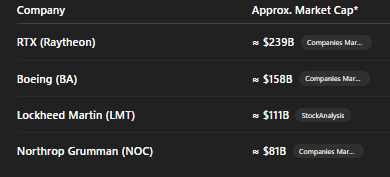


Physical Backbone of America’s Future Defense
Boeing quietly positioned itself at the center of NGAD, Replicator, sixth gen naval aviation, space ISR, and pretty much all U.S. military chokepoints throughout..
Important to note - Boeing’s future still depends on flawless execution under Kelly Ortberg: quality control, culture change, and restoring Pentagon confidence day by day
Things that'll be covered:
Air Dominance & CCAs
NGAD / F-47 Shockwave
MQ-28 Ghost Bat: The First Real Combat Capable CCA
Ghost Bat + F-47 = The New Kill Web
The F-22 → F-47 Lineage
Industrial Base Reset
Spirit Acquisition = Sixth-Gen Production Engine
Leadership Reset (Ortberg / Malave / Shanahan / Phantom Works rebuild)
Why DoD & Congress are quietly shifting back toward Boeing
The Seven Military Chokepoints Boeing Controls
Tankers, logistics, sensors, naval aviation, global basing, missile systems, training
Why America’s war machine collapses without Boeing
Autonomy & Replicator
Orca XLUUV + MQ-25 = Naval Autonomy Empire
Replicator: Why Boeing Is the Tier That Can Scale Production
Barracuda-500: Anduril Brains + Boeing Factories
Palantir + Anduril = Boeing’s New AI/Autonomy Stack
Missile & Strike Ecosystem
JDAM/SDB/Harpoon/SLAM-ER dominance
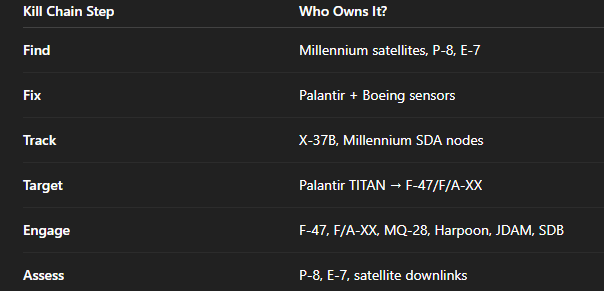
Boeing’s hidden influence across the entire U.S. kill chain
Navy’s Sixth-Gen Fighter
F/A-XX Breadcrumbs
Carrier heritage vs. stealth heritage (Boeing vs. Northrop)
How MQ-25 + MQ-28 + F-47 shape F/A-XX requirements
New Platforms
Boeing’s Tiltrotor Combat Drones (Runway Free Pacific Strike)
Runway Independent CCAs for dispersed Pacific operations
Space Power Layer
Millennium Space Systems
3D Printed satellite structures & rapid constellation buildouts
X-37B testbed
Boeing’s role in future space data centers
Midwest War Belt
Intel Ohio → Boeing Heath → St. Louis/Wichita = The New Silicon Defense Spine
Secure silicon → guidance → airframes → satellites → autonomy
GE Aerospace engine alignment for sixth gen propulsion
Commercial → Defense Surge
Why Boeing’s commercial recovery matters for wartime scaling
Factories, labor force, suppliers, automation → Replicator + NGAD + MQ-25 surge capacity
Strategic Endgame
Why Boeing Becomes the Pacific War Company
The 12 Things Boeing Now Controls That Decide a China Fight
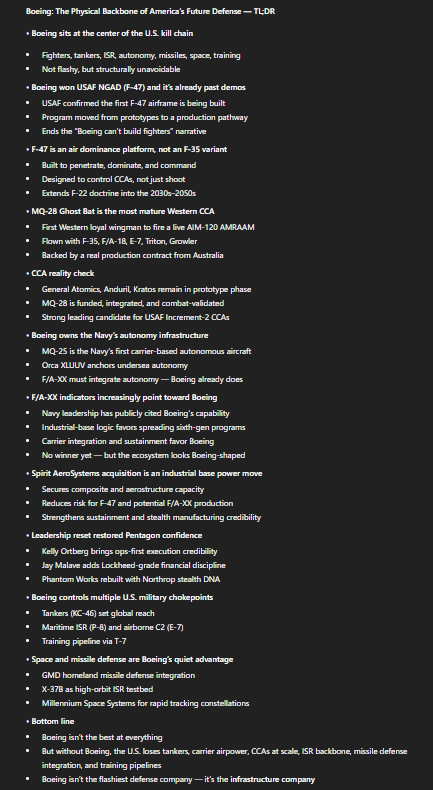
TLDR
Boeing Is Back in the Air Dominance Game
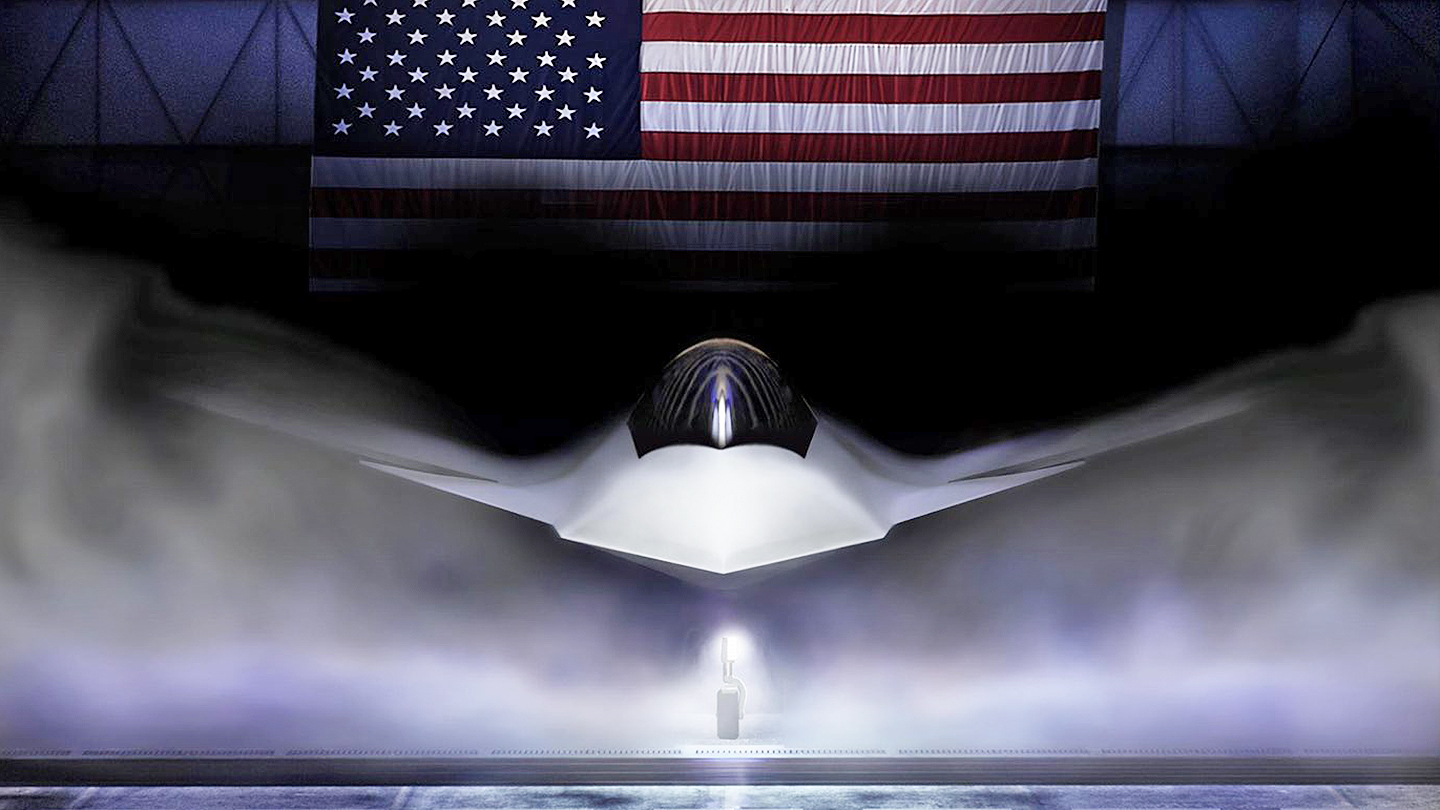
As we know, Boeing won NGAD contract with USAF..
The Air Force’s Next Generation Air Dominance contract is now public under the designation F-47 and USAF statements confirm it is already in production not just demo flights and shit
“Air Force Chief of Staff Gen. David Allvin confirmed the first F-47 airframe is already being built, marking the transition from demonstration to production.”
https://www.airandspaceforces.com/allvin-first-f-47-being-built-first-flight-2028/?utm
https://www.yahoo.com/news/articles/f-47-program-accelerated-pace-170850648.html?utm
What it means:
Boeing beat Lockheed in the biggest Air Force competition since the F-22.. LMT is known for air dominance so how did BA beat them out??
NGAD is replacing the F-22 for the next 40 years - - billions of dollars worth of jets
Boeing has been investing in NGAD class technologies for over a decade
Digital engineering, advanced composites, shaping, manufacturing automation, autonomy, and the Ghost Bat lineage
Phantom works has been revamped to really compete with Lockheeds Skunk Works
The “Boeing is washed in fighters” narrative can finally be put to rest
The F-47 is not a stealth strike fighter like the F-35 - - It’s an air superiority super platform that extends the F-22 lineage:
Penetrate → Dominate → Control the battlespace
Quarterback role in the sky
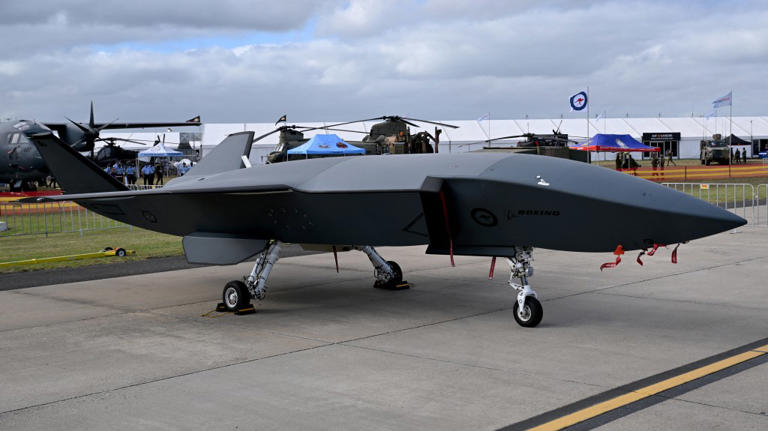
MQ-28 Ghost Bat Just Became the West’s First Combat Capable CCA
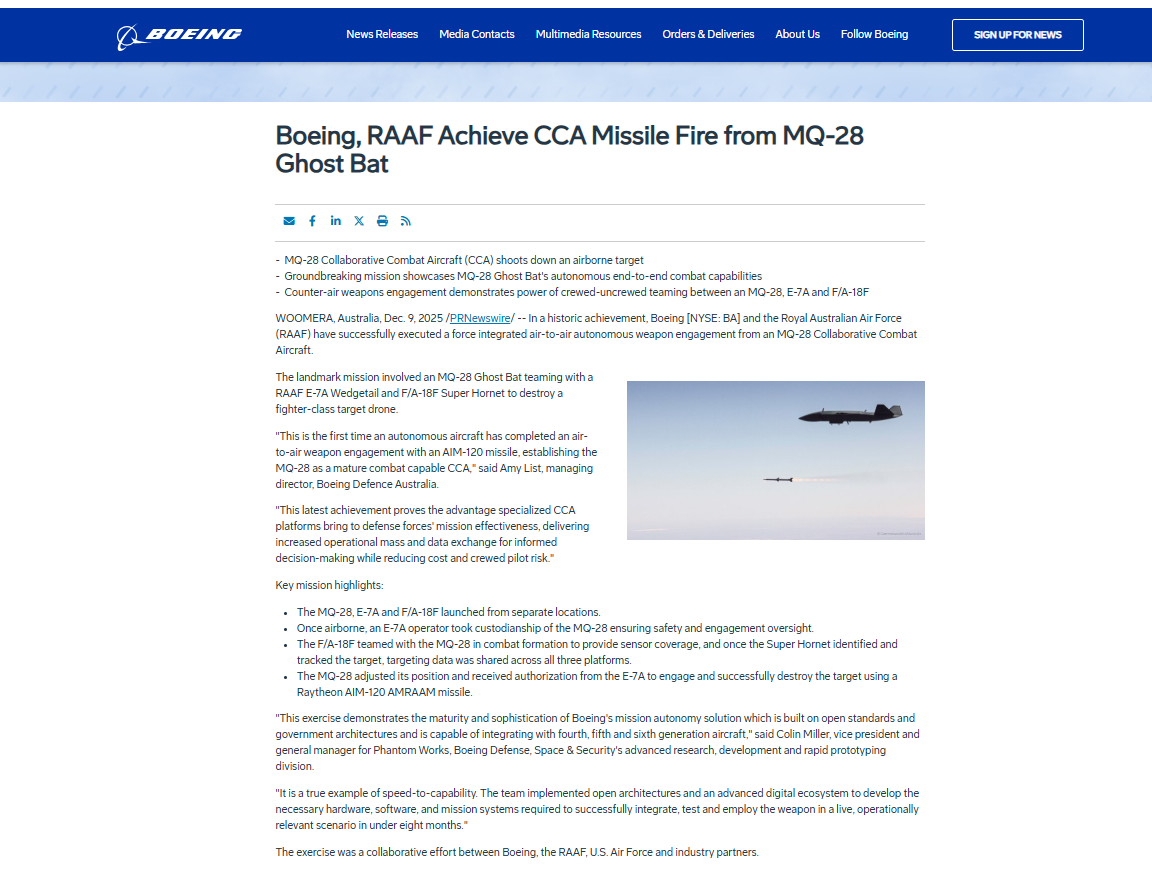
Boeing and the Royal Australian Air Force successfully fired an AIM-120 AMRAAM from a Ghost Bat in a live fire test - - - the first time any Western loyal wingman drone has ever completed an air to air missile engagement.. so HUGE and no one seems to care in the market
What Just Happened (12/9/25)
MQ-28 fired a real AIM-120 AMRAAM and destroyed a fighter class target drone
The mission was flown as part of a crewed/uncrewed teaming exercise:
MQ-28 (autonomous shooter)
E-7A Wedgetail (battle manager)
F/A-18 (manned wingman)
who makes all of these??
Boeing confirmed the mission used their open architecture autonomy stack, built for 4th/5th/6th-gen fighters
Amy List - Boeing Defense Australia: “The first time an autonomous aircraft has completed an air to air weapon engagement with an AIM-120.”
Colin Miller, VP of Phantom Works: “This demonstrates the maturity and sophistication of Boeing’s mission autonomy solution.”
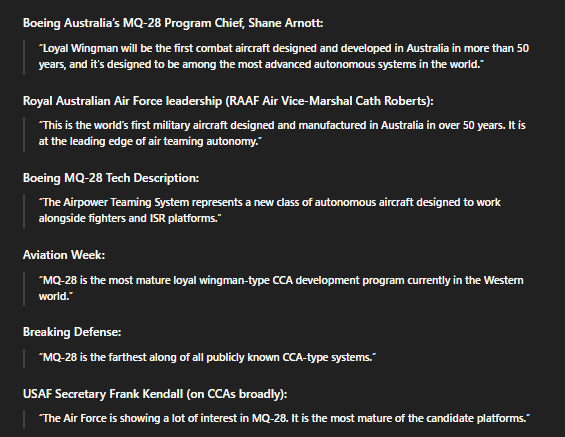
https://www.youtube.com/watch?v=mq6ifMZqvis
https://boeing.mediaroom.com/2025-12-09-Boeing
Why This is a Strategic Breakthrough
MQ-28 is now the first Western drone to fire the U.S. military’s default BVR missile
This instantly places Ghost Bat ahead of CCA rivals:
General Atomics: no production order, no live fire
Anduril Fury: early testing, no production order, no live fire
Kratos: no production order, no live fire
Turkey’s Kizilelma – recently completed a long range kill, but it is designed as an unmanned fighter, not a loyal wingman CCA
Kizilelma is built to fight independently - Ghost Bat is built to multiply the power of manned fighters
Job Listing at Phantom Works
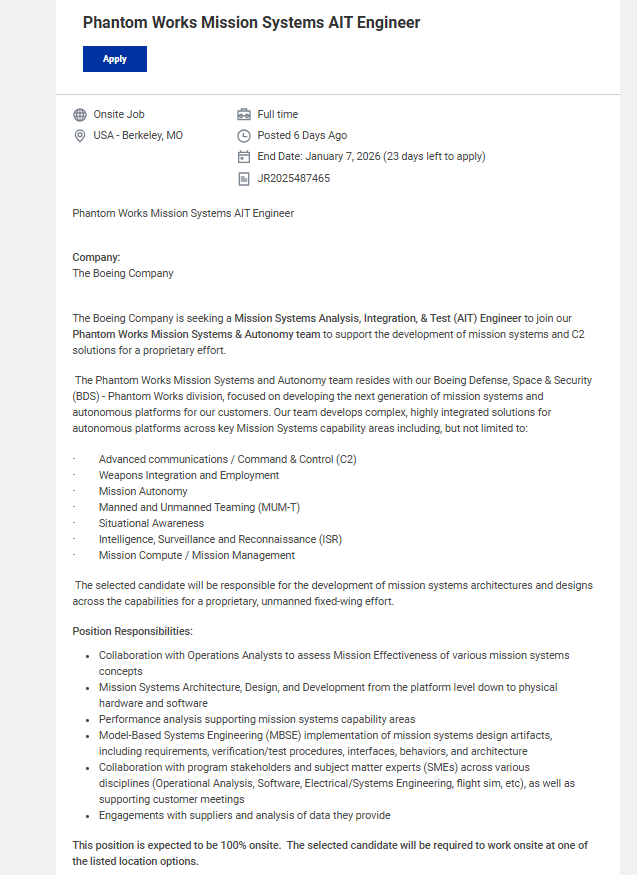
Days after MQ-28’s live AIM-120 firing Boeing posted a classified Phantom Works Mission Systems AIT role in St. Louis
focuses on weapons employment, autonomy, MUM-T, advanced C2, and mission compute which is the exact work required after a live fire test
The position is not contingent on award - - indicating an existing funded effort rather than a bid or demo
This signals a transition from proving feasibility to building a repeatable, certifiable, operational CCA capability
https://boeing.wd1.myworkdayjobs.com/EXTERNALCAREERS/job/USA---Berkeley-MO/Phantom-Works-Mission-Systems-AIT-EngineerJR2025487465
Ghost Bat + F-47 NGAD = The Kill Web the Air Force Wants
This live fire test proves MQ-28 can now:
Receive and act on targeting data from airborne command platforms
Fire BVR weapons in contested environments
Operate as a distributed node in a manned/unmanned kill web
Integrate with legacy and fifth gen platforms
F/A-18
F-22
F-35
Slot perfectly beside the F-47 NGAD as its autonomous strike wing
This turns the CCA concept from theoretical future → operational now
Ghost Bat is now a combat validated, production funded, operationally integrated CCA and Boeing is the first Western prime to hit that milestone.. But its just Boeing right??
This is the CCA backbone for:
F-47 NGAD
F/A-XX naval air dominance
AUKUS Pacific airpower architecture
Replicator’s air autonomy layer
Australia’s A$1B Ghost Bat Production Deal
Australia is locking in a A$1B (~$663M USD) contract to move MQ-28 into full rate production by committing to buy the first six production Ghost Bats - - the first Western production contract for a combat capable autonomous aircraft
First CCA program anywhere in the West to receive a true production order
Confirms MQ-28 as the most mature Western CCA
Establishes Australia + Boeing as a shared Pacific CCA industrial base
Validates Ghost Bat’s integration with F-35, E-7, Triton, Growler
Creates a scalable export program aligned with U.S. CCA doctrine
Australia is treating MQ-28 not as a prototype as they see it as a frontline combat asset.. Boeing now has the world’s first production backed CCA - - strengthening its position for USAF CCA and Navy F/A-XX autonomy teaming
Ghost Bat + AUKUS: Boeing Becomes The CCA Spine Of The Pacific
Australia is building a Pacific CCA war stack with Boeing simply put
It makes Boeing the CCA bridge between U.S. and allied airpower in the Indo Pacific
It lines up perfectly with AUKUS Pillar II (autonomy, AI, networking, undersea)
It pre positions MQ-28 as the logical choice when the USAF goes hunting for a mature Increment-2 CCA
MQ-28 vs General Atomics vs Anduril - So Who’s Actually Ahead?
MQ-28 is surprisingly ahead of General Atomics Gambit and Anduril Fury
GA has no production contract
Anduril has no production contract
MQ-28 Ghost Bat
A$1B production order = real money, not demos
First Western autonomous combat aircraft entering serial production
The most mature Western CCA in the world
Already flown with F-35, F-18, E-7 Wedgetail, Triton, Growler
Already validated AI taxi, takeoff, landing, teaming
The only one with a real missile shot
In service with an allied nation that fully integrates with U.S. systems
The leading candidate for USAF CCA Increment-2
MQ-28A Raw Footage:
And for anyone saying "but we didn't see it hit the target" ... we didn't need to because we know the AIM-120 AMRAAM missiles work... we just needed to see the delivery
https://www.youtube.com/watch?v=P23KVzO1MK8
General Atomics CCA (Gambit series, Eagle-AI)
Lots of prototypes
Lots of concept art
Lots of pitch decks
Zero production contracts
No integration at Ghost Bat level
No confirmed BVR-missile test
Anduril CCA (Fury)
Still in prototype / early flight testing
Strong autonomy (Lattice) but immature airframe
No production orders
No confirmed AMRAAM shot
No large scale fighter integration
Best positioned for software, not aircraft
The Navy wants a fighter that commands CCAs and Boeing is the only one with a CCA that has real world maturity
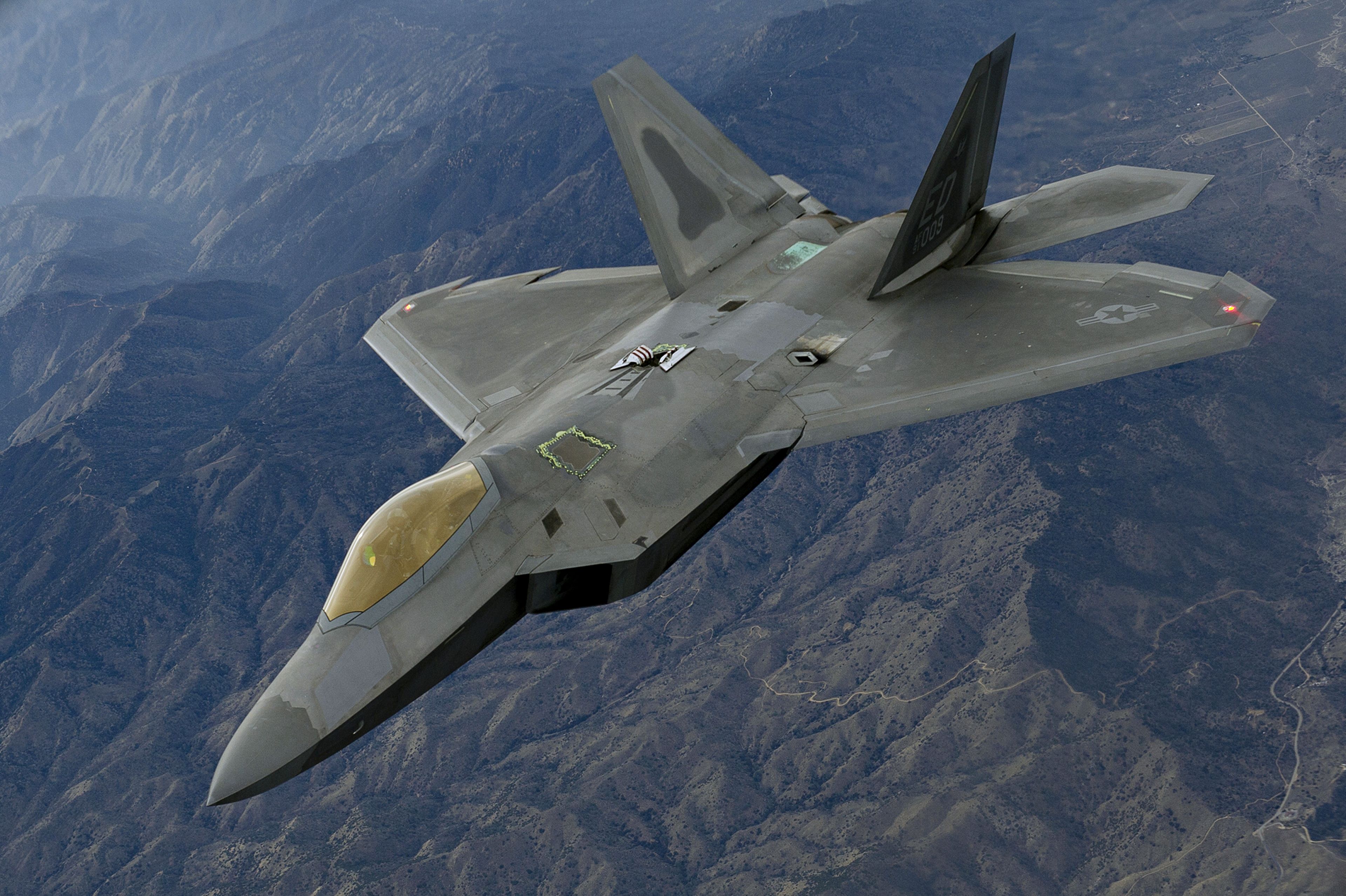
The F-22 → F-47 Lineage: The Return of Boeing’s Dominance Doctrine
There are two fundamentally different philosophies of stealth fighter design:
Passive Stealth – “Avoid the threat”
Example: F-35
Maximize operational survivability
Reduce signature enough to stay hidden
Heavy sensor fusion; lower emphasis on kinematics
Designed for strike, ISR, EW, and coalition interoperability
Dominance Stealth – “Go into the threat and kill it”
Example: F-22
Extreme low observability at all aspects
Supercruise at high Mach
High-G maneuvering at altitude
Loaded with long range air dominance weapons
Designed to penetrate forward SAM rings and destroy enemy aircraft, AWACS, and sensors
Most people don't realize that the F-22 Raptor is half a Boeing aircraft
Lockheed won the prime contract but Boeing built a massive portion of the F-22’s core structure, avionics, and flight systems, including:
The entire aft fuselage
Wings and flaperons
Radar cross section shrouds
Avionics integration
Training systems
Major mission software
Life support integration
Engine inlets + structural composite assemblies
Lockheed supplied the LO shaping + front fuselage... Boeing supplied the backbone, the systems integration, the airframe fidelity, and the structural control surfaces that make the Raptor fly like a Raptor yet they get no credit for it
Since Boeing quietly built half the F-22 they possess hard won knowledge of stealth maintenance
F-22 LO upkeep is notoriously complex
Boeing has decades of classified experience in:
LO panel bonding
Edge alignment
Signature coatings
RAM material stress
Shape fidelity after high-G maneuvers
These are things only a handful of engineers on Earth can actually execute..
Flight control authority and aerodynamics at extreme envelopes
The Raptor is not stable in traditional ways & Boeing helped write the flight control code that make it maneuver like it does
Experience with “dominance first” fighter roles
Lockheed built F-35 to avoid the threat - - Boeing built the aircraft pilots use when they want to own the threat
F-47 = Stealth that dominates the battlespace, not hides from it
Just look at the mission profile Boeing is optimizing for:
Ultra low RCS control - - cleaner than the Raptor in multiple bands
High Mach survivability - - supercruise deep into denied airspace
Long range internal weapons bay for AMRAAMs or next gen air dominance missiles
CCA pack commander - - the F-47 controls a wolf pack of MQ-28 class drones
Kill AWACS + blind enemy IADS from inside A2/AD
Operate alone behind enemy lines
Sensor abundance not sensor reliance
Pure air superiority aircraft - - which is the thing Boeing has always built best:
F-15C → global air-to-air dominance
F/A-18E/F → carrier air dominance
F-22 (50% Boeing) → stealth air dominance
X-32 → Boeing’s stealth fighter lineage
MQ-28 → autonomous, stealth-influenced shape for contested environments
MQ-25 → carrier-based stealth aerodynamics + autonomy integration
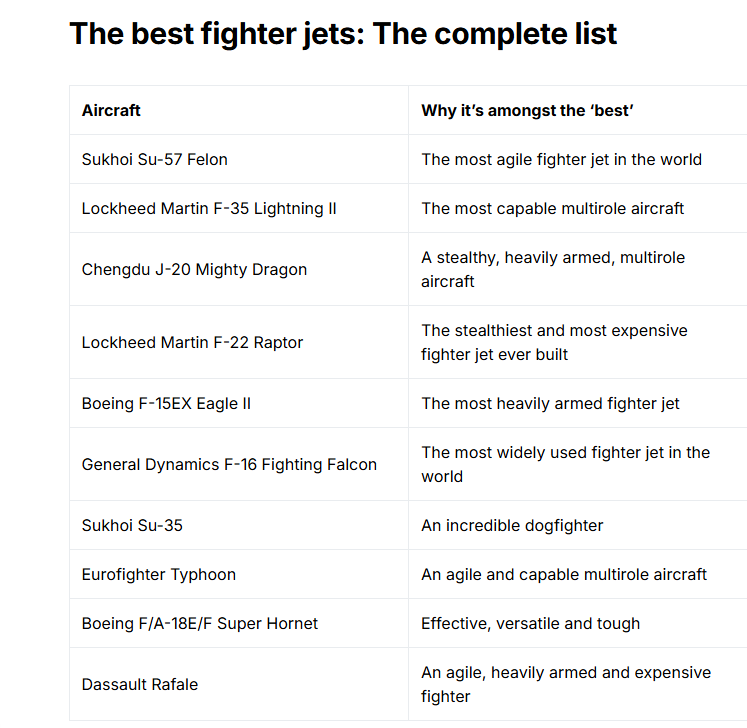 so lets break this down real quick..
Boeing F-15EX Eagle II
Role: Full Prime Contractor
Boeing builds 100% of the F-15EX
The EX is the latest evolution of the F-15 line Boeing has produced for 50+ years
Includes new digital backbone, EPAWSS electronic warfare suite, AESA radar, and massive weapons capacity
This is fully a Boeing aircraft
Boeing F/A-18E/F Super Hornet
Role: Full Prime Contractor
Boeing builds the entire F/A-18E/F fleet
Designed for carrier dominance, high reliability, and strong multirole capabilities
Has been the backbone of U.S. Navy aviation for two decades
Fully a Boeing aircraft
Lockheed Martin F-22 Raptor
Role: Boeing = Co-Prime / Major Partner
Boeing’s share of the F-22 program was huge - often described as 40–50% of the aircraft by value
Boeing is deeply embedded in the F-22
F-15 (all variants, historically)
Even beyond the EX version..
Boeing has been the sole producer of the entire F-15 line since inheriting McDonnell Douglas.
Saudi, Qatar, Israel, Korea all fly Boeing built F-15s.
The entire F-15 lineage is Boeing’s
Boeing’s Spirit AeroSystems Acquisition: The Quiet Move That Changes Everything
Fundamentally reshapes the industrial base and strengthens Boeing’s hand in every major defense competition, including F/A-XX & F-47
Boeing just took control of the most important aerostructures supplier in America.. by doing so Boeing eliminates a historic chokepoint that has caused a decade of instability
This stabilizes Boeing’s commercial AND defense pipelines simultaneously
Spirit is the single point of failure for:
737 fuselages
787 composite sections
P-8 maritime patrol aircraft
KC-46 tanker structures
Defense fuselage and wing components
Classified composite assemblies
The Defense Angle: Why Spirit Helps F/A-XX & F-47
The Navy wants industrial base stability before awarding F/A-XX
Boeing acquiring Spirit directly addresses this concern by:
Securing composite capacity
Reducing supplier risk
Strengthening Boeing’s production bench
Ensuring scale for future sixth gen manufacturing
This move removes the biggest industrial base argument against giving Boeing another major fighter contract
Sustainment = 2× the revenue of development + manufacturing
Lockheed wins F-35 not because they build it but because they own its sustainment pipeline
Boeing is positioning itself to own sustainment for:
F-47
F/A-XX
F-15EX
MQ-25
MQ-28
Navy CCAs
Army TITAN ISR nodes
P-8 & E-7 fleets
Spirit composite structures
Spirit gives Boeing deeper composite manufacturing for stealth aircraft
Spirit builds:
Advanced wing skins
Composite fuselage barrels
LO structures for special mission aircraft
Classified components for primes
This is exactly the kind of capacity needed for:
F/A-XX stealth shaping
MQ-25 scaling
NGAD concurrency
Replicator airframes
Northrop already has elite LO manufacturing (B-21) & this acquisition narrows that advantage materially
Spirit’s Wichita facility becomes a fighter production powerhouse
Wichita historically produced:
B-52 fuselages
F-16 components
Bombers, strikers, and weapons structures
With Boeing taking over Wichita becomes:
Boeing’s second Phantom Works → a stealth optimized, high volume aerostructures hub
This lets Boeing run a two site sixth gen fighter strategy:
St. Louis → final assembly + weapons integration
Wichita → composite barrels, wings, classified structures
This dramatically increases Boeing’s ability to deliver F/A-XX & F-47 on time
Spirit’s aftermarket & repair capabilities boost Navy sustainment confidence
Spirit does:
Depot work
Structural repairs
Composite restoration
MRO on stealth surfaces for certain platforms
This is a huge deal for the Navy:
F/A-XX must be maintainable on a carrier & Spirit’s repair infrastructure strengthens Boeing’s sustainment story
Pat Shanahan (Spirit CEO → former Acting Secretary of Defense)
This is the big one people miss.... PAY ATTENTION TO THIS MAN I CANNOT STRESS ENOUGH
Why Shanahan matters:
He is a former Acting Secretary of Defense
He knows Pentagon budgeting, program structure, industrial base politics, and SAP/black budget pathways better than almost anyone in industry
He previously ran Boeing Defense, Space & Security
His entire career is the intersection of:
defense industrial planning
aircraft production
high level Pentagon decision making
crisis/manufacturing rescue operations
Spirit under Shanahan = industrial base credibility upgrade
When the Pentagon says:
“We are evaluating whether the industrial base can handle two new fighters"
Shanahan’s presence is a direct answer to that concern
Executive & Board Overlaps / Integration Roles
• Mark Suchinski – Spirit CFO → Boeing integration lead
Critical for aligning Spirit’s cost structure with Boeing’s defense production lines.
• Boeing bringing Spirit’s supply chain inside its SAP/black box programs
Spirit becomes eligible to produce components for classified aircraft
The Air Force/Navy feel safer awarding F/A-XX to Boeing once the Spirit supply chain is “secured”
It strengthens Boeing’s “industrial base capacity” argument which is literally what is stalling the F/A-XX downselect
The Real Strategic Reason Boeing Bought Spirit?? Just some thoughts
It is NOT just to fix the 737 and 787 supply chains...
Consolidates stealth manufacturing capacity
Spirit makes:
787 composite barrels
737 fuselages
Classified components for F-35, B-21, and other platforms
Bringing Spirit inside Boeing creates one of the largest stealth composites benches in the U.S.
Spirit Has Deep Military Production Lines People Don’t Realize
Spirit Aero builds critical structures for:
B-21 Raider
F-35 center fuselage components
KC-46 nacelles and pylons
CH-53K structures
P-8 structural assemblies
Boeing now owns all that so the Industrial base concern is solved
The Pentagon does not award programs based on hype.. They award them based on risk subtraction and Pat is the guy for the risk
Significant Recent Boeing Leadership Moves Worth Mentioning
Since we mentioned Pat Shanahan, lets dig into other important people now in the fold at Boeing..
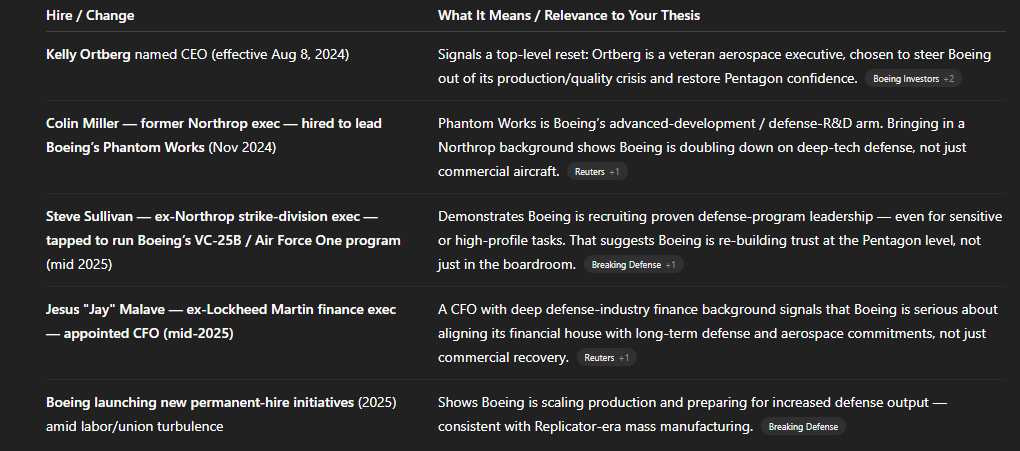
Leadership Reset + Credibility: Ortberg + CFO Malave = Boeing is no longer the "scandal ridden commercial aircraft maker" only - - it’s being repositioned as a defense first, industrial backbone firm
Deep Defense Culture & Experience: Hiring ex-Northrop and ex-Lockheed talent brings in institutional knowledge of stealth, sensors, strike fighters, classified programs
Signal to DoD / Pentagon: Leadership changes at Phantom Works, VC-25B, CFO
all show Boeing expects major defense work, not just a commercial rebound
Industrial Surge Prepping: Hiring permanent staff during union unrest suggests Boeing anticipates high production demand (drones, CCAs, jets, missiles)
Kelly Ortberg – Industrial Fixer
Role: CEO
Ortberg is the first Boeing CEO in 20 years who isn’t a political figure or a finance guy - he’s an operations first aerospace builder
He was brought in because:
He knows how to run high reliability manufacturing
He rebuilt supply chains at Collins Aerospace
He has deep trust from Air Force and Navy program offices
He comes from a culture where quality is religion - not marketing
Boeing’s biggest risk in 2020–2024 was industrial credibility
NGAD, F/A-XX, MQ-25, Replicator, satellite contracts etc.. all depend on trust that Boeing can build at scale without failure
Jay Malave (ex–Lockheed CFO) – $$$
Role: CFO
Lockheed’s entire dominance rests on two things:
political capital
cost-control & program execution
Jay ran the money architecture for F-35 sustainment, missile systems, space, and classified SAP budgeting
Bringing him to Boeing means:
Boeing’s bids now look like Lockheed bids (sharp, politically safe, budget shaped)
F/A-XX and NGAD sustainment plans won’t blow up
Boeing can price sixth gen programs realistically and win them
Congress sees a Lockheed style financial grown up inside Boeing
This is a massive credibility boost
Colin Miller (ex–Northrop) – Phantom Works Rebuilt??
Role: Head of Phantom Works -- very interesting
Northrop is the best stealth manufacturer on Earth
B-2 → B-21 → RQ-180 → (classified programs)
Phantom Works was lagging behind so Boeing hired a Northrop guy who:
lived inside black stealth programs
understands classified coatings, shaping, signatures
has experience with survivability benches & special access programs
understands how to win sixth gen requirements boards
You don’t win F/A-XX without a Phantom Works that looks like Northrop
You don’t build NGAD concurrency without black program discipline
Steve Sullivan (another ex–Northrop) – The Risk Eliminator
Role: Leader of the VC-25B / Air Force One Program... another very interesting hire
Air Force One is the most politically exposed aviation program on Earth
Putting a Northrop veteran on this program:
stabilizes Boeing’s relationship with the Air Force
signals competence on high security, high scrutiny platforms
shows Boeing can execute on the “no mistakes allowed” projects
This gives Pentagon acquisition chiefs confidence Boeing can handle:
F/A-XX
NGAD sustainment
future command and control aircraft
Golden Dome intercept system integration
This hire is about reputation and political optics
The Quiet Hiring Pattern – Not Random, but a DoD Signal
Ex Northrop + ex Northrop + ex Lockheed + industry trusted Ortberg as team captain
All placed into classified, fighter adjacent, or command layer programs
Golden Dome - Miller + Phantom Works + Millennium + X-37B = Boeing owns the sensor + testbed + intercept integration triangle
F/A-XX - Carrier ops + autonomy + stealth lineage + Malave CFO discipline = Boeing becomes the low risk political pick
NGAD / F-47 - Phantom Works reborn under Northrop stealth DNA = Air dominance credibility restored
Replicator - Ortberg + permanent hiring + automation = Boeing can surge production to 1,000+ drones per month
Worth noting its Boeing, Northrop, Lockheed that can sale this, thats it..
Naval Autonomy - MQ-25 + Orca + Northrop invested leadership = Boeing becomes the Navy’s autonomy backbone
Why DoD, the Pentagon and the White House Keep Leaning Boeing
Structural Power: Boeing Controls America’s Global Reach
Air Force One, Air Force Two, E-4B National Command Post → all Boeing
KC-46A tankers → the backbone of U.S. global military reach
P-8 Poseidon, E-7 Wedgetail → the Navy’s eyes and ears
C-17 sustainment → critical for mobility ops
GMD homeland missile shield integration → Boeing runs the national nuclear defense layer
Personnel Power: The Pentagon Knows & Trusts Boeing Leadership
Pat Shanahan → former Acting Secretary of Defense → now running Spirit (now Boeing owned)
understands SAP funding, black budgets, and industrial base politics better than anyone alive
gives Boeing unmatched credibility for sixth gen fighter risk assessments
Kelly Ortberg → widely respected from his Collins Aerospace era
deep trust inside USAF & Naval Aviation
Pentagon knew him long before Boeing hired him
Steve Parker → the Pentagon’s most trusted Boeing liaison
stabilized KC-46
advanced MQ-25
the guy services actually like working with
Stealth engineers from Northrop joining Phantom Works
signals that DoD is comfortable with Boeing building stealth again
would never happen if the Pentagon lacked confidence in Boeing’s role on NGAD / F/A-XX
Programmatic Ties: Boeing Is Embedded in Every Modernization Pathway
RAMP-C → secure microelectronics pipeline with Intel Ohio
links Boeing to the future compute stack for fighters, CCAs, missiles, satellites
only Boeing/Lockheed/Northrop were chosen
F-47 → already in production
MQ-25 & MQ-28 → naval and air autonomy backbones
P-8 + E-7 → intelligence/ASW backbone
Golden Dome (missile shield) → Boeing owns:
the X-37B high orbit testbed
Millennium’s tracking constellation
GMD integration history
the kill chain C2 logic
Geopolitical Power: Every President Needs Boeing
Boeing is:
America’s #1 exporter
a foreign policy bargaining chip
a jobs engine in politically sensitive states (MO, SC, KS, WA, OH)
the company that keeps U.S. allies tied into American airpower ecosystems
P-8s, F-15EXs, E-7s, KC-46s - - these are diplomatic weapons as much as military ones
Every White House uses Boeing to:
strengthen alliances
stabilize trade deals
secure swing state jobs
demonstrate industrial power
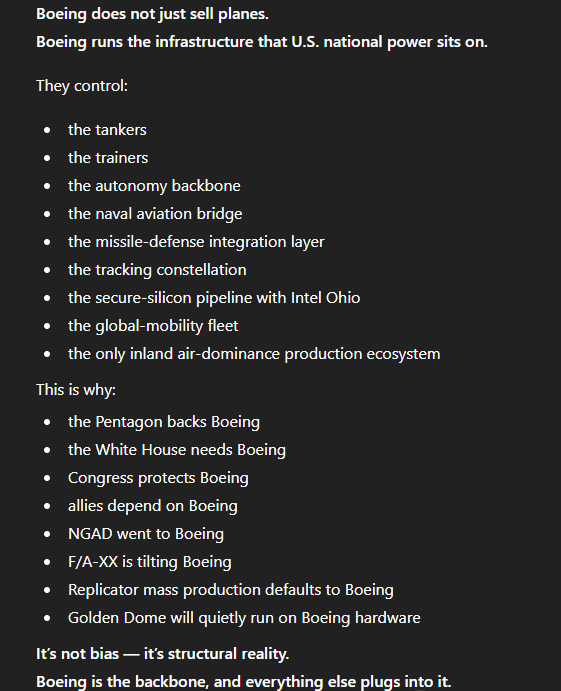
The Seven Chokepoints of U.S. Military Power & Where Boeing Sits
Global Logistics Network
The U.S. can move combat forces anywhere on Earth in less than 48 hours
big part is because Boeing built the mobility fleet
C-17, KC-46A, P-8, E-3/E-7, C-40/C-32 → nearly every strategic lifter or C2 aircraft is Boeing
If these jets stop flying American power projection collapses instantly
Aerial Refueling
The U.S. owns ~80% of the world’s tanker capacity - - the #1 advantage in modern warfare
Fighters, bombers, drones, and Navy strike packages cannot reach the fight without tankers
KC-46A is the ONLY next gen tanker in production → Boeing controls the chokepoint that sets the range of the entire U.S. military
MQ-25 is the Navy’s first autonomous carrier based tanker - - extending F-35C/F-18 strike radius and anchoring the refueling leg of the future naval kill web
Naval Replenishment (Airpower Layer)
Boeing doesn’t build ships but it builds the aircraft that let the Navy dominate oceans
F/A-18E/F, EA-18G, MQ-25, P-8 → all Boeing
These platforms provide:
Carrier air dominance
Aerial refueling for the air wing
Submarine hunting across the Pacific
Boeing aircraft extend the Navy’s kill web reach far beyond any ship’s horizon
It will build the system that builds ships, using the same automation, robotics, and digital twin processes that power the 737, 787, MQ-25, T-7, and F-47 lines
The Navy’s SHIPS Act + AUKUS submarine demands require doubling national ship output
current shipyards cannot scale without aircraft style mass production methods
Boeing is the only U.S. defense prime with modern high rate manufacturing expertise:
robotic riveting, composite layup, automated inspection, and digital design loops
DoD industrial-base teams are already modeling “factory within a shipyard” concepts using Boeing style modular assembly cells to cut construction time 20–40%
Naval autonomy (MQ-25, Orca XLUUV) gives Boeing a strategic footprint inside Navy aviation + undersea warfare - - making Boeing a natural partner for the “next gen shipyard” revolution
Navy will need aircraft style mass manufacturing for unmanned surface and undersea fleets and Boeing is the sort of the only prime that already knows how to do it
Global Base Access
The U.S. fights from 800+ forward bases, and every one of them is kept alive by aircraft Boeing builds
C-17s move the supplies, KC-46s move the fuel, P-8s secure the coastlines, E-3/E-7 AWACS build the radar picture
Boeing aircraft form the circulatory system of American global presence
Without Boeing mobility and ISR the Indo Pacific bases become isolated outposts instead of power projection hubs
Satellite Infrastructure
Boeing quietly builds the orbital backbone of U.S. targeting, missile warning, and secure comms
Millennium (ISR, GEO/HEO tracking, SDA nodes)
Millennium is already delivering into SDA layers, positioning Boeing for future missile warning primes
Spectrolab (world’s best solar arrays)
3D printed satellite structures (deployment in weeks, not months)
X-37B integration (the Pentagon’s most secret space platform)
Plus legacy WGS, protected comm architecture, and NRO/NASA classified missions
Defense Industrial Base (Foreign Militaries Depend on Boeing)
Most allied militaries can’t fight without Boeing integration pipelines
Countries buying Western systems rely on Boeing to connect them into U.S. kill webs
Boeing ties into export ecosystems for:
F-35 sensors & data links
Patriot and THAAD interoperability
AMRAAM integration
HIMARS comms architecture
MQ-9 command & control
AWACS airborne command nodes
Without Boeing the U.S. alliance network loses its shared battlefield picture
Training Pipeline
Most advanced non NATO air forces train in the U.S. on U.S. systems
The trainer replacing legacy fleets? The Boeing T-7
U.S. doctrine export = Boeing export
Boeing quietly inherits the global fighter pilot pipeline
The training pipeline is the most overlooked spot.. we'll dive into that later on
Base Defense & Missile Intercept: Boeing’s Quiet Shield Layer
Boeing’s IFPC Increment 2 interceptor effort with Anduril fills the most dangerous gap in U.S. air defense
mid range cruise missiles and drone swarms targeting forward bases
This is not an ICBM
it’s a tactical, affordable interceptor designed to preserve runways, factories, logistics hubs, and command nodes in the opening hours of a conflict
Anduril supplies the rocket motor and rapid-iteration propulsion
Boeing provides systems integration, fire control, and scale manufacturing
IFPC complements Patriot and THAAD by solving the cost exchange problem (shooting $100k threats without burning $5M interceptors)
Strategically this locks Boeing deeper into Golden Dome era layered defense, base survivability, and the industrial base required for prolonged conflict
Without systems like IFPC, Replicator, NGAD, and CCA force projection collapses on the ground before it ever reaches the fight

Orca XLUUV + MQ-25 = Boeing Now Owns Naval Autonomy
Orca XLUUV (Undersea Autonomy Backbone)
Boeing is prime on the world’s largest autonomous submarine
Fully autonomous with multi month endurance
Payloads for ISR, mine laying, seabed warfare, and strike
A foundational pillar for Replicator’s maritime mass autonomy layer
MQ-25 Stingray (Carrier Autonomy Backbone)
Boeing is prime on the Navy’s first autonomous carrier aircraft
Extends F-35C/F-18 strike radius by hundreds of miles
Acts as a persistent airborne comms + data node
Bridges today’s air wing into the carrier CCA era
Replicator
Replicator needs three pillars:
Brains → Anduril, Palantir
Stealth drones → Northrop
Mass production + launch platforms → Boeing (Anduril Arsenal 1 will change this)
The Pentagon has already said the quiet part out loud:
“Replicator relies on companies with scalable industrial production"
Only three companies qualify: Boeing, Northrop, Lockheed
only Boeing brings the full industrial stack:
St. Louis → high rate weapons manufacturing
Mesa → composite airframe production
Phantom Works → classified design + integration
Commercial robotics from the 737/787 lines ready to be repurposed
Modular assembly lines already built for:
JDAM, SDB, Harpoon, MQ-25, and classified airframes
Boeing can scale production to thousands per month.. not hundreds per year
Launch platforms
Replicator drones will deploy from aircraft Boeing already builds:
F-47 + F/A-xx (hypothetically)
MQ-25
P-8 Poseidon
KC-46A tanker
E-7 Wedgetail
No other company controls the platform layer + production layer simultaneously
So Orca + MQ-25 = Boeing controls naval autonomy
Replicator + Boeing factory scale = Boeing controls mass production
Boeing platforms = Boeing controls the launch environment
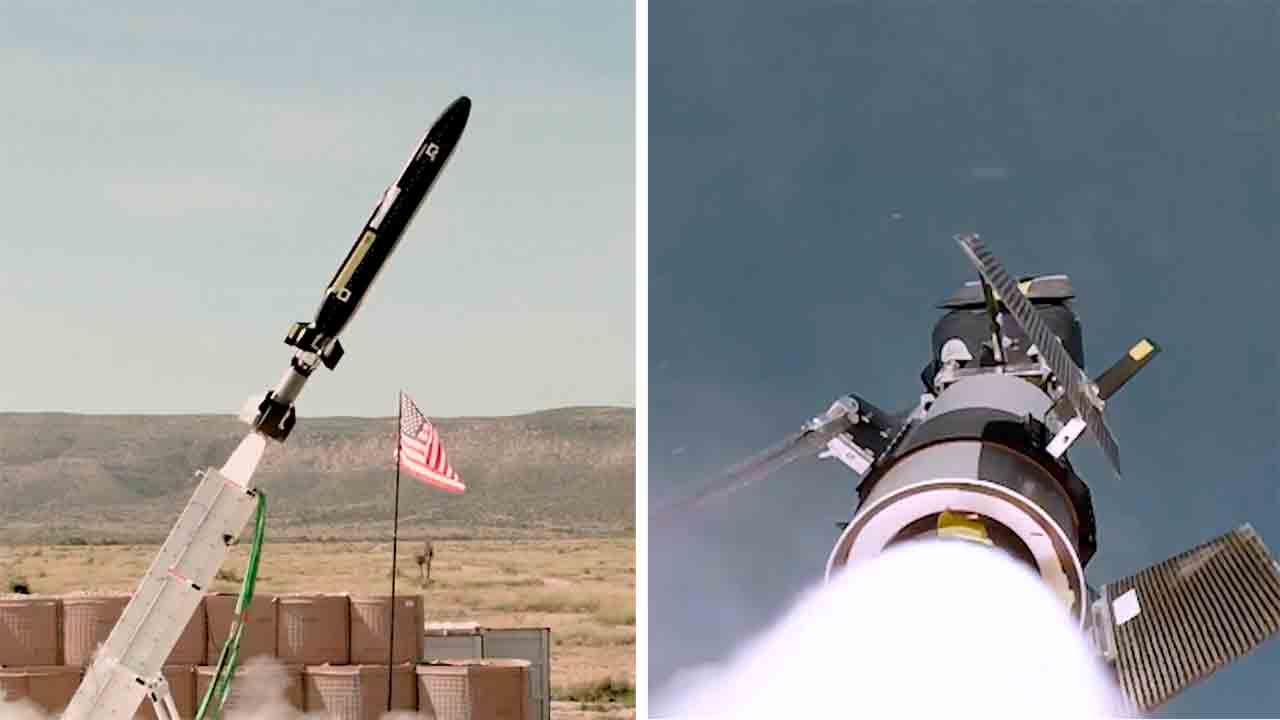
Barracuda-500: Anduril Designs It - HYPOTHETICALLY Boeing Can Help Mass Produce It
Division of Labor
Anduril provides the “brain”:
Autonomy stack (Lattice OS)
Sensor fusion + target ID
Navigation in GPS denied environments
Mission planning + swarming logic
Real time kill chain integration
This is the largest, longest range, highest payload model in the Barracuda family:
Barracuda-100 – tactical
Barracuda-250 – mid range
Barracuda-500 – strategic strike
Boeing provides the “body" - - hypothetically
High rate composite airframe manufacturing
Additive manufacturing for structure + parts
Turbine + propulsion integration
Full airframe assembly + quality assurance
Industrial scale production engineering
Same pattern as MQ-28, MQ-25, JDAM, SDB, and other Boeing built systems:
Anduril invents fast → Boeing scales hard
This is the most likely scalable path if DoD wants mass deployment
What Barracuda-500 Actually Is
Role: long range autonomous strike against high value or time sensitive targets
Opposed to: Shahed-136, Harop/Harpy, Russian Lancer
with U.S. grade accuracy and autonomy
essentially the first Western mass strike drone designed to be fielded in thousands, not dozens
Air breathing engines give Barracuda-500 cruise missile endurance
Why Boeing Is the The Best Scalable Manufacturer
Anduril can design, test, iterate, and field small batches but not mass produce strategic quantities.. at least not at proven scale
Boeing has:
St. Louis high rate weapons lines
Mesa composite airframe capacity
Repurposable commercial automation (737/787)
Modular production cells for JDAM/SDB/Harpoon
Phantom Works for classified integration
Palantir → Boeing’s Sensor & Targeting Brain
Palantir is already teamed with Boeing on Army TITAN ISR, which ingests satellite, drone, and aircraft feeds → then auto generates kill chain targets
This gives Boeing jets real time, automated target nomination, a requirement for sixth gen fighters and CCAs - Boeing fighters (F-47, F/A-XX) become high speed decision nodes, not just shooters
Anduril → Boeing’s Autonomy & CCA Brain
Lattice OS Anduril’s autonomy and mission logic stack has already been tested with Boeing MQ-25 and MQ-28 data models so cooperative autonomy is already in development
Anduril specializes in navigation, swarm behavior, and contested environment autonomy
exactly what CCAs off a carrier will require
Boeing → The Physical Backbone Both Need
Neither Palantir nor Anduril build aircraft, not at proven scale
They need platforms to deploy their AI:
F-47
F/A-XX
MQ-25
MQ-28
P-8
E-7
KC-46
Boeing controls the airframes, launch platforms, and integrations that bring Palantir’s and Anduril’s software to life
Boeing Becomes the Edge AI Carrier of the U.S. Military
By pairing:
Palantir’s sensor fusion
Anduril’s autonomy
Boeing’s aircraft
You get a kill web where Boeing platforms see, decide, target, and command
This is why Boeing is positioned to dominate:
sixth gen naval aviation
CCA integration
Replicator drones
Pacific kill web operations

Boeing’s Missile & Strike Portfolio — The Most Underrated Power Center in U.S. Defense
Boeing is the backbone of American precision strike
Prime contractor for the weapons that actually get used in real wars:
JDAM → the global standard for precision strike
JDAM-ER → doubled range JDAM for Pacific conflict
SDB I → small diameter, high loadout strike
Harpoon (all variants) → the Western world’s default anti ship missile
SLAM-ER → long range precision standoff
HAAWC → air launched torpedo glide kit for P-8 sub hunting
Boeing leads multiple strategic missile and autonomy programs
These define America’s nuclear, missile defense, and autonomy posture:
Ground Based Midcourse Defense (GMD) → the U.S. homeland missile shield
Minuteman III sustainment → keeps the nuclear deterrent alive
MQ-25 → Navy’s first autonomous carrier aircraft
MQ-28 (Australia) → first production Western CCA
HEL MD → directed energy weapon development
Boeing touches nearly every major U.S. missile system
Quietly embedded inside every kill chain:
Patriot → launcher electronics
THAAD → integration + components
SM-3 → avionics for ballistic missile intercept
Aegis → fire control + system components
GBSD (Sentinel) → key subcontractor roles
Arrow-3 (Israel) → co produces major interceptor components
The scaling advantage nobody talks about
PAC-3 seeker production ramping to 750/year → one of the highest volume advanced seeker lines in America
Boeing can surge JDAM, SDB, Harpoon, and other precision munitions faster than most
NGAD / F-47 and F/A-XX will become:
the primary air dominance launch platforms for
JATM
follow on long range AAMs
hypersonic and quasiballistic air launched weapons
the command nodes that tell CCAs which targets to prosecute
the forward sensor/shooter nodes inside contested airspace
When the same company:
designs the fighters
integrates the pylons and internal bays
writes the mission software
and primes the weapons (JDAM/SDB/Harpoon/Slam-ER/HAAWC)
That company has disproportionate leverage over the future kill chain
That company is Boeing..
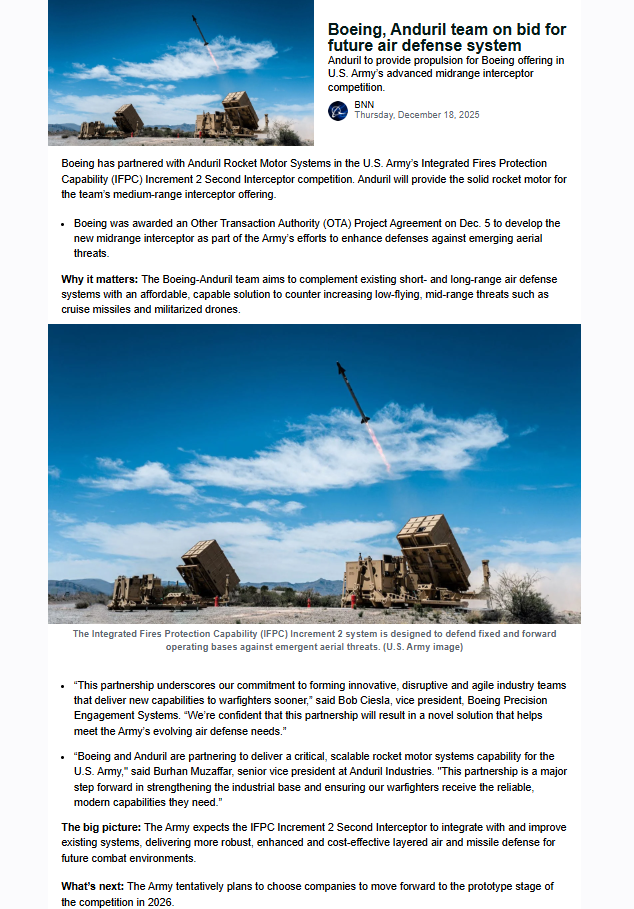
The LEO Precision Strike Aircraft
Phantom Works has leaked work on:
ultra low cost attritable strike aircraft
AI optimized long range UAV bombers
high endurance LEO integrated strike platforms
These tie into:
Replicator
Pacific base dispersal
missile saturated environments
Boeing Quietly Controls the Air Force’s Future Kill Web
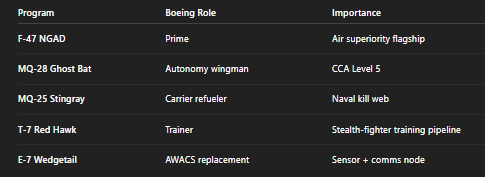
Lockheed had this ecosystem for 20 years but Boeing now owns it...
The Kill Web Runs On More Boeing Code Than People Realize
Another thing about the F-22 is that Boeing built the gateway systems that let F-22 talk to drones
GatewayONE – the bridge that lets F-22, F-35, and other platforms talk across previously incompatible data links
Open Mission Systems (OMS) – modular software architecture so new apps, CCAs, and sensors can plug into old jets
Networking and integration work
Without this the F-22 would be blind inside a CCA fight - again no one knows that Boeing pulls a lot of strings behind the scene.. Boeing solved the hardest part of the network
CCAs couldn’t be seamlessly commanded by legacy fighters + Boeing’s fighters, tankers, AWACS, and CCAs are all being wired with the same digital language
Boeing is quietly hiring AI autonomy engineers at 5× the 2023 rate
Boeing bought Crisp, ForeFlight, and multiple data/automation shops
Boeing St. Louis just received DoD’s new Autonomy Certification Pathing authority
Boeing is the only prime with:
fighters + CCAs + tankers + autonomy + training + missile guidance + space ISR + silicon access
NGAD + F/A-XX will be “AI aircraft” before they are “stealth aircraft”
Lockheed + Northrop still dominate mission systems software in fighters so it's not all BA
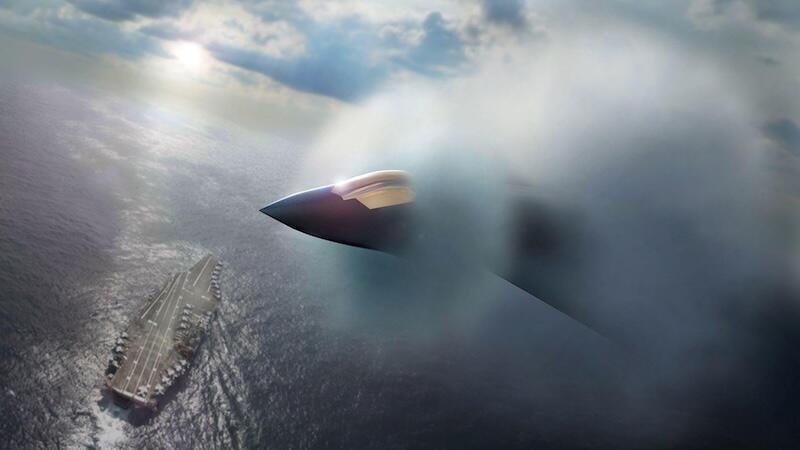
So… What About the Navy’s F/A-XX?
Here are the bread crumbs... no absolutes but the indicators are piling up
Public Navy leadership comments
The Navy CNO explicitly said “Boeing has the need and the ability to build F/A-XX"
Undersecretary of Defense for A&S Michael Duffey openly said:
“There’s a commitment for us to deliver this capability"
Pentagon: “evaluating the industrial base capacity to build two new fighters simultaneously”
That language is extremely unusual but with Super Hornet fleet dying faster than expected..
Airframe fatigue is accelerating
Carrier air wings will fall below required strength mid decade
The Navy loses 100+ combat coded jets by 2030
F-35C production cannot fill the gap in time
Boeing owns the naval autonomy backbone (MQ-25)
F/A-XX must integrate:
MQ-25
carrier CCAs
future autonomous refuelers
distributed naval kill web nodes
Only Boeing has the carrier integration pipeline in production today..
Industrial base logic
The Pentagon cannot allow:
Lockheed to monopolize Air Force and Navy sixth gen
Northrop to split between B-21 and naval sixth gen
Boeing is the only option that:
sustains naval fighter industrial base
prevents consolidation
ensures competition
leverages existing MQ-25 infrastructure
Congress is signaling too
HASC TacAir chairman publicly supported Boeing’s capability.
Congress rarely pre aligns unless a contractor is structurally favored.
Digital engineering pipelines align with MQ-25 and MQ-28
Boeing’s naval aircraft digital backbone is already built.
F/A-XX would slot into this ecosystem faster than any competitor.
Without F/A-XX:
MQ-25 has no high end manned controller
Carrier CCAs have no mission lead
The Navy’s Kill Web is incomplete
Distributed maritime ops break down
Boeing’s air dominance doctrine matches Navy requirements
F/A-XX is not a strike plane its a carrier air dominance fighter
Boeing is historically the best in that role
China’s long-range kill chain matures by 2028–2030
YJ-21 hypersonic anti ship
J-20B mass production
Next gen PLAN carrier aircraft
OTH radar + skywave sensors
Congress is already signaling urgency
HASC: “Full funding”
SASC: Inserted $500M
Appropriators: Moved it to SAP
Analysts: “74M isn’t enough… award being blocked”
Black Budget project???
How F/A-XX Is Actually Being Funded
Public Funding
The NDAA gives ~$74M under “Next Generation Fighter”
Committees call it “full funding” because it fully meets the request, not the need of Navy
It’s not enough to build the aircraft but it keeps both Boeing + Northrop teams alive
Classified / SAP Funding (what you don’t see)
LINK PLUMERIA (a SAP shell used for stealth + mission systems R&D)
Classified Navy air-dominance lines
NGAD / CCA / JADC2 tech transfers paid by the Air Force
Replicator autonomy + networking programs
https://breakingdefense.com/2025/12/compromise-ndaa-released-with-bigger-topline-funding-for-f-a-xx/
Why Is There Confusion?
SASC tried to add $500M in the open
Final NDAA moved most of that into classified lines
Analysts see “$74M” and think it died
But Navy + Congress + SAP managers are still pushing work forward
“Wait until 2027” = letting China close the air dominance window
Mission Fit: What F/A-XX Actually Has To Do
Anchor carrier air dominance in the 2030s–2050s
Control and refuel CCAs off the boat (MQ-25, future carrier drones)
Fight inside dense maritime IADS (China A2/AD belts, long range SAMs, anti ship missiles)
Plug into the Navy kill web – E-2D, Aegis, submarines, P-8, satellites, CCAs, surface fires
Boeing already owns the Navy’s manned + unmanned air side:
F/A-18E/F backbone today
EA-18G for EW
MQ-25 as the first carrier based autonomous aircraft
P-8A Poseidon for ASW and maritime ISR
Northrop owns:
B-21 (Air Force)
E-2D (AWACS)
Aegis sensors / radars
Some carrier history (F-14), but that gene line is cold
Why The Pentagon Needs Boeing Here
DoD cannot afford to let any of the three primes fall off the fighter map
Lockheed – owns F-35 and F-22
Northrop – owns B-21 and NGI, plus huge space / sensors
Boeing – if they don’t get F/A-XX - their only future tac air is F-15EX refresh & F-47
Congress and OSD have been obsessed with “preserving competition” in shipbuilding, missiles, and aircraft - - they already worry Boeing could slide into being “just” a commercial + tanker house if they lose F/A-XX
If F/A-XX goes to Northrop:
Northrop has B-21 + F/A-XX sixth gen
Lockheed has F-35 but Boeing becomes mostly transport/tanker + missiles + legacy fighters
So on industrial base grounds Boeing winning NGAD + F/A-XX feels like a lot but...
Lockheed keeps F-35, C-130, C-5 history, tons of missiles/space
Northrop keeps B-21, bombers, missiles, a huge radar/space franchise
You get a clear division of labor:
Boeing = fighters + naval autonomy + tankers
Lockheed = strike + F-35 glue + missiles
Northrop = bombers + space + strategic sensors
Deck Ops Are A Different Sport
F/A-XX is a carrier fighter first & everything else second.. so who has most carrier experience??
Boeing has:
Decades of carrier flight test & integration from F-18 → Super Hornet → EA-18G → MQ-25
Deep experience in:
Catapult loads
Arrested landings & fatigue
Folded wings / deck handling
Salt environment corrosion / maintainability
MQ-25 already lives on the carrier’s digital nervous system (mission planning, deck ops, sustainment)
Northrop absolutely can build a carrier jet technically - they even have a good past history before northrop grumman merged.. but if you’re the Navy and you’re wiring billions into something that has to trap on a pitching deck in 2045 you choose the team that's been trusted since 1970s rather than risk a new jet, new culture, new carrier integration learning curve vs boeing sort of just upgrading the current ecosystem
MQ-25 + MQ-28 + F-47 Tech
Concept is manned fighter + CCAs + tankers as a single organism
MQ-25 – airborne refueling node, command platform, comms relay
MQ-28 Ghost Bat – CCA with real flight hours and soon live AMRAAM shots
F-47 NGAD – air dominance mothership and pack commander for CCAs
GatewayONE / OMS work – Boeing helped wire F-22/F-35 into a CCA capable network
If F/A-XX is going to:
Plug CCAs into strike packages off carriers
Refuel them via MQ-25
Exchange tracks with F-47, E-7, P-8, Aegis, subs
Then the Navy is basically choosing between:
Boeing solution – fighter + tanker + CCA all share design DNA, networking code, digital engineering tools
Northrop solution – fighter from one house, tanker (MQ-25) and much of the kill web from another
Digital Engineering & Rapid Iteration
Boeing:
T-7 (digitally engineered trainer)
MQ-25, MQ-28 structures and autonomy integration
F-47 NGAD with USAF
737/787 production automation they can steal tooling concepts from
Northrop:
B-21 digital model
Some naval and space programs with heavy model based systems engineering
ANCILLARY (DARPA) - - Ship acts like a drone mothership
Northrop is building a VTOL drone for DARPA
It’s designed to launch/land on small Navy ships with almost no extra equipment
This basically turns any ship into a mini drone carrier
TERN (ONR/Navy) - Turning destroyers & frigates into launch platforms
Joint Navy project to let smaller ships launch medium sized drones
Drone takes off from a compact deck space and recovers itself
Again: this is a ship as mothership concept
REMEDY concept - Big aircraft releasing smaller drones
“Parent aircraft → drops small drones for EW, recon, etc.”
Northrop explored this with the Navy
This is the closest to a true airborne mothership model
I believe Northrop focuses more on these Motherboard Projects & they want to be the dominate force in space race.. with b-21 and all of that I think F/A-XX would spread them too thin.. they cant manufacture at scale as much as Boeing
Boeing has digital lines touching both fighter aerodynamics and carrier operations and CCAs at the same time
That favors Boeing for reuse of:
Flight control laws for high AoA + stealth
Signature management techniques
Autonomy / teaming interfaces
Digital twin models for sustainment
Spirit Aerosystems & Why This Strengthens Boeing’s Odds for F/A-XX
Shanahan = Pentagon trust + program execution + industrial base credibility
Spirit’s manufacturing muscle = extra stealth/composite capacity for two sixth gen aircraft simultaneously (F-47 + F/A-XX)
Supply chain consolidation = more predictable scheduling, fewer risk flags for Navy/DoD
Political & Budget Optics
F/A-XX is expensive and competes for dollars with:
B-21 ramp
AUKUS subs
Shipbuilding for China fight
Replicator, CCA, space layers
Congress sees Boeing as the “job base” in a bunch of swing states (MO, SC, WA, etc.)
Giving F/A-XX to Boeing shores up their defense cash flow
“Boeing Already Won NGAD, Won’t They Share The Love?”
This is the main counter argument people make for Northrop / also Tomcat junkies are real
Here’s why it doesn’t fully hold:
NGAD = Air Force, land based, long range Pacific air dominance
F/A-XX = sea based, carrier integration, naval kill web
Very different beasts from the same family:
Different customer (USAF vs USN)
Shared F-47 tech base accelerates F/A-XX risk reduction
Different sustainment chain
Different basing + training ecosystems
Different CCA engagement modes (runway vs carrier)
Why Northrop Still Has A Shot
Northrop isn’t out of it as they have very real advantages
Elite LO manufacturing from B-2 → B-21
Very strong space/sensor integration – a huge deal for a kill web fighter
They can pitch F/A-XX as “the B-21 of the sea”
If:
B-21 stays on budget and looks like a clean win
The Navy decides stealth margins are more important than carrier heritage
Congress gets aggressive about not letting Boeing “double dip” on two sixth gens
But right now:
MQ-25 is already on deck and entrenched
Navy leadership comments have repeatedly name checked Boeing’s capability for F/A-XX
The industrial base & carrier ops arguments still lean Boeing
**The Navy hasn’t named a winner
But the ecosystem being built around F/A-XX increasingly looks Boeing shaped
Put it all together and Boeing has:
Mission alignment – carrier fighter + MQ-25 + naval autonomy is exactly their lane
Industrial base logic – DoD wants three healthy primes; F/A-XX is Boeing’s life support in fighters
Carrier DNA – nobody else has this much recent trap/cat experience
Autonomy stack – MQ-25 + MQ-28 + F-47 gives them a coherent kill web story
Digital fighter pipeline – T-7, F-47, MQ-25, MQ-28 all feeding F/A-XX design
Political cover – strengthening Boeing doesn’t obviously weaken Lockheed or Northrop; it keeps the triangle stable
How Could F/A-XX + F-47 Combo Save Money??
If two different primes win:
Two stealth fighter production lines
Two LO supplier qualification efforts
Two digital engineering stacks
Two sustainment ecosystems
Two classified test infrastructures
If Boeing wins both:
One stealth/composite supply chain
One digital engineering backbone
One autonomy + CCA integration architecture
One sustainment logic with service specific variants
The biggest cost driver in sixth-gen isn’t the airframe it’s the software, autonomy, and networking
F-47 and F/A-XX share:
CCA command & control logic
OMS / GatewayONE style interfaces
Mission system software pipelines
Digital twins for sustainment and upgrades
If Boeing owns F/A-XX and F-47:
MQ-25 serves as:
Refueling node
C2 relay
Networking bridge between Air Force and Navy CCAs
One tanker ecosystem → two services
Boeing running two related sixth-gen programs allows:
Reuse of:
LO manufacturing processes
Flight control laws
Signature management techniques
Digital production tooling
Shared lessons learned from early NGAD flight testing
Fewer “unknown unknowns” for F/A-XX
Sustainment
A Boeing F-47 + F/A-XX ecosystem allows:
Common diagnostic software
Shared depot tooling
Overlapping training pipelines
Common upgrade cadence (sensors, processors, autonomy)
Political Reality: Cost + Competition
Preserves three healthy primes
Avoids Lockheed monopoly on fighters
Avoids over loading Northrop while B-21 ramps
Reduces total ownership cost
Strengthens naval aviation without exploding budgets
Golden Dome
Pentagon’s $175B Golden Dome program is the largest U.S. missile defense initiative since the original Star Wars (SDI) - - program was announced in 1983 by President Ronald Reagan
Golden Dome = a full spectrum missile defense architecture with 5 major layers:
Detection Layer
Sensors, radars, satellites, orbital watchersTracking & Fusion Layer (“custody”)
Turning millions of sensor hits into one coherent missile trackDecision Layer
AI to choose interceptors, assign platforms, and handle saturation attacksInterceptor Layer
Hard kill missiles, directed energy, ship based and land based launchersResilient Space Layer
Space based sensing, retasking, and high orbit surveillance
Boeing is not trying to win “the entire program”... Boeing is embedded in the structural pillars that make the program work
Where Boeing Fits: The High Ground of Golden Dome
Boeing has four core advantages that position it uniquely within the modern missile shield architecture:
A. X-37B: The Classified Testbed for High Orbit Missile Tracking
Golden Dome requires persistent sensing in higher orbits to track advanced threats:
hypersonics
fractional orbital bombardment
depressed trajectory ballistic missiles
Boeing’s X-37B spaceplane is the only U.S. platform that:
operates in high orbit
tests advanced ISR payloads
performs orbital maneuvering and aerobraking
simulates future missile tracking satellites
Its 2024 image at unusually high altitude hinted the Air Force is quietly vetting new tracking sensors for Golden Dome - - critical upstream player in the space surveillance layer
B. Millennium Space Systems: The “Foo Fighter” Tracking Constellation
Golden Dome won’t rely on just one constellation - - it will require:
proliferated sensors
resilient mesh networks
rapid replace satellites
low cost launch integration
Boeing owned Millennium Space already builds:
missile warning payloads
responsive launch satellites
the “Foo Fighter” proximity ISR system
Millennium is effectively the space scaffolding Golden Dome will be built on
C. Boeing’s Missile Intercept Pedigree
People forget most of what Boeing does in the defense world:
Boeing built the Ground Based Midcourse Defense system
Boeing remains the lead systems integrator for homeland missile defense
Boeing designed interceptors for the SM-3, Arrow, and kinetic kill vehicles
Golden Dome is an expansion of the same mission:
detect → track → intercept → re engage → assess → repeat
Boeing’s command and control DNA is irreplaceable
D. Boeing + Palantir + Anduril: The Kill Chain Triangle
Golden Dome isn’t a single company’s system as it’s a stack of companies
Palantir’s AI targeting & custody layer
(Boeing aircraft + satellites provide raw data → Palantir fuses → AI decides)Anduril’s autonomy & counter UAS mesh
(Boeing provides the platforms, airframes, networks - - Anduril provides autonomy)
Together these three form the first real hybrid kill chain the U.S. has ever fielded & Golden Dome depends on that fusion
Why Golden Dome is Boeing’s Silent Power Play
Golden Dome is not awarded like a fighter program or shipbuilding contract - - its layered, distributed, and modular which means Boeing wins by being unavoidable
Even if Lockheed or Raytheon get the marquee contracts, Boeing controls:
the space testbed (X-37B)
the future tracking constellation (Millennium)
the battle management heritage (GMD)
the physical infrastructure that AI-enabled kill chains ride on
The Political Angle
Congress trusts Boeing with:
homeland defense infrastructure
space based missile tracking
classified test flights
kinetic kill systems
If Golden Dome becomes the centerpiece of U.S. missile defense for the next 30 years - Congress will want:
a prime with existing infrastructure
a prime with reliable sustainment
a prime with deep space experience
That’s Boeing and Northrop with startups helping them

DARPA + DIU Alignment
DARPA LongShot
Boeing is one of the last 2 competitors building the air launched “fighter missile with wings.”
This ties directly into:
F-47 NGAD
F/A-XX
CCA teaming
Hypersonic intercept architectures
This program is literally a mini fighter that shoots fighters
DARPA ANCILLARY (Navy ship launched VTOL drone)
Northrop is involved… but Boeing is being targeted as the scaling manufacturer
Keep an eye on Shield AI X-BAT VTOL - - they'll need a manufacturing partner and these would fit into Boeing chain seemlessly
DIU Autonomy Programs
DIU has shifted funding aggressively toward:
ship deployed drones
counter drone autonomy
attritable air vehicles
Boeing is quietly bidding on multiple “production scale” efforts DIU wants this decade
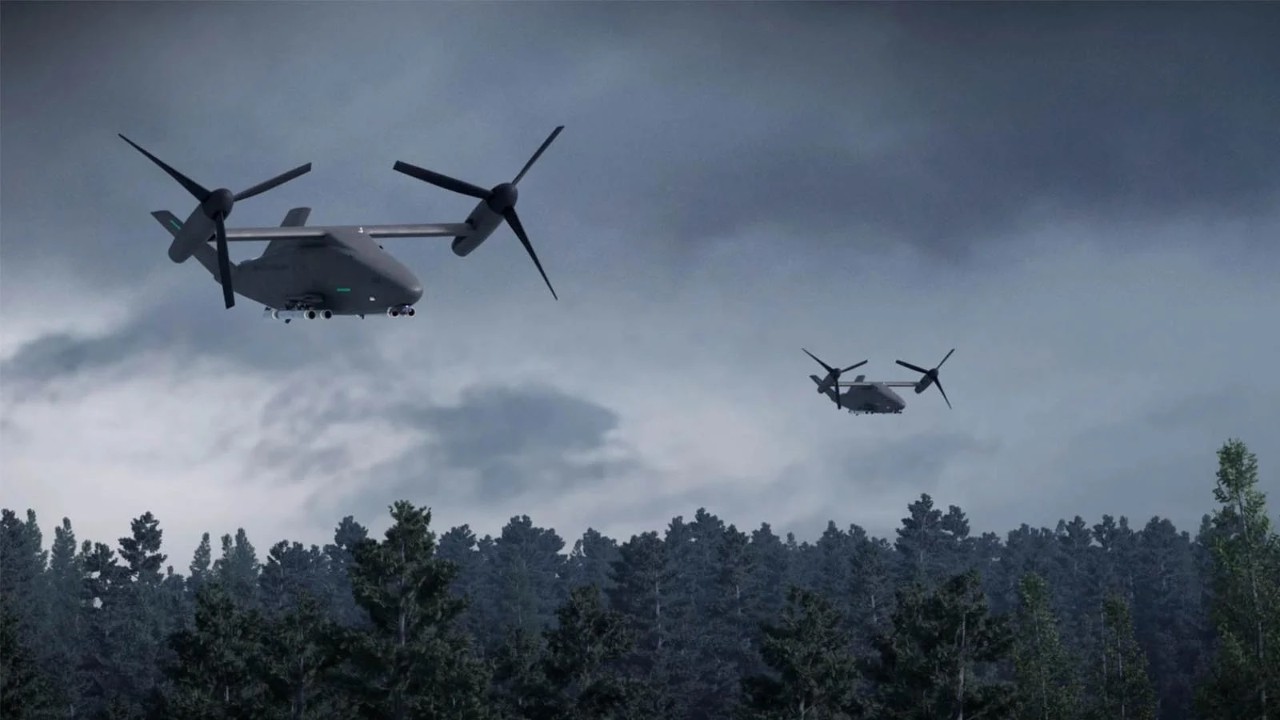
Boeing’s New Tiltrotor Combat Drones: The Runway-Free Strike Arm
Boeing quietly unveiled one of the most important autonomy moves of the decade:
a new family of tiltrotor combat drones designed for the exact war the Pentagon is preparing for a Pacific fight where runways get wiped out on Day 1 - - this is where Shield AI will be needed - - pay attnention to SHIELD AI
These drones combine:
VTOL (vertical takeoff/landing)
300+ knot dash speed
Long range
Autonomous teaming
CCA grade mission systems
Runway Independent CCAs (China’s Worst Nightmare)
China’s first strike plan is simple:
kill the runways
Tiltrotor UCAVs are the answer because they can:
launch from tiny island pads
operate from roads, beaches, barges
disperse across the Pacific like a swarm
survive the opening wave of ballistic missile strikes
This gives the U.S. an airpower fleet that cannot be grounded
Completes Boeing’s “Air Dominance Stack”
Boeing now has:
F-47 NGAD → pack commander
MQ-28 Ghost Bat → loyal wingman
MQ-25 → carrier tanker + data node
Tiltrotor UCAVs → VTOL strike/ISR/EW drones
F/A-XX (likely) → naval air dominance
Phantom Works Is Officially Back
These drones prove Phantom Works isn’t just modernizing fighters - - it’s expanding into vertical lift autonomy - - an area previously dominated by Bell and Sikorsky
Tiltrotor UCAVs are the first sign Boeing is building:
Army autonomy solutions
SOCOM special mission drones
Marine Corps island hop strike nodes
Boeing now has a real seat in future vertical lift
Massive Replicator Upside
Replicator needs drones that:
don’t require runways
can be mass produced
can disperse across the Pacific
can survive missile barrages
can deliver strike, ISR, EW, and logistics
Tiltrotor UCAVs are tailor made for this
Carrier Integration → Strengthens Boeing’s F/A-XX Bid
One variant is carrier compatiblewhich matters because:
CCAs must operate off the boat
MQ-25 is already entrenched in carrier ops
Boeing owns the Navy’s autonomy infrastructure
F/A-XX must command a drone pack
Massive NATO Demand
Apache Helicopters
The AH-64E Apache is the NATO standard attack helicopter
Poland already placed one of the largest Apache orders outside the U.S.
96 AH-64E Apache Guardian attack helicopters ordered for the Polish Armed Forces
Deliveries are expected to begin in 2028
The Foreign Military Sales (FMS) contract is valued at about $4.7 billion
Romania, Greece, the UK, Spain, and Italy all have modernization cycles aligned 2025–2035
Refueling & Air Mobility
NATO's biggest weakness = refueling and airlift
Europe has no other options - - Airbus cannot field a competitive tanker or heavy lifter
Pegasus + P-8 + Chinook become permanent NATO procurement lines
KC-46 Pegasus → NATO is already lining up future orders
C-17 sustainment → irreplaceable
CH-47 Chinook → Europe will modernize all heavy lift fleets
P-8 Poseidon → the NATO standard maritime patrol jet
P-8 Poseidon
Russia’s submarine threat rising, NATO countries are rearming maritime forces at their fastest pace since the Cold War
Countries expected to buy or grow P-8 fleets:
Spain
Italy
Germany
Poland
Norway
Netherlands
UK
MQ-28 Ghost Bat - MQ-25 Stingray - - Orca
MQ-28 Ghost Bat (the first Western CCA to fire a BVR missile)
MQ-25 Stingray (naval autonomous tanker)
Orca XLUUV (largest autonomous submarine platform in the West)
Airborne ASW networks through P-8
Sonobuoy & ASW mission integration
Countries like the UK, Norway, Poland, Germany, Netherlands will expand subsea detection platforms
Space, ISR & Missile Defense
NATO expansion = more surveillance satellites, resilient comms, missile warning, and data fusion
Millennium Space Systems (small satellites, ISR, missile tracking)
X-37B (tech demonstrator for next gen GEO/HEO surveillance)
Next gen satellite buses
Partnerships with Palantir & Anduril for AI integration
Shield AI + Boeing partnership will come to the public eye soon
Fighter Ecosystem
F-15EX sustainment & upgrades for NATO partners
F-18 sustainment (Spain, Finland, Switzerland legacy fleets)
Electronic warfare pods
Mission systems
Weapons integration
Training (T-7 Red Hawk) for NATO pilots
Every NATO air fleet needs:
More training
More hours
More EW
More maintenance
More spares
So to sum that all up:
Increasing NATO defense spending supercharges exactly the areas where Boeing is the dominant or only Western provider:
Tankers
KC-46 Pegasus
NATO’s primary refueling gap → Boeing fills it
Maritime Patrol
P-8 Poseidon
Anti-submarine warfare backbone for NATO
Heavy Lift
CH-47 Chinook
C-17 sustainment (only Boeing supports it)
Attack Helicopters
AH-64E Apache
Poland’s 96 unit mega order; other NATO states rearming
Autonomous Drones
MQ-28 Ghost Bat
MQ-25 Stingray
Unmanned Submarines
Orca XLUUV
NATO’s need for subsea ISR + seabed warfare
ISR Satellites
Millennium Space Systems (Boeing owned)
Missile warning, space based ISR, secure comms
Pilot Training
T-7A Red Hawk
Next-gen training pipeline for NATO fighter fleets
T-7 Red Hawk: The Global Fighter Training Standard in Waiting
The T-7 is the only trainer built from day one to prepare pilots for:
F-35
F-22
F-47 (NGAD)
MQ-28
High-G stealth maneuvering
Drone paired tactics
Countries switching to T-7 will be following U.S. doctrine
Which non NATO advanced air forces train in the U.S.?
Asia-Pacific
Japan - F-35 training in Arizona
South Korea - long-standing F-16/F-35 pipeline
Singapore - multiple U.S. based fighter detachments (Luke AFB, Mountain Home, Tucson)
Australia - F-35 training + Red Flag
Taiwan - F-16V training in Arizona
Middle East
Israel - F-35, F-15, EW integration training
Saudi Arabia - F-15SA & complex weapons workups
UAE - F-16E/F training pipelines
Qatar - F-15QA pilots trained in the U.S.
Kuwait - F/A-18E/F training
Bahrain - F-16V training
Oman - F-16 training
Qatar - confirmed U.S. based F-15QA instruction
Other Non-NATO Partners
Colombia - weapons school training
Brazil - A-29 and tactics integration (limited but real)
Space Power: Millennium + 3D Printing + X-37B Synergy
Boeing’s space division is far more strategic than publicly understood
It quietly builds the orbital kill web the Pentagon depends on for targeting, missile tracking, and classified ISR
Millennium Space Systems - The Pentagon’s Rapid-Response ISR Factory
Maneuverable ISR satellites for contested orbit
Rapid launch constellations designed for fast replenishment
GEO/HEO surveillance payloads for missile warning
Space Development Agency (SDA) tracking contracts
“Foo Fighter” experimental tracking satellites
Multiple black budget ISR platforms (undisclosed missions)
Core contributor to Replicator 2.0 orbital sensor layers
Millennium is one of the few U.S. shops that can deliver fast turn, maneuverable, mission adaptable military satellites
Boeing’s Sensor Stack: You Can’t Kill What You Can’t See
Boeing touches a huge portion of the sensing layer that makes sixth gen and Replicator actually work
P-8 Poseidon – the world’s premier maritime ISR and ASW sensor platform
E-7 Wedgetail – airborne C2 and sensing backbone
IRST and EO/IR packages on multiple fighter lines
Millennium Space Systems – maneuverable ISR, SDA tracking, GEO/HEO missile warning
X-37B payload integration – the most classified “what are we actually seeing from orbit” experiments
Sixth gen fighters, CCAs, Orca, and Replicator are not just about stealth and airframes – they are about who can:
Find targets first
Fuse land/sea/air/space tracks
Push that picture into a kill web in real time
Boeing quietly sits across that entire stack... are they the best at it? I'm sure they're not BUT they're involved either way
3D Printed Satellite Structures
Boeing now prints critical satellite hardware:
Rigid honeycomb structures
Thermal paths + heat spreaders
Harness channels + internal routing
Mounting and deployment hardware
This enables:
6 month reduction in constellation build times
First flight qualified 3D printed solar substrates in the industry
Over 150,000 certified 3D printed aerospace parts already in service
Boeing can surge satellite production faster than any other prime... noticing a pattern
X-37B Integration - - The Most Classified Proving Ground in Orbit
The X-37B tests technologies that never get disclosed but some known areas include:
ISR payloads
Maneuverable micro satellites
On orbit payload swapping
Advanced sensing experiments
Boeing (via Phantom Works + Millennium) supplies:
Satellite buses
Specialized sensors
ISR payloads
Command & integration systems
This is where Boeing + Millennium + X-37B converge:
They form the U.S. military’s potential closed loop experimental pipeline for next generation orbital warfare
Millennium builds the satellites
Boeing prints the structures
X-37B tests the classified payloads
Together they form the most agile, vertically aligned space power cell in the U.S. defense industry
Boeing’s Role in Space Data Centers — The Part Everyone Misses
If “space data centers” become real, Boeing is one of only three companies on Earth already holding the critical infrastructure pieces (Northrop owns the space domain, most people don't understand that) :
Boeing = The Orbital Testbed (X-37B)
Space data centers need new tech validated in orbit:
thermal rejection systems
radiation hardened compute
autonomous on orbit servicing
high power solar arrays
deployable comms architectures
Boeing = The Rapid Response Satellite Factory (Millennium Space Systems)
Space data centers are really constellations of compute nodes.
Millennium already does:
maneuverable LEO satellites
thermal controlled payload buses
SDA missile warning layers
mesh networks for high throughput data movement
“Foo Fighter” proximity ISR (same tech class needed for inter satellite links)
Boeing is one of the only primes already producing the type of satellites that could host compute modules
Boeing = The Structural & Thermal Layer (3D Printed Space Hardware)
Space data centers are bottlenecked by physics:
Heat dissipation
High power distribution
Radiation shielding
Precision structures that hold compute, fiber, and cooling systems
Boeing is the only prime with flight qualified 3D printed satellite structures, including:
heat routes
thermal paths
rigid honeycomb structures
mounting hardware
sensor housings
For more on Data Centers in Space + 3D printing in Space - - I strongly recemmend reading this write up on Redwire - - https://buymeacoffee.com/bige19/rdw
Boeing + Intel + Ohio Defense Stack Connection
Intel Ohio = the future U.S. silicon backbone .. it’s the Pentagon’s new inland secure silicon defense district
Intel Ohio One & Two → America’s Flagship National Security Fabs
The only U.S. fabs explicitly designed for:
14A → sub 1.5nm defense logic
secure packaging for classified compute
DoD RAMP-C chip pathways
trusted high assurance microelectronics
onshore AI accelerators for autonomy + targeting
Intel Ohio is the first U.S. campus where DoD will receive:
NGAD grade compute
rad hard missile logic
edge AI chips for CCAs
secure silicon for space systems
Boeing Heath, OH → the digital spine for weapons & space systems
Less than 15 miles from Intel Ohio sits Boeing’s Heath facility - - a site DoD has quietly depended on for decades
Sharing workforce, vendors, supply chain- - eventually data flows
guidance + navigation assemblies
missile avionics (GMD, MDA, black programs)
space system calibration
rad hard electronics validation
classified subsystem testing
seeker alignment + calibration
This facility is where U.S. missiles “get their brain aligned”
Intel Ohio supplies the brains
Boeing Ohio supplies the integration and targeting logic
Boeing St. Louis / Wichita supply the airframes
Intel Ohio produces the silicon for:
F-47 NGAD mission computers
MQ-28 Ghost Bat edge AI processors
MQ-25 autonomy + comms logic
P-8 Poseidon ASW compute
JDAM/SDB/Harpoon guidance chips
Millennium ISR satellite payload processing
Boeing Heath calibrates & integrates that silicon into:
missile seekers
kill chain avionics
space sensor packages
guidance/navigation systems
rad hard weapons logic
Boeing St. Louis + Wichita build the platforms that fire them:
F-47
F/A-XX
MQ-25
MQ-28
F-15EX
P-8
JDAM/SDB/Harpoon
This is exactly how the Cold War industrial base worked if we're keeping notes
DoD is deliberately building a single industrial zone that can:
produce the silicon
package the chips
assemble missile guidance
build the aircraft
integrate the sensors
launch the satellites
supply autonomy systems
All inland, away from:
coastal missile threat
port disruptions
foreign dependency
Ohio–Michigan–Missouri/Kansas becomes: The Silicon Defense Industrial Spine of the United States
all without touching the coasts or foreign fabs... where? Ohio
Intel Ohio going to be most important asset U.S. has by 2035
Boeing is the first major defense prime physically and operationally tied into that ecosystem
This makes Boeing:
the first beneficiary of RAMP-C
the first fighter maker connected to secure domestic silicon
the first weapons integrator tied to Intel’s trusted compute
the first air dominance builder with a purely American silicon pipeline
When do Lip-Bu Tan & Kelly Ortberg link up??
Rail + Freight Spine → Cheap, Fast Movement of Heavy Defense Hardware
The Midwest is built on rail freight
Guidance kits, avionics, composite panels, and missile hardware from Boeing Heath can move by rail to St. Louis in hours
Heavy composite barrels and wing structures from Spirit Wichita ship straight into St. Louis on the same freight lines
Intel Ohio wafers & packaged secure chips ship by rail/road to Boeing sites cheaper, faster, and without port bottlenecks
NO dependence on port imports, long customs, or coastal vulnerabilities
Inland = China proof, Missile proof, Cyber hardened
A Midwest cluster avoids the most vulnerable nodes:
No coastal missile threat
No port shutdowns
No maritime shipping chokepoints
No reliance on foreign transport hubs
Shared Labor Pool = Aerospace + Semiconductor + Defense Talent Triangle
Ohio → avionics, radiation hardened electronics, missile guidance
Missouri/Kansas → fighter assembly, stealth composites
Michigan → ABF substrates + semiconductor tooling workforce
You get:
Engineers who move between Intel and Boeing??
Technicians who can work on both radar hardware and guidance kits??
A unified supply chain for precision machining, composites, electronics, and testing
Faster Aerospace Development Cycles
Because everything is physically close:
Intel chips move to Boeing integration with days of latency, not weeks
Boeing avionics tested in Heath can be in a St. Louis fighter bay same week
Spirit Wichita composite shells go from mold → St. Louis assembly on the same rail spine
This shortens the design → prototype → test → iterate loop
The Midwest Grid = the Power Needed for High Compute Defense Manufacturing
Intel Ohio alone draws enormous electrical load and the PJM/AEP grid upgrades benefit all industrial nodes:
More reliable industrial power
More redundancy
Faster permitting
Lower energy cost for factories like Boeing/Spirit
Grid hardened against cyberattack and blackout events
Aerospace + semiconductors need stable, massive, 24/7 power.. The Midwest provides it better than almost anywhere else in the U.S.
Cost Advantage: Cheaper Labor, Cheaper Land, Cheaper Logistics
Coastal primes bleed cost due to:
Expensive labor
Congested ports
Higher regulatory burdens
Higher real estate cost
Boeing’s Midwest/Heartland footprint = lower burn rate = more competitive bids for:
F/A-XX
MQ-25 scaling
MQ-28 U.S. production
Replicator
Satellite hardware
Missile kits
By concentrating the “brains” (Intel) and the “body” (Boeing) of the war machine in a single inland industrial belt with rail, energy, labor, and cyber resilience, the U.S. builds the fastest, safest, cheapest defense production ecosystem in the world
Boeing + GE Aerospace Engine Dominance
GE Aerospace partnered with Boeing for decades on fighter engines including:
F110 (F-15, F-16)
F414 (Super Hornet)
F404 (legacy Hornets)
XA100 adaptive cycle engine test paths
GE’s sixth-gen engine work aligns more naturally with Boeing’s F-47/F/A-XX shaping than with Lockheed’s or Northrop’s
Congress wants an American only propulsion base for next gen
Pratt & Whitney has political baggage
GE’s new Ohio + Indiana footprint is tied into DoD modernization
GE leadership keeps signaling partnership with “future fighter programs”
Engines are 30–40% of fighter cost - - whoever aligns with GE wins sustainment dollars for decades
Boeing’s Commercial Recovery Matters for Defense
From Crisis To Credible: Why DoD Trust In Boeing Flipped Back
For most of the last decade, Boeing was a political liability
737 MAX crashes
787 quality issues
Whistleblowers
endless hearings, headlines, investigations
No one at the Pentagon was going to hand them the crown jewel fighter program while that was still burning but 2024–2025 is the first time in years you see a different pattern
737 and 787 production stabilize
regulators stop treating Boeing as a crime scene and start treating it as a critical asset again
DoD leaders talk about Boeing in industrial base terms not scandal terms
New CEO in Kelly Ortberg who is actually respected and knows how to get shit done
Pushing for major culture changes which has been the problem at boeing.. Greed needs to leave at every level
Why this matters for F-47 and F/A-XX
Fighter awards are never just about performance – they are about risk and optics
A Boeing that looks like a recovery story is politically safe to back again
A Boeing that owns Spirit, stabilizes MAX/787, and invests billions into St. Louis is no longer the “problem child”
Boeing’s 2025–2026 recovery targets
440–450 jet deliveries in 2025
737 stabilized at 42/month
787 ramping to 8–10/month
Higher output in 2026 already signaled to investors & suppliers
Why the Pentagon cares
More commercial production means:
More capital flowing into Boeing Defense + Phantom Works
More labor retention → engineering + manufacturing teams stay intact
More automation investment (robotics, composites, quality control)
More stable suppliers across engines, avionics, composites, metals
More surge capacity for wartime scaling of:
Replicator drones
MQ-25
F-47 NGAD
JDAM/SDB/Harpoon
Satellite hardware
It is the financial engine that lets Boeing scale the war machine.
Commercial recovery = defense manufacturing resilience + speed + surge capacity.. exactly why DoD leaders are more publicly supportive of Boeing in 2025 than at any time in the last decade
In a China-war scenario
Boeing’s commercial factories become instant surge lines - - the only U.S. industrial system capable of flipping overnight to produce tankers, P-8 components, MQ-25 airframes, JDAM/SDB kits, and autonomous strike platforms at scale
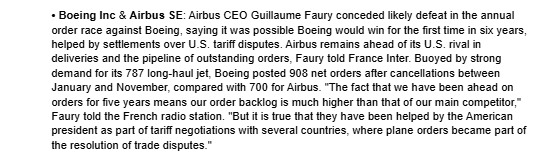
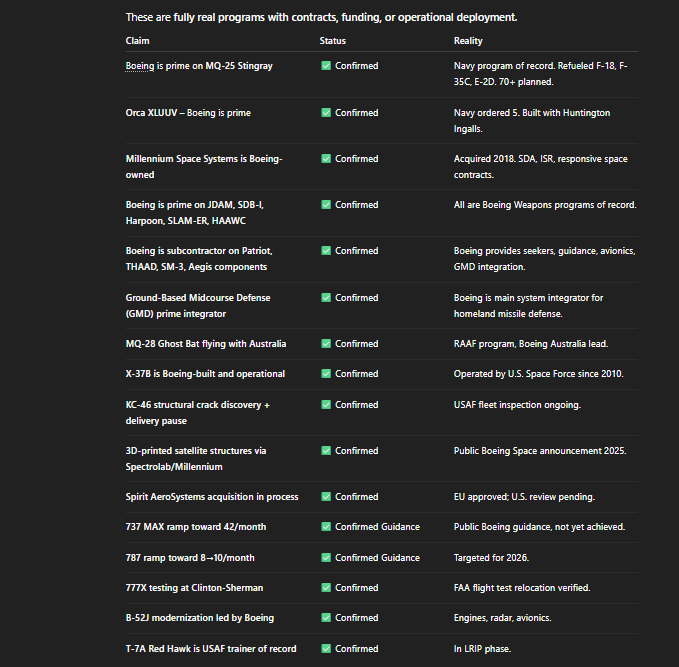
Recent Commentary:
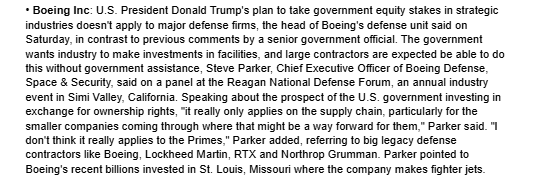
Last sentence "Parker pointed to Boeing's recent billions invested in St. Louis, Missouri where the company makes fighter jets" - - now why does this matter enough for him to say?? He is signaling to DoD that Boeing already built the factory for America’s two sixth gen fighters before the awards even landed
Boeing is the only one who invested ahead of the curve & the Pentagon LOVES primes that remove industrial risk before getting the contract.. Chess moves only under Ortberg
Defense Tech Startups Vs Legacy Primes
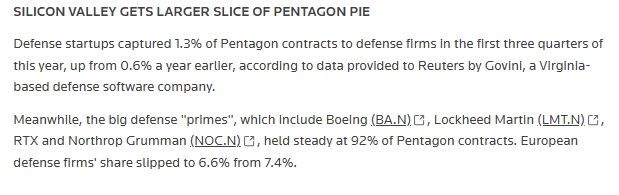
Defense tech startups (Anduril, Saronic, Shield AI) are exploding in valuation and doubling their share of Pentagon contracts
Legacy primes (Lockheed, Boeing, RTX, Northrop) still hold 92% of all Pentagon contract dollars
Hegseth wants to shift power toward commercial, fast moving firms to counter China’s speed.. can startups do that alone??
My guess is a prime, specifically Boeing / Northrop / Lockheed will become anchor manufacturing partners to get these startups scaling faster
Why Startups Are Winning More Contracts
Drones in Ukraine proved how effective cheap, fast, autonomous systems are
Pentagon is directing more money into:
AI autonomy
Drone boats (Saronic)
Wingman jets (Anduril’s FQ-X / Collaborative Combat Aircraft ecosystem)
Sensors + software (Chaos Industries)
Govini data: Startups jumped from 0.6% → 1.3% share of Pentagon contracting in one year
The Scaling Problem (The “Valley of Death”)
Startups can:
Invent tech
Build a prototype
Win a small contract ($10–30M)
But what they can’t yet do is:
Mass produce weapons on Pentagon timelines
Build factories or shipyards fast enough
Handle multi billion dollar sustainment and logistics
Navigate Pentagon bureaucracy
RTX CEO said it plainly: “Innovating is one thing. Scaling manufacturing is an entirely different ballgame.”
Why the Pentagon System Is Hard to Disrupt in 2025
Entrenched political interests protect the primes
Mega projects already awarded (F-35 engine, Golden Dome (sort of) , NGAD, Ukraine aid packages)
Bureaucracy slows onboarding of newcomers
Pentagon acquisition culture is still built for:
10–15 year programs
Massive factories
Large primes with lobbying armies
Primes kept 92% share of Pentagon spend like I mentioned above
Europe slipped from 7.4% → 6.6%.
Pentagon is still awarding the biggest programs to:
Lockheed
Boeing
RTX
Northrop
Major awards this year (fighter initiative, Golden Dome, Ukraine packages) all went to legacy firms
Partnerships Between Old + New
Legacy firms now see the writing on the wall and are partnering aggressively:
Shield AI + HII → autonomous naval vessels
Anduril + HD Hyundai → shipbuilding + autonomous systems
Anduril + Prime contractors → CCA, autonomy, surveillance layers
RTX, Lockheed, L3Harris openly say they want new entrants in the ecosystem
According to Anduril’s head of strategy: “The light switch is in the middle of being flipped.”
Primes will still dominate big programs
BUT startups will take over:
Autonomy
Drones
AI mission planning
Low cost attritable platforms
Sensors
Software
This is exactly the Pentagon’s Replicator vision: quantity + autonomy + speed
Why Boeing Is Structurally The Pacific War Company
P-8 Poseidon hunts PLAN subs from the Philippine Sea to the Indian Ocean
MQ-25 extends the carrier air wing deep enough to matter inside Chinese anti ship missile envelopes
F/A-18E/F and EA-18G still carry the air wing today
Orca XLUUV brings autonomous undersea presence to chokepoints and seabed infrastructure
MQ-28 gives U.S. and Australian forces a shared CCA backbone in the Pacific
F-47 anchors air dominance and CCA pack commanding from land bases
Layer Millennium satellites on top and you get:
space based tracking of ships, missiles, and aircraft
maritime kill chains that start in orbit, pass through P-8 and E-7, and end at a Boeing platform launching a Boeing integrated weapon
if you draw only the lines that matter for a real Pacific war – ASW, carrier air, tankers, CCAs, autonomous undersea, and maritime ISR – Boeing is the dominant name on the map
The 12 Things Boeing Now Controls That Matter in a China War
Air dominance (F-47)
Carrier air dominance (F/A-XX path)
Loyal wingmen (MQ-28)
Carrier autonomy (MQ-25)
Undersea autonomy (Orca)
Tanker chokepoint (KC-46)
Maritime ISR (P-8)
Airborne C2 (E-7)
Precision strike (JDAM/SDB/Harpoon/Slam-ER)
Missile defense integration (GMD → Golden Dome layers)
Space ISR (Millennium + X-37B)
Silicon + guidance pipeline (Intel Ohio + Boeing Heath)
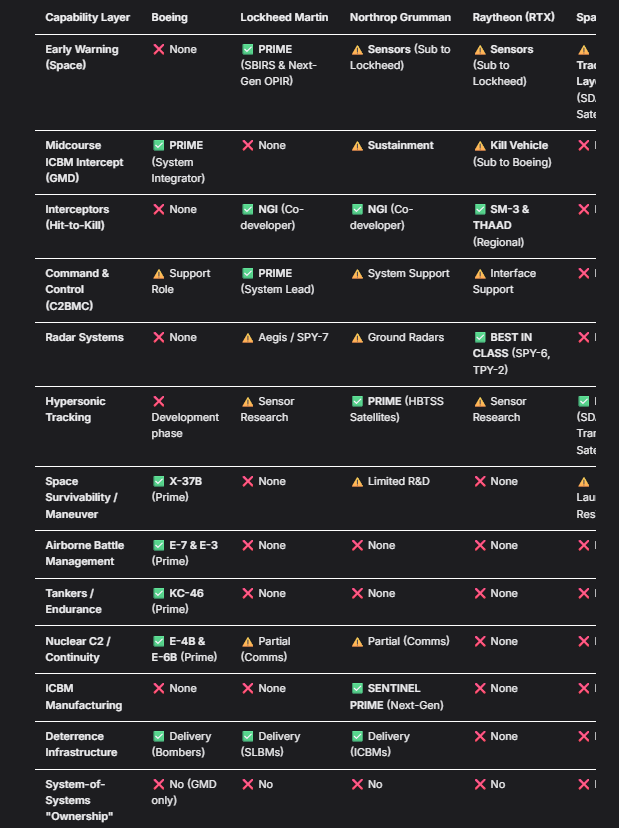
... Midcourse ICBM Intercept (GMD) - look it up... root for your champions and in war / nuclear Armageddon Boeing is one of your champions.. Midcourse intercept is the MOST IMPORTANT LAYER of our missile defense system..
Only layer designed to stop ICBMs aimed at the U.S. homeland
Longest engagement window (~20 minutes)
Last chance before reentry over American cities
Only layer that protects the entire continental U.S.
so much boeing slander out there from people who have no clue
Some Final Thoughts
Strategic Reality
Boeing isn’t winning because it builds the flashiest prototypes - - It’s winning because it owns the infrastructure - - the platforms, factories, testbeds, space assets, and integration layers the entire next generation kill chain requires
You can replace a silicon startup but you can’t replace:
tanker fleets
sixth gen training pipelines
orbital test platforms
carrier aviation infrastructure
undersea autonomy
missile defense command layers
THE NEXT ERA
As the Pentagon shifts from slow mega programs to fast, networked, autonomous systems, the companies that survive are the ones that can:
scale
integrate
mass produce
operate globally
connect air, sea, space, and data
Only one company is sitting at every junction of that transition.. just saying
So next time you hear people screaming Boeing is a failed company / Boeing lost its way / Boeing is going to $0... just remember that without Boeing America loses its dominance in Military power & commercial travel power... so they keep us safe and our #1 exporter... okk
If Boeing fails, America loses air dominance, naval reach, orbital reconnaissance, aerial refueling, global logistics, command and control depth, and half its military training pipeline
If Boeing fails, the U.S. loses the backbone of its commercial travel network and its #1 exporter
Not the #1 missile vendor - Raytheon
Not the #1 stealth manufacturer - Northrop
Not the #1 contractor by revenue - Lockheed
But the #1 infrastructure company for U.S. defense
Boeing keeps America safe by enabling every other company to fight as everything else plugs into the ecosystem Boeing built
Lose Boeing & the system collapses.. Tick tock on that F/A-xx contract
If Boeing executes cleanly for 3–5 years they become #1 defense player... now add in commercial and you'll see why Boeing is undervalued at 150B market cap
https://www.youtube.com/watch?v=rLn8IG5Gxsk
https://www.youtube.com/watch?v=jsKEZxd73bg