

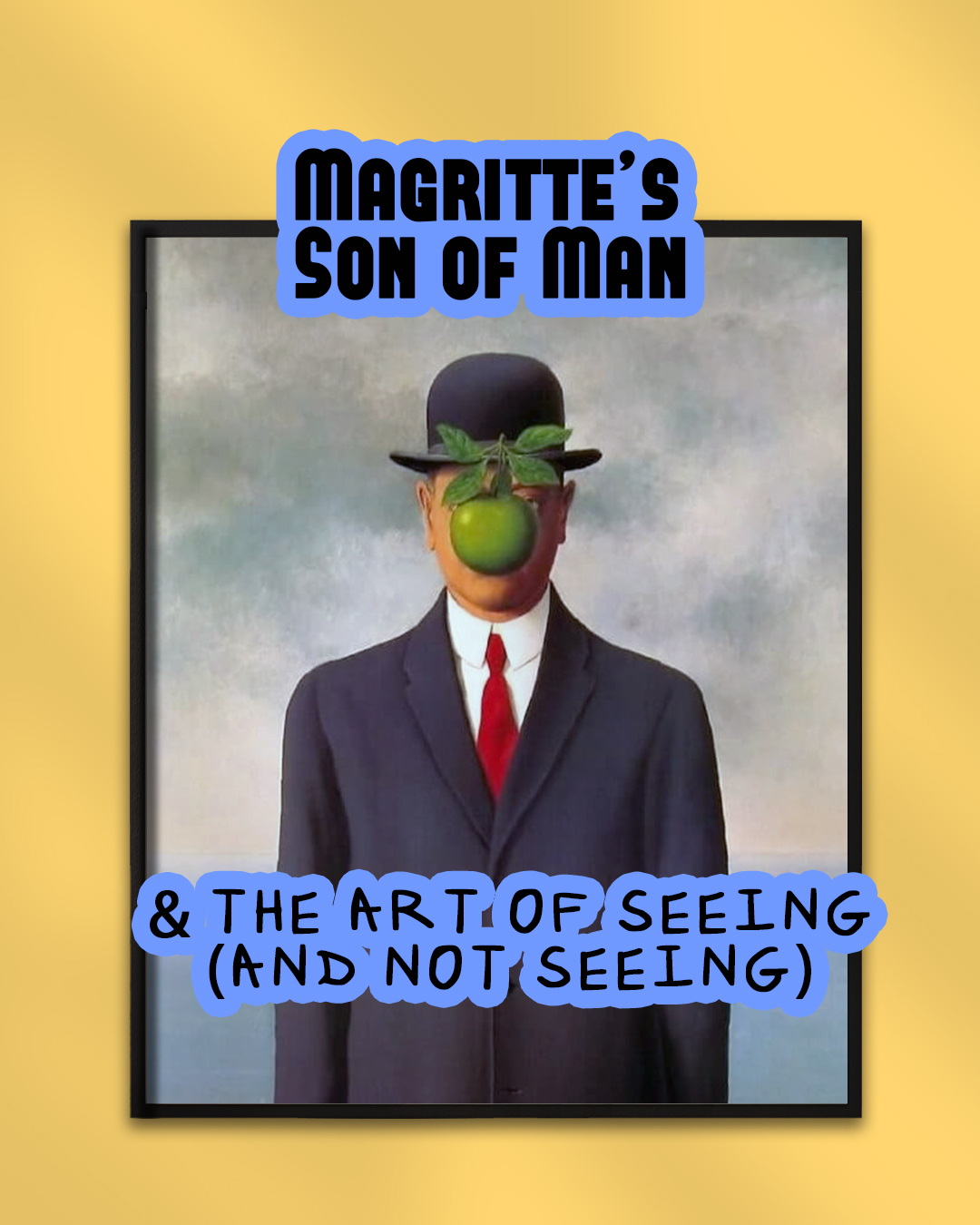
René Magritte (1898-1967), a leading Surrealist, cultivated an "ordinary gentleman" persona by frequently wearing a bowler hat, a deliberate contrast to his bizarre art. This hat, featured in over 50 paintings, became his "hidden visible" device: a familiar object paradoxically concealing, compelling viewers to ponder mystery, representing anonymity and the "everyman."
"The Son of Man" perfectly embodies Magritte's visual philosophy
1) Hidden Visible
2) Perception vs. Representation
3) Mystery in Ordinary
4) Disrupting Dogmatic Views
5) Title’s Role
Magritte's work profoundly influences pop culture, film (e.g., The Thomas Crown Affair [1999], which amplified his "what you see is not real" theme), advertising, and contemporary art.
Beyond "The Son of Man," Magritte's philosophy permeated diverse themes. He questioned arbitrary links between objects and names. In Key to Dreams, ordinary items bear misleading labels, challenging linguistic conventions and representation.
Golconda extends this. Titled after a legendary diamond center (singular wealth), it paradoxically depicts countless identical bowler-hatted men, symbolizing anonymity and conformity. This creates a "paradox of abundance and value": is it human "wealth" or diminishing individual significance due to uniformity? The title, true to Magritte, adds mystery.
"The Son of Man" was sold to Harry Torczyner in 1964, then to a private collector for over $5.3M in 1998. It's periodically lent to museums, last at SFMOMA in 2018.