

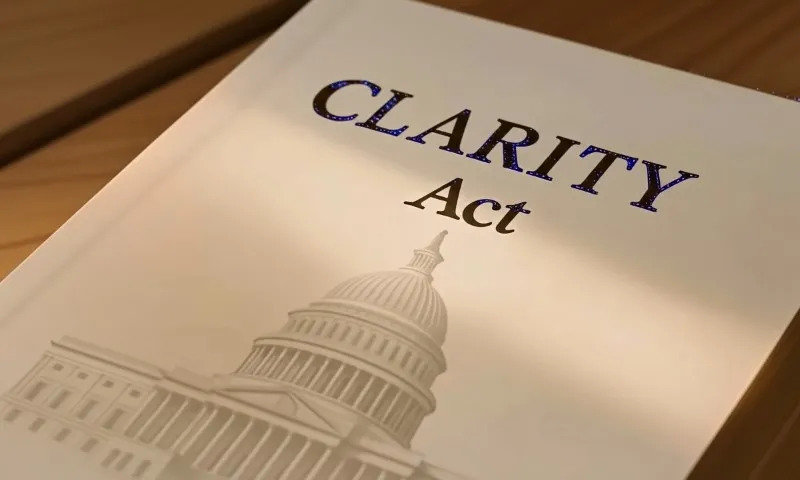
 The Digital Asset Market Clarity Act (CLARITY Act of 2025, H.R. 3633) passed the U.S. House in July 2025 with strong bipartisan support. It now awaits Senate action, with a potential markup targeted for late April 2026. If enacted, the bill would deliver the first comprehensive federal framework for digital assets by clearly dividing oversight: the SEC would regulate assets resembling securities or investment contracts, while the CFTC would oversee decentralized “digital commodities” once blockchains reach maturity.
It ends years of “regulation by enforcement,” creates registration pathways for exchanges and custodians, offers safe harbors for DeFi developers and validators, and includes anti-CBDC measures with tailored disclosures.
Three key reasons why passage would be excellent news for crypto and blockchain
First, it provides long-overdue regulatory certainty. For years, overlapping SEC and CFTC authority created ambiguity that chilled innovation and pushed projects offshore. The CLARITY Act draws bright jurisdictional lines and establishes a “maturity” pathway for tokens to transition from securities to commodities. Entrepreneurs and developers could finally build with predictable rules rather than guessing at enforcement risks. This legal clarity would reduce compliance costs, encourage domestic talent retention, and prevent capital flight—directly fueling blockchain expansion in areas like smart contracts, NFTs, and tokenized real-world assets.
Second, it unleashes responsible innovation, especially in DeFi. The bill includes explicit safe harbors protecting software developers and validators from inappropriate financial regulatory burdens. It carves out space for permissionless peer-to-peer protocols while maintaining strong investor safeguards. Blockchain builders would gain a clear on-ramp for token launches, fundraising (with capped exemptions), and infrastructure development without constant fear of retroactive penalties. This framework would accelerate next-generation applications—decentralized finance, Web3 infrastructure, and user-owned economies—while keeping innovation anchored in the U.S. rather than jurisdictions like the EU’s MiCA
Third, it accelerates mainstream institutional adoption and cements U.S. leadership. Traditional financial players could more easily custody, trade, and integrate digital assets under consistent rules. The legislation opens secondary-market trading on existing SEC-registered platforms and encourages tokenized equity and stablecoin growth. Analysts project significant inflows from pension funds, sovereign wealth funds, and corporate treasuries once regulatory fog lifts. JPMorgan and others have highlighted this as a catalyst for broader market integration, potentially sparking a new bull cycle, job creation, and positioning America as the global crypto capital—countering offshore migration and enhancing national competitiveness.
A word of caution
In summary, while passage would remove major barriers and ignite growth across crypto and blockchain ecosystems, banks and traditional financial institutions may still slow-walk adoption. Many have lobbied aggressively against stablecoin yield provisions, viewing them as direct competition for deposits. Even with clarity, entrenched interests, risk aversion, compliance burdens, and ongoing negotiations over custody charters or tokenized products could delay full integration. Large banks might prioritize incremental pilots over aggressive rollout, preserving their balance-sheet advantages and limiting crypto’s disruptive potential in everyday finance for years.
Blessings
AH